

What if your biggest lunch saving starts with noticing what you already buy? Saving money by bringing lunch from home doesn’t have to mean rigid meal plans or a Sunday spent cooking. When the workday gets busy, grabbing takeaway can feel like the easiest option, while the cost slips past unnoticed.
It’s understandable if planning lunches feels like one more job, especially when good intentions leave ingredients forgotten in the fridge. A practical routine should make lunch easier, not create more waste. This guide will help you compare homemade lunches with your usual bought-lunch habits, so you can see what changing a few days might mean for your budget.
You’ll find simple ways to build flexible lunches from food already in your pantry, fridge or freezer, and pack options that are appealing and easy to take along. If keeping lunch cold is part of the challenge, a purpose-designed freezable lunch bag, such as the Coolpod Freezable Lunch Bag, can help without separate ice packs. Start with what you eat now, then find a routine that works for your week.
Key Takeaways
- Compare the cost of a bought lunch with the ingredients you actually use, including snacks and drinks.
- Build a flexible lunch plan around leftovers and ingredients you already have, then shop only for genuine gaps.
- Work out whether saving money by bringing lunch from home makes sense for your usual lunch habits.
- Prepare a few shared components to make weekday packing easier without eating the same lunch every day.
- Keep lunches appealing and practical by reusing ingredients in different combinations and formats.
Why bringing lunch from home can help you spend less
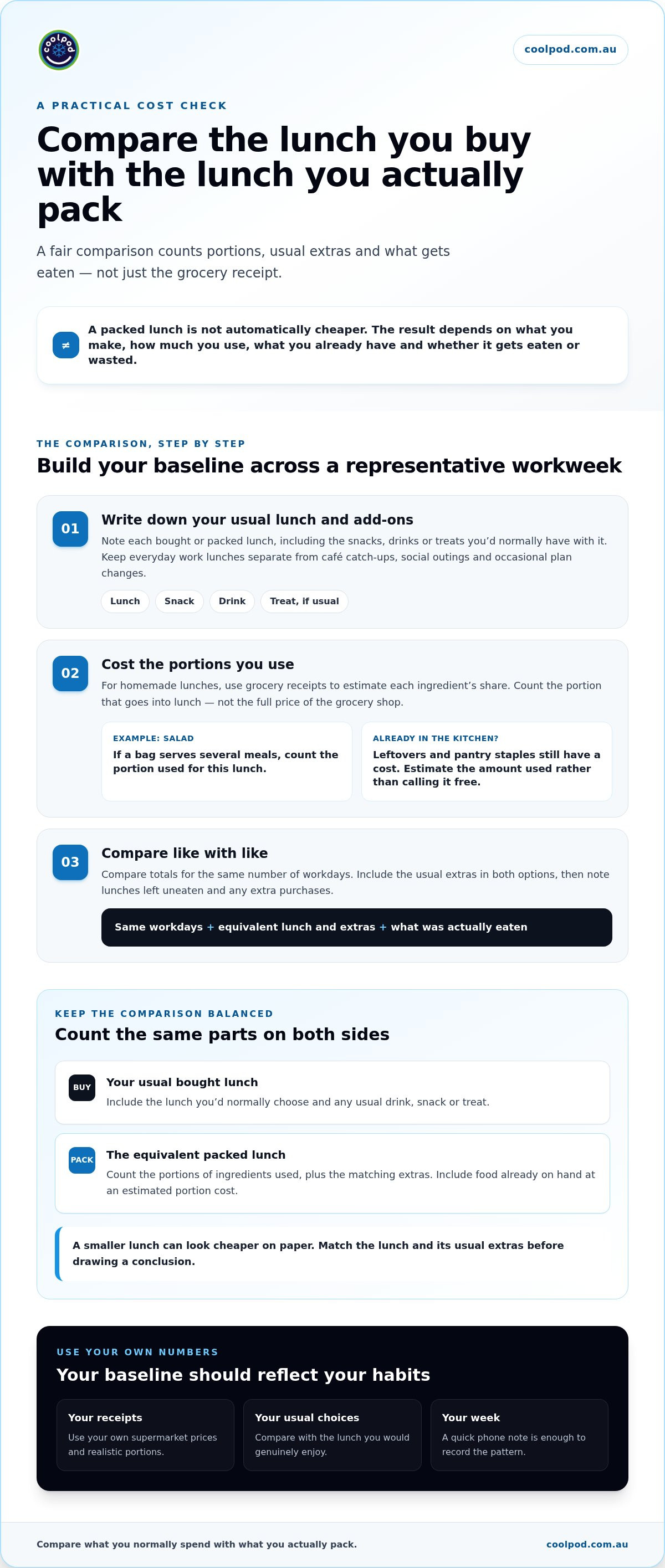
A bought lunch can feel like a small, convenient choice, but regular purchases are easy to overlook during a busy workday. Packing lunch can change how you spend, though it won’t automatically cost less. The result depends on what you make, how much you use, what’s already in your kitchen and whether the food gets eaten or wasted.
To judge saving money by bringing lunch from home fairly, compare the bought lunch you’d normally choose with the ingredients in an equivalent packed lunch. Include the extras you’d usually have with each option, then base your decision on your own spending rather than an assumed saving.
What counts as the cost of a homemade lunch?
Charge the lunch for the share of each ingredient it uses, not the full price of the grocery shop. If a bag of salad serves several meals, count the portion that goes into lunch. Apply the same approach to bread, spreads, cheese, fruit and other ingredients, using your receipt to estimate a reasonable per-portion cost.
Keep the comparison like for like. If your bought lunch usually includes a drink, snack or treat, include those in the bought option and count them in the packed version too. Otherwise, you may mistake a smaller lunch for a cheaper one.
Leftovers and pantry staples still have a cost, even if you bought them earlier. Estimate the amount used rather than treating it as free, while recognising that using food already on hand may help you avoid buying extra ingredients. The concept of a packed lunch covers a broad range of meals, so your comparison can reflect the kind of lunch you’d genuinely enjoy, not just a basic sandwich.
A fair lunch-cost comparison measures what you’d normally buy against the portions and extras you actually pack.
Why track your usual lunch spending first?
Before changing your routine, record what you spend across a representative workweek. Note bought lunches, snacks and drinks, along with the ingredients used for any lunches you pack. A quick phone note is enough. If you have receipts, use them; for groceries, divide an ingredient’s cost by the portions you realistically get from it.
Keep everyday work lunches separate from café catch-ups, social outings or an occasional meal bought because plans changed. Those purchases may matter to your overall budget, but mixing them into a weekday comparison can distort what your routine costs.
- Write down each lunch and its usual add-ons, whether bought or packed.
- For homemade meals, list the ingredients and estimate the portion used from your grocery receipts.
- Compare the totals for the same number of workdays, then note which lunches were left uneaten or needed extra purchases.
Use your own supermarket prices and habits, not a national average. Your portions, preferred lunch spots and pantry stock are specific to you. This baseline gives you a practical way to see whether a new routine changes your spending. It also helps you adjust without assuming every packed lunch will be cheaper.
Plan affordable lunches around food you already have
A lunch plan doesn’t need a new recipe for every workday. Start with what’s already in your kitchen, then build a few mix-and-match options around it. This keeps useful ingredients in circulation and helps stop a promising lunch idea from turning into another shopping list of items you’ll use once.
Before your next grocery shop: check what you have, choose flexible lunch combinations, then buy only what’s missing.
Build a lunch plan from pantry, fridge and freezer ingredients
Look first for food that’s already open or needs using soon. Leftover roast vegetables, cooked rice, tinned beans, pasta, eggs, cheese and frozen portions can all be a starting point. Think in components rather than fixed recipes: combine a grain or bread with a protein, vegetables and a simple dressing or spread.
For example, leftover roast vegetables might go into a wrap one day and a grain bowl another. Use the same core ingredients in different formats, adding a pantry staple or a small extra to change the flavour. That gives you variety without buying a separate set of ingredients for each lunch.
- Use cooked rice, pasta or grains as a base, if you already have them.
- Add beans, eggs, cheese or another available protein.
- Add fresh or frozen vegetables, then finish with a dressing, sauce or seasoning you own.
- Keep a freezer portion in mind as a backup for a day when plans change.
Make a quick note of what you’ve planned, and store food according to its packaging and appropriate food-safety advice. If you’re packing food that needs to stay cold, a freezable lunch bag can be a practical part of the routine.
Shop for gaps and reduce avoidable food waste
Once you’ve chosen a few combinations, write a short list of the ingredients they genuinely need. Check cupboards, fridge and freezer before adding anything. If a recipe calls for an ingredient you don’t have, see whether another vegetable, grain or flavouring you already own will work instead. A flexible plan makes it easier to avoid buying a whole product for one lunch.
Pay attention to date labels as you plan. In Australia, a use-by date relates to food safety, while a best-before date indicates quality. Follow storage directions and don’t eat food past its use-by date. A best-before date isn’t the same safety cut-off, so use the product’s condition and storage instructions to guide your decision.
Keep the plan realistic, too. If you’ve got enough ingredients for only a couple of lunches, plan for those rather than forcing them into every day. A flexible approach to saving money by bringing lunch from home makes it easier to use what’s on hand, shop with purpose and adjust the menu as your week unfolds.
Work out whether your packed lunch is actually saving money
A quick calculation can replace guesswork with a useful answer. Compare the full lunch you’d normally buy with the packed lunch you actually eat, including the extras that make each option satisfying. Use your own receipts and current grocery prices, then revisit the comparison if prices or portions change.
Use a simple per-lunch cost calculation
For homemade food, calculate the cost of the ingredients in one portion. If a pack of wraps makes several lunches, divide its cost by the number you realistically use. Do the same for fillings, vegetables, spreads and sides. Add snacks and drinks if you’d usually buy or pack them.
Keep the comparison consistent. A bought lunch with a drink and snack should be compared with a packed lunch that includes equivalent extras, not just the main dish. Use the table below as a worksheet and fill it in with your own figures.
| Cost to compare | Bought lunch | Packed lunch |
|---|---|---|
| Main meal | Your usual receipt amount | Cost of ingredients in one portion |
| Snack or side | Usual amount, if included | Cost of the portion packed |
| Drink | Usual amount, if included | Cost of the drink packed |
| Food left unused | Note any extra food bought and discarded | Track ingredients that spoil or go uneaten |
| Reusable items | Include only if relevant to your comparison | Allocate a reasonable share of a lunch bag or container’s cost across its expected use |
Add the relevant amounts for each option, then compare the totals. Savings depend on your own prices, portions and habits, so there’s no single result that applies to everyone. Try the calculation over a short period and update it with current grocery prices rather than relying on old estimates.
Spot false economies before they become food waste
A low unit price doesn’t always mean a better buy. If a bulk pack or special ingredient is likely to sit unused, include that in your review instead of treating every portion as a saving. Don’t charge a whole packet to one lunch, but notice when food repeatedly gets thrown out. That’s a sign to buy a smaller amount or choose an ingredient with more uses.
Convenience matters too. A pricier ready-to-use ingredient may suit a busy week if it helps you pack lunch and avoid buying a meal out. Judge it against the alternative you’d genuinely choose, not an ideal routine you’re unlikely to maintain.
Keep familiar, appealing lunches in rotation and make small flavour changes with ingredients you already have. That makes it more likely your packed lunch gets eaten and gives your trial of saving money by bringing lunch from home a fairer measure of both cost and waste.
Create a simple weekly routine for bringing lunch from home
A repeatable routine can make packed lunches feel like part of the workweek, not another project to manage. Keep it light: plan around the days you’ll be out, prepare only what will help, then pack the next day’s lunch when it suits you. If your schedule changes, swap the order or use a backup meal rather than letting prepared food go to waste.
Prepare components without spending your whole weekend meal-prepping
Choose one short planning session before your grocery shop. Check what’s available, pick a few lunches and list only the missing ingredients. Then prepare components that suit your week and storage space, such as cooking extra rice for another meal, washing vegetables or portioning leftovers. You don’t need to make several complete lunches in advance.
Shared components give you options. Cooked grains, chopped vegetables or a prepared filling can become a salad one day and a wrap the next, with a different sauce or seasoning for variety. Portion cooked food into suitable containers and store it safely, following current food-safety advice. If work plans shift, use prepared components in another meal rather than packing a lunch you no longer need.
Make packing lunch easy on busy mornings
Set out a clean container, cutlery and any non-perishable items the night before. Add chilled food in the morning, or pack it ahead if you can store it safely. Keep a short fallback list for days when the plan falls through: for example, crackers with a tin of beans and a piece of fruit, or a simple sandwich made from freezer bread and a familiar filling. Choose combinations you’ll actually want to eat.
For lunches and drinks that need to stay cold, a purpose-designed freezable lunch bag can make packing more convenient. Coolpod’s bags use integrated cooling technology and are designed to keep food and drinks cold without separate ice packs. If you’re weighing up what suits your routine, this guide to choosing a freezable lunch bag offers another practical packing consideration.
Try this simple rhythm: plan before shopping, prepare a few useful components, then pack the next lunch as part of your evening reset. After a week, notice which lunches were easy to assemble and which ones you enjoyed. Keep the winners, adjust the rest, and build a routine that supports saving money by bringing lunch from home without demanding a full weekend of preparation.
For another practical consideration, explore Coolpod lunch-cooling options.
Keep homemade lunches convenient, appealing and easy to continue
A packed lunch only helps your routine if it’s practical to carry and something you’ll look forward to eating. If it takes too long to prepare, gets forgotten or comes home untouched, the plan needs adjusting. The aim isn’t to make every lunch from scratch. It’s to make lunches you already enjoy easy to repeat, with enough variety to keep them appealing.
Keep lunch varied without buying a new set of ingredients
Build variety around familiar ingredients rather than choosing a completely different recipe each day. A cooked grain, vegetables and a protein can become a salad one day, a wrap filling the next, or a snack-style lunch with a dip. Change the seasoning, dressing or topping to shift the flavour without adding lots of new items to your shop.
Keep a short rotation of lunches you know you’ll eat. Planned leftovers can fit into it too: extra roast vegetables or cooked protein from dinner can become part of tomorrow’s lunch, rather than a separate recipe to plan and prepare. If you’re tired of a combination, change its format or flavour before replacing all its ingredients.
Pay attention to what comes back uneaten. Perhaps the portion is too large, the texture doesn’t hold up, or lunch is awkward to eat at your desk. Adjust one detail at a time. A smaller portion, a sturdier container or a different way of serving the same ingredients may make the lunch more appealing and reduce food waste.
Choose practical ways to carry lunch
Think about what you actually take with you: the main meal, snacks, a drink, cutlery or separate components. Choose a lunch bag with enough capacity for your usual load, and consider compartments if you prefer to keep foods organised. The right setup should fit your routine, not encourage you to pack more than you’ll eat.
For separate lunch components, a bento-style bag may suit the way you pack. This bento cooler bag guide can help you think through an organised lunch setup. Coolpod’s freezable lunch bags use integrated cooling technology and are designed to keep food and drinks cold without separate ice packs. Follow appropriate food-storage guidance for the foods you carry; no bag replaces safe handling.
Make the routine your own. Start with a couple of lunches you genuinely enjoy, carry them in a way that suits your day, then refine the plan based on what gets eaten. Saving money by bringing lunch from home is easier to sustain when convenience and enjoyment are part of the calculation too.
If a purpose-designed bag would make packing simpler, explore Coolpod’s freezable lunch range as one practical option for carrying lunch.
Make your next workday lunch a simple starting point
You don’t need to overhaul your routine to make a change. Pick one workday, pack a lunch you already enjoy and notice what makes it easy to repeat. A small, practical habit can help you understand whether saving money by bringing lunch from home fits your budget and your week. Keep what works, and adjust what doesn’t.
If carrying lunch is one of the sticking points, Coolpod offers freezable lunch, bento and drink cooler bags. Its patented integrated cooling technology is designed to work without separate ice packs, making it an optional aid for bringing food and drinks along.
Explore Coolpod’s freezable lunch bags and find a carrying option that suits the lunches you like to pack. Start with one lunch, build from there, and let a routine that works for you take shape.
Frequently Asked Questions
Can bringing lunch from home really save money?
It can, but the outcome depends on your usual lunch choices, ingredients and food waste. To test saving money by bringing lunch from home, compare a typical bought lunch with what you actually pack over a representative period. Include extras such as a morning coffee only if it’s part of your usual lunch spending, and keep it separate from unrelated café visits. Your own receipts will show whether the change suits your habits.
How do I calculate the cost of a homemade lunch?
Add up the share of each ingredient that goes into one serving, including sides and snacks, then compare it with a similar bought lunch. For ingredients used across several meals, divide the packet cost by the number of portions you genuinely expect to get. A note or spreadsheet with the ingredient, packet price and portions can make estimates easier to update when your usual brands or serving sizes change.
What are the cheapest lunches to bring from home?
There isn’t one cheapest lunch for every household because pantry supplies and grocery prices differ. A simple option might be a sandwich or wrap with a filling you already have, paired with fruit from the fruit bowl. Think about ingredients that can work in more than one meal, rather than buying something just for lunch. Compare your chosen portion with your usual alternative and pick an option you’ll enjoy eating.
How can I bring lunch from home without meal prepping for hours?
Keep preparation small and attach it to something you already do. While making dinner, set aside a suitable extra portion for lunch or wash fruit for the next day. You can also keep shelf-stable items together in one spot so they’re easy to grab. Prepare only what would otherwise slow you down in the morning; a plan that allows a last-minute swap is often easier to stick with.
How can I stop packed-lunch ingredients from going to waste?
Give ingredients a job in more than one meal before buying them. For instance, a bag of carrots might provide lunch sticks, a sandwich filling and a dinner side. Keep a visible note of opened items or portions set aside, and update it when plans change. Buy smaller amounts if an ingredient repeatedly gets left over. Follow the product’s storage directions, and treat use-by dates as food-safety advice, not a quality suggestion.
Is bringing lunch from home healthier as well as cheaper?
Not automatically. Preparing lunch yourself gives you more control over ingredients and portion sizes, but the result depends on what you choose. For example, you might pair a filling such as eggs or beans with vegetables and bread or grains, adjusting to your preferences. A homemade meal can still be low in variety or unappealing. If you have a health condition or specific dietary needs, seek guidance from a suitably qualified health professional.
How can I keep a packed lunch cold while travelling?
Choose a suitable insulated or purpose-designed cooling bag, pack food securely, and follow current Australian food-safety guidance for storage and transport. Coolpod’s freezable lunch bags use integrated cooling technology and are designed to keep food and drinks cold without separate ice packs. The right bag depends on what you carry and how you travel. Don’t assume any bag keeps food at a safe temperature for a particular length of time.


