

Your chicken sandwich went into your bag at 7 am. At 1 pm, is it still safe to eat, or just cool to the touch? The answer to “how long does food stay cold in an insulated bag” depends on more than the bag itself. A standard insulated bag with ice packs may keep food cold for around 4 to 12 hours, but that range doesn’t guarantee the food has stayed at a safe temperature.
For potentially hazardous food, staying at 5°C or colder matters. Feeling cool isn’t proof that food is safe. This guide explains what affects cooling time and how to pack lunch to help it stay colder for longer. It also compares separate ice packs with bags that have integrated cooling, such as Coolpod’s freezable bags, which are designed to keep food and drinks cool for up to 8 hours. Conditions still matter, so here’s how to pack with confidence when there’s no fridge handy.
Key Takeaways
- How long food stays cold depends on its temperature, the bag and the conditions, and “cool to the touch” doesn’t confirm that food is safe.
- Insulation slows heat transfer, but a cold source is essential for keeping perishable food chilled.
- Food temperature at packing, how full the bag is and time spent in the heat all affect how long lunch stays cold.
- Chill food before packing, then keep the bag closed and out of direct sun to help lunch stay colder for longer.
- Coolpod’s patented freezable technology provides integrated cooling without the need for separate ice packs.
Understanding the 'Danger Zone': Why Temperature Matters for Food Safety
Knowing how long does food stay cold in an insulated bag is really a question of temperature, not touch. Food can feel cool while sitting above the temperature needed for safe storage. In Australia, potentially hazardous food should be kept at 5°C or colder, or 60°C or hotter. For a packed cold lunch, aim to keep it at or below 5°C until it’s ready to eat.
The food safety Danger Zone is the temperature range from 5°C to 60°C, where bacteria can grow quickly in potentially hazardous food. You can read more about the Danger Zone (food safety) and why time in this range matters. Dairy, meat, eggs and meals containing these ingredients need particular care. A cheese sandwich, yoghurt or boiled egg may look and smell fine even if it hasn’t stayed cold enough, so appearance and smell aren’t reliable safety checks.
An insulated bag slows heat moving in from outside; it doesn’t create cold by itself. Without a cold source, don’t assume the bag will keep perishable food safe for a full school or work day. The 2-hour/4-hour guidance is a useful way to manage food that has been out of refrigeration, but it depends on the food’s total time in the Danger Zone. A suitable cold source helps keep food colder for longer.
The 2-Hour Rule vs. The 4-Hour Rule
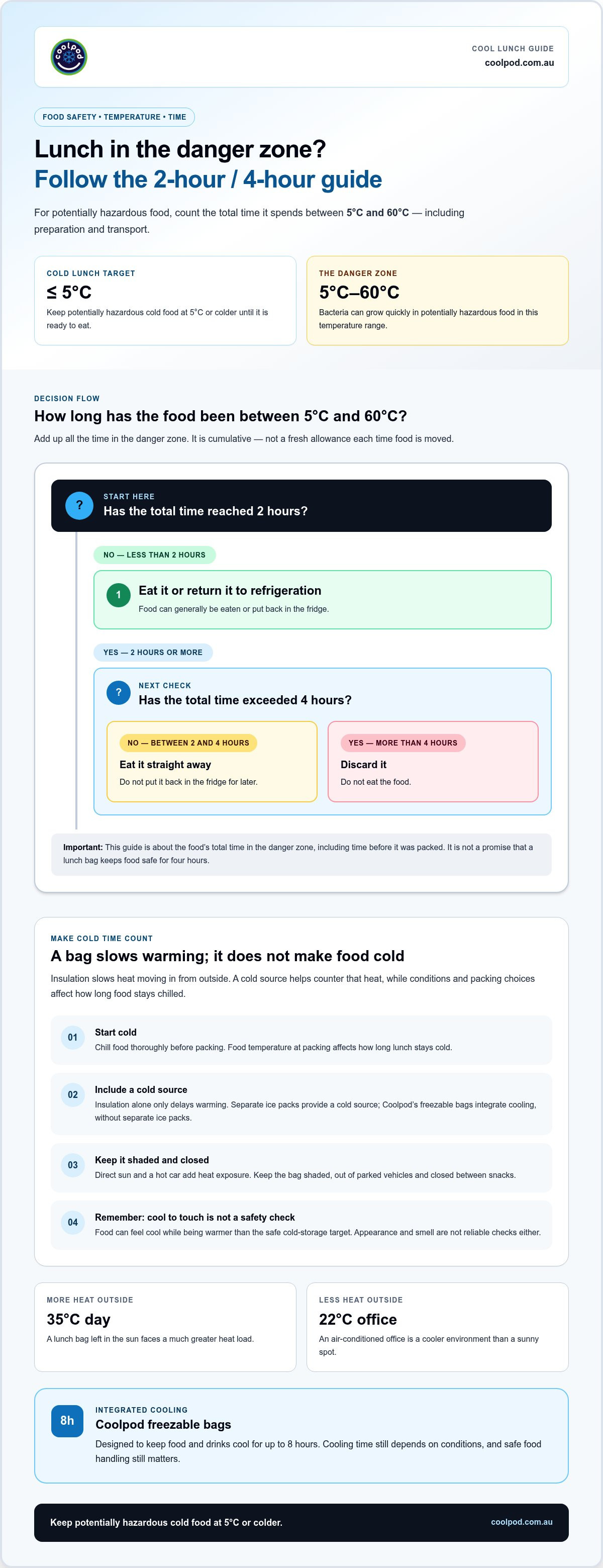
Australia’s 2-hour/4-hour guidance counts the total time potentially hazardous food spends between 5°C and 60°C, including time during preparation and transport. It’s a guide for managing food that has been out of refrigeration, not a promise that every lunch bag will keep food safe for four hours.
- Less than 2 hours: food can generally be eaten or returned to refrigeration.
- Between 2 and 4 hours: eat it straight away; don’t put it back in the fridge for later.
- More than 4 hours: discard it.
These are cumulative periods, not a fresh allowance each time food is moved. If the lunch has already spent time unrefrigerated before packing, include that time in your decision.
How Ambient Temperature Affects Your Lunch
A lunch bag left in the sun on a 35°C day faces a much greater heat load than one stored in a 22°C air-conditioned office. The larger the temperature difference between the surroundings and the cold contents, the faster heat moves into the bag. Direct sun and a hot car add further heat exposure, so keep the bag shaded and out of parked vehicles.
On a hot day, start with thoroughly chilled food and use a bag with an effective cold source. Coolpod’s freezable bags have integrated cooling technology, so there’s no need to pack separate ice packs. They’re designed to keep food and drinks cool for up to 8 hours. For more guidance on choosing a suitable option, explore the best freezable lunch bags in Australia.
The Science of Thermal Resistance: How Insulated Bags Work
An insulated lunch bag slows heat moving from warmer surroundings towards the food. It doesn’t produce cold, so insulation alone can only delay warming. That distinction helps explain how long does food stay cold in an insulated bag: the result depends on the bag’s construction, the food’s starting temperature and whether there’s a cold source inside.
Many insulated bags use several layers, each with a different job. The outer layer helps protect the bag from everyday wear and moisture. A middle layer of foam, which may use materials such as polyethylene or polyester-based insulation, slows heat transfer through the bag’s walls. Inside, a reflective lining can reduce radiant heat entering from the surroundings. These layers work together, but a weak closure or damaged seam can let warmth in faster.
Think of insulation as a barrier, not a refrigerator. A regular foam bag can slow warming, but it can’t cool food that goes in warm or keep drawing heat away indefinitely. For safer packing, chill food first and use a cold source to help offset heat entering from outside.
Conduction, Convection, and Radiation in Your Lunch Box
Heat reaches a lunch in three main ways. Conduction transfers heat through direct contact, such as from a warm surface into the bag’s base. Convection carries heat through moving air, including warm air entering when the bag is opened. Radiation transfers heat from sources such as direct sunlight. A reflective lining can help limit radiant heat, while insulation slows transfer through the walls.
Small construction details matter. A zip that doesn’t close properly or an open seam can become a weak point. Large empty spaces leave more room for warm air, while each time the bag opens, warmer air can replace the cooler air inside. Pack the bag sensibly and keep it closed between snacks.
Passive vs. Active Cooling: The Freezable Advantage
A standard insulated bag provides passive insulation: it slows heat entering, but doesn’t remove it. A freezable bag with integrated gel adds a cooling source. As the frozen material warms and melts, it absorbs heat, helping the contents stay cooler than insulation alone can manage. That can be useful for a school or work day, particularly when there’s no fridge handy.
Cooling time still depends on the conditions, so no bag should be treated as a substitute for safe food handling. Coolpod’s patented freezable technology integrates cooling into the bag, avoiding the need to pack separate ice packs. Coolpod bags are designed to keep food and drinks cool for up to 8 hours. Explore the best freezable lunch bags to compare this approach with a standard foam bag, or discover Coolpod freezable lunch bags.
Factors That Determine How Long Your Food Stays Chilled
There’s no single timer for every lunch bag. How long food stays chilled depends on its temperature at packing, how much is inside, the bag’s cooling setup and the conditions it faces during the day. These details matter especially in hot weather, when a bag carried outdoors or left in a warm vehicle can heat up faster than one kept indoors.
Start with cold food. A bag can slow warming, but it can’t quickly chill a warm container. Chill leftovers in the fridge before packing, and take dairy, meat or egg-based foods straight from refrigeration. Putting a warm meal beside chilled yoghurt transfers heat to nearby items and uses some of the cooling capacity before lunchtime.
The Thermal Mass Effect
Cold items packed together help create a more stable internal micro-climate. A well-chilled lunch, drink and frozen water bottle can absorb incoming heat and help keep one another cool. By contrast, a half-empty bag has more space for warm air, and a single small item has less surrounding cold mass to buffer temperature changes. Pack the contents snugly, without crushing food or blocking the bag’s closure.
A reusable yoghurt pouch can be packed alongside lunch as a chilled snack, while a bento cooler bag helps organise different foods. Keep ready-to-eat food away from raw ingredients, and avoid packing anything warm beside items that need to stay cold.
Where You Keep It, and How Often You Open It
A school bag carried in the shade, an office desk and a car boot aren’t equal storage spots. A boot can heat up quickly, while direct sun adds radiant heat even if the air feels cooler. Choose the coolest shaded place available, and don’t leave lunch in a parked car. Each time you unzip the bag, warm air enters and cooler air escapes. Open it only when needed, then close it fully.
Construction also affects how well a bag slows heat transfer. A thin, disposable silver pouch may offer less protection than a bag with substantial insulation; a freezable design adds an integrated cold source. Look for sturdy seams and a zip that closes properly, as gaps can become pathways for warm air. A food-safe lining is important for contact with packed food and everyday hygiene, but it doesn’t replace temperature control. Keep the lining clean and dry between uses.
For school students and workers without fridge access, getting the starting temperature right and limiting heat exposure can make a meaningful difference. Coolpod’s patented freezable technology combines insulation with integrated cooling, so there’s no need to fit separate ice packs around the food. For best results, chill the contents first, pack them close together and keep the bag zipped and out of the sun.
Expert Tips to Maximise Cold-Time in Your Cooler Bag
A few simple habits can help lunch stay colder for longer, especially on a hot day. Start with chilled food, prepare the bag properly and reduce the heat it encounters between packing and lunchtime. These steps won’t make every bag perform the same way, but they give its cooling system a better chance to do its job.
The Freezer-Ready Method
For a freezable bag, plan ahead rather than packing it straight from the cupboard. Follow the care instructions for your bag, then use this routine:
- Freeze the bag overnight so its integrated cooling material has time to freeze thoroughly.
- Chill food and drinks in the fridge before packing. Aim for about 4°C, and don’t use the bag to cool warm leftovers.
- Pack promptly, keeping perishable items together and placing them towards the centre of the lunch where practical.
- Close the bag fully and put it straight into a shaded spot or backpack.
Integrated freezable gel provides cooling within the bag, so there’s no need to squeeze in separate ice packs. Loose packs can take up room, shift around and leave meltwater behind as they thaw. Built-in cooling offers a tidier way to pack lunch, while the temperature still depends on how well the bag is prepared and the conditions it faces.
A freezable lunch bag can combine everyday style with useful cooling features, making it easier to carry lunch to work without relying on a fridge.
Managing Your Lunch During the Day
Once packed, leave the zip closed until you’re ready to eat. Repeatedly opening the bag lets warmer air in, so avoid checking on lunch or taking out snacks one at a time. If you can, keep the cooler bag inside a backpack or another shaded, sheltered spot. That adds a layer between the bag and direct sun, although it can’t replace a cold source.
Working somewhere without reliable shade? Choose the coolest available place for your lunch, away from direct sunlight, hot equipment and vehicle interiors. Don’t leave it in a parked car or on a sun-baked surface. If there’s a shared fridge, use it; otherwise, keep the bag closed and out of direct heat.
These preparation and storage habits are a practical starting point for improving how long does food stay cold in an insulated bag. For an option with patented integrated cooling and no separate ice packs to pack, explore Coolpod freezable lunch bags.
Why Coolpod is the Smarter Choice for the Australian Climate
A lunch bag for everyday use needs more than an insulating layer. Coolpod combines insulation with patented freezable technology, building the cooling source into the bag itself. That means no separate ice packs to squeeze around food, shift out of place or leave meltwater behind.
Coolpod bags are designed to keep food and drinks cool for up to 8 hours. That can suit school students and workers who may not have access to a fridge throughout the day. It isn’t a guarantee that food will remain at a safe temperature in every situation. Chill food before packing, freeze the bag as directed and keep it out of direct sun to support its cooling performance.
The answer to how long does food stay cold in an insulated bag still depends on the food’s starting temperature, the surrounding heat and how the bag is used. Coolpod’s integrated cooling means there’s no separate ice pack to remember. Its durable construction is made for regular use, whether lunch is headed to class, work or a day out.
Designed for Australian Conditions
Coolpod is an Australian-owned company that designs and engineers patented freezable cooler bags for food and drinks. Food-safe materials and durable construction support everyday use. The freezable design keeps the cooling setup straightforward: freeze the bag ahead of time, add chilled food and close it securely.
Different routines call for different sizes and formats. A lunch cooler bag suits everyday meals, while a wine cooler can help keep drinks cool for an outing. Coolpod’s range also includes bento bags, yoghurt bags and yoghurt pouches, giving families and professionals options for packing different kinds of food and drinks.
A Bag for Everyday Lunches and Days Out
An all-in-one cooling design can simplify the school-morning routine: there’s no loose ice pack to find, freeze separately or fit around lunch. A freezable bento bag helps keep lunch organised, while a yoghurt pouch offers a compact option for a snack. For picnics and other outings, the same principle applies: start with chilled contents and keep the bag shaded and closed where possible.
Coolpod offers an alternative to traditional bags that rely on separate ice packs, particularly for busy families and people working away from a fridge. Explore the full Coolpod range and upgrade your lunch game today.
Make Your Next Lunch a Cooler One
Take the guesswork out of tomorrow’s lunch by building a reliable cooling routine: chill food before packing, freeze your bag as directed and choose a shaded spot for storage. These habits help you make a more informed call about how long does food stay cold in an insulated bag, while keeping food safety at the centre of your day.
For busy mornings, an all-in-one bag can make that routine simpler. Coolpod’s patented integrated cooling technology is freezer-ready and avoids the need for separate ice packs. Coolpod has been operating since 2010 and offers a practical way to carry lunch when a fridge isn’t close by. Cooling performance depends on how you pack and store your food, so use safe handling habits alongside your bag.
Ready to make lunch prep easier? Shop the Patented Coolpod Freezable Range and find a practical option for your school day, workday or next outing.
Frequently Asked Questions
How long does a standard insulated bag keep food cold without ice?
Without a cold source, don’t rely on a standard insulated bag to keep perishable food cold for more than about two hours. Insulation slows warming but doesn’t chill the contents. If you’re asking how long does food stay cold in an insulated bag, the key is whether the food stays at 5°C or colder, not whether the bag feels cool. For a longer day, pack a suitable cold source and keep the bag out of the heat.
Can I put my insulated lunch bag in the freezer?
Only freeze a bag if it’s designed for freezer use. A regular insulated bag may not be made to withstand freezing, so follow its care instructions rather than assuming it’s suitable. Coolpod freezable bags are designed to be frozen before use; freezing one overnight prepares its integrated cooling material for packing the next day. Keep food chilled separately in the fridge, then add it when you’re ready to pack.
Is it safe to eat a sandwich that has been in a cooler bag for 6 hours?
It depends on the sandwich’s ingredients and, most importantly, its temperature history. A sandwich with meat, egg or dairy shouldn’t be eaten if it has spent more than four hours in the 5°C to 60°C range; discard it. If it stayed at 5°C or colder, that’s different, but touch and smell can’t confirm its temperature. If you can’t tell whether it stayed cold enough, the safer choice is not to eat it.
Do freezable bags work better than bags with separate ice packs?
Freezable bags offer an integrated cooling source, so you don’t need to find room for separate ice packs. That can make packing simpler and avoid loose packs shifting or leaving meltwater. A bag with separate packs can also keep food chilled if packed correctly. Neither option guarantees a particular temperature in every situation, so chill food first, follow the bag’s care directions and consider the day’s heat and storage conditions.
What is the best way to keep milk or yoghurt cold in a lunch box?
Start with milk or yoghurt straight from the fridge, then pack it in a prepared cooler bag alongside other chilled items. A freezable yoghurt bag or pouch gives yoghurt its own compact place in the lunch, while an insulated lunch bag can hold a larger meal. Keep the bag closed and shaded until snack time. If the food has warmed and you’re unsure how long it was above 5°C, don’t rely on smell alone.
How do I know if my insulated bag is actually working?
Use a clean food thermometer to check the temperature of a representative perishable item when you’re ready to eat, rather than judging by how cool the bag feels. For a home trial, pack chilled food as usual and check it at the time you’d normally have lunch. Repeat under similar conditions if needed. The reading reflects that particular packing method and day, not a guaranteed performance time for every future outing.
Does the colour of the cooler bag affect how long it stays cold?
Colour may influence how much sunlight a surface absorbs, but it’s only one part of the picture and there’s no reliable time allowance based on colour alone. Direct sun can warm a bag, regardless of its shade. For a better chance of keeping lunch cool, place it in a shaded spot, avoid hot car interiors and keep it closed. The bag’s insulation, cooling source and starting food temperature also matter.
Can I use an insulated bag to keep food warm as well?
An insulated bag may slow heat loss from warm food, but that doesn’t mean it can reliably keep a meal hot enough for safe storage. Potentially hazardous food should be kept at 60°C or hotter if it’s being held hot. For a hot lunch, use a food container designed for hot holding and follow its instructions. Don’t assume a cooler bag can maintain a safe hot temperature, and keep hot food separate from chilled items.


