

What if the best compact lunch cooler for work isn’t the smallest one you can find? A bag that saves space but can’t fit a satisfying lunch may create more hassle than it solves. You need room for what you’ll actually eat, cooling that suits your commute and a shape that fits comfortably in your work bag.
It’s easy to end up carrying loose ice packs you don’t need, or choosing a cooler that’s bulkier than your routine calls for. The right choice depends on how you pack, travel and store lunch at work, not just on appearance or size.
This guide will help you match a cooler to your meal and workday, compare traditional insulation with integrated freezable cooling, and assess practical details such as carrying comfort and packing habits. Options such as the Coolpod Freezable Lunch Bag provide built-in cooling without separate ice packs. By the end, you’ll have a clearer way to choose a compact cooler that makes weekday lunch easier to organise.
Key Takeaways
- Choose a compact lunch cooler for work by checking how your usual meal fits alongside your commute and office storage routine.
- Compare ordinary insulation with integrated freezable cooling to decide which approach better suits how you pack and carry lunch.
- Use the cooler format as a guide: bento-style bags can suit lunches with separate components, while other shapes may better fit your usual containers.
- Build a simple packing routine, including chilling perishable food appropriately and following current FSANZ guidance.
- Consider the Coolpod Freezable Lunch Bag if you’d prefer built-in cooling rather than carrying separate ice packs.
What makes a compact lunch cooler for work practical?
The daily trade-off is simple: you need enough room for a satisfying lunch, but not a bulky bag that takes over your backpack, tote or hand on the commute. There’s no single size that counts as compact for everyone. A useful fit depends on what you pack and how you carry it.
A compact work lunch cooler is a bag that fits your usual meal and cooling needs while remaining easy to carry and store during your workday.
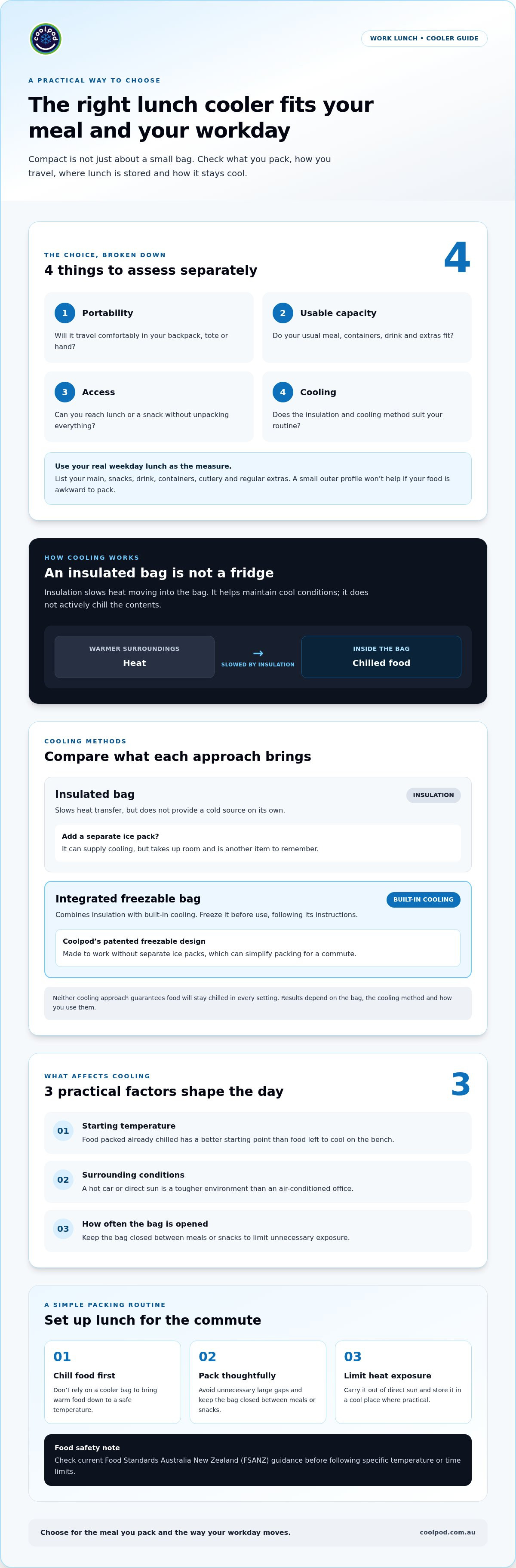
Assess four things separately: portability (how easily it travels), usable capacity (whether your food and containers fit), access (how simply you can reach lunch), and cooling (whether its insulation and cooling method suit your routine). A small outer profile won’t help if the opening makes containers awkward to pack or there isn’t enough space for your usual meal.
How much space does a work lunch actually need?
Before comparing bag formats, list your usual main, snacks and drink. Include the containers that hold them, plus cutlery and any extras you regularly bring. A sandwich and a piece of fruit may pack differently from a lunchbox with several components, even if both count as one lunch.
Consider how those items sit together. A rigid container can take up space differently from soft packaging, while an extra snack or drink may call for a roomier format. Use your real weekday meal as the measure rather than assuming one bag size suits everyone.
What changes between commuting and desk-based work?
If lunch travels in a backpack, consider whether the packed bag fits alongside your work essentials without feeling cumbersome. A tote may offer easy access from the top, while a bag carried by hand makes the cooler’s shape and handle more noticeable. Picture the full trip, including crowded transport or walking between work locations.
At a desk-based workplace, consider where lunch goes once you arrive. Shared fridge space may be limited, or you may keep your lunch with you rather than storing it centrally. Easy access can matter if you want to retrieve a snack without unpacking your whole work bag.
Cooling is another distinct choice. Ordinary insulated bags slow heat transfer, often using materials such as foam insulation, while integrated freezable designs provide cooling without separate loose ice packs. The best fit depends on your routine, not on one feature alone. For broader product-selection advice, see this freezable lunch bag buying guide.
How does a compact lunch cooler keep work food chilled?
A cooler bag doesn’t make food cold like a fridge. Its insulation slows the movement of heat from warmer surroundings into the bag, helping chilled food stay cool for longer. A cooler bag is an insulator, not a refrigerator: it helps maintain cool conditions but doesn’t actively chill its contents.
That distinction matters when choosing a compact lunch cooler for work. The bag’s cooling method and the way you pack it both affect how well it suits your day.
Insulated bags, ice packs and integrated freezable cooling
An ordinary insulated bag slows heat transfer but doesn’t provide a cold source on its own. Adding a separate ice pack can supply cooling, though it takes up room and becomes another item to remember. The result depends on the bag, the pack and how you use them, so neither option guarantees that food will stay chilled in every setting.
Integrated freezable bags combine insulation with built-in cooling. You prepare the bag by freezing it before use, following its instructions. Coolpod’s patented freezable design is made to work without separate ice packs, which can simplify packing for a commute. The freezable lunch bag buying guide provides broader product-selection advice, including options with integrated cooling.
What affects how long lunch stays cool?
Cooling performance varies with the starting temperature of the food, the surrounding conditions and how often the bag is opened. Food packed already chilled gives the cooler a better starting point than food left to cool on the bench. A hot car or a bag left in direct sun can also create a tougher environment than an air-conditioned office.
Keep these practical factors in mind:
- Chill food appropriately before packing. Don’t rely on the cooler bag to bring warm food down to a safe temperature.
- Pack thoughtfully. Avoid leaving large gaps if they’re not needed, and keep the bag closed between meals or snacks.
- Limit heat exposure. Carry the cooler out of direct sun and store it in a cool place where practical.
Food-safety advice can change, so check current Food Standards Australia New Zealand (FSANZ) guidance before following specific temperature or time limits. For additional general lunch-packing information, see the USDA’s food safety guidelines, while relying on Australian guidance for local advice. To explore integrated cooling, see the Coolpod freezable lunch bag.
Which compact lunch cooler format suits your workday best?
There’s no universal winner. A compact lunch cooler for work should fit the meal you actually pack, the cooling method you prefer and the way you carry lunch between home and your desk. Use this comparison as a starting point, then consider how your own containers fit.
| Format | Lunch capacity | Cooling approach | Carrying ease | Best-fit work routine |
|---|---|---|---|---|
| Compact insulated bag | Depends on the bag and the containers you use | Insulation slows heat transfer; a separate ice pack can add cooling | Simple to carry, though an ice pack is another item to pack | You already use ice packs or want to choose your cooling source separately |
| Integrated freezable lunch bag | Check the fit against your usual lunch container and extras | Built-in freezable cooling, designed to work without loose ice packs | Fewer separate items to remember | You want cooling integrated into the bag for a straightforward weekday routine |
| Bento-style cooler bag | Choose based on how your lunchbox and other items fit | Varies by design; check whether cooling is built in or added separately | Can suit a lunch packed together in a bento-style container | You prefer organised meal components rather than several loose containers |
When is an integrated freezable lunch bag a useful fit?
This format can suit workers who want cooling built into the lunch bag instead of packing a separate ice pack. The Coolpod Freezable Lunch Bag is designed around integrated freezable cooling. Before choosing, compare its fit with your own container, snacks and drink, and consider whether freezing the bag as part of your routine is convenient.
When might a bento-style cooler suit a work lunch?
If you prefer separate meal components, a bento-style container can help keep lunch organised as one packed unit. The Coolpod Freezable Bento Bag suits this kind of lunch routine. Compare your lunchbox and any extras with the available space, and explore this bento cooler bag selection guide for more help comparing organised formats.
Whatever format you choose, the bag supports your cooling routine rather than replacing safe food handling. For general context, the USDA offers safe handling recommendations; use current Australian guidance for local food-safety advice. To explore integrated cooling for a weekday lunch, see the Coolpod Freezable Lunch Bag.
How to pack a compact lunch cooler for a workday
A repeatable packing routine makes weekday mornings easier and helps you avoid filling a small cooler with extras you won’t use. Start with the meal you’ve planned, then fit in only the items you need to enjoy it at work.
A simple routine before leaving home
- Prepare food safely. Use clean, dry containers and handle food according to current food-safety advice. Chill perishable food appropriately before packing, following current Food Standards Australia New Zealand (FSANZ) guidance rather than relying on the cooler bag to chill it.
- Prepare the bag. If you’re using a freezable bag, follow the manufacturer’s instructions for freezing and preparing it. Build this step into your routine so the bag is ready when you need it.
- Pack the main meal first. Place your lunch container in the bag, then add the snacks or drink you’ve planned to bring. This helps you see how much room is left before reaching for extras.
- Check the carry. Close the bag and make sure it fits comfortably with your work essentials. If it feels overfilled, remove non-essential items or rethink how the meal is packed.
Make the cooler easier to carry and use
Pack items in the order you’ll want to reach them. If you’re likely to grab a snack before lunch, place it somewhere accessible rather than burying it beneath a rigid container. Keep cutlery with the meal if you’ll need it, but avoid adding duplicate utensils or extra containers out of habit.
Once you’re at work, keep the bag closed between access and store food in line with current food-safety guidance. If you use a workplace fridge, follow local storage practices. If lunch stays with you, choose a suitable cool spot away from heat where possible. The right routine depends on your workplace and the food you’ve packed, so check current FSANZ advice for specific handling and storage recommendations.
A compact lunch cooler for work should make the planned meal easier to carry, not encourage you to squeeze in more than you need. Adjust the layout over a few workdays: note what you actually eat, what stays untouched and which items are awkward to pack. Then refine the routine to suit your commute and desk setup.
For a closer look at options with integrated cooling, compare Coolpod’s freezable lunch bags with your weekday routine. Discover the Coolpod Freezable Lunch Bag.
Is the Coolpod Freezable Lunch Bag right for your work routine?
A lunch bag with integrated cooling may suit you if you want to pack a chilled meal without adding a separate ice pack to your commute. The Coolpod Freezable Lunch Bag is designed for this kind of routine: prepare the bag as directed, pack your lunch and carry one less loose item. Its freezable design helps keep contents cold for hours, though results depend on factors such as the conditions around the bag and how it’s used.
Coolpod is Australian-owned and designs patented freezable bags for food and drinks. The integrated approach can be convenient if you pack lunch regularly and want a straightforward cooling routine. Compare the bag with what you actually carry to see whether it fits your meal and workday.
A good match for simpler chilled-lunch carrying
Before choosing, picture a typical workday meal rather than an occasional lunch. Check the product details against your usual lunch container, snacks and drink, and consider how the bag will fit in your backpack, tote or office storage space. Think about the preparation routine too, including whether you have a suitable place to freeze the bag according to its care instructions.
If you already prefer a separate ice pack or your lunch needs a different format, another style may better suit your habits. The practical test is whether the cooler fits your meal and commute while making packing simpler, not whether it promises to suit everyone.
Choose your next step with confidence
Use four checks to make your decision: meal fit, commute comfort, cooling routine and care instructions. Together, they’ll help you identify a compact lunch cooler for work that suits your weekday habits. Read the product information carefully and consider how you’ll prepare, pack and store the bag at work.
A cooler that suits your routine should make lunch easier to carry without adding unnecessary bulk or extra steps. If integrated cooling sounds useful, explore Coolpod’s freezable lunch bag and see whether it fits the way you pack for work.
Make your work lunch easier to carry
The right compact lunch cooler for work fits your usual meal and commute without adding unnecessary bulk. Start by checking how your containers, snacks and drink sit inside, then choose a cooling approach that suits your routine. Insulation slows warming, while integrated freezable cooling can mean fewer separate items to pack. Preparing and storing lunch carefully helps make the cooler part of a reliable workday routine.
Coolpod is Australian-owned and operated, and designs patented freezable bags for food and beverages. Its integrated cooling is designed to work without separate ice packs, offering a practical option for people who want a simpler way to carry lunch.
Explore Coolpod’s freezable lunch bag and see whether it suits your meal, commute and cooling needs. Choose the setup that works for your day and make weekday lunch easier to organise.
Frequently Asked Questions
What is the best compact lunch cooler for work?
The best compact lunch cooler for work is the one that fits your usual meal, commute and cooling routine. Start by checking whether your main, snacks and drink fit without making the bag awkward to carry. Then decide if ordinary insulation suits your needs or if you’d prefer integrated freezable cooling. The Coolpod Freezable Lunch Bag is an option for workers seeking built-in cooling without separate ice packs.
Are compact lunch coolers big enough for a full work lunch?
They can be, provided the bag fits the lunch you actually pack. A main in a rigid container, a snack, cutlery and a drink may take up more room than a sandwich alone. Before choosing, gather your usual lunch items and compare them with the product details. Avoid assuming that a bag described as compact will suit every meal or container.
How do freezable lunch bags keep food cool?
Freezable lunch bags are prepared in a freezer according to the manufacturer’s instructions. Their integrated cooling helps keep the contents cold, while insulation slows heat from the surrounding environment from entering the bag. They don’t actively refrigerate food, and results vary with the food’s starting temperature, surrounding heat and how often the bag is opened. Pack food appropriately chilled and follow current Australian food-safety guidance.
Do I need an ice pack with a freezable lunch cooler?
With a Coolpod freezable bag, separate ice packs aren’t designed to be necessary because the cooling is integrated into the bag. Follow the product’s preparation instructions before packing. Other insulated lunch bags may rely on a separate ice pack for a source of cooling, so the answer depends on the design. Check how your chosen bag works and don’t assume all insulated or freezable styles use the same method.
Can I use a compact lunch cooler for a long commute?
Yes, a compact cooler can travel with you, but it can’t guarantee food will stay chilled for a particular commute. Consider how long lunch will be out of refrigeration, whether you’ll carry the bag in hot conditions and how often it may be opened. Start with appropriately chilled food, prepare the cooler as directed and follow current Food Standards Australia New Zealand guidance for safe handling and storage.
How do I choose between an insulated lunch bag and a freezable lunch bag?
Choose an insulated bag if you want insulation and are comfortable adding a separate cold source when needed. A freezable lunch bag may suit you if you prefer integrated cooling and fewer loose items to pack. In either case, check that your lunch containers fit, consider the commute and read the care instructions. The right choice depends on your meal and routine, not a universal ranking of bag types.


