

Taking yoghurt to work calls for two things: a secure seal and a plan to keep it cold. If you’re wondering how to carry yoghurt to work without a leak or a warm lunch by midday, think about both before you leave home. A well-sealed container protects your work bag, while suitable cooling helps keep your yoghurt chilled.
This guide explains how to pack yoghurt neatly, keep it cold during your commute and choose a reusable cooling option that suits your routine. Whether you have a short trip or need your lunch to stay chilled until later, a few practical choices can make packing easier.
You’ll find tips for filling and sealing a container, positioning it safely in your bag and matching your cooling method to your workday. We’ll also compare an insulated bag with integrated freezable cooling, including Coolpod’s Freezable Yoghurt Bag and Freezable Yoghurt Pouch, designed to keep contents cold for hours without separate ice packs.
Key Takeaways
- To carry yoghurt to work, plan for both a leak-resistant container and a way to keep it chilled.
- Wipe the container rim, check the seal and secure every latch or screw thread before packing it upright.
- Choose between a workplace fridge, an insulated lunch bag with a cold source, or an integrated freezable bag based on your commute and storage access.
- Adjust your routine to suit your transport time, lunch schedule and the conditions during your commute.
- Coolpod’s Freezable Yoghurt Bag and Freezable Yoghurt Pouch are designed to keep contents cold without separate ice packs.
How to Carry Yoghurt to Work: Cold and Secure
Keep the container seal and the cooling method in mind as two separate parts of your plan. A tight lid helps prevent spills, while a cooling method helps maintain a cold temperature. For how to carry yoghurt to work, consider how you’ll prepare it, how long you’ll travel, when you plan to eat and whether there’s a fridge at work.
Chilled transport means taking yoghurt from the fridge in a way that helps it stay cold until you can refrigerate or eat it. There’s no single safe timeframe for every commute: conditions, travel time and access to a workplace fridge all matter. Temperature control is important because food-preservation methods aim to limit conditions that support microorganism growth, as explained in this overview of processes that make food more resistant to microorganism growth.
A sealed container prevents spills; reliable cooling helps keep yoghurt chilled.
What makes yoghurt tricky to take to work?
Yoghurt can leak through a loose lid, a worn seal or a container that isn’t designed to hold wet foods. Even a well-sealed tub may leak if it’s squeezed under heavier items or packed on its side. Keep it upright and protected in your bag to reduce the chance of a lunchtime clean-up.
Cooling is a separate concern. Yoghurt can warm up while in transit or sitting in a warm environment. A leak-resistant tub won’t keep it cold, and a cooling bag won’t fix a poorly closed lid. Treat them as two parts of your packing plan.
What should you prepare before leaving home?
Start with yoghurt properly chilled in the fridge, and follow current Australian food-safety advice for storing and transporting perishable foods. If you’re using a reusable container, choose one that’s clean and designed for wet foods. You can also leave a sealed single-serve tub in its original packaging until you’re ready to eat.
Before packing, check that the lid, seal and any clips or screw threads fit securely. Then consider your workday: How long is the commute? When will you have lunch? Can you put the yoghurt in a fridge when you arrive? Your answers will help you decide whether workplace refrigeration is part of the plan or whether you’ll need cooling for the journey and the time before lunch.
For a short commute with fridge access, you can pack the chilled yoghurt securely and refrigerate it on arrival. If there’s no fridge or lunch is much later, choose a cooling option suited to those conditions rather than relying on the container alone.
How to pack yoghurt for a leak-resistant commute
A tidy yoghurt lunch starts with a container that closes properly and a packing routine that keeps it upright and protected. Use this sequence before your next commute:
- Choose your container. An unopened single-serve tub keeps its original seal intact. For a reusable option, choose a clean container designed for wet foods.
- Fill it with care. Leave space below the sealing edge and follow the container maker’s filling guidance. Wipe yoghurt from the rim so it doesn’t interfere with the seal.
- Close and inspect. Set the lid evenly, then check that the seal sits flat and every latch or screw thread is fully closed.
- Test it before relying on it. Close a reusable container and hold it over a sink. Turn it gently to check for drips, then dry it before packing.
- Pack it upright. Place it where heavier items won’t crush or tip it. A washable outer pouch can add protection, but it can’t make a faulty lid leak-proof.
Choose and check a yoghurt container
An intact single-serve tub is convenient if you want to avoid transferring yoghurt. A reusable container gives you another option, but its lid and seal need to suit wet foods. Don’t fill it to the top: yoghurt on the rim can compromise the seal, while a little headspace helps you close the lid cleanly. Check for cracks, warped edges or a loose seal.
Do the sink test before the container’s first work commute, and repeat it if the lid or seal looks worn. A quick test at home is easier than finding a leak in your work bag.
Pack the container to minimise spills
Keep yoghurt chilled until you’re ready to leave, and follow current Australian food-safety advice for perishable chilled foods. A secure lid prevents spills, but it doesn’t keep yoghurt cold; cooling is a separate part of packing. For general advice on keeping lunches cold away from home, the USDA Food Safety and Inspection Service recommends using cold sources with packed lunches. Apply relevant Australian guidance to your routine.
Place the sealed tub upright in your lunch bag, away from keys, drink bottles or anything that might press on the lid. For a purpose-built option that combines carrying and cooling, explore yoghurt cooling bags and pouches.
Which yoghurt cooling option suits your work commute?
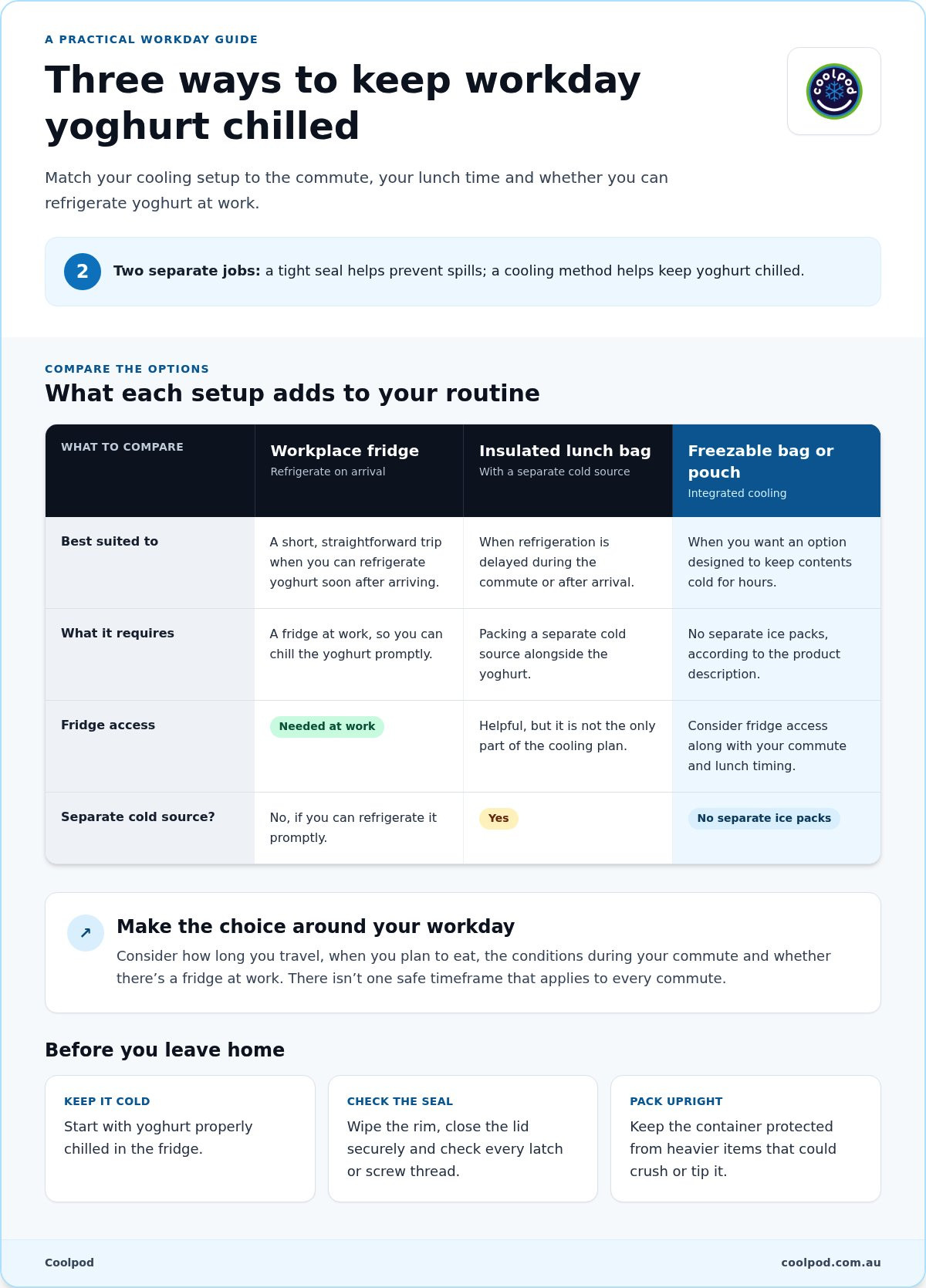
The right choice depends on what happens after you leave home. A quick trip to a workplace fridge calls for a different setup from a longer commute where yoghurt will stay in your bag until lunch. This comparison shows what each option adds to your routine.
| Option | Convenience | Commute suitability | Fridge access | Separate cold source? |
|---|---|---|---|---|
| Workplace fridge | Simple if you can refrigerate yoghurt soon after arriving. | Best suited to a short, straightforward trip. | Needed at work. | No, if you can refrigerate it promptly. |
| Insulated lunch bag with a cold source | Requires packing a separate cold source alongside the yoghurt. | Useful when refrigeration is delayed during the commute or after arrival. | Helpful, but not the only part of the cooling plan. | Yes. |
| Integrated freezable bag | Combines carrying and cooling without a separate ice pack. | Convenient when yoghurt needs to stay in your bag before lunch. | Useful whether or not a fridge is available straight away. | No separate cold source is needed. |
When is a fridge or insulated lunch bag enough?
If you can put your yoghurt in the work fridge as soon as you arrive, that can simplify your journey plan. Keep the yoghurt chilled before leaving and avoid leaving it out on arrival. If refrigeration will be delayed, an insulated lunch bag with a cold source offers an additional cooling measure. For more safe handling recommendations, Michigan State University Extension discusses preparing and packing lunches with cold sources. Follow current Australian food-safety advice for your routine.
When could a freezable yoghurt bag or pouch help?
An integrated freezable option may suit a commute where you’d rather not pack a separate ice pack, or a workday where fridge access isn’t immediate. Coolpod’s Freezable Yoghurt Bag and Freezable Yoghurt Pouch are designed to keep contents cold for hours without separate ice packs. They support your cooling plan, but don’t replace correct food handling or a secure yoghurt container. Follow the product’s preparation and care instructions.
Match your cooling choice to your commute, lunch timing and access to workplace refrigeration. When deciding how to carry yoghurt to work, consider which setup will be easiest to use consistently. For more detail on choosing a reusable yoghurt pouch, see the yoghurt pouch guide. To compare purpose-built options, explore Coolpod yoghurt cooling options.
How to Keep Yoghurt Chilled from Home to Lunchtime
A dependable routine takes yoghurt from the fridge to your lunch break with as little warming as practical. Your setup depends on travel time, whether you can refrigerate lunch at work and the conditions along the way. Australian heat makes it especially important to plan ahead if your bag might sit in a warm car or direct sun.
Before leaving and during the commute
Keep yoghurt refrigerated until you’re ready to pack it, and follow current Australian food-safety advice for chilled foods. Prepare any cooling bag according to its instructions, then pack the yoghurt just before you leave. Carry it upright, protect it from heavier items and keep it away from direct heat where practical. These steps help your cooling plan work as intended without relying on a fixed timeframe that may not suit every day.
- Before you leave: Take the yoghurt from the fridge and place it in your chosen cooling setup.
- On the way: Keep the lunch bag out of hot spots, such as a sunlit seat or boot, where you can.
- At work: Put the yoghurt in a suitable workplace fridge promptly if one is available.
For more practical ideas for warm-weather lunches, read our guide to keeping lunch fresh in the Australian heat.
Once you arrive at work
If there’s a suitable fridge, use it rather than leaving yoghurt in your bag until lunchtime. If there isn’t, follow authoritative Australian food-safety guidance for keeping chilled, perishable food safe, and consider whether your cooling setup suits the conditions and the time before you plan to eat. A freezable bag can be a convenient part of that plan, but it doesn’t replace careful handling or refrigeration where needed.
Don’t use smell or appearance alone to decide whether yoghurt is safe. Food can look and smell normal even when it hasn’t been kept under suitable conditions. If you’re unsure how it has been stored, follow food-safety advice rather than tasting it to check.
That’s the useful rhythm: prepare the cooling option before packing, limit heat exposure during the commute, then refrigerate yoghurt on arrival if you can. If your routine often means keeping lunch in your bag, explore Coolpod’s yoghurt cooling options for a purpose-built way to carry yoghurt.
Make workday yoghurt simpler with a purpose-built cooling option
A reliable workday setup brings together three things: yoghurt in a secure container, a suitable cooling method and a plan for where it’ll be stored after you arrive. Your commute, portion size, lunch timing and access to a workplace fridge all shape what will feel practical day to day.
Coolpod’s patented Freezable Yoghurt Bag and Freezable Yoghurt Pouch are designed to keep contents cold for hours without separate ice packs. Integrated cooling can simplify packing, but it doesn’t replace a well-sealed yoghurt container or careful food handling. Follow current Australian food-safety advice and the preparation and care instructions for your chosen product.
Choose a yoghurt-carrying setup that fits your routine
Think about what you usually pack. A pouch may suit a simple yoghurt portion, while a bag may give you another way to carry yoghurt as part of your lunch. Consider how it will fit into your commute and alongside other lunch items, then keep the yoghurt sealed and follow the product instructions before use.
If you’re weighing up reusable pouch styles and practical considerations, see our guide to reusable yoghurt pouches. A purpose-built option can make the cooling part of your routine more straightforward, while the container seal still does the work of preventing spills.
A simple workday yoghurt checklist
- Start with yoghurt kept chilled according to current food-safety guidance.
- Check that its container is clean, properly sealed and suitable for wet foods.
- Prepare your cooling option as directed, and pack the yoghurt securely.
- Plan whether you can refrigerate it at work, especially if lunch is later in the day.
That’s the practical answer to how to carry yoghurt to work: match the cooling choice to your commute and fridge access, and don’t treat cooling as a substitute for a secure lid. Once those pieces are in place, packing yoghurt can become a simpler part of your workday routine.
Discover Coolpod’s freezable yoghurt options and find a convenient way to carry chilled yoghurt.
Make your next workday yoghurt lunch easier
A successful yoghurt lunch depends on two separate things: a container that seals securely and a cooling plan suited to your commute, lunch timing and access to a workplace fridge. Keep yoghurt chilled before packing, close the container carefully and store it appropriately when you arrive. These habits help manage the two main concerns: spills and warming.
If you’re deciding how to carry yoghurt to work, a purpose-built option can make the cooling part of your routine more convenient. Coolpod’s patented freezable cooling bags are designed to keep contents cold for hours without separate ice packs. The Coolpod Freezable Yoghurt Bag and Coolpod Freezable Yoghurt Pouch are yoghurt-specific options to consider alongside your usual secure container and food-handling routine.
Choose the setup that fits your lunch and commute, then make it part of your morning routine. Discover Coolpod’s freezable yoghurt options and find a practical way to carry your chilled lunch. With a little planning, yoghurt can be an easy, mess-free addition to your workday.
Frequently Asked Questions
How do you carry yoghurt to work without it leaking?
Pack chilled yoghurt in a clean container designed for wet foods. Wipe the rim, close the lid evenly and check every latch, seal or screw thread. Keep the container upright in your lunch bag, away from items that could crush it. A washable outer pouch adds another layer of spill protection, but won’t fix a faulty lid. Test reusable containers over a sink before their first commute.
How do you keep yoghurt cold in a lunch bag?
Start with yoghurt chilled in the fridge, then choose a cooling method that suits your commute and lunch timing. An insulated lunch bag with a cold source or an integrated freezable bag can help keep it chilled. Don’t assume every bag maintains a suitable temperature in all conditions. If there’s a suitable fridge at work, refrigerate the yoghurt promptly on arrival and follow current Food Standards Australia New Zealand advice for chilled foods.
Can yoghurt stay in a lunch bag until lunchtime?
It depends on the surrounding temperature, time in transit, cooling method and whether the yoghurt stays properly chilled. A lunch bag alone doesn’t guarantee that it will remain at a safe temperature. Plan around your commute and workplace fridge access, and refer to current Food Standards Australia New Zealand guidance for chilled food. Don’t rely on smell or appearance alone to judge safety, as these can’t confirm whether yoghurt has been stored appropriately.
Should you freeze yoghurt before taking it to work?
You don’t need to freeze yoghurt to carry it chilled. Freezing may change its texture after it thaws, so consider whether you’ll enjoy it that way. A freezable bag can provide integrated cooling without freezing the yoghurt itself; follow the product’s preparation and care instructions. For food-safety decisions, keep yoghurt properly chilled and use current Australian guidance rather than relying on a homemade estimate of how long it can stay out.
Is an insulated lunch bag enough to keep yoghurt cold?
An insulated lunch bag can help slow warming, but shouldn’t automatically be treated as a cooling source. If yoghurt will be in your bag during the commute or before lunch, consider adding a separate cold source or using an integrated freezable bag. Start with yoghurt chilled, keep the bag out of direct heat where practical and refrigerate the yoghurt at work if a suitable fridge is available.
Can you carry yoghurt in a reusable pouch?
Yes, provided the pouch is designed for yoghurt or other wet foods, is clean and closes securely. Check the seal before packing, follow the maker’s cleaning and use instructions, and keep the pouch upright to help prevent spills. You’ll also need a suitable cooling method, as a secure pouch controls leaks but doesn’t necessarily keep yoghurt chilled. Coolpod’s Freezable Yoghurt Pouch is designed to keep contents cold without separate ice packs.
What should you do if yoghurt gets warm on the way to work?
Consider how long the yoghurt was outside refrigeration, the conditions during the commute and whether your cooling method was effective. Use current Australian food-safety guidance to decide what to do; don’t rely on smell or appearance alone, as they can’t confirm that food is safe. If you’re unsure whether the yoghurt has been kept appropriately chilled, take the cautious option and don’t eat it.


