

A bag that looks like a cooler can work very differently from one with a freezable lining. Before choosing a retail supplier for insulated bags, understand how each design works and which uses make sense for your customers.
Appearance is only one part of the decision. Look for a range that fits your retail environment, offers benefits shoppers can readily understand and comes with commercial terms you can plan around. This checklist will help you compare suppliers, assess product fit and identify what to ask before ordering.
First, compare conventional insulated bags with designs that use integrated freezable cooling. Then consider how lunch, snack and beverage formats might fit your assortment. You’ll also want to check product information and confirm details such as care instructions, current availability, order requirements, fulfilment and ongoing communication. Coolpod is one example of a specialist Australian-owned business, with freezable designs across lunch, bento, yoghurt, wine and drink cooler categories. Use the same questions with any supplier to make a well-informed choice.
Key Takeaways
- Assess a retail supplier for insulated bags by considering product function, customer fit and commercial terms together.
- Compare formats by the occasions your customers shop for, rather than assuming one style meets every need.
- Check that product information clearly explains the cooling approach, care and intended use. Ask about any gaps.
- Before ordering, confirm wholesale requirements, availability, fulfilment, returns and communication in writing.
- Use Coolpod’s lunch, bento, wine, yoghurt and drink cooler categories as an example of a focused range serving different needs.
What Retailers Should Expect from an Insulated Bag Supplier
A retail supplier for insulated bags provides products designed to help keep food or drinks cool. A useful supplier relationship involves more than choosing products from a catalogue. Consider how each bag works, who is likely to buy it and whether the supplier’s commercial arrangements suit your business.
The category includes conventional insulated bags, which use insulating construction to help slow heat transfer, and freezable designs with an integrated cooling element. Cooling methods vary, so check product descriptions rather than assuming every bag works the same way. For a broad introduction to the category, Thermal bag outlines common uses, including carrying food.
What does an insulated-bag supplier provide?
For retail buyers, an insulated-bag supplier is a business that provides bags designed to help keep food or drinks cool, with product information explaining their intended use and cooling method. A range might include lunch bags, beverage coolers and snack-sized options. Clear descriptions make it easier to compare products and explain their purpose to shoppers.
Look for product information that identifies whether a design is conventionally insulated or uses integrated freezable cooling. Check care instructions as well. If key details are missing, ask the supplier before relying on them in product listings or staff guidance.
Why supplier fit matters beyond the product itself
A product may suit one customer group but not another. A retailer serving families might prioritise lunch and snack occasions, while a shop with more space for entertaining or outdoor living might consider beverage options. Shelf space matters, too. A broad range can cover more use cases, but each item should have a clear role in your assortment.
Separate documented product information from details you need to confirm about the supplier. Product descriptions may explain intended use and cooling design, but they don’t necessarily tell you about current availability, order requirements, delivery arrangements or returns. Confirm commercial details directly, preferably in writing, before committing to stock.
Use this sequence to assess a retail supplier for insulated bags:
- Products: Identify the formats and cooling approaches on offer.
- Customers: Match those options to your shoppers, occasions and shelf space.
- Evidence: Check that product claims and care information are clear and verifiable.
- Commercial details: Confirm ordering, fulfilment and other supplier terms before placing an order.
This approach keeps both sides of the purchase in view: what your customers will receive and what your business can source under confirmed terms.
How to Compare Retail Suppliers for Insulated Bags
A consistent process makes supplier comparisons clearer and helps you look beyond a polished catalogue. Work through four steps: define your customer, inspect the range, check product information and confirm commercial terms. Ask every supplier the same questions so you can compare their answers on equal terms.
Which product and quality details should buyers check?
Start with your intended customers and use cases, then see whether the range includes relevant options. Review available documentation for dimensions, materials and care instructions. Check whether each product is described as conventionally insulated or as using integrated freezable cooling. Don’t infer the cooling method or performance from product photos or category labels alone.
For specific cooling claims, ask how the supplier describes the product’s performance and what information supports that description. Check product names and current range details directly before using them in your own retail materials. Missing information isn’t automatically a reason to reject a product, but it is a reason to ask for clarification before stocking or promoting it.
What commercial details should a retailer confirm?
Ask each supplier about wholesale access, minimum order requirements, payment arrangements and current availability. Confirm fulfilment and delivery arrangements, returns and the process for handling damaged goods. These details can vary, so treat them as questions to verify rather than assumptions based on another supplier’s terms.
Pay attention to how the supplier handles your enquiry. Keep a record of when you ask, whether the response answers your questions and what documentation is provided. This gives you a practical view of the buying process without assuming a particular service level or policy.
Use a comparison sheet like the one below, and record each answer or mark it as requiring confirmation:
| Criteria | Questions to ask | Confirm directly |
|---|---|---|
| Customer and range fit | Which products suit the use cases I’m targeting? | Current product names and range |
| Product information | Are dimensions, materials and care instructions documented? | Any missing specifications or claims |
| Cooling claims | How is the cooling approach explained, and what supports performance statements? | Evidence for specific claims |
| Ordering and payment | How do wholesale access, minimums and payment work? | Eligibility and current terms |
| Fulfilment and support | What are the delivery, returns and damaged-goods processes? | Current arrangements and communication process |
This framework can help you assess any retail supplier for insulated bags, including a specialist range such as Coolpod’s freezable bags. Review the products, then ask the supplier to confirm wholesale details before deciding what to stock.
Which Insulated Bag Formats Suit Different Retail Customers?
Choose formats according to the occasions your shoppers have in mind, not unverified performance rankings. A lunch bag, yoghurt pouch and wine cooler serve different needs. The right mix depends on your customer base, existing range and available shelf space. A varied assortment can make different occasions easier to shop for, but it doesn’t guarantee a particular sales result.
Use this table to consider the possible role of each category. Confirm dimensions, intended use and cooling details with the supplier before making product claims or deciding how items will fit your shelves.
| Format | Retail use case to consider | What to check |
|---|---|---|
| Lunch bag | Everyday meals for work, school or outings | Intended use, dimensions and care information |
| Bento bag | Customers looking for a bag category associated with packed meals | How the supplier describes its use and what it is designed to hold |
| Yoghurt bag or pouch | Portable snack occasions | Format, intended use and care instructions |
| Wine cooler bag | Picnics, gifting or entertaining | Product-specific details and how the supplier describes its use |
| Drink cooler bag | Customers seeking a beverage-focused option | Intended use and any stated size or compatibility information |
Lunch, bento and yoghurt bags for everyday food occasions
Lunch and bento bags are separate categories, not interchangeable descriptions. Don’t assume they have the same capacity or layout. Check each product’s documented dimensions and intended use. Yoghurt bags and pouches offer another option for portable snacks, but confirm their exact use and care instructions in the product information. For more category context, see this Australian freezable lunch bag guide and guide to reusable yoghurt pouches.
Wine and drink cooler bags for beverage occasions
Wine cooler and general drink cooler bags may suit different beverage-related occasions, such as picnics, gifting or entertaining. Keep the categories distinct unless product information confirms an overlap. A specialist retail supplier for insulated bags may offer both, but check each item’s intended use and details before grouping them together on a shelf. For further category context, read this wine cooler bag overview.
Coolpod’s confirmed range includes lunch, bento, wine, yoghurt, yoghurt pouch and drink cooler categories. Comparing these by shopper occasion can help you give each format a clear role in your assortment. Supplier documentation helps you keep product descriptions accurate.
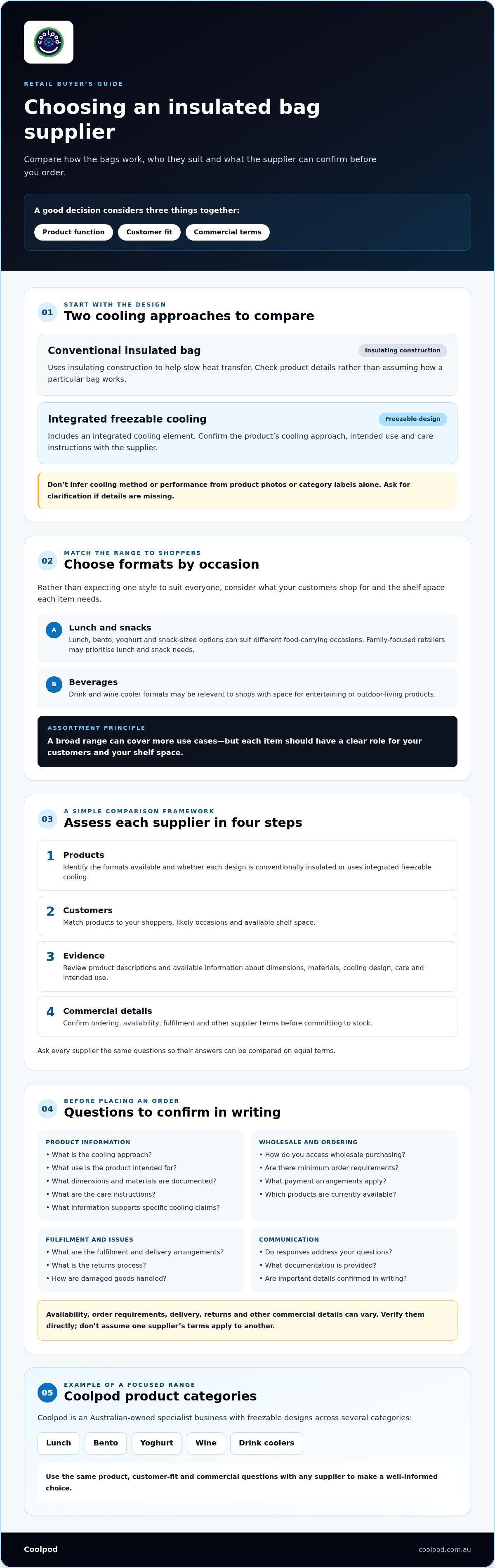
Retail Supplier Due Diligence: Questions to Ask Before Ordering
A clear product range is only part of a sound buying decision. Before placing an order, check what’s documented, what the supplier needs to confirm and whether the range can support your planned assortment over time. Keep the answers together so you can compare suppliers consistently.
Product documentation and customer-facing claims
Request current specifications and care information for each product you’re considering. Use wording confirmed by the supplier in your own product listings, especially when describing cooling method and duration. If claims about materials, food safety or compliance matter to your customers, ask for supporting documentation before repeating them in marketing.
- Are current dimensions, materials and care instructions available for each item?
- How does the supplier describe the cooling approach and any performance claims?
- What documentation supports specific statements about materials, food safety or compliance?
- Are product names and range details current and approved for retail use?
Treat published product information as a starting point, not proof of every claim you might want to make. Record which details are documented and which need written confirmation.
Ordering, fulfilment and ongoing supply
Commercial arrangements differ between suppliers, so confirm the details rather than relying on assumptions. Ask about wholesale access, the order process, minimum requirements, payment arrangements and current stock. Then check fulfilment and delivery arrangements, including any applicable lead times and delivery coverage.
- How can retailers place orders, and what wholesale requirements apply?
- How are stock levels and product availability updated?
- What are the current fulfilment and delivery arrangements?
- How are damaged, incorrect or returned goods handled?
- How will the supplier communicate changes to products or availability?
- Can the supplier explain whether assortment depth and replenishment information suit your planned range?
Ask for important terms and commitments in writing. This gives you a reliable reference if availability or product details change, and helps distinguish confirmed arrangements from informal expectations. A supplier’s response to an enquiry can also show how clearly it communicates, but one exchange doesn’t establish ongoing service levels.
Use the same checklist with every retail supplier for insulated bags, then compare the answers with your stock plan. To assess Coolpod as an Australian freezable-bag supplier, explore Coolpod’s Australian freezable bag range and confirm current wholesale, availability and fulfilment details directly before ordering.
Is Coolpod a Suitable Retail Supplier for Insulated Bags?
Coolpod is an Australian-owned and operated business founded in 2010 that specialises in patented freezable bags for food and beverages. Its range is an example of a specialist supplier focused on integrated freezable cooling rather than a broad catalogue of unrelated bag types. Coolpod describes its bags as designed to keep contents cold for hours without separate ice packs. Check product-specific details before using performance claims in your own materials.
What Coolpod’s confirmed range may offer retailers
The confirmed range includes the Coolpod Freezable Lunch Bag, Coolpod Freezable Bento Bag, Coolpod Freezable Wine Cooler, Coolpod Freezable Yoghurt Bag, Coolpod Freezable Yoghurt Pouch and Coolpod Freezable Drink Cooler Bag. These categories relate to different food, snack and beverage occasions, from packed lunches to portable yoghurt and drinks. Their relevance depends on the customers your shop serves and the shelf space available. Confirm current product descriptions and specifications before preparing shelf labels or promotional copy.
How to decide whether the supplier fits your business
Compare the range with your assortment criteria: customer needs, intended occasions, product documentation and available shelf space. A focused freezable-bag category may suit a retailer looking to offer several food and beverage formats. However, range breadth alone doesn’t establish whether a supplier is the right commercial fit.
Before ordering, ask Coolpod directly about wholesale eligibility, current terms, minimum order or other quantity requirements, product availability, case quantities, fulfilment and delivery arrangements. These details aren’t established by the product range itself and may change. Request written clarification when you need a firm basis for ordering or planning replenishment.
This final check helps distinguish a promising product match from a supply arrangement that’s ready for your business. Coolpod may be worth assessing if its freezable categories align with your shoppers and you can confirm the commercial details that matter to your store.
Contact Coolpod about retail supply to ask about wholesale terms, order quantities, availability and delivery details.
Make Your Next Supplier Choice with Confidence
The right retail supplier for insulated bags should offer formats suited to your customers, clear information about product function and care, and commercial terms you’ve confirmed before ordering. Compare suppliers using the same checklist, then match lunch, snack and beverage categories to your assortment rather than relying on broad claims.
Coolpod is an Australian-owned and operated business founded in 2010, specialising in patented freezable bags for food and beverages. It sells retail and wholesale in Australia. Its focused range may suit retailers whose shoppers want integrated freezable cooling. Before stocking, confirm wholesale eligibility, current terms, availability and fulfilment directly.
Explore Coolpod’s freezable bag range and ask the questions that matter to your store. A clear comparison process helps you make a considered choice and build an assortment that fits your customers.
Frequently Asked Questions
Is Coolpod a retail supplier for insulated bags?
Yes. Coolpod sells retail and wholesale in Australia and specialises in patented freezable bags for food and beverages. Its confirmed range includes lunch, bento, wine, yoghurt, yoghurt pouch and drink cooler bags. Contact Coolpod directly to check wholesale eligibility, current availability, order requirements and fulfilment arrangements. Confirming these details first helps you assess whether the products and terms suit your business.
What should a retailer look for in an insulated-bag supplier?
Start by checking whether the product range suits your customers and whether descriptions explain intended use and cooling features. Review available specifications and care information, then ask suppliers to clarify gaps. Confirm ordering, stock updates, delivery and returns directly. Put the same questions to each supplier so you can compare answers on equal terms, rather than relying on catalogue listings or assuming one supplier’s conditions apply to another.
Are freezable bags the same as insulated bags?
Not necessarily. Some bags use insulating construction to help keep contents cool, while freezable designs include an integrated cooling feature. The terms don’t mean that the bags have identical construction or performance, so check each product’s specifications, care instructions and stated use. Ask what supports any specific cooling claims, and make sure retail descriptions accurately reflect the product. Don’t present different designs as equivalent unless supplier information supports that comparison.
Can retailers buy insulated bags wholesale from Coolpod?
Coolpod’s business information confirms it sells its freezable bag range wholesale as well as retail in Australia. It doesn’t specify wholesale eligibility, minimum order quantities, pricing, payment arrangements or delivery terms here. Contact Coolpod directly to confirm the current process and conditions for your business. Getting the details before planning an order helps you assess whether the range and supply arrangements fit your intended assortment.
Which insulated bag types should a retailer stock?
The right assortment depends on your customers, shopping occasions and available shelf space. Lunch and bento bags, yoghurt bags and pouches, wine coolers and drink cooler bags serve different use cases. Check each product’s confirmed purpose and specifications rather than assuming similar capacities or features. Start by identifying the occasions your existing range doesn’t cover, then check current supplier availability before deciding which formats to stock.
What questions should I ask an insulated-bag supplier before ordering?
Request current product specifications and care instructions, and ask what supports any cooling claims. Confirm wholesale access, order requirements, availability updates, delivery arrangements, returns and the process for damaged or incorrect goods. Ask about any food-safety, material or compliance statements before repeating them in retail copy. Record answers consistently, preferably in writing, so you can compare suppliers and distinguish documented product facts from terms or promises that need confirmation.
Do insulated bags keep food safe all day?
No bag description alone can establish that food will stay safe for a particular duration. Temperature can depend on the food, its starting temperature, packing method and surrounding conditions. Food Standards Australia New Zealand advises that potentially hazardous foods should be kept at or below 5°C, or at or above 60°C, during transport. Retailers should avoid unsupported time or safety promises and check product instructions alongside current FSANZ guidance.


