

What if the part of your freezable lunch bag that’s meant to make life easier is the very thing causing the hassle? Problems with fridge to go bags can start with removable cooling panels left behind, a bulky bag taking over the freezer or office fridge, or condensation leaving your school books and work documents damp. Add an Australian summer to the mix, and it’s easy to see why a bag that should keep lunch simple can feel like one more thing to manage.
You’re not imagining it: panels need freezing and remembering, while a large insulated bag can be awkward to store. Moisture in your backpack is never a welcome surprise, either. Instead of accepting the same daily annoyances, look for a design that fits your routine and is straightforward to prepare, pack and clean.
This article covers common Fridge-to-Go bag frustrations and practical ways to address them, from preparing and caring for your bag to choosing a more convenient cooling solution. Coolpod’s patented integrated cooling technology avoids separate panels to lose, with Lunch Bag and Bento Bag options for everyday meals.
Key Takeaways
- Identify common problems with fridge to go bags, then consider how removable panels and bulky designs fit your routine.
- Compare removable-panel bags with integrated cooling technology to find an option with fewer parts to manage.
- Use simple cleaning and drying habits to help keep your cooler bag fresh and in good condition.
- Consider whether a freezable bag that doesn’t rely on a communal fridge would make office lunches easier to manage.
- Explore how Coolpod’s integrated cooling design avoids loose panels, with Lunch Bag and Bento Bag options for everyday use.
Common Gripes: Why Traditional Freezable Bags Let You Down
A freezable lunch bag should make packing lunch easier, but loose panels, awkward bulk and damp patches can turn it into another thing to remember. These are common problems with fridge to go bags, particularly on busy school mornings or warm, humid arvos.
The Problem with Removable Cooling Panels
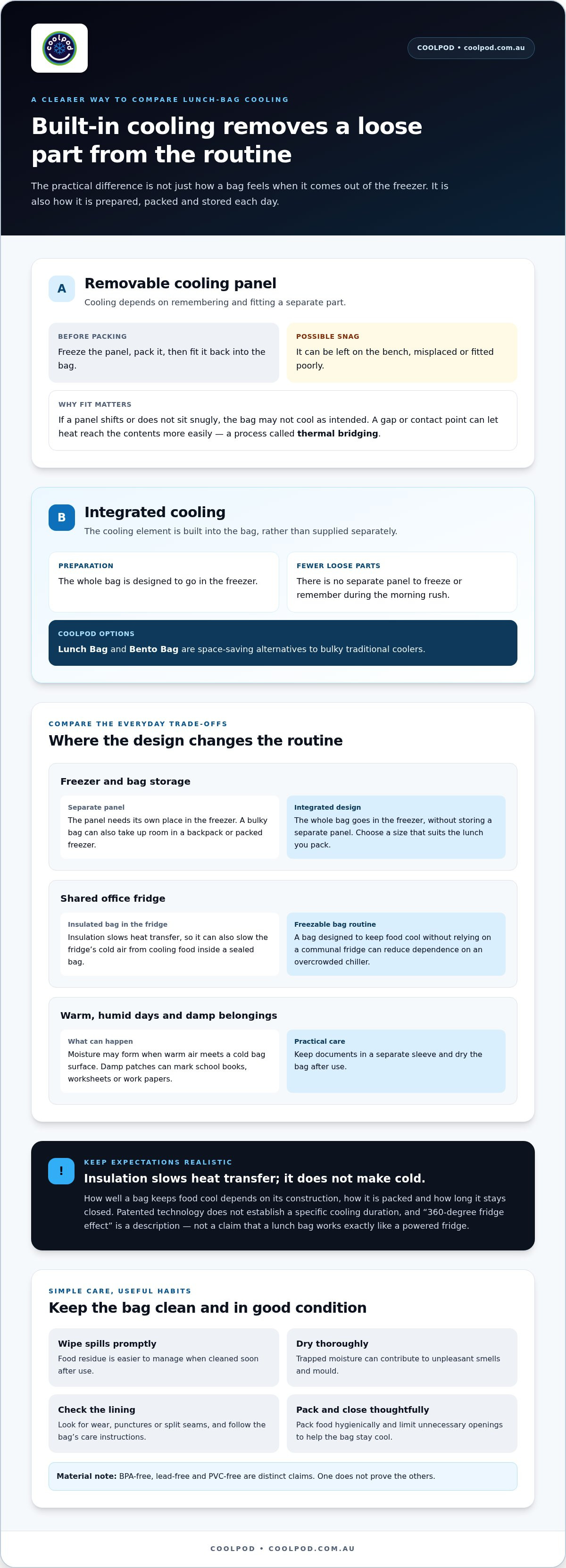
A separate panel has to be frozen, packed and fitted back into the bag. It’s easy for it to stay on the kitchen bench in the morning or get misplaced after lunch at school. If a panel shifts or doesn’t sit snugly, the bag may not cool as intended. Thermal bridging is the transfer of heat through a gap or contact point that lets warmth reach the bag’s contents more easily.
If your bag uses a removable panel, give it a dedicated spot in the freezer and make it part of your packing routine. Check that it is frozen before use and fitted as directed. Integrated cooling, like the design in Coolpod freezable bags, removes the need to freeze and pack a loose panel separately.
Condensation and “Bag Sweat”
On a humid day, moisture can form when warm air meets a cold bag surface. If the outside of the bag becomes cool enough, condensation may collect. A damp bag can mark school books, worksheets or work papers, so keep documents in a separate sleeve and dry the bag after use. Cooling helps slow the processes that affect food, part of the principles of food preservation.
Bulk, Weight and Freezer Space
Some lunch bags feel like a brick before you’ve even added food. Thick walls and removable panels can take up valuable room in a backpack, while a rigid shape may be difficult to fit into a packed freezer. At work, a bulky bag can also occupy more shared fridge space than its contents need.
Choose a size that suits the lunch you actually pack, rather than carrying extra space every day. Coolpod’s Lunch Bag and Bento Bag are space-saving alternatives to bulky traditional coolers. Their integrated cooling means the whole bag is designed to go in the freezer, rather than requiring you to store a separate panel. A more streamlined design can make storage and daily packing less fiddly.
The Science of Chilling: Integrated Tech vs. Removable Parts
Cooling performance depends on more than how cold a bag feels straight out of the freezer. The design needs to help slow heat entering and keep the cold around the food. Removable panels can work, but they add another step. If one is forgotten, misplaced or fitted poorly, the bag won’t cool as intended. That practical weak point can be easy to overlook when comparing features alone.
What Is Integrated Cooling Technology?
Integrated cooling means the cooling element is built into the bag rather than supplied as a separate panel or ice pack. Coolpod’s patented freezable bags use this approach, so there are no loose parts to freeze separately or remember during the morning rush. How well a bag keeps its contents cool depends on its construction, how it’s packed and how long it’s kept closed. Think of “360-degree fridge effect” as a useful description, not a claim that a lunch bag works exactly like a powered fridge.
Insulation is passive: it slows heat transfer but doesn’t generate cold. A well-designed bag helps keep the cooling inside and Australian heat outside. Limiting unnecessary openings can also help it stay cool. When comparing options, consider whether the design makes daily use simpler as well as how its cooling system works. Patented technology means a design is protected, but it does not by itself establish a specific cooling duration or mean every bag will suit every routine.
Material Matters: Linings, Wear and Care
Repeated freezing, packing and cleaning can put pressure on a bag’s seams and lining. A puncture, split seam or damaged inner surface can make cleaning harder and shorten the bag’s useful life. Check the lining for signs of wear and follow the care instructions for your bag. Wipe away food spills promptly and let the bag dry thoroughly. Trapped moisture can contribute to unpleasant smells and mould.
For a bag used around food every day, material information matters too. BPA-free, lead-free and PVC-free are distinct claims, so don’t treat one as proof of the others. Coolpod’s integrated cooling design removes removable panels from the routine. For details about Coolpod bags, explore Coolpod freezable bags.
Solving the "Office Fridge" Conflict
A shared office fridge can become a daily source of friction: large lunch bags take up shelf space, containers get moved and there may be little room for anyone else’s food. But putting an insulated lunch bag in the fridge isn’t always a helpful workaround. Insulation slows heat transfer, so it can also slow the fridge’s cold air from cooling the food inside. A fridge is designed to cool its contents, not necessarily a sealed insulated bag efficiently.
Keep Lunch Out of the Fridge Queue
A freezable bag designed to keep food cool without relying on a communal fridge can make the routine simpler. Coolpod bags have integrated cooling, so there’s no separate panel to store at work. Follow the bag’s preparation and care instructions, pack food hygienically, and keep the bag closed as much as possible. If your workplace has specific food storage rules, follow those too.
Keeping lunch in your own bag also means it stays together rather than being shifted around a shared shelf. It won’t fix every office storage challenge, but it can reduce dependence on an overcrowded chiller and make it easier to organise lunch at your desk.
Choose a Size That Fits Your Workday
The answer to a fridge-hog lunch bag isn’t just finding another shelf. It’s matching the bag to what you actually bring. A full-sized cooler may be more than you need for a yoghurt and a snack, while a compact option can fit more neatly in a work bag or locker. A slimline yoghurt pouch suits a single serve, and a bento-style bag gives you a more structured option for a packed lunch.
Explore the Coolpod Freezable Bento Bag as one option for keeping lunch contained without bringing a bulky cooler into the office. Before packing, consider where the bag will sit during the day and avoid leaving it in direct sun or near heat sources. A compact, fridge-free approach can ease the pressure on the communal chiller while keeping your lunch routine more predictable.
Maintenance Checklist: How to Make Your Cooler Last
A little care after lunch can help keep a freezable bag clean, fresh and ready for its next outing. This matters in warm, humid weather, when food residue and trapped moisture can lead to lingering smells. A simple routine also helps you spot wear early, before a small tear or damaged seam becomes harder to manage.
Clean and Dry It After Use
Empty the bag as soon as you can. Wipe the inside with a soft cloth and mild, soapy water, paying attention to corners where crumbs or spills can collect. Avoid abrasive scrubbers and harsh cleaners, which may damage the lining or seams. For stubborn smells, try a little bicarb soda or mild soap, then wipe away any residue with a clean damp cloth.
Don’t assume a freezable bag is machine washable. A washing machine may stress its seams or cooling construction, so follow the care instructions for your particular bag and stick to spot-cleaning unless machine washing is explicitly allowed. Leave it open to air-dry completely before storing or freezing. In humid conditions, check that the inner corners and seams are dry too, as moisture left behind can encourage musty odours.
Freeze According to the Bag’s Instructions
Prepare Coolpod freezable bags according to their care instructions. Start with a clean, completely dry bag and arrange it in the freezer as directed. Don’t force it into a tight fold or place heavy items on top if that could strain the materials. With integrated cooling, there’s no separate piece to freeze and refit.
There isn’t a universal freezing time that suits every freezable bag, so follow the maker’s guidance rather than assuming a set time guarantees the same result each time. Keep the bag zipped shut during use where practical, and air-dry it thoroughly after each day out.
These straightforward habits can help prevent avoidable wear and odours, two problems with fridge to go bags that are often easier to prevent than fix. If you’d rather skip loose cooling parts altogether, explore Coolpod freezable bags with integrated cooling.
The Coolpod Difference: Why Our Patented Design Wins
The most useful cooling design is one that fits into your routine without adding extra steps. Coolpod’s patented integrated cooling technology means there are no separate panels to freeze, pack or track down. For busy families, that can make the morning dash easier: prepare the bag as directed, pack lunch and head out without wondering if a cooling piece is still on the kitchen bench.
Integrated Cooling Compared with Removable Panels
With a removable-panel bag, cooling depends on remembering to freeze and fit the panel before each use. If it’s missing or doesn’t sit properly, the bag may not cool as intended. Integrated cooling keeps the cooling element within the bag’s construction, removing that separate-part hassle. The design can make daily packing more straightforward, though cooling performance still depends on using and caring for the bag as directed.
To compare options for everyday lunches, explore this guide to the best freezable lunch bags in Australia. It’s a helpful next step if problems with fridge to go bags have you looking for a different approach.
Made for Everyday Use in Australian Conditions
A lunch bag might travel from the kitchen to the school yard, a worksite or a warm car, so practical construction matters. Coolpod makes durable bags for everyday use in Australian conditions. As with any reusable cooler, sensible care helps: avoid rough handling, clean up spills promptly and let the bag dry thoroughly before storing it.
There’s a style for different needs, too. Choose a lunch bag or Bento Bag for a packed meal, a yoghurt bag or pouch for a snack, or a drink cooler bag or wine cooler for beverages. The range lets you match the bag to what you’re carrying, rather than taking a larger cooler for a small snack.
Coolpod is Australian owned and operated, with a focus on freezable bags since 2010. The range includes designs for everyday routines in a demanding climate. If you’re ready to move on from loose panels and cumbersome lunch gear, use the linked guide to explore the range and find a format that suits your day.
Make Your Next Lunch Bag a Smarter Choice
Missing panels, bulky bags and condensation can turn everyday lunches into a hassle. The best fix is a design that suits your routine, is easy to care for and doesn’t rely on separate cooling parts. If you’re weighing up problems with fridge to go bags, consider whether integrated cooling could make packing and storage simpler.
Coolpod’s patented integrated cooling means there are no loose panels to remember, while the Lunch Bag and Bento Bag offer practical options for everyday meals. Coolpod is Australian owned and operated, with bags designed for Australian conditions. The range is also PVC-, lead- and BPA-free.
Ready to simplify your lunch routine? Explore and shop the Coolpod freezable range for lunch, snacks and drinks. A little less to remember can make each school or workday feel that much easier.
Frequently Asked Questions
Why does my freezable lunch bag have condensation on the outside?
Condensation forms when warm, humid air meets a cooler surface, leaving moisture on the outside of your bag. It can be more noticeable on muggy days or when a very cold bag is exposed to warm air. Wipe the surface dry and keep books or papers in a separate sleeve. If the bag regularly gets soaked, inspect it for damage and follow its care instructions.
How long do freezable bags actually stay cold in Australian summer?
There isn’t one cooling time that applies to every freezable bag or summer day. Heat, direct sun, how full the bag is, how often it’s opened and whether it was prepared as directed can all affect performance. Follow the guidance for your specific bag, keep it closed and out of hot spots, and pack food that’s already chilled. Don’t treat a cooling-time claim as a substitute for safe food handling.
Can I put my freezable cooler bag in the washing machine?
Only machine-wash a freezable bag if its care instructions specifically allow it. A wash cycle may strain seams, linings or the cooling construction. For routine cleaning, empty the bag, wipe the inside with a soft cloth and mild soapy water, then wipe away residue with a clean damp cloth. Leave it open to air-dry completely, including the corners, before storing or freezing it.
What is the difference between an insulated bag and a freezable bag?
An insulated bag slows heat transfer but doesn’t create cold on its own, so it usually needs a separate cold source to help keep its contents cool. A freezable bag is designed to be frozen before use, with its cooling element either built in or supplied separately. Coolpod bags use integrated cooling, so there are no removable panels to freeze and remember to pack separately.
Are freezable bags safe for yoghurt and dairy products?
A freezable bag can be used to carry yoghurt and other dairy when you prepare and pack it correctly. Start with chilled food, freeze the bag according to its instructions and keep it closed and away from heat where possible. A bag helps keep contents cool, but conditions vary, especially in summer. Follow safe food-handling guidance and discard perishable food if it hasn’t stayed properly cold.
My cooling panel is lost; can I buy a replacement or do I need a new bag?
If a removable panel is lost, the bag may no longer cool as intended without a suitable replacement. Whether a replacement is available depends on the bag’s brand and model. With an integrated cooling design, there’s no separate panel to misplace because the cooling element is built into the bag. That avoids the extra step of storing and packing loose parts.
How do I stop my lunch bag from smelling?
Empty and wipe your bag after each use, especially after packing tuna, yoghurt or other foods that can leave residue. Use a soft cloth with mild soapy water, then wipe it clean and leave the bag open until it’s completely dry. For lingering smells, a little bicarb soda or mild soap may help. Avoid harsh cleaners and follow the care instructions before using stronger products.
Is it better to have a removable ice pack or an integrated cooling bag?
It depends on what suits your routine. A removable ice pack can be frozen separately and moved between bags, but it adds another item to remember and position. An integrated cooling bag keeps its cooling element in the bag, so there’s no loose panel to forget or lose. For people frustrated by problems with fridge to go bags, fewer separate parts may make daily packing simpler.


