

Why settle for a lukewarm lunch that has spent three hours sweating in the 30°C Australian sun? If you've ever opened your lunchbox to find a soggy salad or warm ham, you know that a standard insulated pouch simply isn't enough for our harsh climate. Most people agree that the struggle with heavy, leaking ice packs that take up all the room is just as frustrating as the food going off before midday. Choosing the right bento cooler bag is no longer just about finding a cute pattern; it's about securing a portable fridge that keeps perishables safely below 5°C.
You deserve a lightweight solution that fits your favourite bento box perfectly without the mess of condensation or mixed compartments. This guide promises to show you how integrated cooling technology can keep your meals fresh and safe for hours. We'll preview the top features to look for in 2026, from durable, easy-to-clean materials to clever engineering that eliminates the need for separate ice bricks entirely. It is time to simplify your morning routine and enjoy a lunch that stays as fresh as when you packed it.
Key Takeaways
- Understand why keeping perishables below 5°C is vital for food safety in the harsh Australian climate.
- Learn how a bento cooler bag with integrated cooling walls saves space and reduces weight compared to traditional ice bricks.
- Master the "Goldilocks" fit by measuring your bento box and freezer shelf correctly before you buy.
- Discover the benefits of patented surround-cool technology that protects your lunch from every angle.
- Find out how to maintain your bag's durability with simple, daily cleaning habits for long-term use.
Why Bento Cooler Bags are Essential for the Australian Lifestyle
Bento culture has exploded across Australia, and it's easy to see why. From bustling schoolyards to busy office desks across the nation, we've embraced the art of the organised, multi-compartment meal. These boxes allow for perfect portion control and a variety of fresh flavours in one container. However, the very thing that makes them great, their ability to hold diverse food groups, also makes them vulnerable to the intense Australian heat. Without a dedicated bento cooler bag, that carefully curated lunch becomes a safety risk before the first morning tea break.
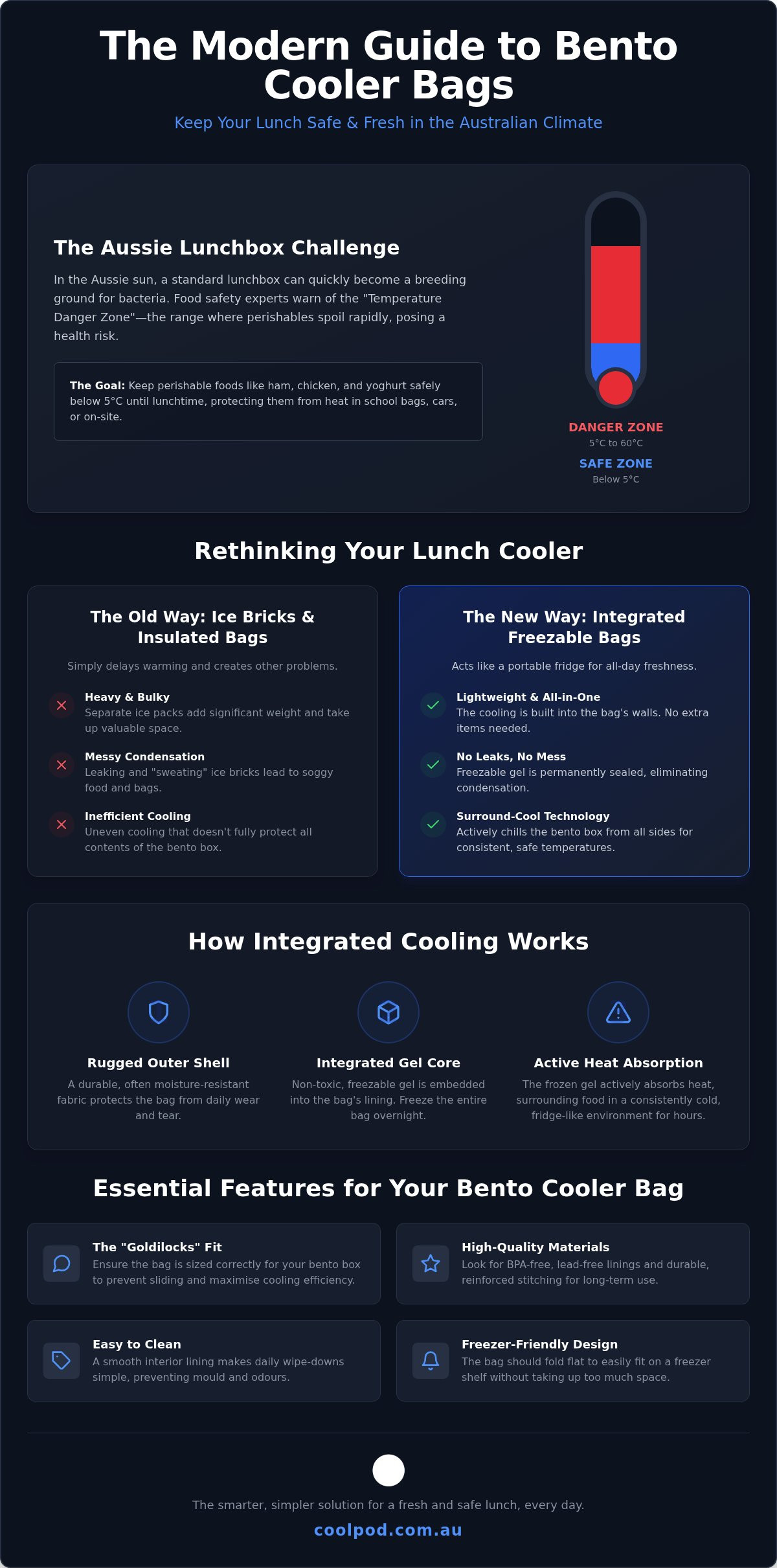
The primary concern is the "Temperature Danger Zone." Food safety experts define this as the range between 5°C and 60°C, where harmful bacteria can multiply rapidly. In a typical school bag or a car parked at the train station, internal temperatures can soar well past 30°C within minutes. While many people understand how insulated bags work by using reflective materials to slow heat transfer, standard insulation often fails during a scorching Aussie arvo. It merely delays the inevitable warming process rather than providing an active cooling environment.
The Challenge of the Australian Climate
Our environment presents unique hurdles for food preservation. High-protein snacks like ham or chicken and dairy items like yoghurt are staples in many bento boxes, yet they are the most susceptible to spoilage. When ambient temperatures in lockers or backpacks rise, the thermal mass of the food isn't enough to stay safe. A high-quality bento cooler bag acts like a portable fridge, ensuring that every compartment, whether it holds fruit or tuna, remains at a consistent and safe temperature until lunchtime.
Bento vs. Traditional Lunchboxes
Bento boxes are often a significant investment in quality hardware. Unlike old-school plastic containers, they feature specific seals and hinges that need protection. Using a bag specifically designed for these dimensions offers several advantages:
- Snug fit: Prevents the box from sliding around, which reduces the risk of internal compartment leakage.
- Hardware protection: Soft internal linings shield expensive bento boxes from scratches and impact damage.
- Consistent cooling: A tight fit ensures the cooling surfaces are in direct proximity to the food container.
Choosing a smarter solution means your child's lunch stays crisp and your own midday meal remains appetising, regardless of how high the mercury climbs outside. It's about moving beyond simple storage and investing in a system that prioritises safety and freshness.
What is a Bento Cooler Bag and How Does it Work?
A bento cooler bag is a specialised insulated carrier engineered to maintain fridge-like temperatures for multi-compartment lunch containers. Unlike basic lunch sacks, these are designed with a specific architecture to combat external heat. A high-quality cooler consists of three essential layers: a rugged outer shell, a middle insulation layer, and a cooling core. While many brands stop at insulation, the most effective designs include integrated freezable walls that provide a consistent source of cold.
This design relies on thermal mass. By freezing the entire bag, you create a cold environment that surrounds the food container. This is far more effective than standard foil-lined bags that simply slow down the warming process. Following established food safety guidelines ensures that perishable items stay out of the danger zone for hours, even when stored in a school locker or a warm car.
The Science of Integrated Cooling
Integrated cooling works through non-toxic gels embedded directly into the bag's lining. When you place the bag in the freezer overnight, these gels solidify. Once removed, the bag doesn't just block warm air; it actively absorbs heat from the lunch container itself. Latent heat is the energy absorbed by the freezable gel as it transitions from a solid back to a liquid, which allows the bag to maintain a steady, chilled temperature without fluctuating. This process ensures your fruit stays crisp and your dairy remains safe during the hottest parts of the day.
Materials and Durability Standards
Since these bags come into close proximity to your food, safety standards are non-negotiable. High-quality options feature linings that are strictly BPA-free and lead-free to prevent chemical leaching. For those living along the humid Australian coast, moisture-resistant outer fabrics are essential to prevent mould and mildew from taking hold. Daily use also demands heavy-duty zippers and reinforced stitching that won't fail after a few weeks of schoolyard or office use. If you're tired of lukewarm lunches, choosing a smarter freezable solution can transform your daily routine.
Integrated Cooling vs. Traditional Ice Packs: The Comparison
Choosing a bento cooler bag with integrated cooling isn't just a style choice; it's a significant upgrade in daily efficiency. Traditional ice bricks are often bulky, consuming up to 30% of the internal storage space. This leaves less room for your actual food, often forcing you to choose between a healthy snack or a cold drink. Integrated walls solve this problem by embedding the cooling power directly into the fabric, providing a streamlined profile that fits easily into a backpack without the unnecessary bulk.
Weight distribution is another overlooked factor. Loose ice bricks tend to slide to the bottom, creating an unbalanced bag that's awkward for children to carry. Expert advice on packing lunches safely often highlights the need for cold sources to surround the food. A bag with built-in cooling achieves this perfectly, chilling from all sides while keeping the overall weight light and manageable. It's a smarter way to ensure your lunch stays fridge-cold without the heavy lifting.
Condensation is the enemy of a good lunch. As traditional ice packs melt, they create puddles that lead to the dreaded "soggy sandwich" effect. High-quality freezable bags use moisture-resistant linings to manage this moisture, keeping the exterior of your bento box dry and your crackers crisp. This also protects the contents of a school bag from getting damp during the day.
Practicality for Kids and School
Packing for school is stressful enough without hunting for lost ice bricks. Many parents find that loose packs are frequently left on the oval or accidentally thrown away. A bento cooler bag with integrated cooling eliminates this risk entirely because the cooling source is the bag itself. It simplifies the morning rush; you just grab the bag from the freezer, pop the box in, and go. This "surround-cool" approach also ensures that even the furthest corners of a multi-compartment bento stay at a safe, even temperature.
Long-term Value and Sustainability
Investing in patented freezable technology offers superior long-term value compared to cheap, disposable alternatives. While plastic ice bricks often crack or leak over time, a well-engineered bag is built for years of daily use. This durability reduces environmental impact by keeping plastic waste out of landfills. There's also the financial benefit of reduced food waste. When leftovers stay cold enough to be safely brought home and eaten later, you're saving money while supporting a more sustainable lifestyle.
How to Choose and Pack Your Bento Cooler Bag
Finding the right bento cooler bag involves more than just picking a favourite colour. To get the best performance in the Australian heat, you need to follow a few practical steps. Start by measuring your bento box carefully. You're looking for a "Goldilocks" fit; if the bag is too tight, you'll strain the zippers, but if it's too loose, the cooling walls won't sit close enough to your food to be effective. A snug fit ensures that the thermal energy stays focused on your lunch container.
Your freezer routine is just as important as the bag itself. For the integrated gel to freeze evenly, ensure the bag can lie flat overnight. Avoid stuffing it into a crowded corner where it might get bunched up. When morning comes, remember the "fridge-to-bag" rule. You should always pre-chill your food items before placing them inside. A cooler bag is designed to maintain a low temperature, not to chill warm leftovers from the night before. Packing cold food into a frozen bag is the only way to ensure it stays safe until midday.
Thermal efficiency also depends on how you manage the space inside. Air is the enemy of cold retention, so try to minimise air gaps. If your bento box leaves a significant void, consider adding a piece of fruit or a chilled drink to fill the space. Finally, keep the bag zipped shut until the exact moment you are ready to eat. Every time you open it, you're letting in warm Australian air that makes the cooling gel work harder than it needs to.
Selecting the Right Size for Work or School
While many designs focus on school children, adults have different needs. If you're heading to the office, you likely want professional aesthetics and extra room for a mid-afternoon snack. You can learn more about how to choose a professional lunch bag for adults to ensure your gear matches your workplace style. For toddlers or those who only need light snacks, a mini cooler option is often the most efficient choice to avoid carrying unnecessary weight through the school gates.
Expert Packing Tips for the Aussie Heat
In high-humidity areas like Queensland or the Northern Territory, condensation can be a challenge for any insulated product. Using a tiny cooler bag for extra dairy items inside a larger setup can provide a double layer of protection for sensitive foods like yoghurt or cheese. This helps isolate moisture and keeps your main bento box dry. If you're ready to upgrade your lunch game, you can explore our full range of freezable bento solutions today to find the perfect fit for your lifestyle.
The Coolpod Advantage: Patented Freezable Bento Solutions
Coolpod engineered the original bento cooler bag with built-in cooling specifically to handle the unique demands of the local climate. Being Australian-owned and operated since 2010 means we have spent over a decade perfecting designs that withstand 30°C days. Our patented technology ensures the cooling gel stays where it belongs, providing a reliable "surround-cool" environment that protects your food from every angle. While global brands often focus on generic insulation, our engineering is rooted in the practical reality of Australian summers.
Longevity is at the heart of our design. To keep your bag performing at its peak, simply wipe the interior with a damp cloth and mild detergent after use. It is best to avoid harsh chemicals or machine washing, as these can damage the internal gel structure and the moisture-resistant lining. Always ensure the bag is completely dry before placing it back in the freezer. This simple habit prevents ice buildup and maintains a fresh, odour-free environment for years of daily use.
Designed for the Modern Australian Family
Life in Australia is diverse, and your lunch gear should be too. Our versatile designs are equally at home on a dusty building site as they are in a corporate boardroom. The "freeze-and-go" system removes the morning friction for busy families by eliminating the hunt for loose ice bricks. Customer feedback consistently highlights the durability of our materials, with many users reporting that their Coolpod has survived years of rugged schoolyard treatment while still keeping snacks perfectly chilled until the final bell.
Ready to Upgrade Your Lunch Game?
As we move into 2026, integrated cooling has clearly become the superior choice for anyone serious about food safety and convenience. It eliminates the mess of melting ice and maximises the space for the fresh, whole foods you want to eat. Before you make your final choice, run through this quick buyer's checklist:
- Safety: Is the lining strictly BPA-free and lead-free?
- Space: Does the bag offer a "Goldilocks" fit for your specific bento box?
- Thermal Performance: Is it engineered to maintain fridge-like temperatures for several hours in high heat?
If you're ready to leave lukewarm lunches behind, it's time to invest in a smarter solution that prioritises your health and your schedule. Explore our range of freezable bento bags and experience the difference that patented Australian engineering makes to your daily routine.
Secure Your Freshness for Every Australian Summer
Packing a healthy, varied lunch shouldn't feel like a race against the clock. By moving away from bulky, leaking ice bricks and choosing a high-quality bento cooler bag, you're investing in food safety and daily convenience. We've seen that the secret to long-lasting chill lies in a snug fit and the simple habit of pre-chilling your meals before they leave the fridge. These small adjustments ensure your lunch stays at a safe, crisp temperature regardless of the afternoon heat.
With over 15 years of cooling expertise and patented Australian technology, we've designed our range to be a dependable partner for your busy lifestyle. Whether you're heading to the office or the schoolyard, you can trust our smarter engineering to protect your meals. It's time to enjoy the peace of mind that comes with a perfectly preserved lunch. Shop the Patented Coolpod Freezable Bento Range today and join a community that values quality and innovation. Here's to fresher, safer lunches for the whole family.
Frequently Asked Questions
How long does a bento cooler bag stay cold in the Australian heat?
A high-quality freezable bag can keep your lunch at fridge-like temperatures for up to 8 hours, even when ambient temperatures reach 30°C. This duration depends on the bag being frozen solid overnight and the food being pre-chilled before packing. For the best results in the harsh Australian sun, keep the bag zipped shut in a shaded area like a school locker or office cupboard.
Do I need to buy separate ice packs for my bento bag?
You don't need to purchase separate ice bricks because the cooling technology is built directly into the bag's walls. This integrated design is a key feature of a modern bento cooler bag, as it saves internal storage space and prevents the mess of melting ice. It simplifies your morning routine by turning the entire carrier into a compact, portable cooling system.
Can I put my freezable bento bag in the washing machine?
Machine washing is not recommended as the agitation and heat can damage the internal freezable gel and the moisture-resistant lining. Instead, use a damp cloth with mild detergent to wipe the interior and exterior surfaces after each use. This method preserves the structural integrity of the bag and ensures the patented cooling technology remains effective for several years of daily use.
Will my bento box fit inside a standard Coolpod bag?
Most popular bento box brands are designed to fit comfortably within our standard range, but it is always best to measure your container first. You should aim for a snug fit that allows the cooling walls to sit close to the food for maximum thermal transfer. If your box is particularly large or deep, check the specific internal dimensions listed on the product page before you buy.
Is the cooling gel inside the bag safe if it leaks?
The gel used in our freezable bags is non-toxic and specifically formulated for food-grade safety. While our heavy-duty linings are designed to prevent leaks, you can rest assured that the material is safe for use around your family's meals. If a puncture does occur, we recommend replacing the bag to maintain its thermal performance and ensure your lunch stays at a safe temperature.
How long does it take to freeze the bag properly?
For optimal performance, you should place the bag in the freezer for at least 10 to 12 hours, or simply leave it overnight. Ensure the bag lies flat rather than being bunched up to allow the gel to freeze evenly across all panels. This preparation is essential for creating the surround-cool effect that keeps your perishables safe during a long day at school or work.
Can I use a bento cooler bag for warm foods too?
These bags are specifically engineered for cooling and should not be used to keep food warm. Placing hot items inside a frozen bento cooler bag will cause the gel to thaw rapidly and may damage the internal lining. If you need to transport warm meals, it is better to use a dedicated thermal flask or a standard insulated carrier without freezable walls.
What is the best way to store the bag when not in use?
When you aren't using the bag, the best place for it is actually in the freezer so it is always ready for the next morning. If you prefer to store it in a cupboard, ensure it is completely dry and leave the zipper slightly open to allow for airflow. This prevents any moisture from being trapped inside, keeping the bag fresh and ready for your next adventure.


