

Have you ever opened your child's backpack at the end of a scorching February day only to find a lukewarm, weeping yoghurt tub tucked against a damp stack of school books? It's a stressful reality for many Australian families, as keeping yoghurt cold in school bag pockets becomes a high-stakes mission when the mercury hits 30 degrees before morning tea. You want to provide nutritious dairy snacks, but the constant anxiety over food spoilage and the mess of melting ice packs often makes the task feel impossible.
We understand that a standard insulated bag rarely stands a chance against the relentless heat of an Australian summer. You deserve a solution that prioritises food safety without adding unnecessary weight to your child's shoulders. In this guide, we'll show you how to maintain that critical 5 degree Celsius temperature through the latest in smart, integrated cooling technology. You'll discover how to eliminate condensation entirely and keep snacks fresh using lightweight, Australian-engineered methods that actually work in our demanding climate.
Key Takeaways
- Understand the critical 5 degree Celsius food safety threshold and why typical Australian school conditions put dairy at risk.
- Discover why integrated cooling technology is more effective than bulky ice packs for keeping yoghurt cold in school bag pockets without the mess.
- Learn how to use pre-freezing techniques and thermal isolation to extend the chill time of your child's snacks through the hottest afternoons.
- Find out how to eliminate the "soggy book" problem by choosing specialised bags that manage condensation and moisture effectively.
- Identify the right freezable pouch or bag for your specific yoghurt packaging to ensure maximum cooling surface area and protection.
Why Keeping Yoghurt Cold in a School Bag is a Food Safety Essential
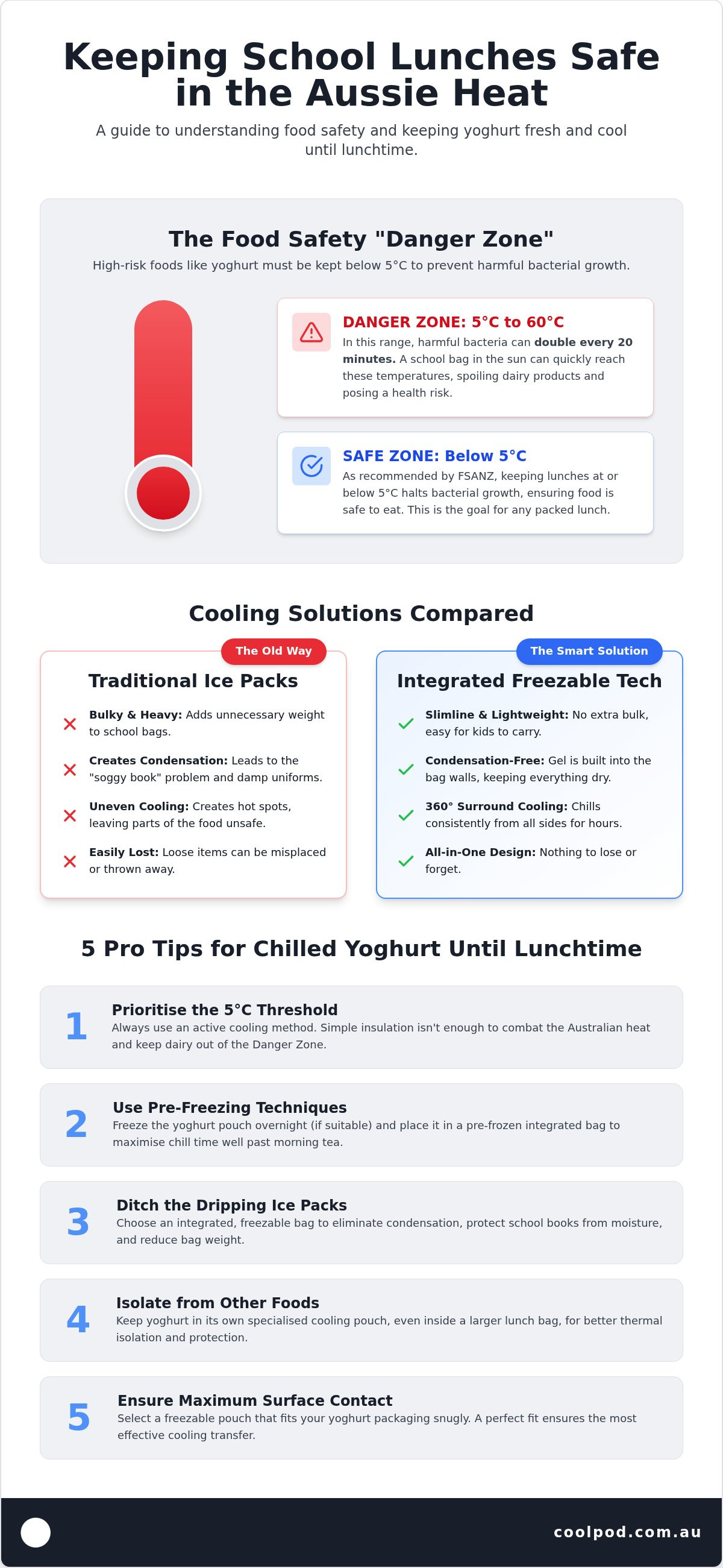
Packing a healthy dairy snack for school seems simple, but the science behind food safety is unforgiving. Dairy products are classified as high-risk foods because they provide the perfect environment for bacteria to flourish. When you're keeping yoghurt cold in school bag compartments, you're fighting against the "Danger Zone." This is the temperature range between 5°C and 60°C where harmful pathogens can double in number every twenty minutes.
In the Australian climate, a school bag left in a locker or a hallway becomes a miniature oven. Ambient temperatures in these spaces often exceed 30°C by mid-morning, meaning an unprotected yoghurt tub will hit the danger zone within an hour. Maintaining a consistent cold chain from your home fridge to the playground is vital. Without active cooling, your child is at risk of stomach upsets or more severe food poisoning from "turned" dairy that has quite literally cooked in its own packaging.
Effective thermoregulation is the only way to mitigate this risk. It's not just about slowing down the warming process; it's about creating a controlled environment that actively resists the external heat. This is especially important for younger children whose immune systems are more vulnerable to foodborne illnesses.
Understanding Dairy Spoilage in the Aussie Heat
Heat doesn't just make yoghurt less appealing; it fundamentally changes its structure. When dairy warms up, the proteins begin to break down, leading to that watery separation and sour smell. While traditional "insulated only" bags provide a thin layer of protection, they don't actually generate cold. They merely trap the existing air. By the 11:00 am recess, the internal temperature has usually risen well above safe levels. This is particularly problematic for probiotic and live-culture yoghurts, as the beneficial bacteria are often destroyed by heat, leaving behind a snack that offers little nutritional value and high bacterial risk.
FSANZ Guidelines for School Lunch Safety
Food Standards Australia New Zealand (FSANZ) provides clear advice for managing high-risk perishables. To keep children safe, school lunches should ideally be maintained at or below 5°C. This mimics a fridge-like environment, which is the only way to effectively halt bacterial growth. Many parents rely on pre-chilling the yoghurt in the fridge overnight, but this is a temporary fix. Without a secondary, active cooling source like a freezable bag, the thermal mass of a small yoghurt tub is too low to resist the surrounding heat for more than a couple of hours. Practical safety requires a system that actively absorbs heat rather than just reflecting it.
Ice Packs vs. Integrated Cooling: Which Wins for School Bags?
Choosing the right cooling hardware is essential for keeping yoghurt cold in school bag compartments. Most parents start with traditional loose ice packs, but these often fall short in the practical, messy world of a primary school backpack. Comparing these to integrated cooling solutions reveals significant differences in weight, temperature consistency, and the safety of school supplies.
The Problem with Traditional Ice Packs
Loose ice bricks are notoriously space-inefficient. They're bulky, heavy, and often take up more room than the actual lunch, forcing parents to use larger, more cumbersome bags. Beyond the weight, there's the "sweat factor." As ice melts, condensation forms on the plastic surface, which quickly seeps through fabric and onto school books, homework, and uniforms. This moisture isn't just a nuisance; it can lead to mould growth in bag linings if not dried properly every day.
From a safety perspective, ice packs provide uneven cooling. The portion of the yoghurt container touching the brick might stay frozen, while the opposite side quickly enters the danger zone. Following Safe Packing principles usually requires multiple cold sources to be effective, which adds even more bulk. Plus, loose items are easily lost in the chaos of the playground or accidentally thrown away with lunch scraps.
The Benefits of Patented Freezable Technology
Integrated cooling technology solves these issues by building the freezing gel directly into the walls of the bag. This provides 360-degree cooling, surrounding the yoghurt pouch with a consistent chill that lasts for hours. Because the gel is distributed evenly through the fabric, there are no bulky "hot spots" or heavy bricks shifting around. This slimline design allows it to fit inside a freezable lunch bag without sacrificing space for fruit or sandwiches.
For kids, the simplicity is a game-changer. There are no loose parts to manage or lose; they simply unzip the bag, eat their snack, and zip it back up. High-quality materials used in these designs are engineered to wick away moisture, preventing the condensation mess associated with cheap plastic bricks. If you're looking to streamline your morning routine, exploring a dedicated freezable yoghurt pouch is a smart way to ensure snacks stay safe and bags stay dry.
5 Pro Tips for Keeping Yoghurt Pouches Chilled Until Lunchtime
Mastering the art of keeping yoghurt cold in school bag pockets requires more than just high-quality gear; it's about the daily habits that maximise your equipment's performance. Even the most advanced cooling technology benefits from a few strategic adjustments to ensure dairy snacks stay fresh until the final school bell. These practical steps help maintain a safe environment and prevent your child's lunch from entering the temperature danger zone during the hottest parts of the day.
Step 1: The Overnight Freeze Method
For the best results, place your freezable bag or pouch in the freezer for at least 8 to 12 hours. This ensures the integrated gel walls are completely frozen through to the core. Positioning the bag flat on a freezer shelf, rather than crumpled or stuffed into a corner, allows for even cooling across the entire surface area. Thermal lag is the delay in temperature change within the bag's walls, providing a buffer that keeps the yoghurt chilled even as the external school environment warms up. By starting with a fully "charged" bag, you extend this lag period significantly.
Beyond the freezer, consider these three simple habits to preserve that chill:
- Isolate the dairy: Keep the yoghurt pouch away from room-temperature items like whole fruit or sandwiches, which can act as heat sources.
- Strategic bag placement: Encourage your child to keep their school bag inside a locker or under a shaded veranda rather than near a hot window or in direct sunlight.
- Trap the cold: Teach your child to keep the cooling bag zipped shut until they are ready to eat, as frequently opening the bag lets the precious cold air escape.
For parents in particularly harsh climates, double-layered protection is a game-changer. Placing a specialised yoghurt pouch inside a larger lunch cooler bag creates an extra thermal barrier that's incredibly effective during summer heatwaves.
Step 2: Choosing the Right Container
The container you choose plays a major role in thermal efficiency. Reusable silicone or thin plastic pouches are often superior to thick, rigid tubs because they allow for better heat transfer between the cooling walls and the yoghurt. A snug fit is essential; if there is too much air inside the cooling bag, that air acts as an insulator for the heat rather than the cold. Look for BPA-free materials to ensure food safety, and always choose a container that maximises contact with the frozen walls of your bag to eliminate warm air pockets.
Solving the "Soggy Bag" Problem: Condensation-Free Cooling
Every parent knows the sinking feeling of pulling a damp, warped maths textbook out of a school bag at the end of the day. When you're keeping yoghurt cold in school bag compartments using traditional methods, you often trade food safety for a soggy mess. This happens because warm, humid Australian air hits the freezing surface of a standard ice pack, reaching its dew point and turning into liquid water. Without a proper moisture barrier, this water migrates through the lunch bag and into the main compartment, threatening expensive tablets, laptops, and library books.
Preventing this moisture build-up isn't just about protecting electronics; it's about hygiene. Persistent dampness in the dark corners of a backpack is an invitation for mould and mildew to grow. This can permanently damage the school bag and create unpleasant odours that are difficult to remove. High-quality freezable bags solve this by using engineered fabrics that manage temperature transitions more effectively than cheap plastic liners.
Why Traditional Bags "Sweat"
Standard insulated bags usually rely on thin, non-breathable plastic liners that offer zero moisture control. When a loose ice brick begins to melt, the resulting condensation is trapped against the liner, eventually leaking through the seams or the zipper. This "sweat factor" is what leads to the dreaded soggy sandwich, where humidity inside the bag softens bread and crackers. Because traditional ice packs have such a high temperature differential compared to the outside air, they attract moisture like a magnet, leaving everything in the vicinity feeling clammy and damp.
The Coolpod Difference: Dry Cooling
We've engineered our products to eliminate the condensation trap. By integrating the cooling gel directly into the fabric walls, we've removed the need for exposed plastic ice bricks. The outer layers of our bags are crafted from high-quality, moisture-wicking materials designed to stay dry to the touch, even on high-humidity days. This clever engineering ensures that the "ice" stays hidden and the exterior remains crisp, protecting the integrity of everything else in the backpack.
To maintain this performance and keep your gear fresh all term, follow these simple maintenance tips:
- Daily wipe: Use a damp cloth to clean the interior liner after every use to remove any yoghurt spills or residue.
- Complete air dry: Leave the bag unzipped and open in a well-ventilated area overnight before returning it to the freezer.
- Avoid total immersion: While durable, these bags perform best when wiped down rather than soaked, which preserves the moisture-wicking properties of the outer fabric.
Protect your child's expensive school gear while keeping their snacks perfectly chilled by choosing a dry-touch freezable yoghurt bag that puts an end to the soggy bag problem.
Finding the Perfect Fit: Coolpod Freezable Yoghurt Bags and Pouches
The morning rush in an Australian household is often a race against the clock. Between finding lost socks and organising school bags, parents need solutions that are fast and reliable. Achieving the goal of keeping yoghurt cold in school bag pockets shouldn't require complex assembly or multiple loose components. This is where specialised gear makes the difference, turning a potentially messy task into a simple "grab and go" routine. By choosing a cooling solution designed for specific yoghurt formats, you ensure maximum thermal efficiency and a better fit for crowded backpacks.
The Coolpod Freezable Yoghurt Bag is the ideal choice for those who prefer standard tubs, small containers, or even fruit snacks. Its square profile maximises internal space while maintaining a slim exterior that won't bulk out a backpack. For families who rely on squeeze-style yoghurts, the Coolpod Freezable Yoghurt Pouch offers a tailored, snug fit. This ensures every millimetre of the yoghurt packaging is in contact with the cooling walls. Both options come in a variety of vibrant colours and kid-friendly patterns, making them an item children are actually excited to pull out of their bags at recess.
Features of the Freezable Yoghurt Pouch
This pouch isn't just a generic insulated sleeve; it's a precision-engineered tool for food safety. The compact dimensions are specifically designed to accommodate standard Australian yoghurt brands, ensuring the pouch doesn't take up unnecessary room. Internal gel panels are integrated directly into the fabric, providing consistent cooling for hours even when the outside temperature climbs. Because school life is messy, the interior is made from easy-to-clean materials. A quick wipe is all it takes to handle those inevitable leaky lid moments or sticky residue, keeping the pouch fresh for the next school day.
Why Australian Parents Trust Coolpod
Our products are designed in Melbourne, specifically to withstand the world’s harshest schoolyard conditions. We understand that a Perth summer or a Darwin humidity spike requires more than just basic insulation. Our patented technology is built into the bag walls, offering a level of performance you simply won't find in generic supermarket bags. By focusing on durability and high-quality materials, we provide parents with the peace of mind that their child's lunch remains safe and chilled from the first bell to the last. This commitment to clever engineering makes us a dependable partner for families across the country.
Shop the Coolpod Yoghurt Range and keep lunch safe today.
Ready for a Stress-Free School Term
Maintaining a safe temperature for dairy snacks doesn't have to be a daily struggle against the elements. By moving away from bulky, leaking ice packs and embracing integrated cooling technology, you ensure that your child's lunch stays fresh and safe. Remember that keeping yoghurt cold in school bag pockets is most effective when you use a dedicated freezable pouch and prioritise the overnight freeze method. These small adjustments eliminate the worry of food spoilage and protect expensive school books from condensation damage.
Since 2010, Aussie parents have trusted our patented Australian designs to handle the unique demands of our climate. Our bags are engineered to keep food cold for hours without the need for loose ice packs, providing a lightweight and reliable solution for every student. You can feel confident that you're providing the best protection for your family's nutrition while simplifying your morning routine.
Browse our range of patented Freezable Yoghurt Bags and discover how easy it is to keep every snack perfectly chilled and mess-free. Here's to a school year filled with fresh, healthy lunches and dry backpacks.
Frequently Asked Questions
How long will yoghurt stay cold in a school bag with a freezable pouch?
A specialised freezable pouch will typically keep yoghurt below the safe 5°C threshold for up to 8 hours, even in ambient temperatures exceeding 30°C. This duration ensures the snack remains fresh from the morning school run until the final afternoon bell. To maximise this time, ensure the bag is frozen flat overnight for at least 8 hours to fully charge the integrated gel walls.
Can I put a frozen yoghurt pouch directly into a school bag without a cooler?
While you can place a frozen yoghurt pouch directly into a school bag, it will thaw much faster without an additional thermal barrier. Using a dedicated cooling pouch provides a secondary layer of protection that resists external heat. This method is the most reliable way of keeping yoghurt cold in school bag compartments throughout the day, as it prevents the snack from reaching the temperature danger zone by mid-morning.
Is it safe for kids to eat yoghurt that has been out of the fridge for 4 hours?
It is only safe if the yoghurt has been maintained at or below 5°C using an active cooling source. According to food safety standards, high-risk dairy items should not be left in the 5°C to 60°C danger zone for more than two hours. If your child's yoghurt feels lukewarm or has been sitting in a standard uninsulated bag for four hours, it is best to discard it to avoid stomach upsets.
How do I stop condensation from ruining school books in the same bag?
You can prevent moisture damage by choosing freezable bags made from high-quality, moisture-wicking fabrics rather than cheap plastic liners. Traditional loose ice packs are the primary cause of sweating in school bags. Integrated cooling technology keeps the freezing gel inside the fabric walls, which significantly reduces surface condensation. Always ensure the bag is wiped dry and aired out overnight before you place it back in the freezer.
Do I need to put the whole Coolpod bag in the freezer or just an insert?
You need to place the entire Coolpod bag into the freezer because the patented cooling gel is built directly into the fabric walls. There are no separate inserts or bulky bricks to manage; this makes the system more streamlined for small backpacks. Simply flatten the bag and leave it in the freezer overnight. This ensures the entire surface area provides consistent, 360-degree cooling once it is packed with your child's favourite dairy snacks.
What is the best type of yoghurt to send to school in hot weather?
Thick, Greek-style yoghurts often hold their temperature slightly better than thinner, liquid varieties due to their density. Squeeze-style pouches are also highly effective because they allow for maximum contact with the frozen walls of a cooling bag. Regardless of the brand, always look for options with sturdy, leak-proof lids. Pre-chilling the yoghurt in the back of the fridge overnight before packing it will also help maintain those safe, low temperatures.
How do I clean a freezable yoghurt bag if the yoghurt leaks?
If a leak occurs, simply wipe the interior lining with a cloth dipped in warm, soapy water. Our bags are designed with easy-to-clean materials that don't absorb odours or stains easily. Avoid submerging the entire bag in water or using a washing machine, as this can damage the internal gel panels. Once cleaned, leave the bag unzipped in a well-ventilated area to dry completely before its next trip to the freezer.


