

Imagine sitting down for lunch on a sweltering 38-degree day, only to find your sandwich is a lukewarm, soggy mess and your yoghurt is dangerously warm. It's a common Australian frustration that leads to wasted food and unnecessary stress. Most of us try to solve this by lugging around heavy eskies or stuffing extra ice packs into a standard insulated lunch bag, but these solutions are often a literal weight on your shoulders. Choosing the right cooling bag shouldn't be a compromise between portability and performance, especially when keeping perishables out of the danger zone is critical for your health.
We know you want a lightweight, durable way to keep dairy and meats at safe temperatures without the hassle of separate ice bricks that melt and leak. You need the confidence that your BYO wine stays crisp and your lunch remains fresh until the last bite. This guide will help you master the essential features to look for in a cooling bag to ensure your food stays ice-cold in the harsh Australian heat. We'll explore active cooling technology, food-safe materials, and the smart design choices that make a genuine difference for your daily routine.
Key Takeaways
- Understand the critical difference between passive insulation and active freezable technology to prevent food spoilage in extreme heat.
- Identify the six non-negotiable features of a high-quality cooling bag, including non-toxic materials and integrated cooling panels.
- Learn how to keep your perishables out of the bacterial "danger zone" by maintaining consistent temperatures below 5°C.
- Explore how specialised designs for yoghurt pouches and wine bottles can simplify your daily routine and improve your BYO experience.
- Discover the convenience of Australian-owned innovations that eliminate the need for heavy, leaky ice packs in your daily commute.
Understanding the Cooling Bag: Passive Insulation vs Active Freezable Technology
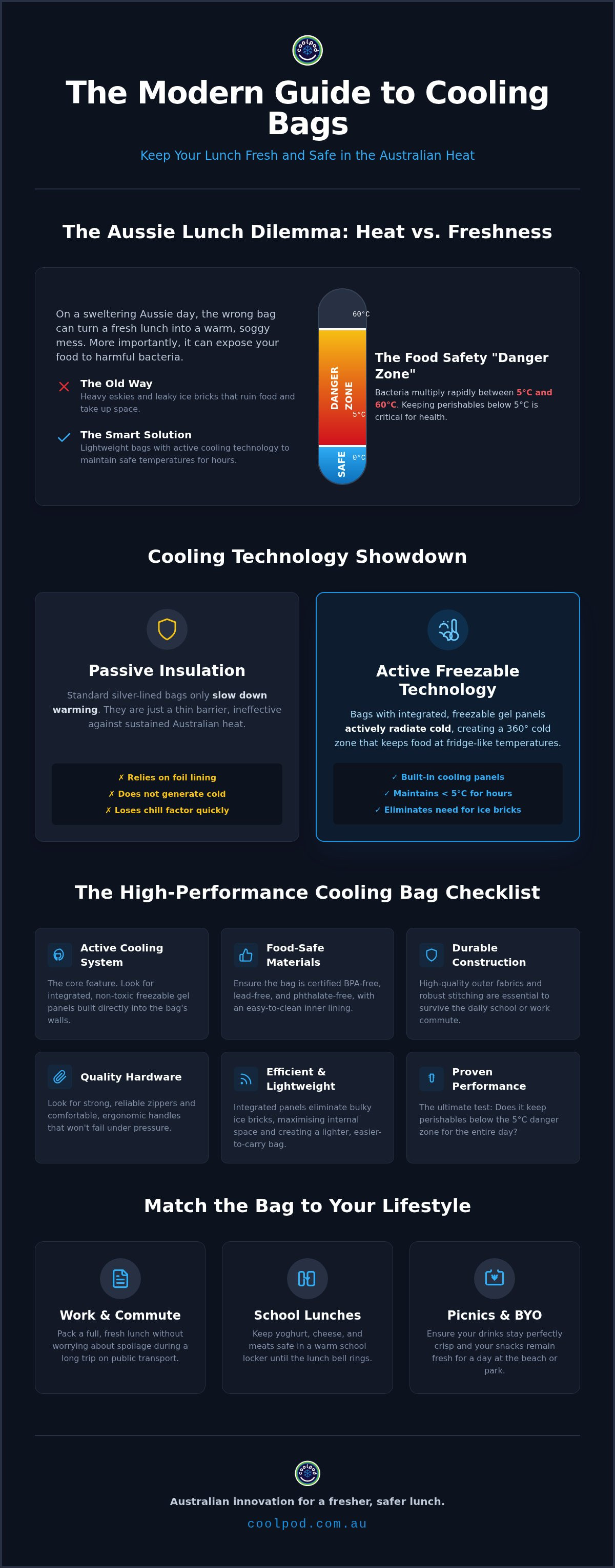
In 2026, a modern cooling bag is a high-performance tool, not just a fabric box with a zip. While most people grew up using a basic thermally insulated container, these passive designs have clear limits. They rely entirely on the initial temperature of your food and the strength of a thin foil lining. In the Australian summer, where temperatures often soar past 35 degrees, passive insulation isn't enough to stop the heat from creeping in. It merely slows down the inevitable warming process.
Standard silver-lined bags are essentially just thermal barriers. They don't generate cold; they simply try to hold onto what's already there. This is the fundamental difference between active and passive technology. An active cooling bag uses integrated gel panels that you freeze overnight. Instead of just blocking heat, the bag actively radiates cold into the storage compartment. This shift in design is vital for anyone carrying dairy, meat, or fresh fruit during a long commute or a day at the beach.
The Science of Keeping Things Chilled
The effectiveness of a modern bag comes down to thermal mass. By building the cooling agent directly into the walls of the bag, you create a 360-degree cold zone. High-quality outer fabrics also play a role. They act as a secondary barrier to prevent external heat transfer. Active cold generation beats passive retention because it resets the internal clock of your food’s safety. It ensures your lunch stays at fridge-like temperatures for hours, even when the bag is sitting in a warm car or a school locker.
Why Traditional Ice Packs are Becoming Obsolete
Relying on loose ice bricks is a dated approach that creates several practical headaches. The biggest issue is "soggy lunch" syndrome, caused by condensation as the ice pack melts. This moisture ruins bread and makes everything in the bag damp. Moving to a bag with built-in cooling solves this by containing the gel within leak-proof panels. It's a cleaner, more professional way to manage your meals.
There are also significant lifestyle benefits to this smarter design:
- Space Efficiency: You don't lose half your storage room to bulky, rigid ice bricks.
- Weight Distribution: Integrated panels are thinner and lighter, making the bag easier to carry on public transport.
- Consistent Cold: Built-in gel provides even cooling across all surfaces, rather than just freezing the one item touching the ice pack.
This clever engineering means you can pack a full bento lunch or a bottle of wine without worrying about it getting warm before you're ready to enjoy it. It provides the peace of mind that your food remains fresh and safe, no matter how high the mercury rises outside.
The Essential Cooling Bag Buyer’s Checklist: 6 Features You Can’t Skip
Finding a reliable cooling bag requires looking beyond the price tag or the colour. You need a product that survives the daily school bag scrum and the relentless midday sun. While many generic options claim to be insulated, they often lack the engineering required for the Australian climate. A smart purchase focuses on active cooling and material integrity to ensure your lunch remains as fresh as when you packed it at 7:00 am.
Material Quality and Food Safety
Safety is non-negotiable when it comes to food storage. Always check for BPA-free, lead-free, and phthalate-free certifications to ensure no harmful chemicals leach into your snacks. Following established food safety guidelines is much easier when your bag features a high-quality, easy-to-wipe internal lining. This prevents bacterial growth and keeps odours at bay. Choosing an Australian-designed product often means the materials have been tested against our high UV levels and extreme temperature fluctuations, providing a level of durability that imported generic brands rarely match.
Design and Functional Hardware
Hardware is often the first point of failure in cheaper bags. High-quality zippers that won't snag or break under pressure are essential for a bag you use every day. Look for ergonomic handles and adjustable straps that make carrying comfortable, whether you're walking to the office or heading to a picnic. Some innovative designs also include compression features. These clever additions help maximise the contact between the cooling panels and your food containers, which significantly improves thermal efficiency. If you want a bag that lasts more than one season, these small details make a massive difference.
Size and Capacity Selection
The right volume depends on your specific lifestyle needs. A standard Freezable Lunch Bag is perfect for a single meal, but you might need something larger for weekend outings. Consider these specific capacity needs:
- Yoghurt and Snacks: Small, targeted pouches prevent delicate items from being crushed.
- Drink Bottles: Ensure the bag is tall enough to accommodate standard Australian water bottles or wine bottles.
- Bento Boxes: Look for a wide-base design that allows lunch boxes to sit flat, preventing leaks and messy spills.
Managing condensation is another critical factor. A well-engineered bag uses moisture-wicking outer shells to keep the exterior dry, protecting your phone or paperwork from dampness. If you're tired of soggy sandwiches and lukewarm drinks, investing in a specialised freezable bag is the most effective way to upgrade your daily lunch routine.
Performance in the Heat: Evaluating Cooling Duration and Food Safety
In Australia, "warm" is often an understatement. When the mercury hits 30°C by 10:00 am, your lunch is immediately at risk. Bacteria thrive in what food safety experts call the "Danger Zone", the temperature range between 5°C and 60°C. To keep dairy, meats, and salads safe, your cooling bag must maintain an internal temperature below 5°C until you're ready to eat. Passive bags often fail this test within two hours, but active technology is designed to push through the hottest part of the day.
The secret to maximum performance is pre-chilling. If you pack cold food into a room-temperature bag, the food immediately starts warming up the bag's interior. By freezing an active bag overnight, you start the day with a "cold reservoir" that actively fights off external heat. This thermal mass is what allows a high-quality bag to stay cold for up to 8 hours, even when the ambient temperature is climbing. It's not just about insulation; it's about active temperature management.
Managing the Australian Summer
Outdoor events and school days are the ultimate tests for any portable cooler. A Lunch Cooler Bag is particularly important for students whose backpacks might sit in a hot locker or under a school veranda for hours. Most people need about 5 to 8 hours of reliable cooling to cover the gap between leaving home and the lunch break. For the best results, always keep your bag out of direct sunlight and follow safe handling recommendations to minimise the risk of foodborne illness.
Testing Your Bag’s Performance
How do you know your bag is still doing its job after a few seasons of use? A simple way to check is to place a fridge thermometer inside the bag after 4 hours of use. If it's consistently reading above 5°C, the insulation or the internal gel panels might be reaching the end of their lifespan. You should also check the physical integrity of the bag regularly. Look for signs that the internal gel panels are leaking or if the lining has developed small tears that could compromise the thermal seal.
One of the most common mistakes is leaving the bag unzipped while eating or during packing. Every second the bag is open, the dense cold air escapes and is replaced by warm Australian air. To maintain the best performance, always zip the bag shut immediately after accessing your food. This keeps the internal "micro-climate" stable and ensures your snacks stay crisp and safe for as long as possible.
Matching the Bag to Your Lifestyle: From Wine to Work
Everyone's daily routine is different, which is why your cooling bag should be tailored to your specific needs. A tradie working on a dusty job site requires a rugged, durable kit that can withstand being tossed into the back of a ute and survive the relentless midday sun. In contrast, an office professional in the CBD likely prefers a slimline, sophisticated design that fits neatly into a commuter backpack or briefcase without adding unnecessary bulk. For parents, the priority is usually school-friendly sizes that ensure fruit and dairy stay fresh until the second bell rings.
The BYO Wine Cooler Essential
Where a vibrant local restaurant culture makes BYO a popular choice, there's nothing worse than a lukewarm Chardonnay on a summer evening. Passive bags often fail to maintain the specific temperature needed for whites and sparkling wines, especially if the bottle wasn't perfectly chilled before leaving the house. A dedicated wine bag offers the necessary height for tall bottles and integrated padding to protect the glass from accidental knocks. For a deep dive into the best options for your next dinner out, check out The Best BYO Wine Cooler Bag Guide.
Snacks and Small Bites
Maintaining toddler nutrition on the go is much simpler when you have a tiny cooling bag designed specifically for yoghurt and cheese sticks. Standard lunch boxes are often too large for small snacks, which leads to wasted space and poor thermal efficiency. Using a specialised Coolpod Freezable Yoghurt Pouch keeps dairy at a safe, fridge-like temperature for hours, making it a reliable partner for morning park visits or long car trips. These smaller formats are also perfect for fitness enthusiasts who need to keep a protein shake or post-workout snack cold in their gym bag.
If you prefer a more structured meal, a Coolpod Freezable Bento Bag allows you to organise a balanced lunch with multiple compartments. This prevents your food from getting crushed and ensures that even delicate items like berries or sushi rolls remain appetising until lunchtime. This level of organisation, combined with active cooling technology, removes the stress of meal prep for the week ahead. Whether you're heading to the office, the job site, or the playground, you can browse our full range of specialised freezable bags to find a solution that fits your unique lifestyle.
Why Coolpod is the Smart Choice for Active Cooling
Melbourne-based and Australian-owned since 2010, Coolpod has spent over a decade perfecting the science of portable food safety. We understand that a standard insulated bag often fails when the temperature climbs. Our journey began with a simple goal: to eliminate the heavy, leaky ice bricks that take up valuable space in your lunch box. By developing a patented technology that integrates freezable gel directly into the bag's walls, we've created a cooling bag that functions like a portable fridge without the need for a power outlet or separate ice packs.
Our commitment to Australian families is reflected in every stitch and panel. We use only BPA-free and food-safe materials, ensuring that your health is never compromised. While generic retailers often focus on low-cost mass production, our focus remains on durability and intelligence in design. This dedication to quality is why we've become a trusted partner for parents, professionals, and outdoor enthusiasts across the country. When you choose an active cooling solution, you're joining a community of smarter lunch packers who value freshness and safety above all else.
The Coolpod Difference
The engineering behind our products is what truly sets us apart. By removing the mess of melting ice, we've solved the "soggy sandwich" syndrome that has plagued school lunches for generations. Our customers take their Coolpods everywhere. We hear stories of wine staying crisp at beachside picnics and dairy remaining fresh during long shifts in the boardroom. We don't just sell bags; we provide innovative, lifestyle-driven solutions that adapt to your day. Whether it's a Coolpod Freezable Bento Bag for a balanced meal or a specialised yoghurt pouch for the kids, each product is designed to handle the specific environmental challenges of the Australian climate.
Ready to Upgrade Your Lunch?
Choosing your first Coolpod is easy when you start with your daily needs. If you're a commuter, look for slimline designs that fit into your existing carryall. For those who enjoy a weekend BYO, our specialised wine coolers are a non-negotiable essential. To make your bag last for years, follow these simple maintenance tips:
- Storage: Keep the bag flat in the freezer overnight to ensure the gel panels freeze evenly.
- Cleaning: Wipe the internal lining with a damp cloth and mild soap after each use to prevent odours.
- Drying: Always ensure the bag is completely dry before placing it back in the freezer to avoid ice crystal buildup.
Investing in high-quality gear means you'll spend less on wasted food and more time enjoying fresh, cold meals. If you're ready to leave the ice bricks behind and experience the benefits of active cooling, browse our range of patented cooling bags today and find the perfect fit for your lifestyle.
Enjoy Fresh Meals Regardless of the Forecast
Transitioning from a standard insulated bag to a high-performance cooling bag is a simple change that makes a massive difference to your daily routine. By choosing active freezable technology over passive silver linings, you ensure your food stays safely below 5°C throughout the harshest Australian summer days. We've explored how matching the right design to your lifestyle, whether it's a rugged job site or a school locker, provides the peace of mind you need to pack dairy, meat, and fresh fruit with confidence.
With over 15 years of Australian expertise, Coolpod remains dedicated to providing clever, durable solutions that simplify your life. Our patented freezable technology eliminates the mess of melting ice packs, while our commitment to BPA-free and food-grade materials ensures your family's safety is always the priority. It's time to stop settling for soggy sandwiches and warm drinks. Discover the patented Coolpod range and keep your lunch fresh all day. You deserve a lunch that is as fresh and crisp as the moment you packed it.
Frequently Asked Questions
How long does a cooling bag stay cold in the Australian sun?
A high-quality cooling bag with active technology can maintain fridge-like temperatures for up to 8 hours. Performance varies based on the outside heat and whether the bag was frozen flat overnight. For the best results in the harsh Australian sun, keep the bag in the shade whenever possible and ensure it remains zipped tight to trap the cold air inside.
Can I put my cooling bag directly into the freezer?
Yes, you should place your Coolpod bag directly into the freezer overnight for at least 10 to 12 hours. To ensure the integrated gel panels freeze evenly and provide maximum thermal mass, it's best to store the bag flat. This preparation allows the bag to act as its own cold source without needing any bulky extra accessories.
Do I still need to use ice packs with a Coolpod bag?
No, you don't need separate ice packs when using our patented freezable range. The cooling agent is built directly into the lining of the bag itself. This clever design saves significant space for more food and eliminates the common mess and weight associated with traditional frozen bricks that often lead to soggy sandwiches.
Are these bags safe for storing medication like insulin?
While these bags are excellent for maintaining a cold environment, you should always consult your medical professional regarding the specific storage requirements for your medication. They are frequently used for insulin or other temperature-sensitive items, provided the cooling duration of the bag matches your specific travel or daily commute needs.
How do I clean my cooling bag if food spills inside?
Cleaning is straightforward; simply wipe the internal lining with a damp cloth and a small amount of mild soap. Avoid submerging the bag in water or putting it in a washing machine, as this can damage the internal gel panels. Always let the bag air dry completely in a cool spot before returning it to the freezer.
Is the gel inside the cooling bag non-toxic?
Yes, the gel used in every Coolpod is non-toxic and contained within food-safe, BPA-free materials. We prioritise safety for all Australian families, ensuring that even if a spill occurs inside the bag, your snacks and drinks remain protected from harmful chemicals or any potential contaminants during your daily routine.
What is the best size cooling bag for a standard school lunch?
The Coolpod Freezable Lunch Bag is the ideal size for a standard school meal, fitting a sandwich, fruit, and a snack easily. If your child prefers a larger lunch box or a variety of containers, the Coolpod Freezable Bento Bag offers a wider base to keep everything sitting flat and chilled until the lunch bell rings.
Can I use a cooling bag for warm food storage too?
These bags are specifically engineered for cold retention and are not suitable for storing warm food. Placing hot items inside can damage the integrated gel panels and compromise the bag's future cooling performance. They are best reserved for keeping your salads, dairy, and drinks ice-cold in demanding conditions.


