

Have you ever opened your lunch bag at midday only to be met with a damp, funky smell that makes your appetite vanish? It's a common frustration for Australians trying to keep their meals fresh in our demanding climate. We all know that a quality insulated bag is an investment in your daily health, yet they can quickly become a breeding ground for mould and stubborn odours if not maintained correctly.
This guide will show you exactly how to clean insulated lunch bag linings using the safest and most effective methods to sanitise every corner and protect the thermal integrity of your gear. Whether you're dealing with soggy sandwich residue or a yoghurt spill, we provide the practical solutions you need to maintain a sparkling, hygienic environment for your food. We'll walk through the essential steps to remove lingering smells and ensure proper drying to prevent future growth. By the end of this 2026 guide, you'll have a clear routine to keep your Coolpod or standard cooler bag in top shape, ensuring your lunch stays fresh and safe from the schoolyard to the office.
Key Takeaways
- Understand why sanitising your bag is essential to prevent bacterial growth and mould in the harsh Australian heat.
- Follow our professional step-by-step guide on how to clean insulated lunch bag linings using gentle, food-safe materials.
- Learn how to use bicarb soda to effectively neutralise stubborn odours and keep your gear smelling fresh.
- Discover the correct way to dry and store your bag to prevent moisture traps and extend its lifespan.
- Get expert advice on maintaining gel-lined technology like the Coolpod range to ensure maximum cooling efficiency every day.
Why Regular Cleaning is Essential for Lunchbox Hygiene
In the sweltering Australian heat, a lunch bag isn't just a carrier; it's a micro-environment. When temperatures climb, the interior of a bag can quickly enter the "danger zone", which is the temperature range between 5°C and 60°C where bacteria multiply most rapidly. This makes a high standard of lunchbox hygiene vital for anyone packing a meal for school or the office. Even tiny crumbs or a small leak from a dressing container can become a feast for microbes. If you leave these spills unaddressed, they often lead to unsightly mould and persistent mildew that can be difficult to shift later.
Beyond the immediate health risks, a dirty bag ruins the lunch experience. Lingering odours from last week's tuna or a forgotten piece of fruit can permeate fresh sandwiches, making them unappealing before you've even taken a bite. Knowing how to clean insulated lunch bag surfaces properly ensures that your food doesn't just stay cold, but stays appetising and fresh. A clean bag is your first line of defence against food-borne illnesses, providing peace of mind every time you unzip your meal.
The Science of Cross-Contamination
Food residue doesn't just sit harmlessly on the surface; it interacts with the lining over time. Acids and oils from food can degrade certain materials, making them more porous and harder to sanitise. Moisture is the real culprit in this process. It gets trapped in the stitched seams or the tight corners of the bag, creating a perfect habitat for bacteria to colonise. While a quick wipe with a damp cloth might remove visible grime, it often fails to reach the deep-seated bacteria lurking in the folds. This is why a thorough, methodical approach is necessary to prevent cross-contamination between yesterday's leftovers and today's fresh snack.
Maintaining Thermal Performance
Cleanliness also directly impacts how well your bag performs its primary job. Many insulated bags rely on reflective linings to bounce external heat away from your food. A layer of grease, dust, or dried spills dulls this surface, significantly reducing its reflective efficiency. For specialised gear like the Coolpod range, keeping the gel-lined walls clean is even more critical. Dirt build-up can interfere with the freezing process and the even distribution of cold throughout the bag. Learning how to clean insulated lunch bag interiors correctly is the simplest way to protect the integrity of the cooling gel and ensure your bag continues to perform in 30-degree weather.
Step-by-Step Guide: How to Clean Your Insulated Lunch Bag
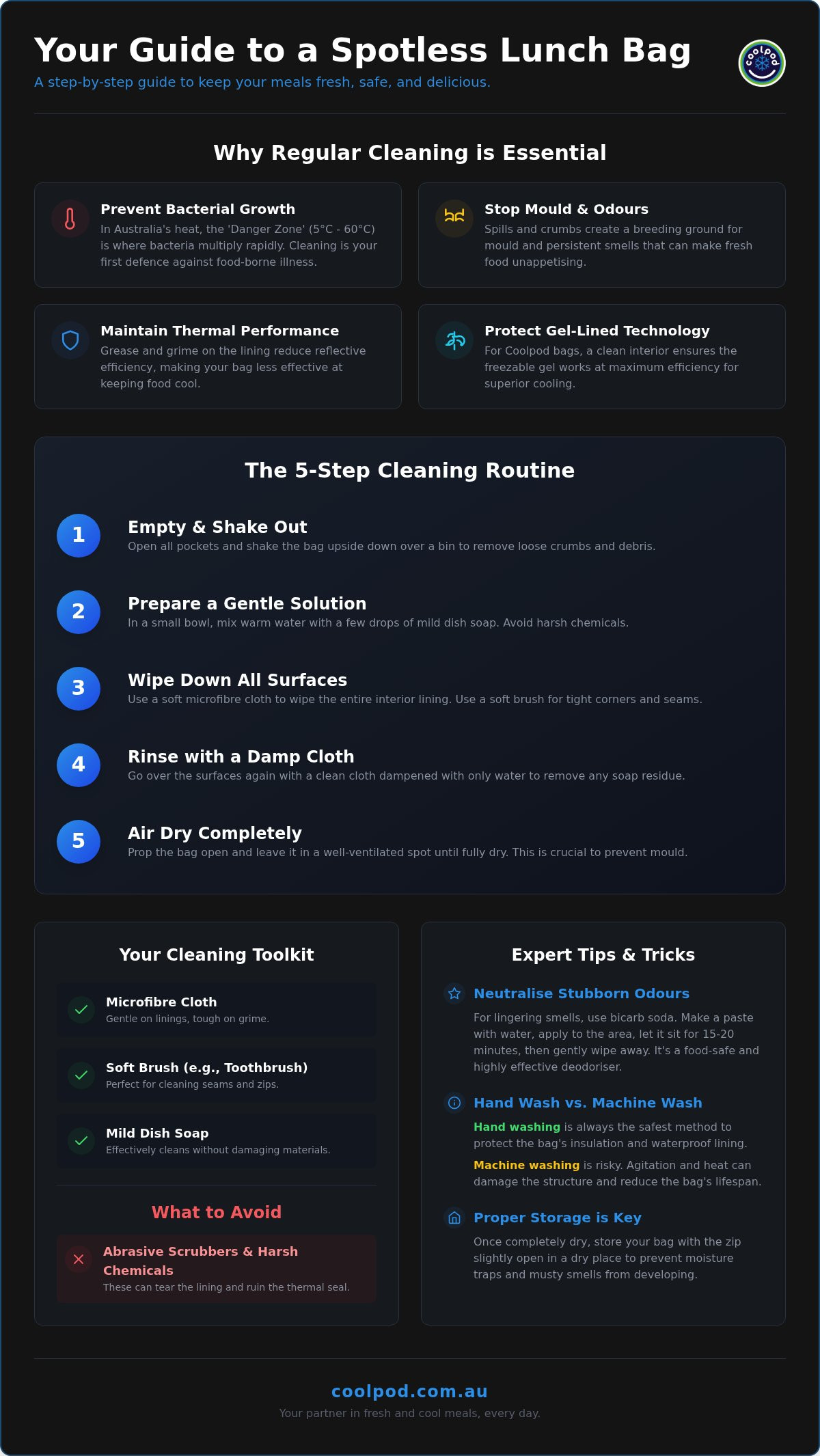
Keeping your lunch gear sanitised doesn't have to be a chore. Following a methodical routine is the best way to ensure your food stays safe and your bag lasts for years. Start by emptying the bag completely. Open every pocket and shake out loose crumbs over the bin. Next, prepare a gentle cleaning solution using warm water and a few drops of mild dish soap. Use a soft microfibre cloth or sponge to wipe down both the interior and exterior surfaces. Pay close attention to the corners where yoghurt spills or crumbs often hide. Once you've scrubbed the surfaces, rinse with a clean, damp cloth to ensure no soapy residue remains. Finally, air dry the bag thoroughly by propping it open in a well-ventilated spot before you place it back in the freezer or cupboard.
Hand Washing vs. Machine Washing
Is it tempting to throw your bag in the wash? Yes. Is it wise? Usually, no. Hand washing is the safest bet for preserving the lifespan of your insulation. The intense agitation of a washing machine can tear the delicate lining or bunch up the internal insulating foam. Heat from a dryer is even worse; it can melt waterproof seals or warp the bag's structure. While some bags claim to be machine-washable on a gentle cycle, you should always avoid hot water and high spin speeds. If you want a solution that is designed for easy maintenance, consider switching to a freezable lunch bag that simplifies the cooling process without the need for separate ice packs.
The Tools You'll Need
You don't need a professional kit to get great results. A soft microfibre cloth is perfect for general surfaces, while an old toothbrush works wonders for getting grime out of the seams and around the zip. Stick to mild detergents to protect the integrity of the materials. Avoid abrasive scrubbers like steel wool or stiff plastic brushes, as these can easily tear the inner lining and ruin the thermal seal. For those who prefer natural options, bicarb soda and white vinegar are excellent alternatives. These pantry staples align with safe food handling recommendations by providing a non-toxic way to sanitise your gear without harsh chemicals. Learning how to clean insulated lunch bag components with the right tools ensures you don't accidentally damage the bag while trying to save it from stains.
Dealing with Stubborn Stains and Lingering Smells
Sometimes a standard wipe-down isn't enough to tackle the aftermath of a forgotten tuna sandwich or a leaky container of Bolognese. If you've followed the basic steps on how to clean insulated lunch bag surfaces but still notice a persistent "funk", the culprit is usually trapped moisture or old organic spills that have settled into the seams. In the Australian humidity, these odours can intensify quickly, making it essential to neutralise them at the source rather than just masking them. For pungent food smells, a solution of one part white vinegar to three parts water is an excellent natural neutraliser. Simply wipe the lining and let the vinegar scent dissipate, taking the unwanted odours with it.
Persistent stains require a bit more physical action. If a spill has left a discoloured patch, create a thick paste using bicarb soda and a small amount of water. Apply this directly to the stain and let it sit for about 15 minutes before gently scrubbing. This method is particularly effective for oily residues that often resist standard dish soap. It's a simple, non-toxic way to restore the look of your bag without using harsh chemicals that might linger near your food.
The Bicarb Soda Deodorising Method
When smells are deep-seated, the "dry" deodorising method is your best friend. Start with a completely dry bag. Sprinkle a generous layer of bicarb soda powder across the bottom and into the corners. Zip the bag shut and leave it to sit overnight, or for up to 24 hours if the smell is particularly strong. Bicarb soda is a natural desiccant and deodoriser; it works by absorbing excess moisture and neutralising acidic odour molecules. The next morning, simply shake out the powder over the bin and wipe away any remaining white residue with a damp cloth. Your bag will smell neutral and fresh, ready for another week of work or school.
Spot Cleaning Tough Spills
Tomato-based sauces and oily salad dressings are notorious for leaving marks on light-coloured linings. The key is to treat these spills as soon as they happen. If you're dealing with a set-in stain, use an old toothbrush to gently agitate the bicarb paste into the fabric seams. Be careful not to scrub so hard that you compromise the bag's thermal seal or tear the waterproof coating. Ensuring these areas are spotless doesn't just look better; it prevents the build-up of grime that can eventually lead to mould growth, especially in the dark, damp environment of a school bag.
Drying and Storage: Preventing Mould and Soggy Sandwiches
Once you've mastered how to clean insulated lunch bag surfaces, the most critical step begins: drying. Never rush this part by tossing a damp bag into a dark kitchen cupboard or leaving it inside a school bag overnight. Moisture is the enemy of hygiene. Water trapped in the insulation is a magnet for mould spores, especially in the humid Australian climate. Instead, prop the bag wide open in a well-ventilated area. Avoid placing it in direct sunlight, as intense UV rays can degrade the outer fabric and compromise the internal thermal lining over time. Check the deep corners and seams with a dry paper towel before you consider the job done. Even a few drops of water hidden in a fold can lead to a musty smell by the time lunch rolls around the next day.
The Secret to Fresh Sandwiches
Residual moisture is the primary reason for the dreaded midday soggy sandwich. When you place dry bread into a bag that hasn't fully dried, the remaining water creates a humid micro-climate. As the bag cools down, this moisture condenses onto your food wrapping and eventually seeps into the bread. By ensuring the interior is 100% dry before use, you're effectively preventing soggy sandwiches in lunchbox setups. A dry, cold environment is the only way to maintain that perfect just-made texture for your ham and salad rolls. It's a simple change that makes a massive difference to the quality of your daily meals.
Optimal Storage Techniques
Where you store your bag depends on its design. For standard insulated carriers, a dry pantry shelf is fine once the bag is completely aired out. However, if you're using a freezable bag with integrated gel, the freezer is its natural home. This keeps the bag ready for the morning rush and prevents the gel from settling unevenly. Organising your lunch kit in a dedicated spot helps streamline your routine. When stacking your bags, avoid folding them too tightly or placing heavy items on top. This protects the internal gel pockets from being crushed, ensuring the bag maintains its patented cooling power for every use. If your current gear has developed permanent mould spots that won't budge, it's time to invest in a high-quality freezable lunch bag that's designed for durability and easy cleaning.
Maintaining Your Coolpod: Care for Freezable Technology
Coolpod's design is a game-changer for the Australian summer. Unlike standard insulated bags that rely on external ice packs, Coolpod features patented gel-lined walls. This means there are fewer loose items to clean and no condensation from melting ice bricks soaking your bag's base. However, this integrated technology requires a specific approach when you're looking at how to clean insulated lunch bag models with built-in cooling. The most critical rule is to avoid high heat. Never put your Coolpod in the dishwasher or use boiling water for sanitising. Extreme temperatures can compromise the chemical integrity of the cooling gel, potentially causing it to leak or lose its thermal efficiency over time.
Regular maintenance ensures your bag remains a reliable partner for your daily meals. By treating the technology with care, you extend its lifespan and maintain the high performance needed to combat 30-degree days. A quick, gentle clean after each use prevents the build-up of grime that makes deep cleaning much harder later on. This proactive approach is the smartest way to handle your lunchbox hygiene.
Protecting the Gel-Lined Walls
To keep the cooling panels in peak condition, you should always clean the bag while it's fully defrosted. When the gel is frozen, the walls are rigid, making it harder to reach into the folds where crumbs might hide. Once the bag has reached room temperature, the walls are flexible and easy to wipe down. Be mindful of what you pack; sharp objects like loose knives or metal skewers can puncture the internal panels. Because the Coolpod freezable lunch bag eliminates the need for messy, separate ice packs, the overall cleaning process is much faster and more streamlined than traditional methods.
Long-term Durability Tips
Regular maintenance is the key to a long product lifespan. Periodically inspect the outer fabric for any signs of wear and tear, especially around the handle and base. It's also vital to keep the zippers clear of debris. Small crumbs or dried spills can jam the teeth of the zipper, leading to snags that eventually ruin the bag's seal. A quick brush with a dry toothbrush every few days is usually enough to prevent this. Knowing how to clean insulated lunch bag zips and seams ensures your gear remains airtight and effective. If you notice the insulation is no longer holding its temperature or if the inner lining has become permanently stained, it's a clear sign that you should consider upgrading to ensure the highest standards of food safety.
Enjoy Fresh, Hygienic Meals Every Day
Maintaining a high standard of hygiene is the simplest way to protect your family's health and ensure your food stays appetising in the demanding Australian heat. By following a regular routine of gentle washing and thorough air-drying, you can say goodbye to stubborn odours and the risk of mould growth. Remember that moisture is the enemy of freshness. Ensuring your bag is completely dry before storage is the secret to avoiding those dreaded soggy sandwiches. Now that you've mastered how to clean insulated lunch bag linings correctly, your gear will perform better and last significantly longer.
If your current bag is becoming a struggle to keep fresh, it might be time for a smarter solution. Coolpod's patented freezable technology eliminates the need for messy ice packs; this makes your daily cleanup much faster and more efficient. As an Australian owned and designed brand, we've built our products specifically to handle our climate while prioritising food safety and intelligent engineering. Upgrade to a cleaner, colder lunch with a Coolpod Freezable Bag today and experience the difference of a truly fresh midday meal. Taking these small steps now will keep your lunches safe and delicious for years to come.
Frequently Asked Questions
Can I put my insulated lunch bag in the washing machine?
No, you shouldn't put most insulated bags in the washing machine. The mechanical agitation can shred the delicate thermal lining or cause the internal foam to bunch up, ruining its ability to keep food cold. High spin speeds and hot water are particularly damaging to the waterproof seals. Instead, stick to the hand-washing steps outlined in this guide on how to clean insulated lunch bag surfaces to ensure your gear lasts for years.
How do I get the smell out of my child's lunch bag?
Bicarb soda is the most effective way to neutralise stubborn odours from your child's lunch bag. Simply sprinkle a generous amount of the dry powder inside the bag and zip it shut overnight. The powder absorbs moisture and acidic smells from spilled yoghurt or old fruit. The next morning, shake out the residue and wipe the interior with a damp cloth. This natural method is safe for kids and keeps the bag smelling fresh.
Is it safe to use bleach to clean the inside of a cooler bag?
It is not recommended to use bleach on the interior of your cooler bag. Bleach is a harsh chemical that can degrade the plastic or fabric lining, eventually causing it to crack or peel. Since the bag holds your food, you should stick to food-safe alternatives like mild dish soap, white vinegar, or bicarb soda. These natural cleaners are effective at sanitising the surface without leaving behind toxic residues that could contaminate your lunch.
How long does it take for a freezable lunch bag to dry?
A freezable lunch bag typically takes between two to four hours to air dry in a well-ventilated area. Because bags like the Coolpod range have integrated gel-lined walls, they may take slightly longer than a standard thin-lined bag. Always prop the bag wide open and check that the seams are 100% dry before placing it back in the freezer. Proper drying is essential to prevent ice crystals from forming on the fabric during the freezing cycle.
Can I use a hairdryer to speed up the drying process?
You should never use a hairdryer to dry your lunch bag. The concentrated high heat can easily melt the waterproof lining or warp the internal cooling gel pockets, permanently damaging the bag's performance. It's much safer to let the bag air dry naturally. If you're in a hurry, placing the bag near a fan or an open window with good airflow will speed up the process without risking heat damage to the materials.
How often should I deep clean my lunch bag?
You should give your bag a quick wipe every day and a thorough deep clean once a week. Daily maintenance removes fresh crumbs and minor spills before they have a chance to develop into odours. A weekly deep clean using the bicarb soda method ensures that any deep-seated bacteria in the seams are neutralised. This routine is especially important during the Australian summer when warm temperatures can accelerate bacterial growth in uncleaned bags.
What should I do if I see mould inside my lunch bag?
If you spot mould, treat it immediately with a paste of bicarb soda and water or a diluted white vinegar solution. Scrub the affected area gently with a soft toothbrush to lift the spores from the fabric or seams. Rinse thoroughly and ensure the bag dries completely in a breezy spot. However, if the mould has penetrated deep into the insulation or won't come clean, it's safer to replace the bag to avoid health risks.
How do I prevent my sandwiches from getting soggy in a cold bag?
Preventing soggy sandwiches starts with ensuring your lunch bag is completely dry before you pack it. Any residual moisture inside the bag creates a humid environment that the bread will absorb. Using airtight containers or wrapping your sandwiches in greaseproof paper provides an extra layer of protection. By learning how to clean insulated lunch bag interiors and drying them properly, you maintain a cold, crisp environment that keeps your bread's texture perfect until midday.


