

A smarter school lunch kit isn’t a pile of products. It’s a few well-chosen essentials that suit your child’s food and school day, and are simple for them to manage. This back to school lunch gear checklist will help you decide what to pack, what to buy and what you can leave out.
When choosing gear, consider what your child eats, how much they need and whether they can open and close each container independently. If lunch includes food that needs to stay chilled, a freezable lunch or bento bag can keep contents cold for hours without a separate ice pack.
Use this practical checklist to choose containers, cooling gear and useful extras, then build a packing routine around them. A quick trial before school starts can reveal whether everything fits and whether your child can manage it.
Key Takeaways
- Use this back to school lunch gear checklist to choose essentials around your child’s food, appetite and school-day routine.
- Match the container to the food, checking capacity, compartments, leak resistance and whether your child can open it independently.
- Choose cooling gear based on the food and your routine. A freezable lunch or bento bag keeps contents cold for hours without a separate ice pack.
- Make packing easier with an evening-before routine and a short morning check of the meal, drink and any utensils.
- Choose gear by function: carry, contain, cool, drink and organise. Skip items that don’t solve a real need.
Back-to-school lunch gear checklist: start with what your child actually needs
Buying a separate container for every snack and several extra accessories can make lunches harder to pack. More pieces mean more to store, wash and keep track of. Start with the food your child eats and the rhythm of their school day, then add only what makes packing or eating easier.
A useful back to school lunch gear checklist starts with four basics:
- Lunch container: Choose a size that fits the main meal your child usually eats.
- Drink bottle: Pick one your child can open, close and carry comfortably.
- Lunch bag: Make sure it fits the packed meal and is easy for your child to carry.
- Snack containers: Add these when snacks need to be separated or packed for different breaks.
A practical school lunch kit starts with a container, drink bottle and lunch bag. Add snack containers only when your child’s food or routine calls for them.
Think of the kit as a small system, not a shopping list to complete. School policies and children’s needs vary, so there’s no single combination that suits every family. Even the familiar lunchbox has a broader story behind it; explore the history of lunchboxes for background on this everyday item.
The everyday essentials for a school lunch
Match the container to the meal. A single container may suit a sandwich or a substantial serving, while divided sections can keep different foods apart. Consider how much your child usually eats and whether they have one lunch break or several opportunities to eat. Aim for enough room for their usual food without making the packed lunch awkward to carry.
Consider age and dexterity as well as capacity. A child who struggles with a tight lid or fiddly clips may find a simpler closure easier to manage. Practise opening and closing the container together before school starts. Check that your child can also carry the lunch bag alongside their other school items.
Optional extras that earn a place in the bag
Add an extra only when it solves a specific problem. A small container can keep a separate break-time snack organised; cutlery is useful when the food needs it, and a reusable pouch may suit a snack your child already takes. If an item regularly comes home unused, leave it out to reduce what you need to pack, clean and remember.
Before adding special items, check the school’s lunch guidance. Requirements can differ, and some schools may restrict particular foods or objects. If the lunch includes food that needs to stay chilled, a cooling bag may suit your routine. For a closer look at options, see the best freezable lunch bags in Australia guide.
Review the kit after the first few school days. Notice what comes home untouched, what your child finds difficult to handle and whether everything fits. Use those observations to make small changes rather than buying more gear by default.
Choose lunch containers and bags that suit the food and the school day
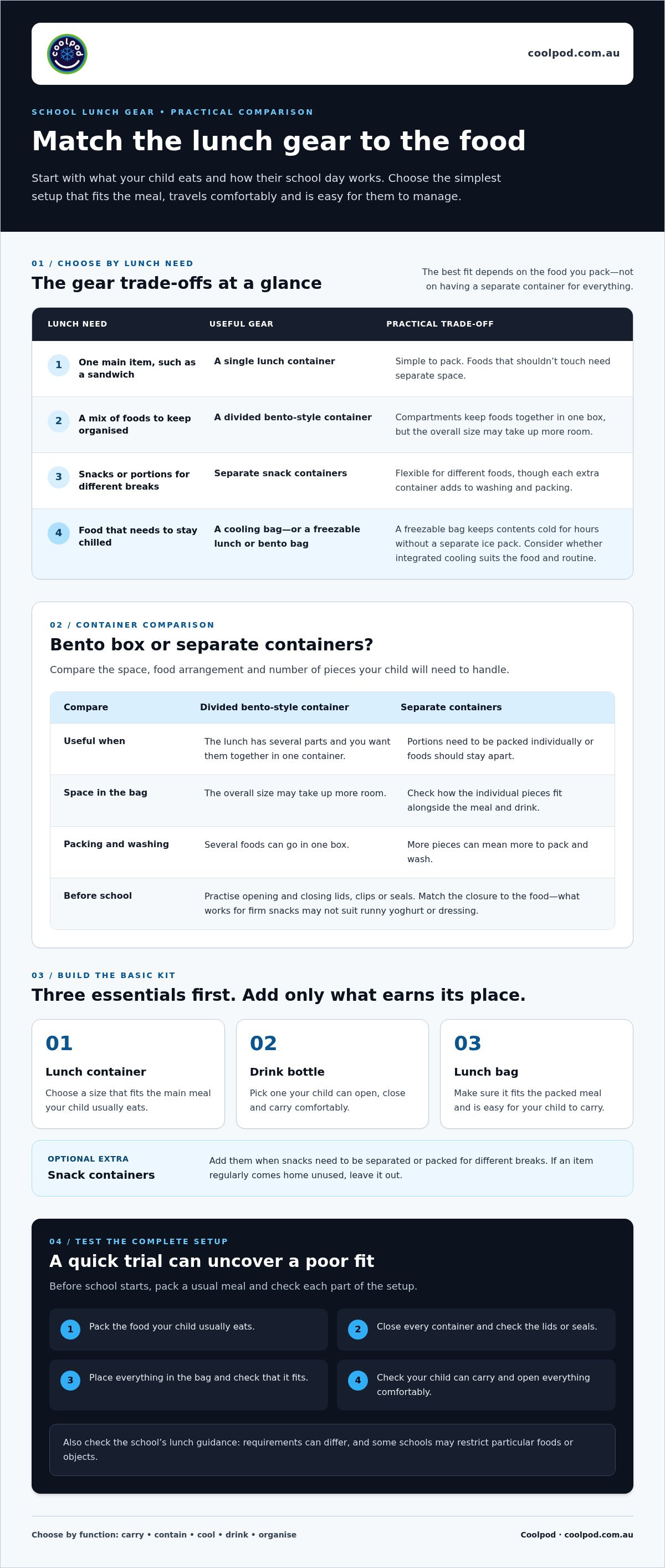
The right container fits the meal, travels comfortably and lets your child reach their food without a struggle. A divided box can suit a lunch with several parts, but it may take up more bag space than a simple container. Use the food you actually pack as your guide, then check that the container and bag fit together.
| Lunch need | Useful gear | Practical trade-off |
|---|---|---|
| One main item, such as a sandwich | A single lunch container | Simple to pack, but foods that shouldn’t touch need separate space. |
| A mix of foods to keep organised | A divided bento-style container | Compartments keep foods together in one box, but the overall size may take up more room. |
| Snacks or portions for different breaks | Separate snack containers | Flexible for different foods, though each extra container adds to washing and packing. |
Bento box or separate containers: which fits your child?
Compartments can keep several foods together in one container, which may suit a varied lunch. Separate containers offer more flexibility when portions need to be packed individually or foods should stay apart. Compare the space they take up, how many pieces need washing and how easily your child can open each lid. Practise with any clips or seals before the school day.
Leak resistance matters when you’re packing food that could spill or make other items messy. Check how the lid closes and consider what will go inside. A container that works well for firm snacks may not suit runny yoghurt or dressing. Match the closure to the contents rather than expecting one container to suit every food.
Match the lunch bag to the packed meal
Choose a bag for the packed meal’s volume and shape, not just its appearance. Consider the container’s footprint, any drink or snack items and how easily your child can pack and carry everything. A lunch bag can suit a main meal, while a bento bag is designed for carrying organised bento-style contents. For a closer format comparison, explore this bento cooler bag guide.
If the lunch includes food that needs to stay chilled, a freezable bag is another option. Coolpod’s freezable lunch and bento bags keep contents cold for hours without a separate ice pack, bringing carrying and cooling together. Consider whether that integrated cooling suits your child’s food and school routine. Explore freezable lunch and bento bags.
Use this part of your back to school lunch gear checklist to test the complete setup. Pack a usual meal, close every container, place it in the bag and check that your child can carry and open everything comfortably. A quick trial can reveal a poor fit before the first school morning.
Plan cooling and drinks without adding unnecessary lunch gear
Cooling needs depend on what you pack, how long the food is carried before it’s eaten and your child’s school-day routine. For guidance on handling particular foods, follow current Australian food-safety advice rather than relying on a lunch bag alone.
A cooling item is one part of your plan, not a guarantee that food is safe. Choose suitable gear for the food, then follow current food-safety guidance for preparing, storing and packing it.
Separate ice packs or integrated cooling?
A separate ice pack is another item to prepare, pack and remember. A freezable bag has cooling built in. Coolpod’s freezable lunch and bento bags keep contents cold for hours without separate ice packs. The practical choice depends on your packing habits and what you’re carrying. For a closer look at the two approaches, see this guide to built-in cooling and traditional ice packs.
As you refine your back to school lunch gear checklist, consider:
- What needs cooling? Think about the specific food you’re packing and consult current Australian food-safety advice for it.
- What fits your routine? If you prefer a separate ice pack, include it in your evening packing check. If you want fewer loose items, integrated cooling may suit your routine.
- What will your child carry? Make sure the packed lunch and any cooling gear fit comfortably with their other school belongings.
Neither option replaces safe food handling. Don’t treat a cooling bag or ice pack as proof that a meal will remain safe in every situation. Follow food-safety advice relevant to the food and how it’s stored.
Add a drink bottle that works for the school routine
Choose a bottle with a capacity that suits your child’s day and a lid they can open and close independently. Check whether it fits in the school bag or needs to be carried separately. A bottle that’s awkward to handle may go unused, so practise with the lid before school begins. Check school rules for permitted bottle types and drink contents.
Keep the drink decision separate from food cooling. A bottle carries a drink; it doesn’t replace a plan for chilled food. A drink cooler bag is another option when you want to carry a drink with cooling in mind. Explore Coolpod’s freezable bags for food and drinks as you decide what best fits your family’s routine.
Keep the setup simple: pack only the cooling gear the food calls for, and choose a bottle your child can manage. Each item on the checklist should have a clear purpose.
Use this school-morning packing checklist to keep lunch gear manageable
A repeatable routine takes the guesswork out of packing and makes it easier to spot what’s missing. Set up the evening before, when there’s time to check the next day’s schedule and organise the right gear. Follow current Australian food-safety advice when preparing and packing foods that need chilling.
The night-before lunch gear check
Start with the next day’s timetable and any school requirements. A day with sport or an excursion may call for different food or gear, while school guidance may affect what you pack. Choose containers for the planned meal, then identify anything that needs to be chilled overnight. Keep clean, dry lunch gear together in an easy-to-reach spot.
Use this simple sequence:
- Check the plan: Look at the school schedule and note any relevant requirements.
- Choose the gear: Set out the lunch container, bag and any snack containers or utensils the meal needs.
- Prepare for chilling: Refrigerate foods that need to be kept chilled, following current Australian food-safety guidance.
- Gather the kit: Place clean, dry items together so they’re easy to find in the morning.
This sequence works whether you pack the whole lunch ahead or prepare only the parts that suit your routine. Don’t leave chilled food out as part of the packing setup. Use current food-safety advice for handling and storage rather than guessing at time or temperature limits.
The final check before heading to school
In the morning, compare the packed meal with the plan. Check that snacks, a drink bottle and any required utensils are included, then close the containers and bag. If your child will carry and open their own lunch, let them try the packed setup before leaving. This can catch a difficult lid or awkward fit while there’s still time to adjust.
Keep the last check short and consistent. A note near the lunch gear or a small checklist can help children take part as they grow more independent. Focus on what that day requires rather than adding extras “just in case”.
- Meal and planned snacks are packed.
- Drink bottle is included and ready to carry.
- Any required utensils are in the bag.
- Lids are closed and the child can manage the kit.
Make the return trip part of the system, too. Choose a regular place at home for used lunch gear, such as a spot near the kitchen where it won’t get lost among school items. That gives everyone a clear next step after school and makes it easier to see what needs attention before the next packing session. Keep clean gear in its own designated place, separate from items brought home.
For families who want cooling built into the lunch bag, a freezable lunch bag can be part of the routine.
Build a back-to-school lunch kit that suits your family
A useful lunch kit fits your child’s food and school day, not the number of pieces it contains. Use your back to school lunch gear checklist to give each item a job: carrying the meal, keeping food organised, managing cooling or helping your child eat and drink independently. If an item doesn’t solve a real need, leave it out.
A simple checklist by school lunch need
Start with the meal your child usually eats, then add only the gear that makes packing or eating it easier. This function-based check can help you avoid duplicates and keep the kit straightforward to use.
- Carry: Choose a lunch bag that fits the packed meal and is comfortable for your child to take to school.
- Contain: A suitable container may be enough for a basic lunch. For several components, consider a divided container or separate containers to keep foods organised.
- Cool: If the food needs cooling, weigh up a separate ice pack against a freezable bag. Consider your packing habits and whether you want another item to remember.
- Drink: Include a drink bottle your child can manage and that suits the school’s requirements.
- Organise: Add snack containers or utensils only if the food, breaks or school routine call for them.
Check the complete setup with a usual lunch packed inside. Does everything fit? Can your child open the containers and carry the bag? This trial can show whether each piece of gear is useful or simply taking up space. Revisit the kit when your child’s appetite, independence or school routine changes.
Explore a cooling option that reduces separate items
For food that needs to stay chilled, a freezable lunch or bento bag is an optional cooling choice. Coolpod’s freezable bags use integrated cooling to keep contents cold for hours without separate ice packs. That can simplify the packing checklist by removing a separate item from the routine. It’s not a requirement for every family; choose cooling gear according to the food you pack and your needs.
Keep the final kit practical: carry, contain, cool, drink and organise. A basic lunch may need only a container, bottle and bag, while a more varied meal may benefit from extra compartments or a cooling option. Choose a setup your child can manage and your family can pack consistently.
If integrated cooling suits your lunch routine, explore Coolpod’s freezable lunch gear for carrying food without packing a separate ice pack.
Make your next school week easier to pack
Use the back to school lunch gear checklist as a starting point, then let your family’s routine guide any changes. After a few school days, notice which items come home untouched, which are tricky for your child to manage and whether the setup suits the food you’re packing. Adjust one thing at a time as your child’s appetite, confidence and school schedule change.
If chilled food is part of your lunch plan, integrated cooling may simplify what you pack. Coolpod is an Australian-owned business with patented freezable bags designed to keep contents cold for hours without separate ice packs. Choose this option when it suits your routine, not because every lunch kit needs it.
Explore Coolpod’s freezable lunch gear and find a freezable lunch or bento bag for your child’s school day. Choose the gear that fits your routine and helps your child manage lunch with confidence.
Frequently Asked Questions
What should I pack in a child’s school lunch bag?
Pack the meal and drink your child needs for their school day, plus only the extras they’ll use. A sandwich, piece of fruit and drink may need just one container and a bottle; a child with separate snack breaks may need another small container. Check the school’s food requirements and your child’s needs, then leave out utensils or pouches they won’t use.
Is a bento box better than separate lunch containers?
Neither is automatically better. Choose based on the meal and your child’s preferences. A bento box can keep foods such as crackers, cheese and fruit together, while separate containers let you vary portions or keep foods apart. Consider how much space the packed lunch takes up and whether your child can manage the lids and clips.
Can a child open their lunch containers independently?
Many children can manage their own containers when the closures suit their age and dexterity. Before school starts, practise with the actual containers they’ll take: ask them to open, close and pack each one back into the bag. If a lid needs a difficult grip or a clip is stiff, try a simpler closure. This practice can help reduce lunchtime frustration.
How do I label school lunch gear so it is easy to identify?
Put your child’s name somewhere easy to spot, using a label or other identification method suitable for the item. Check that it stays legible and attached through ordinary use, and label lids separately if they’re often mixed up with other containers. Use the same name across the bag, bottle and containers so misplaced gear is easier to recognise.
Should I pack a reusable yoghurt pouch for school?
Pack a yoghurt pouch if your child enjoys yoghurt and the pouch suits their school routine. Consider whether they can open and handle it neatly, and whether the school permits it. Don’t assume every pouch is reusable: follow the product’s intended use and care instructions. If your child struggles with pouches, a container and spoon may be more practical.
Can a freezable lunch bag replace a separate ice pack?
A freezable lunch bag provides integrated cooling without a separate ice pack. Coolpod’s freezable bags are designed to keep contents cold for hours, so this format may suit families looking to reduce loose items in the lunch kit. A cooling bag isn’t a guarantee of food safety. Choose cooling gear for the food you’re packing and follow current Australian food-safety guidance.
How often should I replace a child’s lunch bag or containers?
There’s no set replacement interval that suits every family. Check the gear regularly and consider replacing an item if damage affects how it works, such as a container that no longer closes securely or a bag with a broken fastening. Follow the maker’s care guidance, too. If your child has outgrown the capacity or can’t manage the closures, choose a better fit.


