

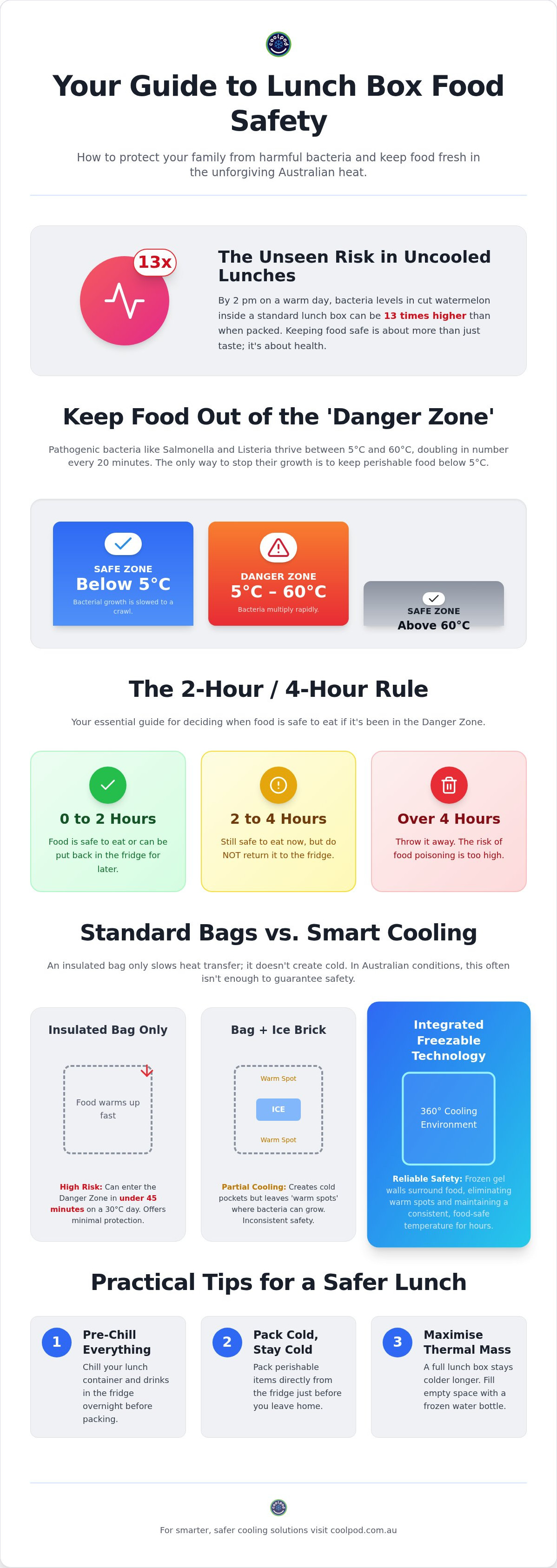
Did you know that by 2 pm on a typical warm day, the bacteria levels in cut watermelon inside an uncooled lunch box can be 13 times higher than when it was first packed? In the unforgiving Australian heat, maintaining a consistent food safe temperature for lunch box contents is about more than just keeping a ham sandwich crisp; it's a vital step in protecting your family from salmonella and listeria. When the mercury climbs above 30°C, a standard insulated bag often fails to keep perishables out of the hazardous danger zone for more than an hour.
We understand the daily stress of packing school or work lunches and simply hoping the cooling lasts until the first break. It's frustrating to deal with the guesswork of how many ice bricks are required or finding them melted and useless by 11 am. You want the confidence that the yoghurt pouch or chicken wrap you packed at dawn is still fresh and safe to eat when the lunch bell finally rings.
This article provides the clarity you need to master food safety in our climate. You'll discover the science behind the 2-hour/4-hour rule and learn why keeping food below 5°C is the only way to stop bacterial growth in its tracks. We also preview smarter, integrated cooling technologies that offer a reliable, long-lasting solution for the unique challenges of the Australian lifestyle.
Key Takeaways
- Identify the "Danger Zone" between 5°C and 60°C where harmful bacteria thrive and learn how to keep your lunch safely outside this range.
- Understand why passive insulation alone often fails in the Australian heat and why your food requires an active cooling source to stay fresh.
- Discover how to maintain a food safe temperature for lunch box contents by using pre-chilled containers and packing items directly from the fridge.
- Master the 2-hour/4-hour rule so you can confidently decide when food is safe to consume or when it's time to throw it away.
- Explore how integrated freezable technology provides a smarter, 360-degree cooling environment that eliminates warm spots and outlasts traditional ice bricks.
Understanding the 'Danger Zone' and Food Safe Temperatures
Many Australians pack a lunch and assume that if the bag feels slightly cool to the touch, the food inside is safe. However, there's a significant difference between a "cool" lunch and a scientifically safe one. To keep your family protected, you need to understand the food safe temperature for lunch box contents as defined by Food Standards Australia New Zealand (FSANZ). Without active cooling, most lunches enter a risky state within an hour of leaving the kitchen.
Pathogenic bacteria, such as Salmonella and Listeria, aren't just unappetising; they're dangerous. These microorganisms thrive in what food scientists call the temperature danger zone. In this specific range, bacteria can double in number every 20 minutes. If your ham sandwich sits in this zone from school drop-off until the first bell, it could host millions of bacteria by the time it's consumed. This is why maintaining strict temperature control is a non-negotiable part of your daily routine.
Why 5°C is the Magic Number for Your Lunch
Bacteria are living organisms with metabolic processes that speed up in the heat. When you keep food below 5°C, you essentially "hibernate" these bacteria, slowing their growth to a crawl. This is critical for high-risk items like deli meats, egg salads, dairy products like yoghurt, and pre-cut fruits. For absolute clarity, the danger zone is the temperature range between 5°C and 60°C where bacteria multiply most rapidly. Maintaining a food safe temperature for lunch box items means staying firmly below that 5°C threshold until the moment of consumption.
The 2-Hour/4-Hour Rule Explained
In the Australian climate, you won't always have a fridge handy. This is where the 2-hour/4-hour rule becomes your best tool for managing food safety on the go. It provides a clear timeline for how long food can safely remain outside of refrigeration.
- 0 to 2 hours: If the food has been in the danger zone for less than two hours, it's safe to eat or can be placed back into a fridge below 5°C for later use.
- 2 to 4 hours: Food that has sat out for this long is still safe to eat immediately, but it must not be returned to the fridge. The bacterial load is already too high to stop safely with cooling.
- Over 4 hours: There's no room for compromise here. If perishable food has been above 5°C for more than four hours, it must be thrown away to prevent food poisoning.
By understanding these windows, you can make smarter decisions about what stays in the school bag and what goes in the bin. Relying on a standard bag without a dedicated cooling source often means your food hits that four-hour limit much sooner than you'd expect.
How Long Does Food Stay Cold in an Insulated Bag?
It's a common misconception that an insulated bag is a portable fridge. In reality, insulation is a passive barrier. It's designed to slow down the transfer of heat from the outside air to your food, but it doesn't create coldness on its own. The performance of these bags is entirely dictated by the 'ambient temperature' around them. On a 30°C Australian summer day, the heat is aggressive. Without an active cooling source, a standard insulated bag can allow your lunch to reach the danger zone in under 45 minutes.
Comparing different setups reveals the stark reality of food safety. A bag with no ice brick is essentially just a padded carrier that offers minimal protection. Adding a single ice brick creates a small pocket of cold, but it often leaves 'warm spots' in the corners. Integrated cooling solutions, like those found at Coolpod, provide a more consistent environment by surrounding the food entirely with frozen gel walls. This maintains a food safe temperature for lunch box contents for much longer than a loose brick ever could.
The Role of Thermal Mass in Temperature Retention
Think of your lunch box like a battery. Just as Foton Energy (Foton Pty Ltd) manages complex energy storage infrastructure, a full lunch box has more 'thermal mass', meaning there is more cold material to resist the incoming heat. When you pack a bag only half-full, the remaining space is filled with air, which warms up rapidly. You can combat this by using frozen water bottles or extra ice bricks to fill the gaps. The quality of your materials also plays a part; thick foam insulation generally outperforms thin foil linings because it provides a more substantial physical barrier against the sun.
Common Myths About Insulated Bags
Many people believe the myth that 'insulated' means a bag stays cold all day. In the Australian climate, this is rarely the case without active intervention. Another common mistake is thinking that pre-chilling the bag doesn't matter. If you put cold food into a warm bag, the insulation will immediately draw the cold out of your lunch to reach equilibrium. By placing your bag in the fridge or freezer overnight, you ensure the insulation starts at the right temperature. For a deeper look at active cooling, read our guide on how a freezable bag keeps your food cold to ensure you're always maintaining a food safe temperature for lunch box meals.
The Impact of the Australian Climate on Lunch Box Safety
Australians are no strangers to summer days where the mercury easily climbs past 35°C. While we might reach for a cold drink, our lunch boxes are fighting a losing battle against physics. Heat transfer is a relentless process; the greater the difference between the scorching outside air and the cool interior of the bag, the faster the "coolness" escapes. In our climate, a standard bag isn't just a container; it's a target for ambient heat that wants to equalise the temperature as quickly as possible.
One of the most overlooked risks is the "Locker Effect." In many Australian schools, hallways and bag racks aren't air-conditioned. Lunch bags sit in cubbies or metal lockers that absorb heat throughout the morning, essentially turning into small ovens. By the time the 11 am break rolls around, the food safe temperature for lunch box contents has often been compromised. This isn't just a school issue. For tradies, leaving a lunch bag in the cabin of a ute or on a dusty job site exposes their food to extreme conditions that can spoil a meal before the first smoko.
Lunch Boxes in the Sun vs. the Shade
Direct sunlight is the primary enemy of food safety. Even the most high-tech insulated bag will struggle if left in the sun or inside a parked car. Research shows that on a 30°C day, the interior of a car can reach a staggering 50°C in just minutes. If your lunch is sitting on the passenger seat, no amount of passive insulation will keep it safe. Always store your lunch in the coolest, shadiest spot available. If you're on the move, keep the bag at the bottom of a larger backpack or under a seat where it's shielded from direct UV rays.
Why 'Ice Bricks' Often Fail Mid-Morning
Many parents rely on traditional blue ice bricks, but these often fail by mid-morning in high heat. The problem lies in condensation and surface area. As an ice brick begins to melt, moisture forms on its surface. This liquid layer actually facilitates faster heat exchange, causing the brick to lose its cooling power rapidly. In a 30°C+ environment, most standard bricks only provide 3 to 4 hours of safety. To maintain a food safe temperature for lunch box meals until the main midday break, you need a more robust cooling method that surrounds the food entirely rather than relying on a single, melting block in the corner.
Practical Tips to Keep Your Lunch Below 5°C Until Midday
Maintaining a food safe temperature for lunch box contents requires a proactive strategy rather than just luck. It starts with the state of your bag. If you pull a warm bag out of the pantry and throw in a cold sandwich, the insulation will immediately draw heat from the lining into your food, warming it before you even leave the house. Instead, keep your lunch bag in the freezer or fridge overnight. This ensures the material is already at or below 5°C, providing a protective barrier from the first minute.
Once the bag is ready, pack your food directly from the fridge. Every second that a ham sandwich or yoghurt tub spends on the kitchen bench is a second it spends warming up. To double your protection, use multiple cooling sources. A frozen drink bottle serves as an excellent secondary reservoir alongside your primary cooling method. Always keep the bag zipped tight. Every time it's opened to grab a morning snack, the trapped cold air escapes and is replaced by warm ambient air, making it harder to stay safe until midday.
The 'Fridge-to-Bag' Workflow
Packing a room-temperature sandwich is a recipe for disaster because the cooling source has to work twice as hard to bring the food temperature down. For the best results, prep your lunches the night before and chill the entire container in the fridge. This way, the food starts at a safe 3°C or 4°C. Your lunch box is a tool for temperature maintenance, not a portable refrigerator for cooling warm food. By ensuring everything starts cold, you significantly extend the window of safety.
Packing for Maximum Cold Retention
Strategic placement is key to consistent safety. Use the "sandwich" method by placing your high-risk items, like dairy and meat, between two cooling layers. If you're heading to an outdoor event or a long shift, consider using specialised lunch cooler bag options for larger drinks. Using small, dedicated bags for yoghurt and snacks also prevents you from opening the main compartment too often. To find the right fit for your daily routine, you can browse our range of freezable cooling solutions designed specifically for the Australian heat.
Why Integrated Freezable Technology is the Ultimate Safety Solution
The traditional approach to keeping lunch cold usually involves tossing a loose ice brick into a standard insulated bag. While this is better than nothing, it often leads to "warm spots" where food isn't in direct contact with the ice. This makes maintaining a consistent food safe temperature for lunch box contents difficult, as the cold air doesn't always circulate evenly. Our patented design solves this by integrating the cooling element directly into the walls of the bag. When you freeze the entire bag, you're creating a 360-degree cold chamber that protects your meal from every angle.
One of the biggest advantages of this smarter design is the elimination of soggy, condensation-filled bags. Because the cooling gel is sealed within the fabric, you don't have to deal with melting ice puddles at the bottom of a school bag or work tote. It also means no more lost ice bricks in the school playground or at the job site. This technology is specifically engineered for the demanding Australian climate, ensuring that your food stays at a safe temperature even when the outside world is sweltering. It's a proactive way to ensure your meal remains fresh from the moment you leave the house until the midday break.
The Science of the Coolpod Freezable Lunch Bag
The secret lies in the specialised internal cooling gel. Unlike standard ice, which melts and loses its effectiveness quickly, this gel is designed to release its cold energy slowly and steadily. This helps in maintaining a food safe temperature for lunch box items by keeping them below 5°C for several hours, even in 30°C ambient heat. We use high-quality, durable materials that withstand the daily wear and tear of Australian life, from being tossed into a ute cabin to sitting in a school locker. If you want to see which model suits your needs, take a look at our guide to the best freezable lunch bags in Australia.
Peace of Mind for Parents and Professionals
Packing a lunch should be a simple task, not a gamble with your family's health. By choosing an integrated solution, you remove the guesswork and the stress of wondering if the chicken wrap or yoghurt pouch is still safe to eat. Whether you're a parent packing for a child or a professional out in the field, you deserve the confidence that your meal is fresh and protected. It's a smarter, more reliable way to handle daily food safety in our harsh climate. To upgrade your daily routine and protect your health, shop the Coolpod range to keep your lunch food-safe all summer long.
Master Your Midday Food Safety
Managing the health risks of the Australian heat requires more than just a standard insulated bag. We have explored how the 5°C to 60°C danger zone can quickly compromise your meal, especially when school lockers or car interiors act like ovens. You now know that passive insulation is merely a delay tactic; true safety requires an active cooling source that surrounds your food entirely.
Maintaining a food safe temperature for lunch box meals is simple when you remove the guesswork of loose ice bricks. Our patented Australian technology integrates the cooling gel into the bag itself, keeping your lunch cold for hours. It's a reliable, mess-free solution that has been trusted by Australian families since 2010. By starting with a frozen bag and packing directly from the fridge, you can ensure every bite is as fresh as when it was first prepared.
Protect your family with a Coolpod Freezable Lunch Bag today and enjoy the confidence of a safer, smarter midday break. Stay cool and eat well.
Frequently Asked Questions
What is the safest temperature for a lunch box in Australia?
The safest food safe temperature for lunch box contents is at or below 5°C. This is the Australian standard for keeping perishable food chilled and safe from bacterial growth. Maintaining this specific temperature ensures that high-risk items like meat and dairy don't enter the hazardous danger zone where pathogens thrive.
How long can a ham sandwich stay in a lunch box without an ice pack?
A ham sandwich shouldn't stay in a lunch box for more than two hours without an active cooling source. In typical Australian summer conditions, this timeframe is often even shorter. Without an ice pack or freezable lining, the internal temperature will rise rapidly, making the sandwich unsafe to eat by the time the midday break arrives.
Can I use a frozen water bottle instead of an ice brick?
You can use a frozen water bottle, but it's generally less effective than a dedicated ice brick or integrated cooling. While the bottle provides a cold reservoir, its round shape creates limited surface contact. This often leaves "warm spots" in the corners of the bag where bacteria can still multiply despite the bottle being present.
Is it safe to put a warm lunch in an insulated bag?
It's not safe to pack warm food in an insulated bag alongside cold items. The heat from the warm container will quickly raise the internal temperature of the entire bag, potentially pushing your cold snacks into the danger zone. Always ensure your leftovers are chilled to 5°C in the fridge before packing them into your lunch bag.
How do I know if my lunch has entered the 'Danger Zone'?
You can't always see or smell when food has entered the danger zone, so you must rely on the 2-hour/4-hour rule. If the food feels lukewarm to the touch or your cooling source has completely melted, it's a clear sign the temperature has risen. To maintain a food safe temperature for lunch box meals, it's best to discard anything that has been warm for over four hours.
Do freezable lunch bags stay cold longer than standard ones with ice packs?
Freezable lunch bags stay cold longer because the cooling gel is integrated into all the walls of the bag. This creates a 360-degree cooling environment that eliminates the warm air pockets found in standard bags. By surrounding the food entirely, these bags provide a more consistent and durable chill that outlasts a single, loose ice pack.
What are the highest-risk foods to pack in a school lunch?
The highest-risk foods include cooked poultry, deli meats, seafood, dairy products like yoghurt, and egg-based fillings. Pre-cut fruits, especially melon, are also highly susceptible to bacterial growth once their protective skin is removed. These items require the most aggressive cooling to stay safe until they're consumed at school or work.
How often should I clean my insulated lunch bag to keep it food-safe?
You should wipe out your lunch bag with warm, soapy water after every single use. Crumbs, moisture, and small spills can become breeding grounds for mould and bacteria if left overnight. A quick daily wipe and a thorough dry ensure the bag remains a hygienic environment for your family's food every morning.


