

Why are we still wrestling with bulky ice packs that hog half the space in a lunch box and somehow vanish the moment they hit the kitchen bench? It’s a frustrating cycle every Aussie parent and professional knows well. You pack a healthy meal at 7 am, but by the time the midday heat hits 30 degrees, your sandwich is soggy from condensation and your yoghurt is questionable at best. You’ve likely wondered, are freezable lunch bags worth it, or are they just another gadget destined for the back of the cupboard?
We'll help you discover if integrated cooling technology is the right investment for your daily routine and how it stacks up against traditional ice packs in the relentless Australian heat. This guide explores everything from food safety standards to the practical benefits of a bag that stays fridge-cold until 1 pm, ensuring your lunch remains as fresh as when you packed it. We'll also look at why a durable, Melbourne-engineered solution is the smartest way to end the cycle of lost freezer bricks and soggy bread for good.
Key Takeaways
- Understand why standard insulated bags often fail in 30-degree heat and how to keep your lunch safely below the 5°C danger zone.
- Learn the mechanics of integrated cooling gel and how it turns your entire lunch container into a self-cooling "Esky in a bag."
- Compare the weight, space, and condensation benefits to decide are freezable lunch bags worth it for your specific daily needs.
- Discover the long-term savings of a durable cooling solution that eliminates the cycle of lost ice packs and soggy, wasted food.
- See why Australian-owned engineering provides the ultimate protection for everything from school snacks to your favourite bottle of wine.
The Great Aussie Lunch Dilemma: Why Standard Bags Often Fail
Aussie summers don't mess around. When the mercury hits 30 degrees before morning tea, a standard polyester bag with a thin silver lining simply cannot cope with the thermal pressure. Most of us have experienced that sinking feeling of opening a lunch box at midday only to find a lukewarm sandwich and a "sweating" piece of cheese. This isn't just about unappealing food; it's a matter of safety. If you've ever thrown out an expensive salad because it sat too long in the sun, you've likely asked yourself: are freezable lunch bags worth it for my daily commute?
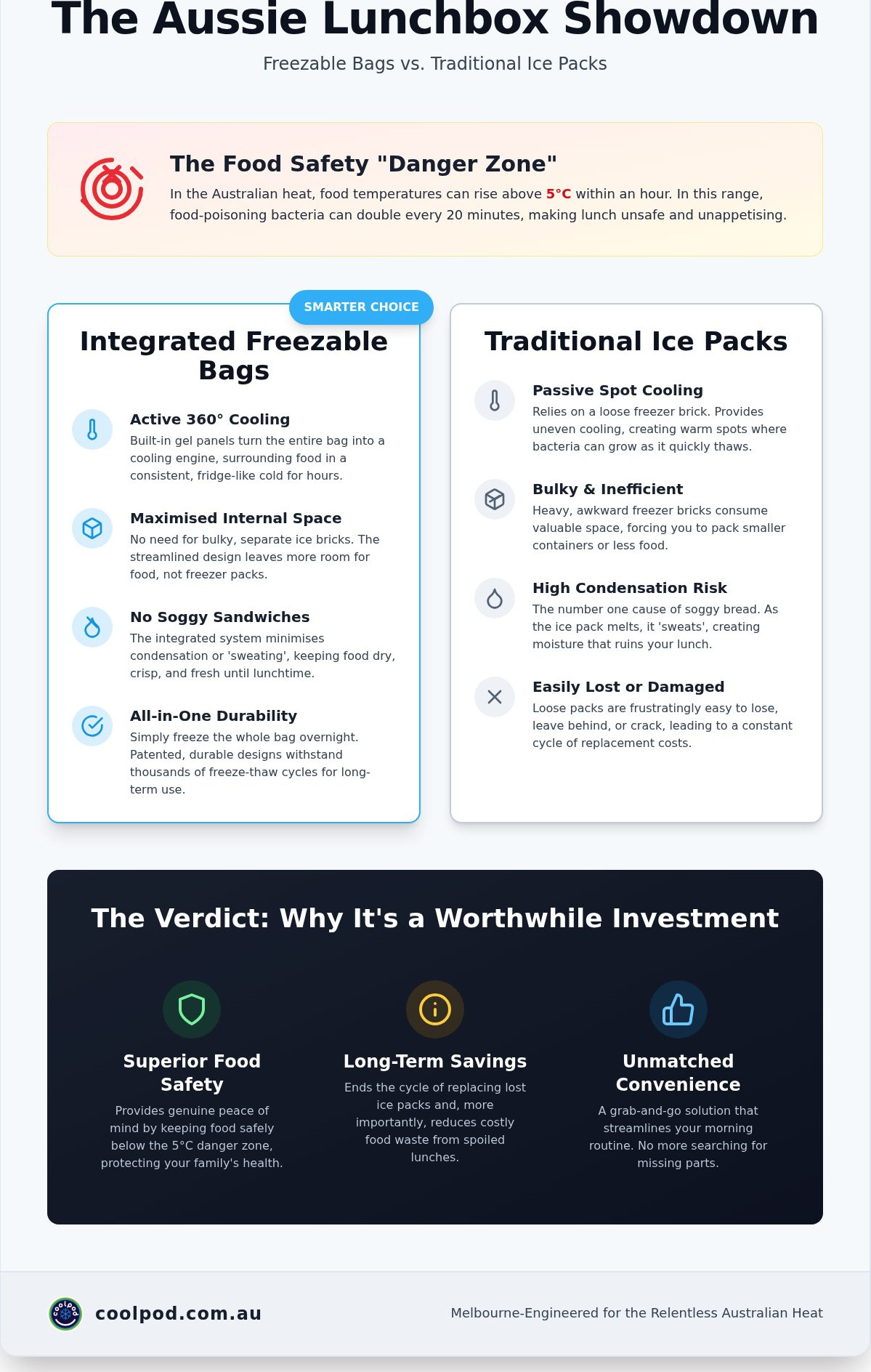
The primary issue is the "Danger Zone." Food safety experts define this as the temperature range between 5°C and 60°C, where food-poisoning bacteria can double in number every twenty minutes. In a typical school bag sitting in a cubby or a work bag left in a warm office, a standard insulated bag will reach this zone within an hour. Knowing your lunch is genuinely chilled provides a level of psychological peace of mind that a basic bag just can't offer. When parents question are freezable lunch bags worth it, they're usually looking for an end to the daily gamble with food spoilage.
The Science of Passive vs. Active Cooling
Standard lunch bags provide passive cooling. They rely on a layer of foam to slow down the transfer of heat from the outside air to your food. While this works in a climate-controlled kitchen, it fails in the Australian heat because there's no "active" source of cold to fight back. Once the initial chill from the fridge dissipates, the temperature inside the bag begins to climb steadily. There's a significant difference between "cool" and "cold" for dairy and meat products.
True freezable technology uses thermal mass to maintain a cold environment. By integrating refrigerant gel packs directly into the lining, the entire bag becomes a cooling engine. This active cooling absorbs the heat that tries to enter the bag, keeping the interior at fridge-like temperatures for hours. There's a massive difference between food that's merely "not hot" and food that stays safely cold.
The Hidden Costs of Traditional Lunch Kits
Traditional kits often rely on loose freezer bricks, which bring a host of frustrations. They're bulky, heavy, and notoriously easy to lose. Many families find themselves in a constant cycle of replacing lost or cracked ice packs every few months. These loose packs also create a significant amount of condensation, which is the number one cause of soggy, unpalatable bread. It's an inefficient way to organise a daily meal.
Beyond the cost of the hardware, there's the cost of wasted food. When a lunch looks or smells "off" due to the heat, it goes straight into the bin. This waste adds up quickly over a school year. Loose packs also take up valuable real estate inside the bag, often forcing you to use smaller containers or pack less food. A streamlined, freezable design maximises internal space while ensuring every centimetre stays chilled.
How Integrated Freezable Technology Actually Works
To understand why these bags excel, you need to look past the fabric. A freezable lunch bag is a sophisticated container featuring non-toxic cooling gel permanently integrated into its lining. Unlike a standard bag that relies on a loose brick, this design transforms the entire unit into a portable cooling source. It functions like a soft-sided Esky, where every wall works to keep the internal temperature stable. When considering are freezable lunch bags worth it, the answer lies in this "all-over" cooling effect that a single ice pack simply cannot replicate.
The performance depends on a simple "charging" cycle. You place the entire bag in the freezer overnight, usually for about eight to twelve hours. During this time, the gel panels solidify, storing thermal energy. Once you remove it in the morning, the bag begins to absorb heat from the surrounding environment, protecting the food inside. Patented designs are crucial here because the strategic placement of these panels ensures there are no "warm spots" where bacteria could thrive.
Inside the Cooling Panels
The magic happens through a process of heat absorption. As the frozen gel slowly transitions from a solid back to a liquid, it pulls heat away from the food and the air inside the bag. High-quality linings are essential for this process, as they must be durable enough to withstand thousands of freeze-thaw cycles without leaking. Integrated cooling acts as a 360-degree thermal barrier that surrounds your meal in a consistent pocket of cold air. Following established food safety guidelines is much easier when your equipment does the heavy lifting for you.
Performance Expectations in 2026
In typical Australian summer conditions, you can expect a high-quality freezable bag to keep food at fridge-like temperatures for up to eight hours. However, performance is influenced by how often the bag is opened. Every time a child unzips their bag for a quick snack, cold air escapes and warm air rushes in. To get the best results, it's smarter to keep the bag zipped tight until mealtime. You'll find that different sizes offer tailored performance; a freezable yoghurt pouch is engineered for rapid, targeted cooling, while larger bento bags are designed for sustained temperature management over a full school day. This versatility is a key factor when deciding are freezable lunch bags worth it for your family's specific needs.
Freezable Bags vs. Traditional Ice Packs: A Comparison
Choosing between a standard kit and integrated technology often comes down to daily practicality. Traditional setups rely on a heavy ice brick thrown into a basic bag. This often creates an uneven cooling environment where one side of your container is freezing while the other is exposed to the Aussie heat. When you ask yourself are freezable lunch bags worth it, consider the ergonomic shift. Integrated panels distribute weight evenly across the entire unit. This makes it far more comfortable for a child to carry in their backpack without the bag sagging or pulling to one side. Meeting official food safety guidelines becomes a simple, automated part of your morning routine when the cooling source is built right in.
The Space and Weight Factor
Space is a luxury in a crowded school bag. Loose ice packs are notorious for being bulky and awkward, often forcing you to choose between a healthy snack and a cold drink. Integrated technology eliminates this trade-off by keeping the cooling source thin and tucked away in the lining. This design is particularly effective for bento cooler bags, where internal volume is at a premium. A single, streamlined unit is also much easier for kids to manage. There are no loose parts to leave behind on the school oval or lose in the depths of a locker.
Condensation and the Soggy Sandwich
One of the biggest frustrations with loose ice packs is the condensation they produce. As the ice melts, moisture collects on the surface of the pack and transfers directly to your food. This is the primary reason sandwiches become unpalatable by midday. Integrated technology manages this moisture far more effectively. Because the cooling source is part of the lining, it creates a uniform temperature that prevents the "sweating" common with loose bricks. This ensures your bread stays dry and your crackers remain crisp. It is also the secret to keeping reusable yoghurt pouches at the perfect consistency without them becoming watery or warm.
Hygiene is another critical factor to weigh up. Loose ice packs often sit at the bottom of a bag where crumbs and spills accumulate. This creates a breeding ground for mould in the tight spaces between the pack and the liner. A freezable bag offers a smooth, continuous surface that is easy to wipe down and sanitise. High-quality designs use robust materials that outlast cheap, foil-lined alternatives which tend to crack and peel after just a few months. This durability is a major reason why are freezable lunch bags worth it as a long-term investment for the school year. You are buying a solution that lasts, rather than a disposable kit that needs constant replacement.
Safety, Savings, and Sustainability: Calculating the Value
When you calculate the true cost of a daily meal, the bag itself is often the smallest part of the equation. Are freezable lunch bags worth it? The answer becomes clear when you look at the value of the food you're protecting. In the 2026 Aussie climate, a lunch bag isn't just a carrier. It's an insurance policy for your health and your wallet. Investing in a smarter cooling solution pays for itself by preventing waste and ensuring your food remains safe to eat.
Protecting High-Risk Foods
High-risk ingredients like chicken, eggs, and yoghurt require consistent temperatures below 5°C to stay safe for consumption. If your cooling solution fails, you aren't just eating a warm meal; you're risking a serious bout of food poisoning. Reliable cooling bags support healthy eating habits by allowing you to pack fresh, nutritious meals that would otherwise spoil in a standard bag. Throwing away just one spoiled ham sandwich or chicken salad per week can cost you upwards of five hundred dollars over a school year.
Reducing Your Environmental Footprint
We are seeing a significant shift away from the "disposable" culture that has dominated school and office lunchware for decades. Cheap, foil-lined bags often crack and lose their thermal efficiency within a few months, inevitably ending up in the bin. A high-quality freezable lunch bag is designed as a multi-year investment. By choosing durable materials like those used in Melbourne-engineered designs, you significantly reduce landfill waste. This "buy once, buy well" philosophy is a cornerstone of sustainable living in 2026.
The sustainability angle extends to the accessories you no longer need. You can stop buying single-use plastic ice bags or replacing cheap plastic freezer blocks that leak blue goo. Because the cooling is integrated, you also tend to use fewer layers of plastic wrap to protect food from condensation. It's a cleaner, greener way to manage your daily routine without sacrificing performance.
Convenience is the final piece of the value puzzle. Busy mornings are stressful enough without a scavenger hunt for missing ice bricks. With an integrated system, you simply grab the bag from the freezer, pack your containers, and head out the door. This reliable "grab and go" functionality saves precious minutes every single day. If you want to simplify your morning and protect your family, you can shop the full freezable range to find the perfect fit for your lifestyle.
Why Coolpod’s Patented Designs are the Smarter Choice
Coolpod stands apart because it is a dependable specialist, not a generalist. While international competitors often offer generic designs, our patented technology is Melbourne-engineered and tested for the specific intensity of the Australian sun. Since 2010, we've focused on creating a smarter way to handle the daily heat. When you evaluate are freezable lunch bags worth it, the local expertise behind the design is often the deciding factor. You are choosing a product that understands a 35-degree day isn't just a possibility; it's an expectation for our community.
Our range extends far beyond the standard lunch box. We offer everything from wine cooler bags for weekend outings to specialised snack pouches and drink coolers. This variety ensures that every item in your bag, from a delicate yoghurt to a heavy midday meal, receives the exact level of thermal protection it requires. Our focus on clever engineering means you get superior performance without the bulk of outdated cooling methods.
A Solution for Every Member of the Family
We recognise that a tradie on a dusty site has different needs than a professional in a corporate office or a child at primary school. Our designs reflect this, balancing rugged durability with modern style. For those seeking a blend of fashion and high-end performance, the womens lunch bag range offers sleek aesthetics without compromising on cooling power. Supporting an Australian-owned business means you get a product tailored to your lifestyle while contributing to the local community. It also ensures that help and advice are always accessible from people who understand your specific environmental challenges.
Next Steps: Choosing Your Perfect Pod
Selecting the right bag depends on your daily meal prep habits. If you prefer large bento-style meals, our specialised bento bags provide the necessary volume and protection. For those who just need to keep a drink or a small snack cold, a compact pouch is the more efficient, streamlined choice. To get the most out of your tech, always freeze the bag flat overnight to ensure the gel panels are evenly distributed for maximum coverage.
Maintenance is remarkably simple. A quick wipe with a damp cloth and some mild detergent after use is all it takes to keep the lining in top condition for years. Because the cooling is integrated, there are no hidden corners or loose parts where mould can grow. You can explore the full collection of 2026 designs to find the durable, stylish solution that finally puts an end to lukewarm lunches and soggy sandwiches.
Upgrade Your Lunch Experience for 2026
The evidence is clear: integrated cooling technology is no longer a luxury for the Australian climate. By replacing passive insulation with a patented thermal barrier, you ensure your food stays at fridge-like temperatures regardless of the midday heat. This shift doesn't just prevent soggy sandwiches; it protects your family from the risks of the temperature danger zone while simplifying your morning routine.
When you weigh up the savings from reduced food waste and the longevity of a durable, Melbourne-engineered design, the answer to are freezable lunch bags worth it is a resounding yes. As an Australian owned and operated business since 2010, we've spent years perfecting our patented cooling technology to support thousands of happy Aussie families. It's time to stop the cycle of lost ice packs and embrace a smarter, more sustainable way to enjoy your daily meals.
Explore the full range of patented Coolpod freezable bags today and discover the peace of mind that comes with superior protection.
Frequently Asked Questions
Do freezable lunch bags actually stay cold for 8 hours?
Yes, high-quality models like the Coolpod Freezable Lunch Bag are engineered to maintain safe temperatures for up to 8 hours. When you consider are freezable lunch bags worth it, this duration is a primary factor for success. To achieve the best results, you must freeze the bag overnight and keep it zipped tight during the day. This prevents warm air from entering and ensures the integrated gel panels can effectively absorb heat.
Are freezable lunch bags safe for kids?
Safety is a top priority for Aussie families. Coolpod products use non-toxic, food-safe cooling gel and are constructed from BPA-free and PVC-free materials. Our patented technology is designed to be durable enough for the daily school run, ensuring that no harmful chemicals come into contact with your food. You can have peace of mind knowing that these bags meet strict safety standards for children and adults alike throughout the school year.
How do you clean a freezable lunch bag properly?
Maintaining your bag is simple and straightforward. You should wipe the interior and exterior surfaces with a damp cloth and a small amount of mild dish soap after each use. It is essential to let the bag air dry completely before placing it back in the freezer or storage. This prevents moisture buildup and keeps the lining fresh. Avoid using harsh chemicals or abrasive sponges, as these can damage the protective coating.
Can I put a freezable bag in the dishwasher?
No, you should never put a freezable bag in the dishwasher. The intense heat and high-pressure water of a dishwasher cycle can damage the integrated cooling gel and compromise the integrity of the heat-sealed seams. To ensure your bag lasts for several years, stick to a simple hand-wipe method with a damp cloth. This gentle approach protects the patented technology and keeps the exterior fabric looking its best for longer.
What happens if the cooling gel leaks?
While our high-quality linings are designed to be extremely durable, if a leak does occur, you should stop using the bag. The cooling gel used in Coolpod products is non-toxic and safe, but a puncture means the bag can no longer maintain its thermal efficiency. Most leaks are caused by sharp objects or extreme mechanical stress. If your bag is damaged, it is time to invest in a replacement to ensure food safety.
Do I still need an insulated lunch box if I have a freezable bag?
You don't need a separate insulated box because the freezable bag provides its own 360-degree thermal barrier. Standard insulated boxes only slow down heat transfer, whereas a freezable bag actively pulls heat away from your food. This all-in-one solution is a major reason why are freezable lunch bags worth it for busy professionals and parents. It eliminates the need for bulky extra layers and simplifies your daily meal preparation significantly.
How much freezer space do these bags take up?
These bags are designed to be space-efficient and won't take over your kitchen. Most models, including the Coolpod Freezable Bento Bag, fold down flat when empty. This allows them to fit easily into your freezer drawer, taking up about as much room as a thin hardcover book. You don't need a massive chest freezer to keep your lunch gear ready; a small space in a standard fridge-freezer is more than enough.
Are freezable bags heavier than normal lunch bags?
A freezable bag is slightly heavier than a basic fabric bag because of the integrated gel panels. However, it is often lighter than a traditional setup that includes a standard bag plus a separate 400g freezer brick. The main advantage is the weight distribution. Because the cooling source is built into the walls, the weight is balanced across the entire unit, making it much easier for kids to carry in their backpacks.


