

That standard insulated lunch bag sitting in your work tote is actively failing your health goals. In our demanding climate, passive thermal foam simply cannot prevent fresh food from creeping into the bacterial danger zone above 5°C. Finding the most reliable meal prep cooler bag australia has to offer isn't just about carrying lunch; it's about protecting your nutrition from the morning commute through to a late afternoon desk session.
You've likely dealt with the frustration of pulling out a lukewarm meal, souring yoghurt, or a container soaking in condensation from a melting ice pack. Spending hours on Sunday meal prep only to risk food spoilage by midday is exhausting, messy, and completely avoidable.
This comprehensive 2026 guide reveals how to choose a smarter cooler bag that keeps portion-controlled containers safely chilled below 5°C all day without bulky, space-stealing ice bricks. We examine the essential hardware features, food-safe materials, and surround-cooling designs that guarantee your meals stay genuinely fresh on the go.
Key Takeaways
- Understand how keeping perishable foods below the 5°C danger zone protects your nutrition and prevents rapid bacterial growth during warm daily commutes.
- Discover why investing in the best meal prep cooler bag australia has to offer means replacing messy, sweating ice packs with built-in surround-cooling panels that maximise internal space.
- Identify the essential hardware features to prioritise, including seamless food-safe liners, durable zips, and compartments tailored for portion-controlled containers.
- Master simple overnight freezing and packing techniques that ensure your meals stay genuinely chilled and fresh across your entire working day.
What Is a Meal Prep Cooler Bag and Why Does Quality Matter in Australia?
A meal prep cooler bag is a specialised, portable carrier engineered to secure portion-controlled food containers while maintaining consistently low internal temperatures. Unlike flimsy promotional totes or soft supermarket satchels, it relies on structured walls and high-density thermal barriers. In Australia, high ambient summer temperatures put severe thermal stress on perishable proteins, dairy, and fresh produce. Choosing a reliable meal prep cooler bag australia commuters can trust protects both your personal health and your weekly grocery budget by stopping bacterial growth before it starts.
The Problem with Basic Lunch Totes in Warm Climates
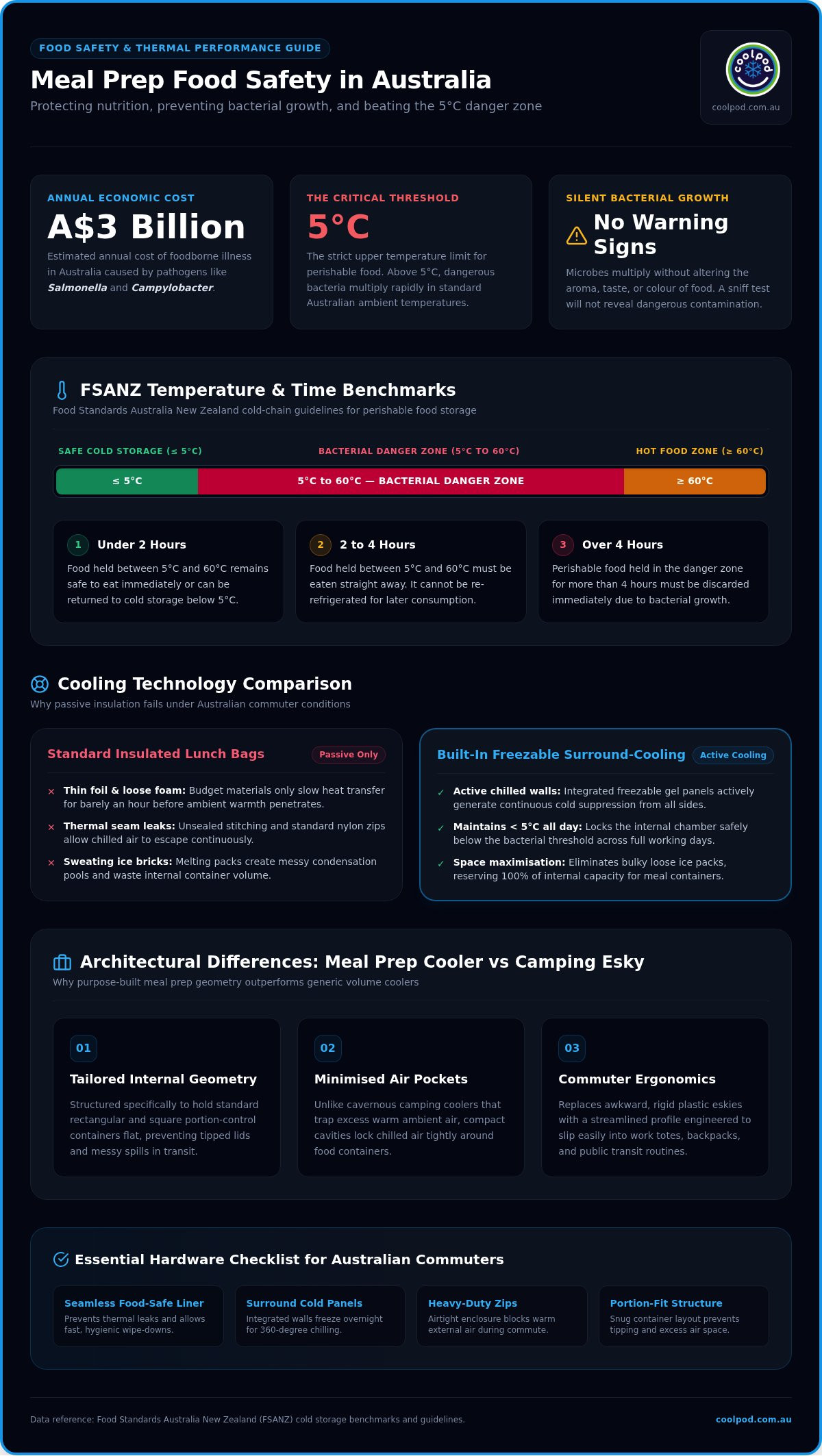
Most standard lunch satchels rely on wafer-thin foil linings and loose open-cell foam. These budget materials slow heat absorption for barely an hour before external heat warms the interior. Traditional designs also feature unsealed stitching and standard nylon zips, creating thermal leaks that allow chilled air to escape continuously. When left in a warm vehicle or carried across sunny transit platforms, internal temperatures surge rapidly. Unlike a commercial thermally insulated shipping container engineered for strict cold-chain logistics, basic consumer totes cannot handle demanding local weather conditions.
Meal Prep Cooler vs. Standard Cooler: Key Distinctions
A conventional camping esky or beverage cooler is built for volume, but purpose-built meal prep carriers are engineered for daily nutritional routines. The key differences lie in architecture and efficiency:
- Tailored internal geometry: Meal prep bags are structured specifically to hold standard rectangular and square containers flat, preventing tipped lids and messy leaks during transport.
- Minimised air pockets: Cavernous camping coolers trap excess ambient air, which quickly accelerates thermal loss. Meal prep coolers feature compact cavities that lock cold air tightly around your containers.
- Commuter-friendly ergonomics: Bulky plastic eskies are awkward on trains and buses. A dedicated meal prep bag delivers robust thermal retention in a streamlined format that slips easily into a backpack or work tote.
Understanding Food Safety: Preventing the Food Danger Zone on Hot Days
Food safety is the foundation of successful nutrition planning. In Australia, foodborne illness costs our economy an estimated A$3 billion each year, with pathogens such as Salmonella and Campylobacter presenting very real everyday risks. Most people assume that a quick sniff of cooked chicken or a visual check of overnight oats will reveal whether a meal is safe to eat. In truth, dangerous bacterial growth happens silently. Microbes multiply rapidly without altering the aroma, taste, or colour of your food. Carrying a dependable meal prep cooler bag australia conditions require is your primary safeguard against invisible bacterial contamination.
Critical Temperature Benchmarks for Perishable Food
According to Food Standards Australia New Zealand (FSANZ), potentially hazardous foods must be kept strictly at or below 5°C, or at or above 60°C. The span between these numbers represents the bacterial danger zone. Meal prep staples such as cooked poultry, lean mince, seafood, boiled rice, and high-protein dairy start breeding bacteria the moment they sit in this zone. Australia's established 2-hour/4-hour rule warns that perishable food held between 5°C and 60°C for more than two hours must be eaten straight away; past four hours, you must discard it. Checking practical food safety tips for packing a cooler reinforces why keeping lunches below 5°C is non-negotiable when facing warm summer transit.
Why Passive Insulation Fails Without an Active Cold Source
Thermal foam does not generate cold. It simply slows down the thermodynamic transfer of heat. Placing cold glass or plastic containers into a standard tote without an active cooling engine is a losing battle against the sun. Within two or three hours of transit, ambient warmth seeps through the seams, pushing food squarely into the danger zone.
Safe food storage demands continuous thermal suppression. Choosing an integrated solution, such as the built-in freezable designs from Coolpod, surrounds your containers with actual frozen walls rather than relying on thin foam alone. This active chilling locks the internal chamber down, protecting your health and preserving your hard work until you sit down to eat.
Key Features to Look for When Choosing a Meal Prep Cooler Bag
A decorative exterior print means nothing if a bag cannot hold your containers flat or tears along the zipper within a month. Sifting through options to find the most capable meal prep cooler bag australia professionals rely on requires focusing on functional architecture rather than aesthetics. Evaluating structural dimensions, interior lining construction, and thermal hardware guarantees your carrier handles daily commuting without hassle.
Container Capacity and Interior Architecture
Always match the internal footprint directly to your container configuration. Standard glass meal dishes and multi-compartment lunchboxes require a wide, rigid base. Flexible, tapered bags force containers onto their sides, putting immense pressure on lid seals and inviting messy spills. Choose a squared internal cavity tailored for portion-controlled containers or bento layouts. This structure keeps containers level and prevents excess air pockets that undermine thermal retention.
Lining Durability and Leak Prevention
Daily meal preparation will test the interior lining against acidic sauces, oil residues, and condensation. Look for food-safe, non-toxic linings free from BPA and phthalates. Pay close attention to how the seams are assembled:
- Heat-sealed waterproof seams: Welded seams contain accidental liquid spills completely, stopping oils from soaking into the insulation foam.
- Stitched linings: Punctured needle holes in cheap linings allow moisture to seep behind the fabric, creating stubborn odours and mould over time.
- Antimicrobial wipe-clean surfaces: Smooth interior walls let you sanitise the entire cavity in seconds with a damp cloth at the end of the day.
Portability, Hardware, and Daily Ergonomics
Hardware quality dictates how long a cooler survives everyday transit. Packing dense, high-protein meals places continuous stress on zip tracks. Prioritise industrial-grade zippers with reinforced perimeter stitching to prevent split tracks when the bag is filled to capacity. Comfortable reinforced handles and streamlined profiles are equally critical, allowing the bag to slip neatly into work lockers, gym packs, or vehicle footwells without monopolising passenger space.
Traditional Ice Packs vs. Built-In Freezable Technology: What Works Best?
Most people packing their lunch resort to tossing a heavy blue ice brick into a standard bag. It feels like common sense, but this dated setup creates daily headaches for meal preppers. Loose cooling blocks consume significant room, slide out of place, and generate persistent condensation puddles that ruin meal labels and paper napkins. Upgrading to a modern meal prep cooler bag australia workers rely on means rethinking how thermal energy is managed inside your carrier.
The Hidden Drawbacks of Removable Gel Packs and Ice Bricks
Separate ice packs create an uneven cooling environment. Because cold air sinks, an ice block resting on the bottom of a tote chills only the underside of your bottom container. The upper containers remain exposed to rising warm air, creating severe temperature variance inside a single bag.
Loose gel bricks bring several persistent daily frustrations:
- Messy condensation puddles: As solid ice melts, surrounding humidity condenses rapidly on the plastic shell, leaving your containers sitting in standing water.
- Sacrificed container volume: Bulky ice blocks occupy up to 30% of the internal capacity, forcing you to carry smaller portions or squeeze items awkwardly.
- Impact damage: Solid bricks slide around during transit, bruising soft fruit, cracking container corners, and popping snap-lock lids open.
How Integrated Freezable Panels Deliver 360-Degree Cooling
Patented surround-cooling technology solves every limitation of the loose ice brick. Instead of fighting for space with an awkward plastic block, non-toxic freezable gel is built directly into the structural walls of the carrier itself. You simply fold the bag flat and store it in your freezer overnight. By morning, the entire interior functions as a high-powered cooling chamber.
This design creates true surround cooling. Every side of your stacked containers receives direct thermal suppression from all angles, eliminating warm pockets entirely. Condensation is held within the sealed multi-layer composite walls, so your containers stay clean, dry, and ready to eat. If you want to eliminate messy ice blocks and reclaim your storage space, explore Coolpod freezable cooler bags to upgrade your daily commute.
How to Pack and Maintain Your Meal Prep Cooler Bag for Peak Performance
Getting the best thermal performance out of your gear comes down to daily preparation. Even the most advanced meal prep cooler bag australia professionals rely on requires proper handling to stay cold across a long day. Establishing an easy packing and cleaning routine protects the core cooling technology and keeps your food at peak freshness.
Step-by-Step Packing Routine for All-Day Cold Retention
Thermal efficiency starts the night before. Follow these key steps to maximise interior chill:
- Freeze the bag flat overnight: Place your empty cooler flat in the freezer for at least eight hours. This ensures the internal cooling panels freeze solid right through to the centre.
- Pre-chill your food and containers: Always pack food straight from the refrigerator. Placing warm or room-temperature containers inside forces the bag to waste cooling energy bringing food temperatures down.
- Pack containers snugly: Group chilled containers tightly together to create a unified cold thermal mass that resists heat intrusion.
- Zip shut immediately: Keep the bag sealed until you are ready to eat. Every unzipping swaps dense cold air for warm ambient air, reducing total cooling duration.
Cleaning and Hygiene Protocols to Extend Bag Life
Routine hygiene preserves lining integrity and prevents lingering food smells. At the end of each day, wipe down the internal lining using a soft cloth dampened with warm, soapy water. Avoid abrasive scourers or harsh chemical sprays that could weaken the waterproof heat seals.
Always leave the bag unzipped to air-dry completely on your bench before returning it to the freezer. Placing a damp bag back into sub-zero temperatures causes frost crystals to form inside the cavity. Never submerge the bag in water or wash it in a washing machine, as mechanical agitation can damage the internal cooling cells.
Choosing the Ideal Freezable Solution for Your Routine
Selecting the right bag format ensures your daily portions fit without forcing or squeezing. For standard glass containers or stacked meal containers, the Coolpod Freezable Lunch Bag delivers generous vertical capacity and dependable surround-cooling.
If you prefer multi-compartment portion boxes that must lay flat, the Coolpod Freezable Bento Bag offers a squared footprint designed specifically for wide bases. Matching your specific container setup to a purpose-built freezable carrier guarantees fresh, delicious, and safe nutrition wherever your day takes you.
Take the Heat Out of Your Daily Meal Prep
Protecting your hard work in the kitchen shouldn't involve wrestling with leaky ice packs or second-guessing food safety. Passive foam totes simply can't handle the harsh realities of a warm commute. Investing in the most dependable meal prep cooler bag australia has to offer turns healthy eating into an effortless routine, keeping every portion chilled, crisp, and safely below 5°C.
Coolpod has championed this smarter approach since 2010. As an Australian owned and operated specialist, Coolpod engineers patented integrated freezable cooling walls directly into bag linings. This clever design eliminates messy condensation puddles and loose ice blocks entirely. Crafted from durable, food-grade, non-toxic materials, each bag delivers robust thermal defense built for demanding daily use nationwide.
You don't need to let warm transit compromise your nutrition or your schedule. Upgrade your daily routine with a Coolpod Freezable Lunch Bag today and enjoy genuinely fresh, wholesome meals wherever your day unfolds.
Frequently Asked Questions
How long will a quality meal prep cooler bag keep food cold in Australian conditions?
A high-grade meal prep cooler bag can keep contents below 5°C for up to eight hours under typical Australian conditions. Bags with integrated freezable walls chill containers continuously from every angle rather than just relying on passive insulation. Performance depends on pre-chilling food, freezing the bag flat overnight, and keeping the bag zipped shut during warm transit.
Can I pack warm meal containers directly into a meal prep cooler bag?
No, you should never place warm or freshly cooked containers directly into your cooler bag. Thermal carriers are designed to maintain existing low temperatures, not rapidly chill hot food. Placing warm dishes inside quickly exhausts the cooling panels, raises the interior temperature, and puts the entire contents into the bacterial danger zone. Always refrigerate cooked meals thoroughly before packing.
What is the advantage of a freezable cooler bag over a standard cooler with ice packs?
Built-in freezable bags eliminate loose ice bricks that steal internal storage and cause messy condensation puddles. Instead of uneven chilling from a single block at the bottom, patented freezable walls surround containers with 360-degree cold. Choosing an integrated meal prep cooler bag australia commuters trust provides greater packing space, lighter daily carrying weight, and completely dry container exteriors.
How do I choose the right size meal prep cooler bag for my containers?
Measure the length, width, and height of your standard food containers before buying. Meal prep containers, especially glass dishes or multi-section bento boxes, need a flat, wide base to prevent tipping and lid leakage. For stacked rectangular tubs, choose an upright lunch bag shape. If your portion box is broad and shallow, a dedicated square bento cooler is ideal.
Are meal prep cooler bags leakproof if a container spills inside?
Premium bags feature heat-sealed, waterproof internal linings designed to contain accidental leaks completely. While standard stitched seams let liquid seep through into outer foam layers, seamless construction holds sauces and dressings safely inside the main compartment. This stops grease from damaging the bag's exterior fabrics, your work bag, or car upholstery while allowing quick clean-ups with a damp cloth.
How do you clean and prevent mould in a meal prep cooler bag?
Wipe the interior daily with a soft cloth dampened in warm, mild soapy water, then let it air-dry completely unzipped. Mould requires moisture to thrive, so never refreeze or zip up a damp cooler bag. Avoid soaking the bag in a sink or using a washing machine, as excessive saturation can damage internal cooling cells and compromise the outer fabrics.
Can a freezable meal prep bag keep dairy, yoghurt, and seafood safe all day?
Yes, an active freezable bag creates an environment cold enough to protect high-risk perishables like yoghurt, fresh seafood, and chicken. By maintaining temperatures below the 5°C danger zone across the workday, it prevents silent pathogen growth. Using a dedicated meal prep cooler bag australia workers rely on ensures sensitive proteins stay fresh and safe to eat until lunchtime.


