

When summer temperatures soar past 35°C, recipe selection matters far less than structural cooling and moisture control. Most parents searching for kids lunch box ideas for hot weather look for magical, non-perishable ingredients. Yet even the healthiest meals deteriorate rapidly when left sitting in an unshaded metal locker or outdoor bag rack under the Australian sun.
You already know the daily frustration of unpacking a school bag at 3:30 pm only to find a soggy sandwich sitting beside a melted, sweat-covered ice pack. Between dairy spoiling in the heat and condensation soaking through exercise books, fussy eaters quickly abandon lukewarm food.
The good news is that keeping food crisp, safe, and reliably under the 5°C danger threshold doesn't require culinary wizardry. In this guide, you'll discover heat-resilient lunch combinations, simple moisture barriers, and smart packing strategies that eliminate food waste and keep school bags completely dry.
Key Takeaways
- Understand the critical 5°C food safety threshold and how outdoor school cubbies compromise perishable proteins before the morning bell.
- Discover dependable kids lunch box ideas for hot weather that replace delicate sandwich bread with heat-resilient flatbreads, rolls, and chilled proteins.
- Learn how to turn frozen fruit skewers and high-water-content snacks into edible cooling elements that keep children energised and hydrated.
- Master simple pre-chilling routines and lipid moisture barriers to stop condensation from creating soggy lunches and damp schoolbooks.
- See why integrated freezable cooling walls provide all-day perimeter chill without the bulk or messy puddles of traditional loose ice bricks.
The Schoolyard Heat Challenge: Food Safety in Australian High Temperatures
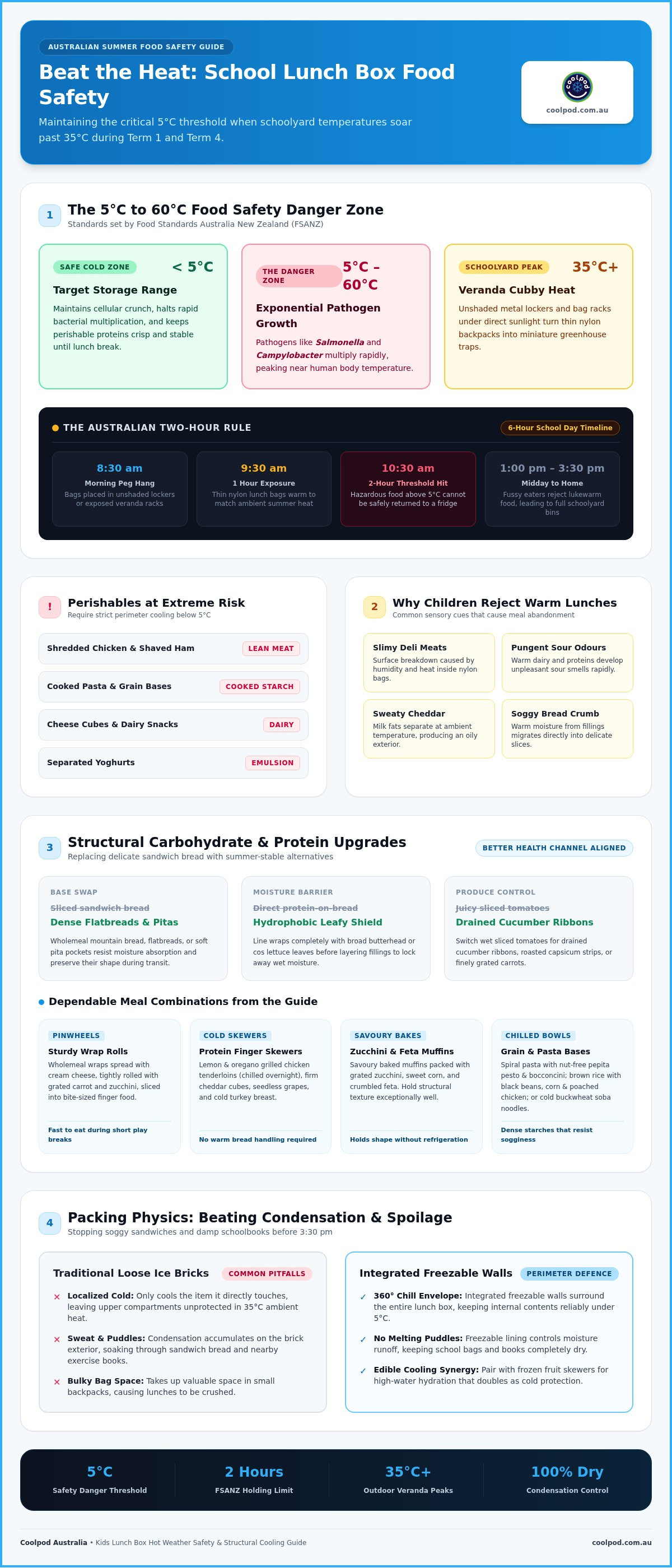
Most Australian classrooms don't provide refrigerated storage for student lunches. Instead, backpacks spend six hours hanging on outdoor veranda pegs or stuffed into unshaded metal cubbies where ambient heat routinely tops 35°C during Term 1 and Term 4. When planning kids lunch box ideas for hot weather, understanding the microbiology of these conditions is vital.
According to Food Standards Australia New Zealand (FSANZ), perishable food enters the food safety danger zone when its internal temperature sits between 5°C and 60°C. Within this window, harmful pathogens like Salmonella and Campylobacter multiply exponentially, peaking near human body temperature. Common staples such as shredded chicken, shaved ham, cooked pasta, and cheese cubes spoil quickly without dedicated cooling.
Lunches left above 5°C for two hours risk rapid bacterial growth, turning wholesome ingredients into health hazards before the midday bell.
Understanding the Two-Hour Rule in Australian Summers
Dark canvas backpacks act like miniature greenhouses under intense sunlight. Thin nylon lunch bags provide virtually no thermal resistance against this radiant energy, causing internal contents to warm within an hour. Under FSANZ guidelines, potentially hazardous food held between 5°C and 60°C for over two hours cannot be safely returned to a fridge and must be consumed or discarded. Children often identify this heat spoilage through telltale sensory cues: pungent sour odours, milky condensation beads, or slimy deli meats.
Why Room-Temperature Food Leads to Schoolyard Food Waste
Food safety concerns aside, lukewarm food simply tastes terrible on a scorching afternoon. Children naturally reject sweaty cheddar, separated yoghurt, and limp celery sticks when seeking refreshing relief during lunch break. Cold food stimulates appetite during hot weather by offering a crisp, clean texture. Maintaining a strict chill barrier preserves cellular crunch and prevents cut fruit from oxidising, ensuring healthy meals get eaten instead of dumped in schoolyard bins.
Heat-Resilient Main Lunches: Filling Ideas That Withstand High Temperatures
Traditional sliced sandwich bread breaks down rapidly once exposed to high ambient heat. Warm moisture from fillings migrates directly into the crumb, creating an unappetising, pasty texture. Developing successful kids lunch box ideas for hot weather requires choosing structural carbohydrates and dense proteins that retain their integrity when kept chilled in summer schoolbags.
Aligning your weekly prep with the Better Health Channel's healthy lunchbox guidance means prioritising balanced carbohydrates and lean proteins that stay crisp. Deconstructed compartments, hearty grains, and moisture-sealed wraps offer far greater stability than traditional sandwich builds.
Wraps, Rolls, and Pinwheels That Resist Sogginess
Replace delicate sandwich slices with dense flatbreads, wholemeal mountain bread, or soft pita pockets. These bases resist moisture absorption and hold their shape during transport. Follow these smart ingredient swaps:
- Create a leafy barrier: Line wraps completely with broad butterhead or cos lettuce leaves before adding proteins to create a natural hydrophobic shield.
- Control filling moisture: Swap juicy sliced tomatoes for drained cucumber ribbons, roasted capsicum strips, or finely shredded carrots.
- Roll compact finger fuel: Spread cream cheese over sturdy wholemeal wraps, roll tightly with grated carrot and zucchini, and slice into bite-sized pinwheels.
Cold Finger Foods and Protein Skewers
Finger foods allow children to eat quickly without handling warm, bulky items during short lunch breaks. Marinate lean chicken tenderloins in lemon and oregano, grill thoroughly, and chill overnight before packing. Thread blunt wooden skewers with firm cheddar cubes, seedless grapes, and cold turkey breast. Savoury baked muffins packed with grated zucchini, sweet corn, and crumbled feta also hold their texture exceptionally well when chilled.
Chilled Pasta and Grain Bowls
Dense starches hold up brilliantly against heat without turning soggy. Spiral pasta tossed with nut-free pepita pesto, baby spinach, and firm bocconcini balls provides a refreshing midday meal. Alternatively, mix chilled brown rice with black beans, corn kernels, and shredded poached chicken for a satisfying bowl. Cold buckwheat soba noodles dressed lightly in sesame oil with blanched sugar snap peas offer another reliable, heat-resilient base.
Pairing these recipes with a dedicated Coolpod Freezable Bento Bag ensures meals stay properly chilled and ready to enjoy, no matter how high the thermometer climbs.
Hydrating Snacks and Crisp Sides for Warm Afternoons
When playground temperatures climb during afternoon play, children dehydrate faster than usual. While water bottles are non-negotiable, hydrating snacks offer essential cellular fluids, natural electrolytes, and refreshing relief. Developing practical kids lunch box ideas for hot weather means selecting produce with exceptionally high water content that withstands high heat without softening into unappetising mush.
Following established USDA FSIS lunchbox safety guidelines helps ensure chilled sides remain crisp and safe to consume throughout the day. Using frozen produce serves a brilliant dual purpose: it functions as a secondary cooling agent before thawing into a chilled afternoon snack.
High-Hydration Fruits and Frozen Refreshers
Produce boasting more than 90% water content delivers refreshing crunch when prepared correctly. Try these cooling fruit strategies:
- Freeze stone fruit and citrus: Peeled mandarin segments, orange quarters, and pineapple wedges freeze solid and slowly thaw into chilled treats by midday.
- Pack melon spheres and frozen grapes: Watermelon wedges and rockmelon balls hold cellular shape well, while frozen green grapes taste like bite-sized sorbet drops.
- Acidulate sliced apples: Lightly coat freshly cut crisp pink lady or granny smith wedges in diluted lemon or pineapple juice to prevent browning and preserve cellular crispness.
Dairy and Dip Solutions That Stay Safe
Dairy remains notoriously temperamental in summer heat. Creamy favourites like Greek yoghurt or cream cheese separate into watery whey and unpalatable curds once warmed. Send yoghurt in a specialised sleeve like the Coolpod Freezable Yoghurt Bag or see how a reusable yoghurt pouch australia parents trust keeps smooth purées thoroughly chilled. For cheese, swap soft, weeping varieties for firm blocks of mature cheddar or gouda that resist sweating.
No-Melt Crunch: Savoury Munchies and Baked Snacks
Standard snack bars containing chocolate chips or sugary glazes melt into sticky wrappers within minutes of sitting in warm lockers. Swap these out for heat-stable alternatives that retain satisfying crunch. Bake homemade flapjacks using rolled oats, mashed ripe bananas, chia seeds, and sunflower kernels. Pack roasted fava beans, salted chickpeas, or lightly buttered popcorn in dry compartments. If including wholegrain crackers alongside dips like hummous or tzatziki, isolate crackers in separate snap-lock pods to prevent moisture absorption.
Packing Physics: How to Prevent Sogginess and Condensation
Heat transfer and atmospheric condensation ruin more school lunches than poor recipes ever could. Even the most inventive kids lunch box ideas for hot weather collapse when moisture migrates across compartments or pools at the bottom of a warm backpack. Eliminating this breakdown requires applying simple thermodynamic principles during your morning assembly routine.
- Chill containers overnight: Place empty bento tubs and stainless containers inside your refrigerator alongside prepared food so they don't introduce ambient warmth.
- Dry all washed produce: Pat berries, cucumber ribbons, and salad greens completely dry with paper towels to eliminate excess surface moisture.
- Establish physical air gaps: Use modular compartments or silicone cups to isolate distinct food items, preventing wet ingredients from touching dry starches.
- Apply lipid barriers: Coat bread or crackers with butter or cream cheese edge-to-edge to create a hydrophobic barrier against ambient dampness.
- Enclose within frozen walls: Surround your packed containers with built-in cooling walls that absorb rising heat evenly from every angle.
Eliminating the Sweaty Lunch Box Phenomenon
Condensation occurs when warm, humid air collides with a cold surface. Traditional loose freezer bricks sweat as they melt, soaking into cardboard snack boxes and dampening bread. Tucking a folded paper towel beneath fresh salad cuts absorbs ambient condensation before it pools. Choosing a specialised bento cooler bag provides sealed, internal perimeter cooling that isolates cold containers, preventing sweating exterior surfaces from ruining dry foods.
Pre-Chilling Secrets for School Morning Routines
Never pack warm food into a chilled school sack. Freshly cooked proteins or warm boiled eggs emit steam, creating immediate moisture traps inside enclosed containers. Allow all cooked ingredients to cool to refrigerator temperature before packing. Storing containers overnight in the fridge ensures you start with zero thermal load. Assembling your chilled tubs directly from fridge shelves straight into frozen outer linings eliminates temperature spikes, guaranteeing that your kids lunch box ideas for hot weather maintain their fresh, crisp texture until lunchtime.
Ready to upgrade your school day routine? Explore the Coolpod collection to discover patented freezable lunch bags built specifically for demanding Australian summers.
Cooling Technology: Why Integrated Freezable Bags Beat Loose Ice Bricks
Even the most creative kids lunch box ideas for hot weather fall flat if cooling relies on a loose ice brick. In basic physics, effective cooling requires continuous contact and uniform thermal absorption. A single rigid ice brick rests against just one side of a container, leaving the remaining sides completely exposed to rising ambient heat. These bulky blocks also devour up to 40% of internal storage volume without surrounding food evenly. For a thorough comparison of available gear, check the best freezable lunch bags in Australia 2026 guide.
The Downside of Traditional Gel Packs and Ice Blocks
Loose cold elements introduce several mechanical flaws to a child's school routine:
- Uneven migration: Ice packs slide to one side of the backpack as children walk, leaving delicate meats and dairy entirely unprotected at the top.
- Condensation pooling: As traditional plastic blocks thaw, melting condensation drips freely onto interior seams, creating damp pockets where bacteria thrive.
- The lost brick cycle: Loose items are easily misplaced in schoolyards or left behind on oval benches, compromising food safety the following morning.
The Patented Coolpod Surround-Cooling Solution
Solving the heat dilemma requires switching from loose cooling accessories to structural thermal walls. Rather than treating cooling as an afterthought, integrated chill technology builds the cold source directly into the architecture of the bag itself.
The entire carrier folds flat into your home freezer overnight, freezing solid before the morning rush. Patented internal cooling walls envelop food containers in an unbroken 360-degree perimeter chill, neutralising radiant veranda heat before it penetrates meals. Because the chill cells are permanently sealed behind durable, food-safe linings, sweat condensation cannot migrate into backpacks or dampen homework books. Investing in a purpose-built Coolpod Freezable Lunch Bag ensures your kids lunch box ideas for hot weather stay genuinely crisp, cool, and safe until the final bell.
Keep School Lunches Crisp, Safe, and Appetising All Summer Long
Packing for blistering summer terms doesn't have to end in limp vegetables, separated dairy, or uneaten sandwiches. By pairing moisture-smart ingredients with dense wraps, chilled grain bowls, and hydrating frozen fruits, you can easily turn routine meals into refreshing fuel. The most successful kids lunch box ideas for hot weather rely on smart moisture control and reliable perimeter cooling.
Australian owned and designed specifically for demanding climate conditions, Coolpod solves the schoolyard heat challenge at the source. Patented all-around freezable wall technology envelops food in an unbroken thermal barrier that keeps meals chilled safely below 5°C for hours. This built-in engineering eliminates messy, leaking ice packs entirely while maximising interior storage space, ensuring exercise books stay completely dry.
Take control of playground heat and banish food waste for good. Keep your child's lunch crisp and safe with a patented Coolpod Freezable Lunch Bag and pack every school morning with complete confidence.
Frequently Asked Questions
What are the best kids lunch box ideas for hot weather that will not spoil?
The best options combine heat-resilient carbohydrates with stable proteins, such as cold buckwheat noodle bowls, wholemeal wraps lined with leafy greens, and roasted chickpeas. Pair these with firm cheeses like cheddar or gouda, hard-boiled eggs kept in their shells until eating, and whole fruits. Choosing deconstructed bento ingredients keeps wet components away from dry grains, ensuring kids lunch box ideas for hot weather stay fresh and appetising.
How do I keep school lunch cold when it is 35 degrees outside?
You need surround-cooling technology that maintains internal temperatures strictly below 5°C throughout the school day. Pre-chill all containers and ingredients in the fridge overnight before packing. Replace standard insulated sacks with an integrated cooling carrier like the Coolpod Freezable Lunch Bag, which envelops food from every angle. Keep school bags zipped shut and encourage children to store their bags out of direct sunlight on veranda racks.
Can you freeze a lunch box overnight to keep it cold?
Yes, provided you use an integrated freezable bag engineered with built-in cooling walls rather than a standard fabric lunch sack. Dedicated freezable bags fold completely flat to freeze solid overnight in home freezers. Freezing an ordinary fabric cooler only causes condensation leaks and fabric degradation without providing real thermal protection. Integrated chill cells freeze solid without cracking, providing hours of surround-cooling the following day.
Why does bread get soggy in an insulated lunch bag?
Bread turns soggy when humidity from moist fillings and ambient air condenses against cooler surfaces inside the bag. When warm air meets cold air inside plastic containers, water droplets form and migrate directly into porous sandwich bread. You can prevent this by applying butter edge-to-edge as a hydrophobic barrier, drying all vegetables thoroughly, and isolating damp elements like dressings until lunchtime.
Is it safe to pack deli ham or chicken for school in summer?
Yes, but only if the lunch bag maintains an internal temperature strictly below 5°C until consumed. Cooked meats and deli poultry fall into the potentially hazardous food category defined by national food safety authorities. Leaving them in warm cubbies above 5°C for more than two hours triggers rapid bacterial growth. To pack them safely, pre-chill the meat thoroughly and use 360-degree freezable walls rather than loose ice blocks.
How long does a freezable lunch bag stay cold compared to ice bricks?
An integrated freezable lunch bag keeps contents cold for hours longer than loose ice bricks by enclosing food in continuous perimeter cooling. Loose ice bricks quickly lose cooling efficiency because cold air sinks, leaving the upper sections of food containers exposed to rising heat. Built-in cooling walls absorb thermal energy from every angle simultaneously, maintaining a consistent chill barrier across the entire school day without melting puddles.
What are good snack ideas for kids that do not melt at school?
The most reliable non-melting snacks include roasted fava beans, savoury seed oat bars, crunchy vegetable batons, and frozen fruit skewers. When planning kids lunch box ideas for hot weather, steer clear of chocolate-coated bars or soft cheeses. Instead, pack frozen mandarin segments, rockmelon balls, salted edamame, and whole-seed flapjacks. These snacks withstand elevated playground temperatures effortlessly, giving children sustained energy without sticky fingers.


