

Ever unpacked lunch on a hot day only to find it warm, soggy or leaking? The best way to pack a cold lunch isn’t just about choosing an insulated bag. It means preparing food properly, packing it in the right order and keeping it chilled on the way to mealtime.
It’s frustrating when a meal doesn’t arrive in good condition, and it’s not always obvious which foods need to stay cold or how to carry them safely. A simple routine can take the guesswork out of packing lunch for work, school or a day out.
This guide takes you through that routine, from preparing and chilling ingredients to choosing secure containers and packing your bag. You’ll also learn how to adapt your setup to your meal and daily plans. A reusable cooling option, such as a freezable lunch or bento bag, may simplify carrying lunch. The right choice depends on what you’re packing and how you travel.
Key Takeaways
- The best way to pack a cold lunch is to follow a repeatable routine that covers preparation, packing order and the trip to mealtime.
- Chill each component before packing, and choose containers that help prevent leaks and keep foods separate.
- Protect your lunch from direct sun and hot surroundings, and use suitable refrigeration when it’s available.
- Match your lunch setup to the meal size, time in transit, access to a fridge and how easily the gear can be cleaned.
- A reusable cooling bag may make carrying lunch simpler. Choose an option that suits your routine and follow its care instructions.
Best way to pack a cold lunch: start with food safety and preparation
Lunch can warm up between the fridge and mealtime, especially if it’s carried through hot weather. The best way to pack a cold lunch is to manage the food from preparation through to eating, rather than relying on the lunch bag alone.
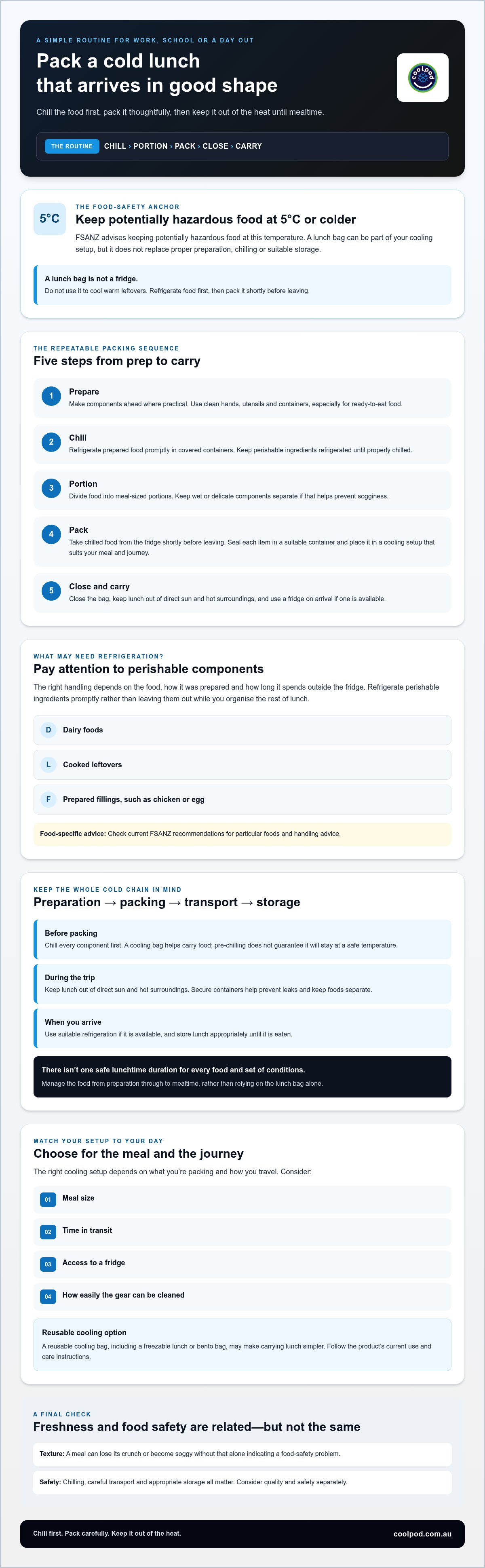
Safe cold-lunch packing means chilling food before packing, keeping it cold during transport and storing it appropriately until it’s eaten. FSANZ advises keeping potentially hazardous food at 5°C or colder. A bag can be part of your cooling setup, but it doesn’t replace proper food preparation, suitable chilling or sensible storage.
Make the routine easy to repeat: chill, portion, pack, close and carry. This sequence helps prevent rushed packing, reduces the chance of leaks and keeps food safety in view alongside taste and texture. A meal can lose its crunch or become soggy without necessarily indicating a food-safety problem, so consider quality and safety separately.
Which lunch foods need to stay chilled?
Dairy foods, cooked leftovers and prepared fillings such as chicken or egg may need refrigeration to stay safe. The right handling depends on the food, how it was prepared and how long it spends outside the fridge. Check current FSANZ advice for specific foods, and refrigerate perishable ingredients promptly rather than leaving them out while you organise the rest of lunch.
What does keeping lunch cold actually involve?
Start with food that’s already properly chilled. A lunch bag isn’t a fridge, so don’t use it to cool warm leftovers. Chill them in the refrigerator first, then portion and pack. Keeping lunch cold involves a chain of steps: preparation, packing, transport and storage all matter. There isn’t one safe lunchtime duration that applies to every food and set of conditions.
For example, refrigerate a cooked main, fruit and a chilled snack before packing. Seal each item in a suitable container, then place it in a cooling setup that suits your meal and journey. On arrival, use a fridge if one is available. While carrying lunch, keep it out of direct sun and hot surroundings.
Lunch containers have changed from simple pails to modern insulated options. For background on that evolution, see the history of the lunch box. Whatever style you choose, put food safety first: a container helps protect the meal, while chilling and careful handling support safe storage.
Chill every component before packing a cold lunch
A lunch bag helps carry food, but it shouldn’t be expected to chill warm ingredients. The best way to pack a cold lunch starts in the fridge: chill each component first, then pack it just before you leave. Pre-chilling helps food begin the journey cold, but doesn’t guarantee it will stay at a safe temperature. Transport and storage matter too.
Use this repeatable sequence on busy mornings:
- Prepare: Make lunch components ahead where practical, using clean hands, utensils and containers.
- Chill: Refrigerate prepared food promptly in covered containers. Keep perishable foods refrigerated until they’re properly chilled.
- Portion: Divide food into meal-sized portions. Store wet or delicate components separately if that helps prevent sogginess.
- Pack: Take the chilled food from the fridge shortly before leaving and place it in your chosen cooling setup.
- Close and carry: Seal containers and close the bag, then keep lunch out of direct sun and hot surroundings.
For general lunch-handling advice, the USDA food safety guidelines offer useful background, but they’re US guidance. For Australian food-specific advice, check current FSANZ recommendations.
How to prepare lunch the night before
Prepare ingredients, portion them into clean containers, cover them and refrigerate. If you’re saving cooked leftovers, don’t put them straight into the lunch bag while warm. Cool and refrigerate them appropriately first, following current food-safety advice. Keep components such as cut fruit and sandwich filling separate if that helps protect their texture, then combine them when you’re ready to eat.
What to do on the morning you pack lunch
Wash your hands and use clean utensils and containers, especially for ready-to-eat food. Take lunch from the fridge when you’re ready to pack it, rather than leaving chilled ingredients on the bench while you get ready. A freezable lunch bag, such as the Coolpod Freezable Lunch Bag, is one reusable option for carrying chilled food. Check and follow the product’s current use and care instructions. Explore freezable lunch bags if you’re considering an integrated cooling option.
Pack a cold lunch in an order that protects freshness
Once your food is chilled, pack it so each item stays contained, easy to find and protected from leaks. The best way to pack a cold lunch is to organise the meal in containers, then choose a carrying setup that helps maintain cold conditions. These have different jobs: a secure lunch box can prevent spills, but it doesn’t keep food cold by itself.
For a simple lunch with a sandwich, fruit and chilled yoghurt, keep the yoghurt in a sealed container or pouch, and put the sandwich in a container that fits without crushing it. Pack juicy fruit separately from crisp foods so moisture doesn’t soften them. Choose portions that fit comfortably instead of forcing lids shut or leaving containers loose enough to tip around.
How to arrange food in a lunch container
Use clean containers sized for the meal, with lids that close securely. Check each seal before packing, particularly for yoghurt, dressings or other foods that could leak. Separate wet ingredients from dry or crisp items, and use compartments or smaller containers when they help keep textures distinct. Keep delicate food from being squashed beneath heavier items.
Pack the meal in a practical order: secure each food in its own container first, then arrange the containers in the lunch box or bag. This keeps the main, fruit and snack together without letting one item spill into another. For more ideas on handling packed meals, see these safe lunch packing guidelines from Michigan State University Extension.
Where does the cooling component go?
Follow the cooling product’s instructions for preparation and placement. Lunch bags and cooling products are designed differently, so there isn’t one position that works for every setup. Where the design allows, keep the chilled food grouped with the cooling source and avoid gaps that let items shift during the trip.
A freezable bag, such as the Coolpod Freezable Bento Bag, is one option for combining carrying and cooling. Use it according to its current instructions, and remember that the bag is part of a broader food-safe routine, not a substitute for chilled food or suitable storage. If you’re considering an integrated option, explore freezable lunch bags to see whether one suits the way you pack.
Keep a packed cold lunch safe from fridge to mealtime
A well-packed lunch still needs sensible handling after it leaves home. Keep it out of direct sun, away from hot car interiors and other warm spots, and refrigerate it when you arrive if suitable fridge space is available. On a warm day, don’t leave lunch sitting in a parked car while you run errands.
For potentially hazardous food, FSANZ’s 2-hour/4-hour guide counts the total time it spends between 5°C and 60°C. The time is cumulative, not reset each time food goes back into the fridge: under 2 hours, it can be used or returned to refrigeration; from 2 to 4 hours, use it straight away; after 4 hours, throw it out. This guide applies to time in that temperature range, not a bag’s advertised cooling duration. A lunch bag alone can’t tell you how long food has been in the danger zone.
How long can a cold lunch stay out of the fridge?
There isn’t one guaranteed safe lunchtime duration based on bag type. The relevant question is how long potentially hazardous food has been between 5°C and 60°C, including time during preparation, transport and storage. A cooling setup may help keep food cold, but conditions vary with the food, surroundings and how the setup is used. Follow current FSANZ advice, and refrigerate lunch on arrival if you can.
What if lunch is no longer cold?
Consider how the lunch was prepared, how long it has been out of refrigeration and whether it was kept in a cooling setup. Don’t rely on smell or appearance to decide if food is safe. If you can’t work out how long it may have been warm, or you’re unsure whether it’s safe, take the cautious option and don’t eat it. Check FSANZ guidance for advice on the specific food and situation.
For practical care considerations, read the cooler bag maintenance and food safety guide. If an integrated cooling option suits your routine, explore freezable lunch bags. Follow the product’s current instructions, and keep using safe chilling, transport and storage practices alongside your bag.
Choose a cold-lunch setup that suits your daily routine
The right setup depends on more than the lunch bag. Consider the size of your meal, how long you’ll carry it, whether there’s a fridge at your destination and how easy the containers and bag are to clean. A setup that works for a quick trip to the office may not suit a full day out without access to refrigeration.
How to match a lunch setup to your day
For a short trip with a fridge at your destination, focus on chilled food, secure containers and putting lunch in the fridge when you arrive. If you’ll be away from refrigeration for longer, consider the whole carrying setup, including how the food is packed and what cooling method the bag uses. Plan for your actual journey rather than relying on a bag label alone.
Bento-style lunches call for a little extra thought. Check that the compartments suit your portions and keep wet ingredients from leaking into crisp foods. A container that’s easy to open and clean can also make everyday use simpler. For an overview of styles and features to compare, see this guide to freezable lunch bags in Australia.
When a freezable lunch bag may be useful
If your routine involves carrying chilled food without separate ice packs, an integrated cooling bag may be a convenient option. Coolpod’s freezable lunch bag is designed to keep contents cold for hours without separate ice packs. That design can simplify the carrying stage, but it doesn’t replace properly chilling food before packing or storing lunch appropriately at your destination. Follow the product’s current instructions for preparation and care.
Choose according to what you carry most often. A compact snack, a full meal and a compartmentalised bento lunch may each call for a different size or format. Before deciding, check that your usual containers fit, the bag suits your commute and cleaning it won’t become a chore. The best way to pack a cold lunch is with a setup you can repeat comfortably, one that fits both the food and the day ahead.
- Check the meal: Will your usual portions and containers fit?
- Check the day: How long will lunch be in transit, and is a fridge available?
- Check the upkeep: Can you clean the setup easily and follow its care instructions?
If an integrated cooling bag fits your routine, explore Coolpod’s freezable lunch solutions.
Make your next cold lunch easier to pack
The best way to pack a cold lunch is to follow a routine you can repeat: start with properly chilled food, portion it into secure containers, then choose a carrying setup that suits your meal and the day ahead. Keep lunch away from heat, and refrigerate it when suitable storage is available.
Small choices can make lunch fresher and easier to manage. Separate foods that could leak or become soggy, and consider how long lunch will be in transit before choosing your setup. An integrated cooling bag can simplify carrying, but it works alongside safe preparation and storage, not instead of them.
Coolpod is an Australian-owned business founded in 2010, offering patented freezable bags designed to keep contents cold for hours without separate ice packs. If that style of setup suits your routine, explore Coolpod’s freezable lunch solutions.
With a little preparation and a setup that fits your day, packing lunch can feel simpler. You’re ready to make tomorrow’s lunch with confidence.
Frequently Asked Questions
What is the best way to pack a cold lunch?
The best way to pack a cold lunch is to chill the food first, portion it into clean, secure containers, then carry it in a suitable cooling setup. Keep wet or delicate foods separate if they could leak or become soggy. Once you arrive, refrigerate the lunch if suitable fridge space is available. A cooling bag can help during transport, but it doesn’t replace chilled food or safe handling.
Should you put an ice pack on top or underneath lunch?
Follow the instructions for your lunch bag and cooling product, as there isn’t one placement rule for every design. If your setup allows, arrange the cooling source close to the chilled food, and pack items snugly to limit shifting. Some bags are designed with integrated cooling, while other setups use separate cold sources. Don’t assume placement alone guarantees that food stays at a safe temperature.
Can you pack warm food in a cooler bag?
Don’t use a cooler bag to chill warm food. It’s intended to carry food that’s already been chilled, not rapidly cool a warm meal. Refrigerate cooked leftovers appropriately before packing, and keep them in the fridge until you’re ready to leave. If you want to take hot food, use a suitable insulated container designed for hot food and follow current food-safety advice for preparing and storing it.
Do you need to refrigerate a lunch bag when you arrive at work or school?
If suitable refrigeration is available, put your lunch in the fridge when you arrive, especially if it contains potentially hazardous food. This adds a sensible storage step after transport. Keep the lunch out of direct sun and away from hot areas until then. If there’s no fridge, plan for the full time the food may spend between 5°C and 60°C, and follow FSANZ’s 2-hour/4-hour guidance.
What foods need to stay cold in a packed lunch?
Foods that may need chilling include dairy products, cooked leftovers and prepared fillings such as chicken or egg. Whether refrigeration is needed depends on the food and how it’s been prepared and handled. Keep potentially hazardous foods at 5°C or colder, and check current FSANZ advice for specific ingredients. If you’re unsure whether a food needs refrigeration, don’t rely on smell or appearance to decide it’s safe.
Can a freezable lunch bag replace separate ice packs?
Some freezable lunch bags are designed to keep contents cold for hours without separate ice packs. Coolpod’s freezable lunch bags are designed for this, but they don’t make warm food safe or guarantee a particular temperature. Chill food properly before packing, follow the bag’s current instructions and store lunch in a fridge when suitable refrigeration is available. Choose a setup that suits your meal and time away from home.


