

What if learning how to get kids to eat packed lunch starts with less pressure, not a more elaborate lunchbox? It’s frustrating to spend time preparing lunch only to find it untouched, especially when your child’s preferences seem to change from one week to the next. And trying to pack a perfectly balanced meal every day can make the school-morning routine feel like a test you can’t pass.
A calmer approach starts with what your child already enjoys, then makes room for small choices and familiar routines. You don’t have to win them over with a brand-new menu or turn every lunch into a nutrition checklist.
This article shares practical, low-pressure ways to make packed lunches more appealing, involve your child in choosing what goes in, and build a routine that fits your family. You’ll also find ideas for adapting to school-day logistics and handling chilled foods thoughtfully, so lunch works for your child and the school routine, not just the lunchbox.
Key Takeaways
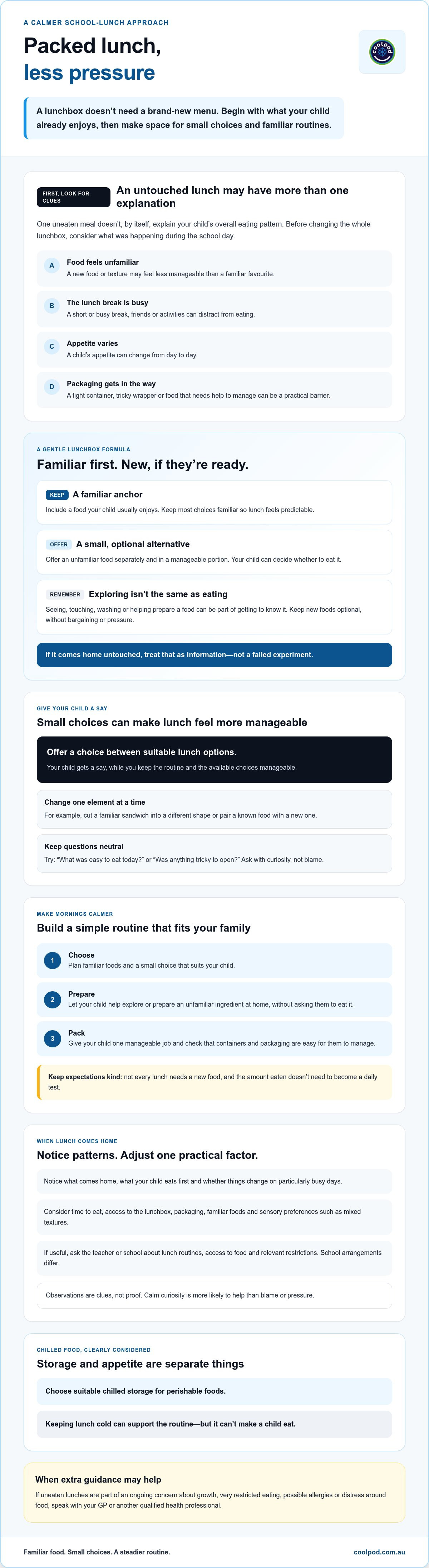
- Look beyond food preferences when lunch comes home untouched: timing, distractions and tricky packaging may also play a part.
- To explore how to get kids to eat packed lunch, keep a familiar favourite in the mix while offering unfamiliar foods without pressure.
- Offer a small choice between suitable lunch options so your child can have a say without taking over the whole routine.
- A simple plan for choosing, preparing and packing lunch can make school mornings calmer. Give your child one manageable job.
- Choose suitable chilled storage for perishable foods, while remembering that keeping lunch cold and encouraging your child to eat are separate matters.
Why might a child leave their packed lunch uneaten?
An untouched lunch can be disappointing, but one uneaten meal doesn’t, by itself, explain your child’s overall eating pattern. There may be a simple reason that has little to do with the food or your parenting. Before changing the whole lunchbox, consider what else might have been happening during the school day.
Possible reasons include unfamiliar foods, a short or busy lunch break, distractions from friends or activities, or appetite that varies from day to day. Practical barriers count too: a child may not be able to open a tight container, peel packaging or manage a food without help. These clues can help you work out how to get kids to eat packed lunch without turning lunchtime into a battle.
Look for patterns before changing the whole lunchbox
Notice what comes home, what your child eats first and whether the pattern shifts across different days. Is one item consistently left, or does lunch seem untouched after a particularly busy school day? Treat your observations as clues, not proof. After school, ask neutral questions such as, “What was easy to eat today?” or “Was anything tricky to open?”
Avoid making the amount eaten a daily test or asking your child to justify every leftover. Calm curiosity is more likely to give you useful information than blame or pressure.
Consider the school-day setting and your child’s needs
Think about whether your child has enough time to eat, can reach their lunch comfortably and can manage the packaging independently. A fiddly wrapper or container can be a bigger obstacle than it seems. Food familiarity and sensory preferences, such as a strong dislike of mixed textures, may also influence what feels manageable. These are possibilities to explore, not reasons to diagnose your child.
If it could help, ask the teacher or school about lunch routines, access to food and any relevant restrictions. School arrangements differ; an overview of school meal programmes offers broader context on how meal provision can vary. A quiet conversation with the school may clarify whether time, setting or rules are affecting your child’s lunch.
If uneaten lunches are part of an ongoing concern about growth, very restricted eating, possible allergies or distress around food, speak with your GP or another qualified health professional. They can help assess your child’s individual needs. For everyday lunchbox troubleshooting, start by observing calmly and adjusting one practical factor at a time.
How familiarity and gentle exposure can make packed lunch easier
A lunchbox doesn’t need a brand-new menu to offer variety. Start with foods your child is comfortable eating, then introduce something unfamiliar in a small, optional way. If it’s left untouched, that’s information, not a failed experiment. Learning about a food can include seeing or handling it, not just eating it.
Calm, repeated opportunities are more constructive than pressure: Johns Hopkins Medicine’s tips for picky eaters encourage involving children and making food exploration engaging, without turning a new food into a demand.
Keep a familiar anchor in the lunchbox
Include a familiar food your child usually enjoys, then build around their preferences. For example, if they like plain sandwiches, keep that familiar option and offer a small piece of a new fruit separately. Avoid replacing the whole lunch with unfamiliar choices; that can make lunchtime feel less predictable.
Change one element at a time. You might cut a familiar sandwich into a different shape or pair a known food with a new one. Keep the portion manageable and make it clear the new item is optional, not a test they need to pass.
Offer new foods without turning lunch into a negotiation
Take the first step at home, where there’s less time pressure. Your child could look at an unfamiliar ingredient, touch it, wash it or help prepare it. Use neutral language such as, “This is a different kind of pear,” rather than promising they’ll love it or asking them to take a bite.
At lunch, let your child decide whether to eat the optional item. You can offer it again another time without bargaining, praise tied to bites or disappointment if it comes home. To make how to get kids to eat packed lunch feel more manageable, focus on steady familiarity, not instant acceptance.
Variety can build across the week; every lunchbox doesn’t need to contain a new food. Keep most choices familiar while occasionally offering a small alternative that suits your child. If food refusal is persistent, distressing or affecting your child’s wellbeing, ask your GP or a qualified health professional for guidance. If chilled familiar foods are part of your routine, a freezable lunch bag may help keep suitable items cold, but it can’t make a child eat them.
Which packed-lunch choices help kids feel involved?
Parents still need to manage the essentials, including food safety, allergies and any school requirements. But letting your child choose between a few suitable options can give them a meaningful say without making you plan a completely different lunch every morning. The right level of choice depends on their age, confidence and routine.
Instead of asking, “What do you want for lunch?”, offer two or three options you’re happy to pack: “Would you like apple or pear?” or “Which familiar sandwich filling would you prefer?” Younger children may do best choosing between two items, while older children could help plan several lunches at once.
Make choices manageable and planning predictable
A short weekly planning chat can reduce last-minute decisions. Keep it simple: agree on a few familiar mains, fruit or vegetable options, and another suitable snack. A flexible lunchbox template might include a familiar main, a fruit or vegetable your child is comfortable with, and a snack that suits their needs. It’s a guide, not a rule that every box must follow.
Let your child choose within the options; adults can still account for dietary needs, allergies and school guidance. There’s no universal portion size that suits every child. Consider their age and appetite, and seek advice from a qualified health professional if you have concerns about how much they’re eating or their nutritional needs.
Make lunch practical to eat at school
A lunch can sound appealing at home but be hard to manage in a busy school setting. Choose foods your child can open, hold and eat independently, and practise with containers before packing them. If a lid is difficult to undo or a snack needs several steps to unwrap, a simpler option may be easier during a short break.
Keep components recognisable and avoid combinations that become messy or awkward to eat. Separated compartments can help keep different foods distinct; explore this bento cooler bag guide for ideas on organising lunchbox components. The aim is a lunch that’s straightforward for your child to handle, not an elaborate display.
Choice works best when it’s consistent and contained. A child who helps pick the fruit or filling may feel more ownership, while a predictable set of options keeps the task manageable for you. That balance is a practical part of how to get kids to eat packed lunch: give them a voice, keep the routine clear, and let adults handle the boundaries.
How to build a packed-lunch routine that reduces morning stress
A repeatable routine can take some of the pressure out of school mornings without locking your family into the same lunch every day. Keep a short list of foods your child usually accepts, then rotate options or adjust them as appetites, schedules and what’s available change. The goal is fewer last-minute decisions, not a perfect lunchbox.
Prepare choices before the busy school morning
Use a relaxed moment during the week to agree on a few possible mains, fruit or vegetables, and snacks. Check any school food rules and allergy requirements before settling on options. If you prepare components ahead, follow current food-safety advice from Food Standards Australia New Zealand (FSANZ) and choose foods that suit your child’s needs.
Give your child one manageable job, such as choosing the fruit or placing a snack in the bag. You stay responsible for safe handling and suitable options; they get a simple, predictable way to take part.
Use the same simple sequence each day
A short order of tasks helps everyone know what comes next. Adapt this routine to your household:
- Agree on options: Choose from the familiar foods you’ve discussed, rather than starting from scratch each morning.
- Prepare suitable components: Gather what you need and involve your child in one age-appropriate task.
- Pack safely: Use containers your child can manage, and follow current FSANZ guidance for any perishable foods.
- Review without judgement: Notice what came home and ask what they might choose next time, without treating an empty lunchbox as the goal.
If the lunch includes foods that need to stay chilled, plan their storage as part of packing. A guide to freezable lunch bags can help you consider the available options. A Coolpod Freezable Lunch Bag is one option designed to keep contents cold for hours without separate ice packs; it supports chilled storage, but can’t guarantee your child will eat the food. You can explore the Coolpod Freezable Lunch Bag for this part of your routine.
After school, keep the check-in brief and curious: “Was anything tricky to eat?” If an item keeps coming home, change one practical detail next time, such as its size, packaging or which familiar option you pack. Avoid rewards for an empty lunchbox or using food as punishment. That calm review can help you refine how to get kids to eat packed lunch while keeping the routine flexible.
How chilled storage can support a packed-lunch routine
Keeping suitable foods chilled is part of packing lunch thoughtfully, but it’s separate from whether your child finds that lunch appealing. A cooling bag can support the way food is carried; it can’t make a child eat, resolve food preferences or guarantee food safety. Keep working on familiarity and low-pressure choices while treating storage as its own practical task.
Choose a storage approach that suits the lunch
Start by considering what’s in the lunchbox and how long it will be carried before your child can eat it. Foods that need refrigeration require appropriate handling and storage, so check current guidance from Food Standards Australia New Zealand (FSANZ) and follow any relevant school requirements. Avoid relying on a general rule about safe time or temperature if it hasn’t been checked against authoritative advice and the food you’re packing.
Think through the whole routine: how the food is prepared, packed, carried and stored at school. A chilled-storage option may be useful for suitable foods, but it needs to fit your child’s lunch and the school-day arrangements. If you’re uncertain about a particular food, consult FSANZ guidance or ask a qualified food-safety professional rather than guessing.
Keep expectations realistic and make the next step simple
A freezable lunch bag is one option, not a requirement for every family or every lunch. The Coolpod Freezable Lunch Bag is designed to keep contents cold for hours without separate ice packs. That can help with carrying suitable chilled foods, but it doesn’t guarantee they’ll stay safe in every circumstance or that your child will eat them.
Separating the issues can make decisions clearer. If your child rejects a food, consider familiarity, choice or whether it’s practical to eat. If the food needs chilling, focus on suitable handling and storage. That way, the search for how to get kids to eat packed lunch doesn’t become a demand for one product or one perfect lunchbox.
Choose the storage approach that fits your family’s needs and check current food-safety advice as part of your routine. If a freezable bag would be useful for the foods you pack, you can explore Coolpod’s freezable lunch bags.
Make the next school lunch a little easier
An untouched lunch doesn’t mean you’ve failed. Start by noticing what your child finds familiar, practical and manageable at school, then make small adjustments rather than changing everything at once. A few guided choices and a simple routine can give them a say while keeping mornings more predictable.
That’s the heart of how to get kids to eat packed lunch: reduce pressure, stay curious about what works, and remember that food appeal and safe storage are separate considerations. Follow current food-safety guidance for perishable foods, and choose chilled storage only if it suits the lunch you’re packing.
If you’d like an option for carrying suitable chilled foods, Coolpod is Australian-owned and operated, with patented freezable bag designs made to keep contents cold for hours without separate ice packs. A bag can support your routine, but it can’t guarantee your child will eat lunch. Explore Coolpod’s freezable lunch bags and see whether one fits your family’s needs.
Keep it simple, involve your child in one small way, and give your routine time to settle. Progress can begin with a calmer morning.
Frequently Asked Questions
How do I get my child to eat their packed lunch?
Start with familiar foods your child usually accepts, then offer a small choice between suitable options. Ask what was easy or difficult to eat, and look for practical barriers such as tricky packaging or a rushed lunch break. A calm routine can help you adjust one thing at a time. Learning how to get kids to eat packed lunch is about finding what suits your child, not making every lunch perfect.
Why does my child eat at home but not at school?
School can feel different from home: your child may have less time, more noise, distractions or less help opening containers. They may also feel more comfortable eating familiar foods in a familiar setting. Ask gently about the lunch break and check with the school if you’re unsure about routines or access to food. One uneaten lunch alone doesn’t explain your child’s overall eating pattern.
Should I make my child eat everything in their lunchbox?
No, avoid turning an empty lunchbox into a daily target or making your child finish every item. Appetite can vary, and pressure may make meals more stressful. Instead, notice what tends to come home and ask neutral questions about the experience. If you’re worried about ongoing food refusal, growth or wellbeing, discuss your concerns with your GP or another qualified health professional.
How can I encourage my child to try new lunchbox foods?
Offer a small amount of an unfamiliar food alongside something your child already knows, and make it optional. They can first see, touch or help prepare it at home; tasting isn’t the only way to become familiar with food. Keep your language neutral and offer opportunities again without bargaining or pressure. Repeated exposure may help a child learn about a food, but it doesn’t guarantee they’ll accept it.
What should I pack for a child who is a fussy eater?
Build lunch around foods your child already accepts, then offer manageable choices within that range. For example, let them choose between two familiar sandwich fillings or fruits. You might use a simple guide of a familiar main, a fruit or vegetable option, and another suitable snack, adapting it to your child’s appetite and needs. Check school rules and allergy requirements, and seek qualified advice if eating is persistently restricted or distressing.
How do I keep packed lunch fresh until lunchtime?
For foods that need chilling, follow current Food Standards Australia New Zealand guidance on preparation, packing and storage. Choose a suitable way to carry them based on the foods and school-day routine, and don’t assume a bag alone guarantees food safety. A Coolpod Freezable Lunch Bag is designed to keep contents cold for hours without separate ice packs, but it can’t guarantee safety or that your child will eat lunch.


