

Have you ever reached into your backpack for a morning snack only to find a lukewarm mess and a soggy sandwich? In the peak of an Australian summer, standard insulation often fails before the first school bell even rings. It's a common frustration to deal with bulky ice packs that sweat through your gear or, worse, leave your food in the temperature danger zone where bacteria thrive. You shouldn't have to choose between a heavy bag and a spoiled lunch.
We know that keeping dairy and fruit crisp in high temperatures requires more than just a thick lining. This guide reveals how to master the latest integrated cooling technology to ensure your snacks stay perfectly chilled from dawn until dusk. By using a dedicated portable yoghurt cooler and learning how to properly charge your bag's internal gel walls, you can ditch the melting ice for good. We will explore the best ways to organise your freezer bags in 2026, the science of maintaining a steady 5°C, and why lightweight, leak-proof designs are the ultimate win for the office or the schoolyard.
Key Takeaways
- Learn why active cooling gel technology provides a superior "mini-fridge" effect compared to standard passive insulation.
- Master the preparation process by flattening your bag and freezing it in the coldest spot to ensure the gel is perfectly "charged".
- Optimise your portable yoghurt cooler by packing food straight from the fridge and minimising air gaps to lock in the cold.
- Discover how to maintain your bag's food-safe lining using gentle cleaning methods that ensure durability and hygiene.
- Understand why integrated cooling technology is the smartest, most lightweight way to protect snacks in the Australian heat.
What is a Freezer Bag and How Does it Work?
A modern freezer bag is a clever evolution of traditional thermally insulated bags. Instead of just relying on thin foam layers to block out the heat, these bags feature patented cooling gel integrated directly into the fabric walls. This design transforms the entire carrier into an active cooling system rather than just a simple shield. It's a total game-changer for anyone who has ever pulled a warm, separated yoghurt out of their bag at lunch or found their fruit has turned to mush in the heat.
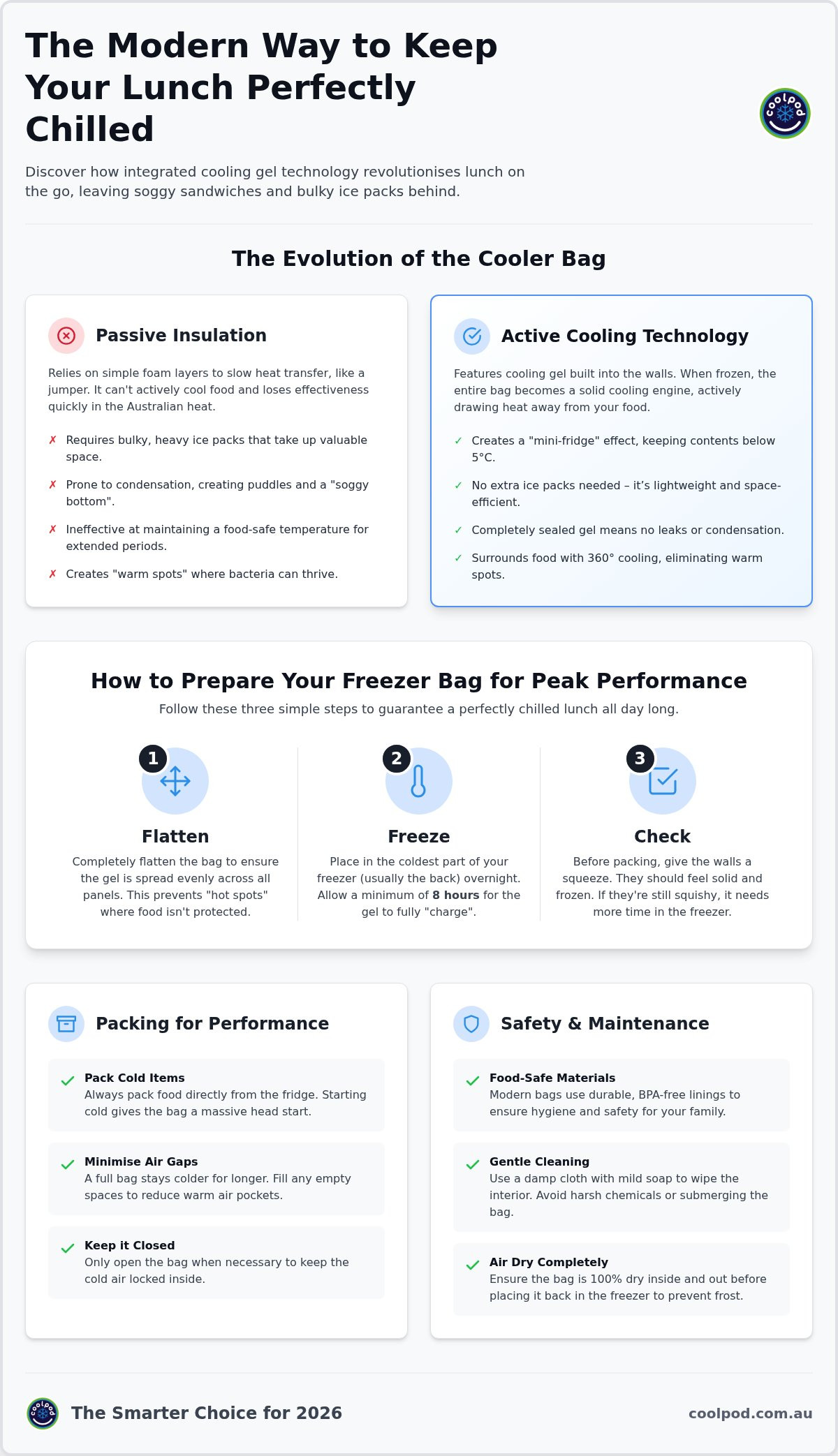
Most people are used to "passive" insulation. Think of this like wearing a jumper; it keeps what's inside at its current temperature for a short while but doesn't actively chill it. In contrast, a freezable portable yoghurt cooler provides "active" cooling. When you place the bag in your freezer, the gel walls store energy. Once you take it out, those walls draw heat away from your food. This creates a "mini-fridge" effect that's essential for the harsh Australian climate, where temperatures can soar well above 30°C before midday.
One of the greatest benefits of this technology is the removal of bulky, leaking ice packs. Traditional ice bricks take up nearly a third of the usable space in a lunch box and often leave a puddle of condensation at the bottom of a backpack. By integrating the cooling element into the bag itself, you get a lightweight, streamlined solution that fits easily into a school bag or a work tote without the extra weight or the mess.
The Science of Integrated Cooling
The secret to long-lasting freshness lies in thermal mass. The gel inside the bag walls has a high capacity for heat absorption. As the sun beats down on your bag, the gel absorbs that thermal energy before it can reach your snacks. This keeps the internal temperature below the critical 5°C food safety threshold for hours. Unlike a standard tiny cooler bag that relies on a single loose ice pack, the integrated gel surrounds your food on all sides. This creates a consistent cold zone with no "warm spots" where bacteria could grow.
Freezer Bag vs. Traditional Cool Bag
When you compare the two, the "no-mess" factor is a clear winner for the daily commute. Because the cooling gel is sealed within the lining, you won't find condensation puddles damaging your documents or electronics. Modern, patented Australian designs are also built for durability. They use food-safe, BPA-free materials that are tough enough to handle the daily rigours of the schoolyard. You get a much higher level of performance and space efficiency, ensuring your portable yoghurt cooler stays slim enough to fit into a crowded backpack while keeping your dairy perfectly chilled.
Step-by-Step: How to Prepare Your Freezer Bag
Preparing your bag correctly is the difference between a cold snack and a disappointment by morning tea. Start by flattening the bag completely before you put it away. This simple step ensures the internal gel is spread evenly across the panels. If the gel bunches up in one corner, you will end up with "hot spots" that fail to protect your food. For the best results, slide the bag into the very back of your freezer. This is typically the coldest zone, away from the door where warm air enters every time you grab a snack.
You need to allow a minimum of eight hours for the gel to reach its full thermal capacity. We recommend popping it in overnight so it's ready to go when you are. Before you pack your portable yoghurt cooler in the morning, give the walls a quick squeeze. They should feel solid and "charged". If they still feel squishy, the bag won't have the staying power to fight off the Australian sun for the whole day.
Optimal Freezing Techniques
Never fold or crumple the bag while it is freezing. Freezing it in a folded position can stress the seams and prevent the gel from reaching its maximum surface area. It is also vital to ensure the bag is dry before it hits the freezer. Any moisture on the exterior can turn into frost, which might make the bag slippery or cause it to stick to other items in your freezer drawer.
Following strict food safety guidelines is much easier when your equipment is running at peak performance. Check that your freezer is set to -18°C or lower. If your ice cream is soft, your cooling bag won't freeze properly either. A well-maintained freezer ensures the gel walls are icy cold and ready to perform.
Quick-Start Tips for Busy Mornings
To stay ahead of the game, keep a spare bag in the freezer at all times. This means you're never caught out if you forget to clear the kitchen bench the night before. If you did forget to freeze it, a quick two-hour "boost" in the deep freeze is better than nothing, though it won't last as long as a full overnight charge. A properly frozen bag can act as a freezable lunch bag for hours, keeping your mains and snacks safe until your break. If you find yourself constantly rotating bags for the whole family, you might want to browse our range of sizes to find the perfect fit for every backpack.
Packing for Performance: Maximising Your Portable Yoghurt Cooler
Packing your food is just as important as the freezing process itself. To get the most out of your portable yoghurt cooler, you must pack items directly from the fridge. If you leave a yoghurt tub on the kitchen bench while you get dressed, it's already beginning to warm up. Putting a room-temperature item into your bag forces the gel walls to work harder to cool it down, which wastes the stored energy. By starting with chilled food, the bag only has to maintain that temperature, which allows it to last much longer.
Air is the primary enemy of a cold lunch. When there are large empty spaces in your bag, warm air fills those gaps every time you open the zip. To keep things icy, try to fill the pouch as much as possible. If you only have one small item, you can even add a small, dry cloth to take up the extra space. This simple trick prevents warm air from circulating and keeps the internal environment stable.
On those scorching 35-degree days, even the best technology needs a bit of help. Keep your bag zipped tight until the second you are ready to eat. If you are at the beach or a park, store your cooler in the shade or tuck it deep inside a larger insulated bag. This double-layering technique provides extra protection against the direct radiant heat of the sun, ensuring your snacks stay crisp until your break.
The Art of Packing Yoghurt and Dairy
For the best results with dairy, ensure your container is in direct contact with the frozen walls of the bag. A reusable yoghurt pouch Australia is the perfect companion for this bag because its flexible shape allows for maximum surface area contact. This ensures your yoghurt stays at a safe, crisp temperature. If you are packing toppings like granola or fruit, keep them in a separate small container inside the bag to maintain their texture without losing the chill.
Managing Condensation and Moisture
It is normal to see a small amount of moisture on the outside of the bag as the cold gel reacts with the warm air. This is just science at work. To keep your backpack dry, you can wrap the bag in a small cloth wipe or place it in a dedicated side pocket. Understanding how to clean cooler bags properly after use will prevent any lingering dampness from turning into a hygiene issue. Modern, high-quality fabrics are designed to minimise this "sweat", but a quick wipe-down at the end of the day keeps everything fresh and ready for the next freeze.
Safety and Maintenance: Keeping Your Bag Clean
Hygiene is the foundation of a healthy lunch routine. Because your portable yoghurt cooler often carries dairy, fruit, and other perishables, a quick daily clean is non-negotiable. After you come home, simply wipe the interior with a soft, damp cloth and a drop of mild detergent. This simple habit removes any surface spills or crumbs before they have a chance to settle and cause issues. It's the easiest way to ensure your bag remains fresh for every use.
Using harsh chemicals like bleach or abrasive scourers is a mistake. These substances can degrade the food-safe lining and compromise the bag's integrity over time. To keep the bag in top condition, don't submerge it in water or toss it into the dishwasher. The intense heat and water pressure of a dishwasher can damage the patented cooling gel and the protective fabric. Instead, stick to a gentle hand-wipe and let the air do the rest. This approach protects the clever engineering inside the walls.
Before you store the bag or put it back into the freezer, ensure it is completely air-dried. Trapping moisture inside a zipped bag is a recipe for trouble. If you want to keep your gear in peak condition for the long haul, shop our durable freezable range designed for easy maintenance and longevity. A dry bag is a safe bag, and taking a few extra minutes to let it breathe will extend its life significantly.
Preventing Mould and Odours
If the bag isn't currently in the freezer, follow the "open-air" rule. Store it with the zip slightly open in a well-ventilated area to prevent stale smells from developing. If a major spill occurs, such as a yoghurt lid popping open, you can perform a deep clean using a paste of bicarb soda and water. Apply it to the spot, let it sit for a few minutes, and wipe it away to neutralise any lingering odours. It's also smart to keep an eye on the lining as the years go by. If you notice any permanent discolouration or a change in the gel's consistency, it is time to replace the bag to ensure your snacks stay safe and properly chilled.
Food Safety Standards
Australian food safety standards are very specific about the "Danger Zone". Bacteria multiply rapidly when food temperatures sit between 5°C and 60°C. Keeping cold food at or below 5°C is the gold standard for preventing illness. A high-quality portable yoghurt cooler provides a reliable barrier against the heat, keeping your snacks at fridge-like temperatures for hours. Because the materials are BPA-free, Phthalate-free, and use non-toxic gel, you can pack your family's lunch with total peace of mind, knowing their food is protected by safe, high-performance materials.
Why Coolpod is the Smarter Choice for 2026
Choosing the right gear for your daily routine makes a massive difference in how you experience your day. Coolpod stands out because our patented design integrates the cooling gel directly into the fabric walls. This isn't a generic mass-market pouch; it's a specialised portable yoghurt cooler built specifically to withstand the intense Australian sun. By removing the need for separate ice packs, we've created a more efficient, lightweight way to keep your dairy at the perfect temperature without the bulk or the mess.
Our local heritage is at the heart of everything we do. Being Australian-owned means we understand exactly what a 40-degree January afternoon looks like. We've designed our bags with custom-fit dimensions specifically for standard Australian yoghurt tubs, ensuring there's no wasted space and maximum contact with the cooling walls. The durability of our zips and reinforced handles means these bags can handle being tossed into school bags or shoved into office lockers day after day. You're investing in a product that's engineered for longevity and high performance in demanding conditions.
Safety is just as important as performance. Every bag in our range is made from food-safe, BPA-free, and Phthalate-free materials. This commitment to quality ensures that your family's snacks are protected by a portable yoghurt cooler that is as safe as it is effective. When you choose a brand that has spent years perfecting its craft, you get the peace of mind that comes with proven, reliable technology.
Innovation in Every Zip
Our products utilise high-quality insulation layers that work in tandem with the frozen gel to create a stable thermal environment. We offer a variety of styles to suit every part of your lifestyle, from freezable wine coolers for weekend picnics to specialised pouches for quick snacks. If you're looking for a complete meal solution, our bento cooler bag provides the perfect way to organise a full day of food while keeping everything crisp and safe. Each design reflects our focus on smarter, more streamlined ways to handle routine tasks.
Join the No-Ice-Pack Revolution
Switching to an integrated cooling solution is about more than just convenience; it's a smarter way to pack your lunch. You'll never have to hunt for a lost ice brick again or deal with the condensation that ruins paper documents and electronics. Our reusable, long-lasting bags are a sustainable choice that pays for itself by preventing food spoilage. We invite you to join the community of Australians who have already ditched the bulky ice packs for a more intelligent design. Explore the Coolpod range and keep your lunch fresh today!
Master Your Daily Freshness Routine
Packing a safe and delicious lunch in the Australian sun no longer requires heavy gear or melting ice bricks. By switching to active gel technology, you ensure your snacks stay at fridge-like temperatures until the very moment you're ready to eat. We've explored how proper preparation, such as flattening your bag before an overnight freeze, and smart packing techniques can significantly extend the cooling life of your portable yoghurt cooler. These simple habits don't just protect your food; they streamline your entire morning routine and eliminate the mess of condensation.
Choosing a solution that is Australian designed and owned means you're getting equipment built for our specific environment. With patented cooling technology and materials that are entirely BPA and Phthalate free, you can trust that your family's health is always the priority. It's time to ditch the soggy sandwiches and lukewarm dairy for a smarter, cleaner way to snack. Shop the Coolpod range of freezable bags and pouches today and experience the difference that expert engineering makes. Enjoy the peace of mind that comes with a perfectly chilled lunch, every single day.
Frequently Asked Questions
How long does a freezer bag stay cold in the Australian heat?
A high-performance bag stays cold for up to 8 hours depending on the external conditions. On a typical 30-degree Australian day, the integrated gel walls maintain a fridge-like environment well past lunchtime. To maximise this time, you should keep the bag zipped and stored out of direct sunlight. If you use a properly frozen bag, your dairy and fruit will stay crisp and safe for the duration of a standard school or work day.
Can I put my freezer bag in the washing machine?
You should never put your cooling bag in the washing machine. The agitation and heat can damage the patented gel walls and compromise the food-safe lining. Instead, use a damp cloth with mild detergent to wipe the interior and exterior surfaces after each use. This gentle method removes spills without affecting the bag's structural integrity. Always allow the bag to air-dry completely before placing it back in the freezer to prevent frost buildup.
Do I still need to use ice packs with a freezable bag?
You don't need separate ice packs because the cooling technology is built directly into the bag's walls. This is a major advantage for any portable yoghurt cooler, as it frees up space for more food and reduces the weight of a backpack. The entire bag acts as a large ice pack, providing a consistent cold zone that surrounds your snacks. This clever design eliminates the problem of leaking ice bricks and soggy sandwiches.
Is the cooling gel inside the bag safe if it leaks?
The gel used in our products is non-toxic and formulated with safety as the primary focus. While the durable outer fabric is designed to prevent leaks, you can rest easy knowing the materials are BPA and Phthalate free. If a puncture does occur, discard the bag and wipe any residue from your food containers with warm soapy water. Our focus on safety ensures that even in the unlikely event of a leak, your family remains protected.
Will a portable yoghurt cooler fit different brands of yoghurt?
Yes, the portable yoghurt cooler is designed to fit most standard Australian yoghurt tubs and pouches. The flexible nature of the fabric allows it to accommodate various shapes, from 170g tubs to squeeze pouches. For the best performance, ensure the container is in direct contact with the internal walls. This ensures the maximum amount of cold energy is transferred to the dairy, keeping it fresh and safe for hours in any weather.
How much space does the bag take up in the freezer?
These bags take up very little room because they are designed to be stored flat. When you aren't using the bag, simply flatten it out and slide it into a narrow gap in your freezer or on top of a frozen vegetable packet. This "flat-freeze" method not only saves space but also ensures the cooling gel is evenly distributed. It's a much more efficient use of freezer real estate than using bulky, rigid ice bricks.
Can I use a freezer bag for warm food?
We don't recommend using these bags for warm food. The integrated gel is specifically engineered to store cold energy, and placing hot items inside could damage the thermal lining or cause excessive condensation. These bags are built to maintain freshness for perishables like dairy, fruit, and salads. If you need to keep food warm, it's better to use a dedicated thermal flask or an insulated container designed specifically for heat retention.
What happens if I leave my freezer bag out in the sun?
Leaving the bag in direct sunlight will cause the gel to "discharge" much faster as it works overtime to fight the radiant heat. While the high-quality insulation provides a strong barrier, the Australian sun is incredibly powerful. To get the best performance, always store your bag in the shade or inside a larger backpack. This simple step preserves the cold energy for your food rather than wasting it on the surrounding environment.


