

Imagine it’s 12:30 pm on a 35-degree day, and you’ve been looking forward to that crisp salad all morning. You open your bag only to find a lukewarm bowl of wilted greens sitting next to a sweating ice pack that’s soaked your notebook. We’ve all been there, and it’s frustrating when your gear lets you down. Keeping food safe and appetising in the Australian sun often feels like a constant battle against the clock and the humidity.
This guide will help you master the art of the midday meal by choosing the right gear to keep your food at or below 5°C. You'll learn how to ensure your yoghurt stays cold and your salads stay crisp until the very last bite, even in the middle of summer. We will break down the essential differences in the lunch bag vs lunch box debate, explain why integrated cooling technology beats bulky, leaking ice bricks, and help you build a streamlined kit that fits perfectly in your work bag or backpack. It’s time to stop worrying about food safety and start enjoying a fresh lunch every single day.
Key Takeaways
- Keep your food safe and appetising by learning how to maintain a consistent temperature at or below 5°C throughout the workday.
- Understand the functional differences in the lunch bag vs lunch box debate and why using them as a combined system is essential for the Australian heat.
- Discover how to streamline your kit by using integrated cooling technology that removes the need for bulky, leaking ice packs.
- Master the "Cold Chain" rule and the simple overnight preparation habit that guarantees up to 8 hours of reliable chill.
- Learn easy maintenance routines to keep your gear hygienic, odour-free, and performing at its best for years to come.
Understanding the Lunch Bag and Lunch Box System
In the harsh Australian climate, relying on a standalone plastic container is a recipe for lukewarm leftovers. While the history of the lunch box shows a transition from simple tin pails to modern plastic divisions, these containers aren't designed to fight 30°C heat. They provide structure, not temperature control. This is where the lunch bag vs lunch box distinction becomes critical. To keep food safe, you need a two-part system: the box to organise your meal and a high-performance bag to act as an external thermal barrier. Without this barrier, thermal bridges form where heat transfers directly through the plastic, quickly spoiling dairy and meats.
Passive Insulation vs. Active Cooling
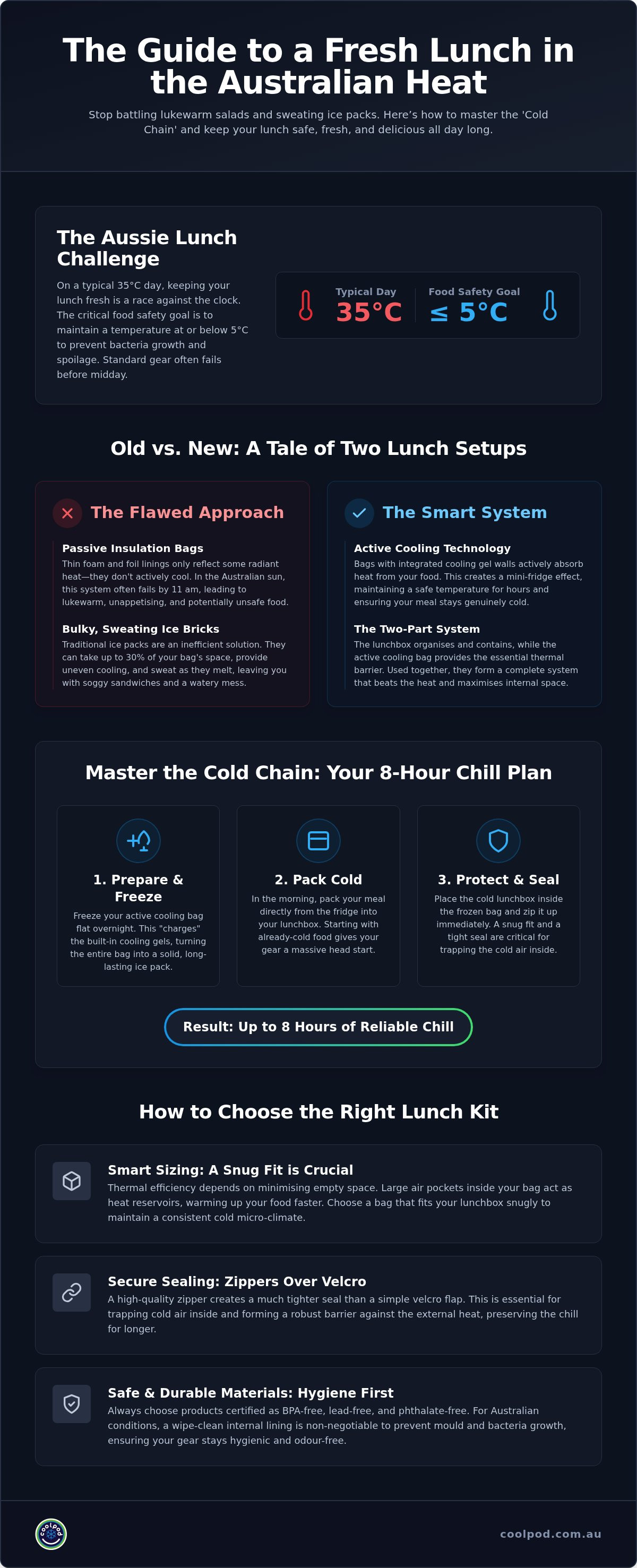
Standard bags use passive insulation. This usually means a thin layer of foam and a foil lining. It's designed to reflect radiant heat, but it doesn't actually lower the internal temperature. In Australia, passive insulation often fails by 11 am. Active cooling technology is the smarter alternative. It uses phase-change materials, such as specialised cooling gels, to actively absorb heat from the food. This creates a mini-fridge effect that keeps your lunch at or below the recommended 5°C safety threshold for hours. When weighing up the lunch bag vs lunch box dynamic, remember that the bag's primary job is to maintain the cold chain that started in your fridge.
The Problem with Traditional Ice Packs
Most people try to fix the heat issue by throwing a loose ice brick into their bag. It's a clunky solution. Traditional ice packs often take up to 30% of the internal space, forcing you to choose between a smaller meal or a heavier bag. As the ice melts, it sweats, creating condensation that leaves sandwiches soggy, fruit slippery, and yoghurt lukewarm. Choosing a system with integrated cooling walls eliminates this mess. By building the cooling gel directly into the fabric, you maximise storage space and ensure the chill is distributed evenly around the food. It's a more efficient piece of engineering that provides peace of mind without the bulk.
How to Choose the Right Lunch Bag and Lunch Box Combo
Selecting a professional lunch setup requires more than picking a style you like. It is an exercise in practical engineering. To get the best results, start by measuring your typical meal portions. A container that is too large for your meal leaves too much room for air, which speeds up the warming process. Once you have your box, you must match its footprint to your bag. This is a critical step in the lunch bag vs lunch box selection process. If you use a bento-style container, you need a bag with a wide, flat base to prevent your meal from tipping and leaking.
Next, evaluate the closure system. High-quality zippers are generally superior to velcro because they create a tighter seal, trapping the cold air inside. Finally, consider your daily environment. An office worker might prioritise a slim design that slides into a commuter bag, while someone on a construction site needs a rugged exterior that can withstand dust and rough handling.
Sizing Your Lunch Kit for Success
Thermal efficiency relies on a snug fit. When a bag is significantly larger than the box, large air pockets form. These pockets act as heat reservoirs that quickly neutralise your cooling source. While school kits are often bulky and awkward, adult lunch bags offer a more streamlined aesthetic. These designs are tailored to fit modern containers tightly, maintaining a cold micro-climate that lasts until your break. It is a smarter way to carry your food without the unnecessary bulk of a traditional cooler.
Material Matters: Durability and Safety
Safety is a priority when food is sitting in the heat for hours. Always check for BPA-free, lead-free, and phthalate-free certifications to ensure no chemicals leach into your snacks. Following the best practices for lunchbox food safety also means choosing gear that is easy to sanitise. Wipe-clean internal linings are essential for preventing mould and bacteria build-up in humid Australian conditions. For the outer shell, look for heavy-duty fabrics that won't tear when tossed into a gym bag or the footwell of a ute. If you want a kit that handles these demands effortlessly, a specialised freezable bag provides the durability and safety standards required for daily use.
The Professional Guide to Packing Your Lunch Bag
Packing your gear correctly is the difference between a fresh meal and a food safety hazard. While the lunch bag vs lunch box debate usually focuses on hardware, your packing technique is the software that makes it run. The most effective strategy is freezing the entire bag overnight. This ensures the cooling gel in the walls is fully charged, creating a consistent cold zone from the moment you leave the house. It's a simple habit that guarantees your food stays at a safe temperature for up to 8 hours.
You must also respect the Cold Chain rule. A cooling bag is designed to maintain temperature, not to chill warm leftovers. Only pack food that is already fridge-cold to ensure you stay within the lunchbox safety guidelines. When loading, place highly perishable items like chicken, ham, or dairy at the very bottom where the chill is most concentrated. Pack everything tightly; air is the enemy of thermal retention. By minimising empty space, you prevent warm air from circulating and stealing the chill from your food containers.
Maximising the Cooling Duration
To get the best performance, follow the 12-hour freeze rule for your freezable bag. This ensures the internal gel is completely solid and ready for a full workday. If you enjoy mid-morning snacks or drinks, consider using a separate insulated drink bottle bag. This allows you to keep the main lunch compartment sealed until midday, preventing the unnecessary temperature spikes that occur every time the zipper is opened. Be mindful of where you store your kit. Never leave your lunch bag in a hot car, as even the best technology can't fight a 60°C cabin for long.
Organising Your Bento Box
When using a bento system, keep hot and cold elements strictly separated to prevent heat transfer. This is a common pitfall in the lunch bag vs lunch box setup where people pack warm rice next to cold tuna. You can even use reusable yoghurt pouches as secondary cooling elements by freezing them before packing. This adds extra "thermal mass" to your kit. Thermal mass refers to the principle where a higher volume of cold items packed together helps the entire environment stay chilled for a longer duration.
Maintaining Your Lunch Gear for Longevity
Investing in a high-quality lunch kit is the first step, but proper maintenance ensures your investment lasts for years. When comparing a lunch bag vs lunch box, the bag requires more specific attention due to its technical cooling walls. A consistent daily cleaning routine prevents the build-up of bacteria and lingering food odours that can ruin a fresh meal. After every use, wipe the internal lining with a damp cloth and mild detergent. This simple habit stops small spills from becoming permanent stains and keeps the environment hygienic for your next meal.
Deep cleaning is necessary if a leak occurs or if the bag starts to smell. Avoid harsh chemicals that can degrade the fabric or leave toxic residues. Instead, a paste of bicarb soda and water works wonders on stubborn spots. For sanitisation, a quick wipe with a diluted vinegar solution kills most common germs without damaging the integrated gel. It is a smarter, safer way to handle gear that comes into close contact with your food.
Proper drying is the most overlooked part of gear care. You must ensure the bag is completely dry before placing it back in the freezer. If moisture remains inside the fabric, it will turn into ice crystals that can damage the internal cooling cells over time. Air dry the bag upside down in a well-ventilated area, away from direct sunlight. Once dry, the best place to store your Coolpod freezable lunch bag is actually in the freezer. This keeps the gel charged and ready for the next morning, saving you time and ensuring maximum performance.
Cleaning Dos and Don’ts
Most technical cooling bags should never go in the washing machine. The agitation and high spin cycles can rupture the cooling cells or weaken the thermal seams. Stick to hand washing to protect the engineering. Follow these rules for the best results:
- Do: Use a soft sponge or microfibre cloth for daily wipes.
- Do: Use bicarb soda to lift stubborn stains and odours.
- Don't: Submerge the entire bag in water unless absolutely necessary.
- Don't: Use a tumble dryer or hair dryer to speed up the process.
Natural cleaning agents are superior to heavy bleaches because they are food-safe and highly effective at neutralising acids. Never use a tumble dryer; the heat will destroy the phase-change gel and melt the internal insulation.
Troubleshooting Common Issues
If your bag stops holding its chill, check your freezer settings first. The gel requires a standard domestic freezer temperature, usually -18°C, to fully charge. If the freezer is too full, air won't circulate well enough to freeze the bag solid. Also, inspect the lining for any punctures. Small nicks in the plastic can lead to thermal loss, which complicates the lunch bag vs lunch box temperature balance. In high-humidity regions, you might notice condensation on the outside of the bag. This isn't a leak; it's simply the cold surface meeting the warm, moist air. Just wipe it down with a dry towel before heading out.
Why the Coolpod System is the Ultimate Australian Choice
Navigating the lunch bag vs lunch box market often feels like a choice between two extremes. You can have a sturdy box that offers no temperature control or a soft bag that requires separate, messy ice bricks. Coolpod was founded to bridge this gap by integrating high-performance cooling technology directly into the bag itself. As an Australian owned and operated family business, we have a deep understanding of the unique environmental pressures our customers face. Our gear is designed to survive the intense radiant heat of a school bag left on a playground or a kit sitting in the footwell of a ute.
By supporting a local specialist, you're choosing a product that has been stress-tested for the specific demands of our climate. We don't rely on generic imports that were designed for milder northern hemisphere conditions. Instead, we offer clever engineering that addresses the real-world problems of soggy food and food safety risks. This commitment to quality has allowed us to build a community of users who no longer have to worry about whether their lunch will still be fresh by the time their break rolls around.
Patented Technology Explained
The core of our innovation is the patented cooling gel concealed within the fabric walls. This creates a uniform thermal barrier that standard ice packs simply can't match. Because the gel is built-in, it provides consistent cooling across every surface of your food container, eliminating the warm spots that lead to bacterial growth. This design also ensures the kit remains lightweight and easy to carry, as you aren't adding the dead weight of multiple ice bricks. Coolpod bags have been refined since 2010 to meet Australian standards. This long history of innovation means our materials are durable enough to handle daily freezing and thawing without losing their structural integrity or cooling power.
Versatility for Every Aussie Lifestyle
Our collection is built to handle everything from the office commute to a weekend at the beach. Whether you're looking for a bento cooler bag for a healthy work lunch or a specialised wine chiller for a sunset picnic, the technology remains consistent. We offer professional, understated colours for adults and vibrant designs for kids, ensuring there's an option for every member of the family. Every zipper, seam, and lining is chosen for its longevity and performance under pressure. Browse the full Coolpod range and upgrade your lunch game today.
Upgrade to a Smarter Midday Routine
Mastering the lunch bag vs lunch box combination is the simplest way to reclaim your midday break. You now have the tools to choose gear that fits your lifestyle, pack for maximum thermal efficiency, and maintain your kit for years of reliable use. By moving away from passive insulation and embracing active, integrated cooling, you can finally enjoy crisp salads and cold dairy regardless of the outside temperature.
Coolpod has spent over 15 years perfecting the art of temperature control for the local climate. Our patented Aussie technology features freezable walls that remove the need for bulky, leaking ice packs. This results in a more streamlined carry and a fresher meal every single day. It's a practical solution designed for those who value safety, quality, and clever engineering.
Ready to experience the difference for yourself? Shop the Patented Coolpod Range Now and take the first step toward a better lunch. You deserve a meal that stays as fresh as the moment you packed it.
Frequently Asked Questions
Do I still need to use ice packs with a Coolpod lunch bag?
No, you don't need additional ice packs. The Coolpod's patented design features cooling gel built directly into the bag's walls. This is a primary benefit in the lunch bag vs lunch box debate, as it saves up to 30% of internal storage space. By removing bulky ice bricks, you have more room for food while ensuring a consistent, 360-degree chill that keeps everything fresh until your midday break.
How long will a freezable lunch bag keep my food cold in 35-degree heat?
A fully frozen Coolpod bag keeps food at a safe temperature for up to 8 hours, even when ambient temperatures reach 35°C. For the best results, ensure you freeze the bag for at least 12 hours before use. This long-lasting performance is essential for the Australian climate, where standard insulated bags often fail by mid-morning. It gives you peace of mind that your dairy and meats remain out of the temperature danger zone.
Can I put my freezable lunch bag in the washing machine?
You should never put a freezable lunch bag in the washing machine. The high-speed spin cycles and agitation can rupture the internal cooling cells or damage the thermal seams. Instead, use a soft cloth with mild detergent or a natural bicarb soda solution for spot cleaning. This manual approach protects the engineering of the bag, ensuring it continues to hold its chill effectively for years without compromising the integrity of the integrated gel walls.
What is the best lunch box size to fit inside a standard cooler bag?
The best size is one that leaves minimal air gaps between the container and the bag walls. For a standard Coolpod, a rectangular or bento-style box that fits snugly is ideal. When deciding between a lunch bag vs lunch box combination, always measure your container first. A tight fit maintains a cold micro-climate by preventing warm air from circulating, which is the most efficient way to keep your meal crisp and safe in the heat.
How do I stop my lunch bag from smelling after a few months?
Preventing odours starts with a daily wipe-down using a damp cloth. If smells persist, apply a paste of bicarb soda and water to the lining, let it sit for a few minutes, and then wipe it away with a diluted vinegar solution. Always ensure the bag is completely air-dried upside down before placing it back in the freezer. This prevents moisture from being trapped, which is the primary cause of mould and unpleasant scents.
Is it safe to freeze the entire lunch bag every night?
Yes, it's perfectly safe and highly recommended to freeze the entire bag every night. These bags are specifically engineered to withstand the repeated expansion and contraction of the freezing process. Storing your bag in the freezer ensures the cooling gel is always fully charged and ready for the next morning. It also saves pantry space and guarantees that your lunch starts its day in the coldest possible environment for maximum safety and performance.
What happens if the cooling gel inside the bag leaks?
If a leak occurs, the cooling gel is non-toxic and safe to handle, but the bag will no longer function correctly. While the gel won't harm you or your food, a puncture means the bag can't maintain its thermal barrier or hold a freeze. You should stop using the bag for cooling purposes and replace it to ensure your food remains at a safe temperature. Inspect the lining regularly for any sharp-object damage or wear.
Are these lunch bags suitable for tradies working outdoors?
These bags are excellent for tradies and anyone working in demanding outdoor environments. The outer fabrics are selected for their durability and ability to withstand the dust and rough handling typical of a job site. Unlike standard coolers that rely on melting ice, the integrated gel system provides a consistent chill that won't leave your lunch soaking wet. It's a rugged, reliable solution for staying nourished and safe during a long shift in the sun.


