

Have you ever opened your lunch bag at midday only to find a lukewarm salad and a sandwich that's more sponge than snack? In the middle of a scorching summer, knowing how to keep lunch cold without a fridge is about more than just avoiding a limp meal; it's a vital part of staying safe. When temperatures soar, the "Danger Zone" between 5°C and 60°C becomes a real concern for anyone carrying dairy, meat, or fresh greens, as bacteria can multiply rapidly in the heat.
We've all been there, dealing with the heavy weight of a bulky esky or the messy condensation from a melting ice pack that soaks through your bag and ruins your paperwork. You deserve a lunch that stays crisp and safe without the extra hassle. This guide shares the most effective, mess-free ways to keep your food at fridge-temperature until the moment you're ready to eat, even when you're out on a jobsite or at a school with no cool storage.
You'll discover how clever engineering and the latest food safety standards can give you total peace of mind. We're looking at lightweight, innovative solutions that ditch the loose ice and keep your yoghurt cold and your sandwiches dry, no matter how high the mercury climbs.
Key Takeaways
- Understand why staying out of the 5°C to 60°C "Danger Zone" is critical for food safety during a scorching Australian summer.
- Learn how to keep lunch cold without a fridge by using patented, freezable technology that turns your bag into a portable cooler.
- Discover the "Freezer First" rule and why starting with chilled food is the secret to maintaining freshness until the lunch whistle blows.
- Identify the best fridge-free friendly ingredients and how to safely pack dairy using specialised, integrated cooling pouches.
- Say goodbye to soggy sandwiches and bulky eskies with streamlined, mess-free solutions designed specifically for our local climate.
Why Temperature Control Matters: The Science of Food Safety
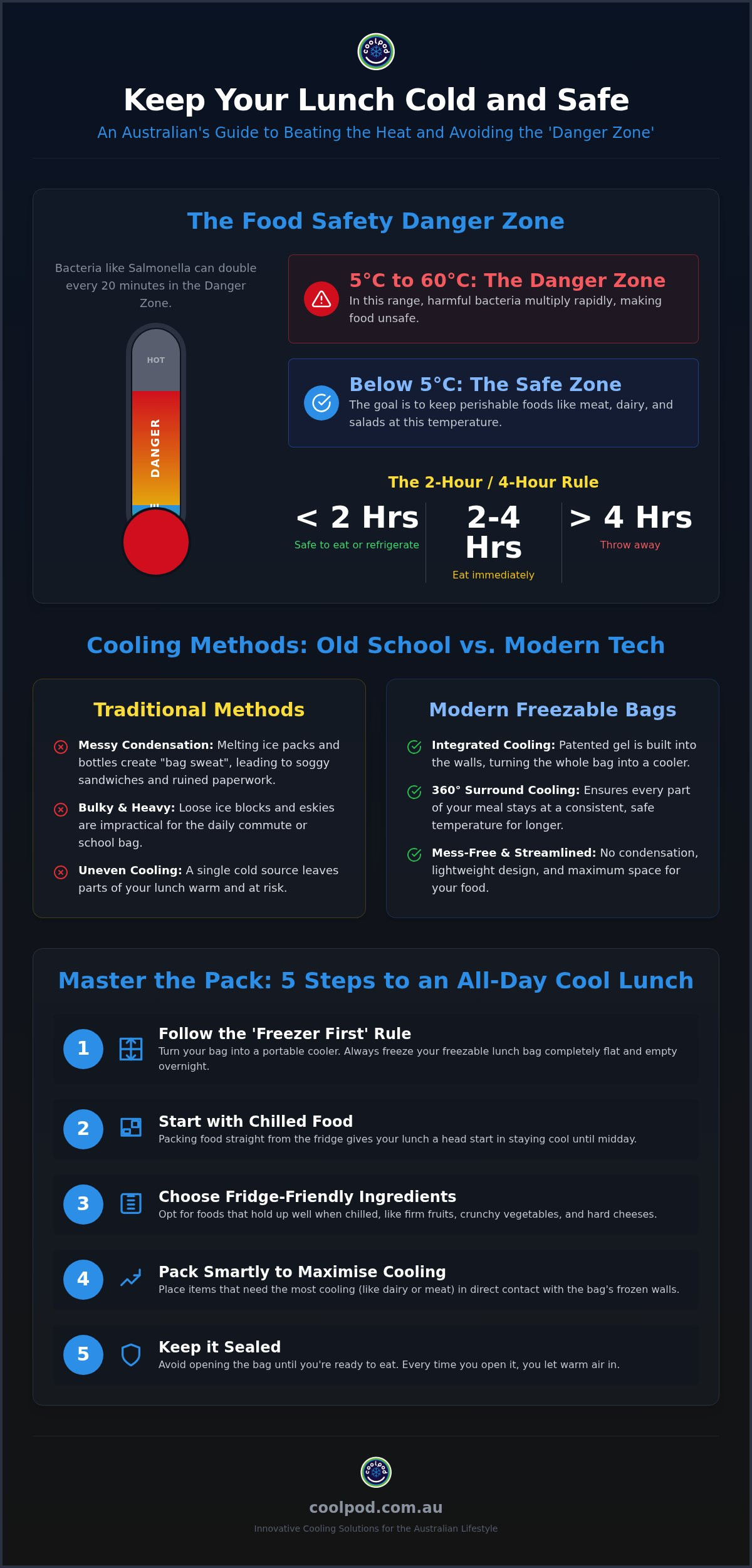
Food safety isn't just about how your meal tastes; it's about the invisible science happening inside your lunch box. Bacteria thrive in what experts call the temperature danger zone, which is the range between 5°C and 60°C. In this window, pathogens like Salmonella and Campylobacter can double in number every twenty minutes. If you are wondering how to keep lunch cold without a fridge, the goal is simple: stay below that 5°C threshold for as long as possible.
Australia's food safety guidelines provide a clear framework known as the 2-hour/4-hour rule. If your food has been in the danger zone for less than two hours, it's safe to eat or put back in a fridge. Between two and four hours, you should eat it immediately. Once you hit the four-hour mark, the risk of food poisoning becomes too high, and the meal must be thrown away. This is particularly critical for high-risk ingredients like poultry, seafood, dairy, and even cooked rice, which can harbour heat-resistant spores that survive the initial cooking process.
The Reality of the Australian Climate
Our local conditions are uniquely challenging. On a typical 30°C day, the temperature inside a parked car or a school bag left in a corridor can easily climb past 40°C before the morning tea break. Most standard insulated bags are passive; they only slow down the warming process rather than preventing it. Without an active cooling source, your lunch will reach ambient temperature long before midday. High humidity in our northern regions also makes traditional evaporation-based cooling less effective, making a reliable, integrated cooling system essential for anyone working outdoors or on a jobsite.
This is a challenge well-understood by outdoor professionals; for instance, the team at GridFree Solar spends most of their time on rooftops installing renewable energy systems, where access to a fridge is often impossible and the heat is unrelenting.
Signs Your Lunch is No Longer Safe
Many people rely on the "sniff test," but this is a dangerous gamble. Pathogens that cause foodborne illness often don't change the smell, taste, or appearance of your food. Instead, look for physical signs of temperature abuse. Wilting lettuce, "sweating" cheese, or a slimy texture on deli meats are clear indicators that your meal has spent too long in the heat. To ensure true safety, your cooling solution needs to maintain a consistent environment as close to 4°C as possible. Learning how to keep lunch cold without a fridge effectively means moving beyond simple insulation and embracing technology that actively fights the Australian heat.
Traditional Methods vs. Modern Cooling Technology
For decades, the standard advice for how to keep lunch cold without a fridge involved bulky ice blocks or frozen water bottles. While these methods are better than nothing, they are far from perfect. Frozen bottles create uneven cooling, leaving the top of your salad warm while the bottom potentially freezes. They also take up a lot of room, leaving you with less space for the actual food you want to eat. Loose ice packs are another common choice, but they are heavy and frequently forgotten on the kitchen bench during the morning rush.
Modern cooling technology has evolved to solve these specific headaches. Instead of adding a cold object to a bag, the latest designs feature integrated gel walls. This turns the entire freezable lunch bag into a cooling unit. This 360-degree approach is far more efficient than a single ice pack. It ensures that every part of your meal, from the yoghurt at the top to the fruit at the bottom, stays protected. When you are safely packing a lunch, surface area contact is key; the more of your food that touches a cold surface, the longer it stays fresh.
The Problem with Condensation
One of the biggest downsides to traditional ice packs and frozen bottles is "bag sweat." As the ice melts, moisture builds up on the outside of the container. This leads to soggy sandwiches and damp fruit that no one wants to eat by midday. If you carry your lunch in a backpack, this condensation can even damage your laptop or important paperwork. Integrated cooling gel is sealed within the bag's lining, which significantly reduces external moisture. It keeps your meal crisp and your belongings dry, providing a much cleaner experience for students and professionals alike.
Space Maximisation: Bag vs. Esky
While a large esky is great for a weekend barbecue, it's a nightmare for the daily commute. Lugging a bulky plastic box on public transport or trying to fit it into a small office locker is simply impractical. Modern cooling bags are designed to be slimline and lightweight. Many options, like the Coolpod Freezable Bento Bag, are foldable. This means they take up minimal space in your freezer overnight and can be flattened once your lunch is finished. It is a smarter way to handle how to keep lunch cold without a fridge without the unnecessary bulk of traditional coolers.
Mastering the Pack: 5 Steps to Keep Lunch Cold All Day
Knowing how to keep lunch cold without a fridge isn't just about having the right gear; it's about how you use it. To get the most out of your cooling technology, you need to think about thermal mass. A well-packed bag acts like a mini-refrigerator, but a poorly organised one will lose its chill long before the midday break. Follow these five essential steps to ensure your meal stays fresh and safe.
- Pre-chill everything: Never pack warm food. To stay at 4°C, your meal needs to start at 4°C. Chill your containers and ingredients in the fridge overnight before transferring them to your bag.
- The Freezer First rule: Your freezable bag needs a full "charge." Just like a phone, it won't perform if the battery is low. Place it in the freezer at least 10 hours before you need it.
- Layer strategically: Place high-risk items like meat or dairy in the centre of the bag. This area is the best protected from external heat and creates a cold core for your meal.
- Eliminate air gaps: Air is the enemy of cold. A full bag stays colder than a half-empty one because there is less room for warm air to circulate. If you have extra space, fill it with a small cloth or extra pieces of fruit.
- Keep it zipped: Every time you open your bag, cold air escapes and warm air rushes in. Be quick when grabbing a snack and ensure the zip is pulled tight every single time.
The Night-Before Routine
For a standard 2026 Aussie summer day, your bag needs a solid 10 to 12 hours in the freezer. To get the best results, flat-pack your bag rather than crumpling it. This ensures the integrated gel freezes evenly across the entire surface. When selecting containers, choose sizes that fit snugly within your Coolpod Freezable Lunch Bag. Reducing the "dead space" inside the bag is a key recommendation in many USDA food safety guidelines, as it helps maintain a consistent internal temperature throughout the morning.
External Factors: Where You Leave Your Bag
Even the best cooling tech can struggle if it's left in a heat trap. Avoid the car boot at all costs; temperatures there can skyrocket in minutes. The backseat is slightly better, but the floor behind the front seat is often the coolest spot in a vehicle. At work or school, keep your bag off the hot ground and away from direct sunlight. If you're working on a jobsite in extreme conditions, placing your Coolpod Freezable Bento Bag inside a secondary insulated carrier can provide an extra layer of defence against the scorching sun.
Strategic Meal Prep: Choosing Fridge-Free Friendly Ingredients
While the right cooling technology is your first line of defence, your choice of ingredients plays a massive role in how well your meal survives the day. Some foods are naturally more resilient than others when it comes to temperature fluctuations. Mastering how to keep lunch cold without a fridge involves a two-pronged approach: using high-performance gear and selecting ingredients that don't easily spoil. By thinking about the stability of your proteins and the structure of your salads, you can ensure your lunch is just as appetising at 1 PM as it was when you packed it at 7 AM.
Texture is often the first thing to go in the heat. To keep your salads crisp, keep your dressings and condiments in separate small containers or sachets. Pre-mixing dressing into your greens doesn't just lead to a soggy mess; the acids and oils can actually speed up the wilting process and make the environment more hospitable for bacteria. If you prefer a hearty salad, swap delicate lettuce for robust bases like quinoa, farro, or shredded cabbage, which hold their crunch much longer in a portable environment.
For those who want to get even more creative with their office or jobsite meals, So Yummy provides fantastic kitchen hacks and recipe videos that make meal prepping both simple and delicious.
High-Stability Proteins
Not all proteins are created equal when you're away from a kitchen. Plant-based options like chickpeas, lentils, and baked tofu are often more resilient in warm conditions than poultry or seafood. If you prefer meat, tinned tuna and salmon are the ultimate fridge-free backups because they remain sterile until you crack the seal. Hard-boiled eggs are another great choice, provided you keep the shells on until you're ready to eat; the shell acts as a natural protective barrier. For those who enjoy dairy, using a specialised yoghurt pouch or dedicated yoghurt bag ensures that sensitive items stay at a safe, consistent temperature throughout the morning.
Hydration and Snacks
Your drinks can also serve as secondary cooling sources. A clever hack for those long days on a jobsite is to use a wine cooler bag to house large water bottles or breakfast smoothies. These bags provide the vertical space needed for taller containers while offering the same integrated gel technology found in lunch bags. When it comes to fruit, choose "hardy" varieties like apples, pears, or citrus over soft berries or bananas, which can quickly turn to mush in a warm bag. For parents, keeping yoghurt pouches at the right consistency is a common struggle; a dedicated cooling pouch prevents the contents from separating and becoming unappealingly liquid by the first school bell.
Ready to upgrade your daily meal prep? Browse our full collection of freezable lunch and yoghurt bags to find the perfect fit for your lifestyle.
The Coolpod Advantage: Patented Cooling for the Australian Lifestyle
When you're facing a forty-degree day in Western Sydney or a humid morning in Brisbane, a standard insulated bag simply isn't enough. Finding a reliable way for how to keep lunch cold without a fridge requires a solution designed specifically for our local conditions. Coolpod was born from this exact need. Designed in Melbourne, our bags are engineered to withstand the intense Australian heat, providing a level of thermal protection that generic imports can't match. By integrating the cooling source directly into the bag, we've removed the guesswork from food safety.
While preparing your own gear for the heat, don't forget your furry companions; keeping them safe and identifiable with Pet ID Tags Australia is a key part of any Australian summer outing.
The "No Ice Pack Needed" revolution is about more than just convenience. Traditional loose ice packs are heavy, take up valuable space, and are often the first thing forgotten during a busy morning. Our patented technology replaces these bulky additions with a streamlined, all-in-one system. This approach maximises the internal volume for your food while ensuring a consistent chill that lasts for hours. Whether you are heading to a dusty jobsite, a high-pressure office, or a busy schoolyard, these bags are built to handle the rigours of daily life without failing when the mercury rises.
Patented Integrated Technology
The secret to our performance lies in the hidden cooling gel panels. Unlike a single ice pack that only cools what it touches, our design creates a 360-degree "fridge effect." This surrounding cold zone ensures that every corner of your Coolpod Freezable Lunch Bag stays at a safe temperature. This method is also a win for the environment. By choosing a durable, reusable cooling solution, you are actively reducing your reliance on single-use plastic zip-lock bags and disposable ice alternatives. We've also prioritised hygiene; the internal surfaces are designed to be easy-clean, which helps prevent the build-up of mould and unpleasant odours that often plague traditional soft coolers.
Style Meets Function
We believe that a lunch bag should look as good as it performs. Our range features professional, understated designs that look perfectly at home in a corporate boardroom or on the back of a ute. One of the most practical features for the daily commuter is the ability to fold the bag flat. Once you've finished your meal, the Coolpod Freezable Bento Bag can be collapsed, taking up almost no room in your backpack or briefcase for the trip home. It's a smarter, more efficient way to manage how to keep lunch cold without a fridge while maintaining a professional image.
Explore the full Coolpod range and upgrade your lunch game today.
Enjoy Fresh, Safe Lunches Anywhere
Enjoying a crisp, healthy meal shouldn't be a luxury reserved for those with access to an office kitchen. By staying out of the 5°C to 60°C temperature danger zone and choosing resilient ingredients, you can protect your health and your tastebuds. Mastering how to keep lunch cold without a fridge is simple once you have the right tools and a solid routine. Ditching bulky eskies and leaky ice packs for integrated cooling gel ensures your meal stays at fridge-temperature without the soggy mess.
Coolpod brings over 15 years of cooling expertise to every design. As a 100% Australian owned company, we understand exactly what it takes to beat a local heatwave. Our patented Australian technology is engineered for durability and performance, whether you're working on a jobsite or sitting in a classroom. It's time to stop worrying about food safety and start looking forward to your midday break with total confidence.
Shop the 2026 Coolpod Collection – Keep Your Lunch Fresh Anywhere
Frequently Asked Questions
How long will a freezable lunch bag stay cold in 30-degree heat?
A Coolpod Freezable Lunch Bag typically keeps food at a safe temperature for up to eight hours, even when ambient temperatures reach 30 degrees. This performance relies on the bag being frozen flat for at least 10 hours and starting with food already chilled to 4°C. Larger bags with more integrated gel surface area generally maintain their internal chill for longer than smaller pouches.
Can I use a freezable bag for hot food as well?
You shouldn't use a freezable bag to keep food hot because the patented gel is specifically engineered for thermal cooling. Placing hot containers inside will quickly melt the gel panels and could potentially damage the internal lining. These bags are specialised tools for those wondering how to keep lunch cold without a fridge, so they aren't suitable for heat retention tasks.
Is it safe to keep yoghurt in a lunch bag without a fridge?
It is perfectly safe to pack dairy if you use a dedicated Coolpod Freezable Yoghurt Bag or Pouch. These specialised designs surround the yoghurt with cooling gel to keep it well below the 5°C danger zone. This prevents the yoghurt from spoiling or becoming unpleasantly runny, which is a common problem when using standard insulated lunch boxes without an active cooling source.
How do I clean my freezable bag to prevent smells?
Cleaning your bag is a straightforward process; simply wipe the internal and external surfaces with a damp cloth and warm, soapy water. Avoid using harsh chemicals or submerging the bag in a washing machine, as this can compromise the integrity of the gel walls. Always ensure the bag is completely dry before you place it back in the freezer to prevent ice build-up.
Do I still need to put my lunch bag in the fridge if one is available?
You don't necessarily need to use a fridge if your bag is fully charged, but doing so will significantly extend the cooling duration. If an office fridge is available, keeping your bag inside helps the gel stay frozen for a much longer period. This is an excellent strategy for anyone learning how to keep lunch cold without a fridge during extra-long shifts or on high-heat days.
What is the best way to freeze my Coolpod bag for maximum performance?
For the best results, place your bag flat in the freezer for 10 to 12 hours overnight. Laying it flat ensures the cooling gel is distributed evenly across the panels, providing consistent 360-degree protection for your meal. Avoid crumpling the bag or folding it tightly while it freezes, as this can create warm spots in the gel and reduce its efficiency.
Are freezable bags safe for kids to take to school?
Freezable bags are a very safe and practical choice for school children because they are made from durable, non-toxic materials. They eliminate the need for heavy, loose ice packs that kids often lose or leave behind in the playground. The integrated design also keeps school bags dry, protecting expensive textbooks and homework from the mess of external condensation.
Can I take a freezable lunch bag on a plane?
You can take a freezable bag on a plane, provided the integrated cooling gel is completely frozen when you go through security. Most Australian and international airlines allow frozen gel packs because they are not considered liquids while in a solid state. It's still a good idea to check with your specific airline for their latest 2026 cabin baggage requirements before you head to the airport.


