

Have you ever reached into your esky for a lunchtime wrap only to find a soggy, waterlogged mess floating in a pool of lukewarm meltwater? It's a classic Australian frustration. Whether you're packing for a quick beach trip or a long weekend away, the insulated bag vs cooler debate usually comes down to one thing: how to keep your food safe and fresh without the hassle. We all want a solution that actually works, but lugging a heavy, rigid box for a simple picnic often feels like more trouble than it's worth.
In this article, you'll discover the critical differences between soft insulated bags and hard coolers so you can choose the perfect cooling solution for your next Aussie adventure. We'll explore why traditional ice bags often fail and how modern, integrated cooling technology provides a lightweight alternative that eliminates the mess. From portability to ice retention, we're breaking down everything you need to know to keep your lunch crisp and your drinks cold under the summer sun.
Key Takeaways
- Distinguish between the short-term cooling of soft bags and the long-haul power of a traditional hard esky.
- Solve the insulated bag vs cooler debate by matching your cooling needs to your specific Australian outdoor activities.
- Find out why traditional ice bags often cause more mess than they're worth and how to avoid "soggy sandwich" syndrome.
- Discover a clever "third option" that provides the cooling performance of a hard cooler without the unnecessary bulk.
- Learn which gear is best for the job site versus what you should pack for a remote weekend camping trip.
Understanding the Basics: What Defines an Insulated Bag and a Cooler?
Choosing between an insulated bag vs cooler depends on how long you need to fight the heat. A traditional insulated bag is typically soft-sided, featuring a flexible outer fabric and a foam-lined interior. It's designed for portability; it's the gear you grab for school lunches, a quick gym session, or a trip to the local park. In contrast, the hard cooler, better known locally as the classic Aussie esky, is a rigid powerhouse. It uses thick, solid insulation and heavy-duty walls to handle high-capacity storage for days. Both systems often rely on ice bags to create a thermal barrier, but they perform very differently in the field.
The primary metric for success in this comparison is ice retention. This refers to how long a container can keep ice in its solid state before it melts into water. While a premium esky might boast several days of retention, a standard insulated bag is usually measured in hours. Understanding this distinction is the first step in ensuring your food stays safe and your drinks stay refreshing.
How Soft Insulated Bags Work
Most soft bags use a multi-layer approach to stay cold. A reflective inner lining is critical because it bounces radiant heat away from your food. Between that lining and the outer fabric sits a layer of foam. High-quality bags often use PEVA (polyethylene vinyl acetate) because it's PVC-free and offers better thermal resistance than cheaper, standard alternatives. If you're using loose ice bags, a heat-sealed, leak-proof liner is essential. Without it, meltwater will eventually seep through the seams, leaving you with a damp car seat or a wet backpack by mid-afternoon.
The Anatomy of a Hard Cooler
When you're comparing an insulated bag vs cooler, the winner usually depends on how long you need to fight the heat. In the harsh Australian climate, the gap between these two solutions is significant. A standard soft bag might offer 2 to 4 hours of safe storage, whereas a high-quality esky can keep contents chilled for 24 to 72 hours. This difference often dictates whether your lunch stays fresh or becomes a health risk by the time you're ready to eat.
The Aussie sun is relentless, and it affects soft bags more than hard-sided containers. Because fabric bags have thinner walls, they absorb external heat much faster. Hard coolers combat this through sheer thickness and density. However, they rely heavily on the principle of thermal mass. A full cooler stays cold longer than a half-empty one because there's less ambient air inside that needs to be kept chilled. If you're only packing a single sandwich and a drink, a massive cooler might actually perform worse than a well-fitted bag because of all that empty, warm space.
Cold Retention: Real-World Expectations
Ice retention is the ability of a container to keep ice in solid form over time. For a typical 8-hour shift, a standard soft bag often sees a sharp temperature rise by midday. To get the best results, you must practice pre-chilling. This involves placing your gear in the fridge overnight or using sacrificial ice bags to lower the internal temperature before you pack your actual food. Without this step, your insulation spends the first hour cooling down the bag itself rather than protecting your lunch. If you need a daily solution that skips the hassle of loose ice, the Coolpod Freezable Lunch Bag uses integrated gel to maintain a cold environment for hours without the bulk.
Durability in the Australian Environment
Surviving the back of a ute is a different challenge than fitting into a backpack. Hard coolers win on impact resistance, but cheap plastics often fail under intense UV exposure. Constant sun can cause low-grade polyethylene to become brittle and eventually crack. High-quality fabric bags are designed to flex, making them more resilient in cramped spaces. The most common point of failure for a bag is the zipper, while coolers usually suffer from broken hinges or perished rubber latches. Keeping your gear hygienic is also a priority. Hard eskies are simple to hose out, while soft bags usually require a quick wipe-down with warm soapy water to prevent mould growth in the seams.
Portability and Practicality: Why Traditional "Ice Bags" Can Ruin Your Day
When we look at the daily practicalities of the insulated bag vs cooler choice, portability becomes the deciding factor for most Australians. A hard cooler is undeniably effective for long-term storage, but it comes with a significant weight penalty. Once you add a few kilos of ice, a large esky becomes a heavy anchor that often requires two people to lift safely. For a quick trip to the job site or a simple picnic at the park, this level of bulk is usually more of a hindrance than a help.
The "Soggy Sandwich" syndrome is perhaps the most frustrating part of using traditional ice bags. As the ice melts, it inevitably finds a way through even the sturdiest plastic bags. By lunchtime, your carefully prepared meal is often floating in a pool of lukewarm water. This doesn't just ruin the texture of your food; it's also a waste of money. Buying a bag of ice for every outing might seem cheap at first, but over a long Australian summer, those A$5 transactions at the service station quickly add up to a significant hidden cost. Furthermore, a large cooler takes up a permanent footprint in your car boot, even when it's completely empty.
The Mess Factor: Water and Condensation
Melting ice creates a damp environment that is far from ideal for food safety. Standing water in the bottom of a soft liner can become a breeding ground for bacteria if the bag isn't thoroughly disinfected after every use. There's also the simple annoyance of "fishing" for a cold drink at the bottom of a freezing, murky pool. Achieving "dry" cooling is the gold standard for hygiene. By using integrated cooling solutions, you maintain a crisp, dry environment that keeps your food fresh and protected without the watery mess.
Weight and Ergonomics
The "grab-and-go" nature of a soft bag is its greatest strength for the daily Aussie commute. Unlike a rigid cooler that occupies half your storage space, a high-quality bag can be tucked away or carried over a shoulder with ease. Handle placement and padded straps are essential features that make a bag practical for public transport or walking from the car park to the office. If you want to maximise your internal space and reduce the physical load, learning how to pack a cooler bag without ice: The ultimate Aussie guide will help you ditch the bulk for good.
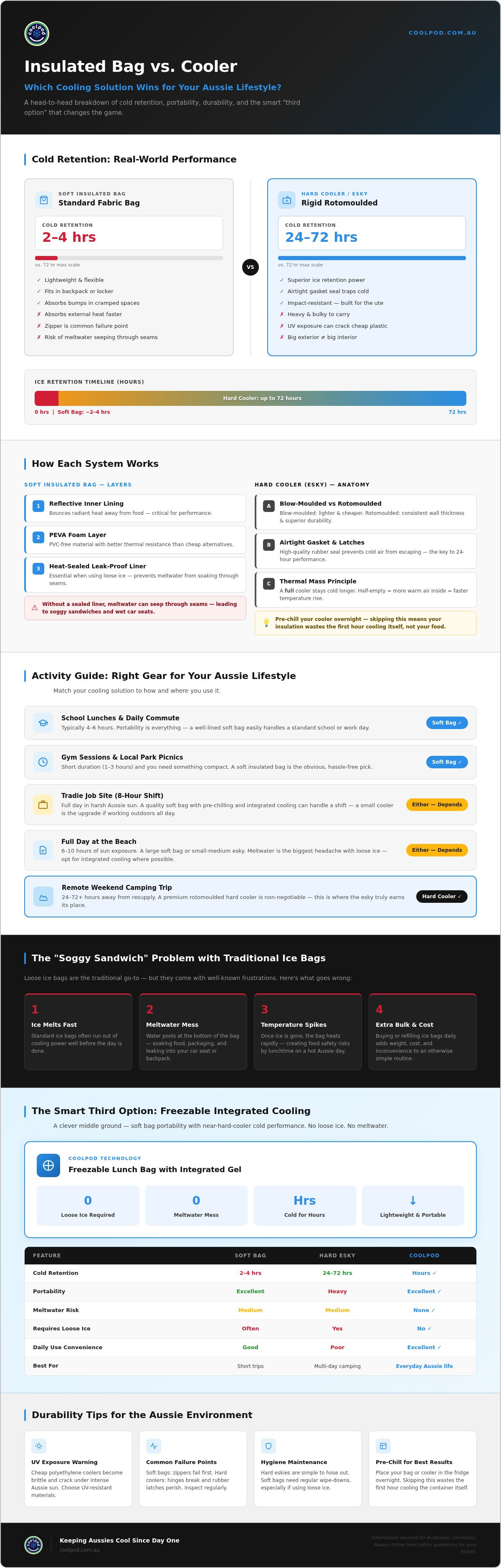
Activity Guide: Choosing the Right Gear for Your Aussie Lifestyle
Choosing the right gear depends entirely on your itinerary. If you're heading out for a three-day fishing trip off the coast, a heavy-duty, rotomoulded esky is non-negotiable. You need that massive thermal mass to keep your catch fresh and your drinks ice-cold from Friday night through to Sunday afternoon. But for the daily grind, that same esky is an oversized burden. Understanding the trade-offs of an insulated bag vs cooler ensures you don't over-invest in heavy gear for a simple lunch.
School lunches present a unique challenge in the Australian summer. When temperatures regularly soar past 30°C, a standard fabric bag without adequate cooling is effectively just an oven for your child's yoghurt. You need a solution that balances weight, so it's not a struggle for them to carry, with high-performance cooling that keeps food safe until the second bell. Similarly, picnics and beach trips occupy a tricky middle ground where loose ice bags become most annoying. Sand sticks to everything damp, and once your ice begins to melt, you're dealing with a slurry of saltwater and grit inside your bag.
Scenario 1: The Office and Job Site
For the 9-to-5, a slim profile is king. Whether you're in a corporate office or on a dusty job site, space is at a premium. A high-performance mens lunch kit needs to be compact enough to fit in a locker or a shared fridge, yet powerful enough to handle the midday heat. Soft-sided bags are the smart choice here because they can be flattened and tucked away once you've finished your meal. For those planning a bigger weekend spread, checking out the Ultimate guide to picnic cooler bags in Australia 2026 will help you find the right capacity for your group.
Scenario 2: The Beach and the Barbie
While individual gear is important, companies in the construction and real estate sectors often look for ways to recognise their team's hard work. For those wanting to celebrate professional achievements, Cadeau + Bliss provides a detailed guide on selecting meaningful employee milestone gifts.
The beach environment is brutal on gear. Salt air and fine sand can ruin zippers and hinges if the materials aren't up to scratch. Smooth, high-quality liners are much easier to wipe down than the porous plastic found in some budget coolers. Then there's the "Wine Cooler" dilemma. Nobody wants to hear the constant clanking of glass bottles against ice bags while walking to the perfect sunset spot. A dedicated wine cooler bag is a picnic essential because it provides a snug, padded fit that keeps your drinks chilled and quiet. To upgrade your daily routine with a smarter cooling solution, explore the full range of Coolpod freezable bags today.
The Smart Alternative: Why Freezable Technology Beats Traditional Insulation
While the insulated bag vs cooler debate often feels like a choice between portability and performance, freezable technology offers a smarter way forward. This "third option" bridges the gap by embedding cooling power directly into the walls of a lightweight bag. By using integrated gel, you get the steady temperature control of a hard cooler without the physical burden of a rigid box. It's a modern evolution that addresses the specific environmental challenges of the Australian heat.
There's also a significant environmental benefit to this approach. Traditional cooling often relies on single-use plastic ice bags that end up in landfill after a single beach trip. Integrated cooling is entirely reusable, which reduces waste and saves you the recurring cost of buying ice. Because the cooling source surrounds your food evenly, you avoid the "hot spots" that occur when loose ice shifts to one side of a container. You get a consistent, dry chill that protects your meal from start to finish.
The Coolpod Difference: Patented Freezable Design
To get the best results, you simply "charge" your bag by placing it in the freezer overnight. This ensures the patented gel is completely solid before you pack your lunch. The Coolpod Freezable Lunch Bag is designed specifically for this daily cycle, making it a reliable partner for school or work. Freezable bags use non-toxic, integrated gel to provide hours of cooling without the need for loose ice. This technology turns the bag itself into the cooling element, so you don't have to worry about leaks or condensation ruining your belongings.
Why Aussie Families are Making the Switch
Aussie parents are increasingly moving away from standard insulation to protect their family's health. Keeping high-risk foods like yoghurt, cheese, and meat at safe temperatures is difficult in a 30°C classroom, but integrated gel provides the sustained chill needed for food safety. It's also a matter of practicality. When you don't need to pack 3kg of ice bags just to keep a few sandwiches cold, you have far more internal storage space for actual food. This makes your daily carry lighter and more efficient. Investing in a reusable, all-in-one cooling solution is a cost-effective move that pays for itself over a single summer season.
Upgrade Your Lunch for the Australian Summer
The choice between an insulated bag vs cooler doesn't have to be a compromise between heavy lifting and soggy sandwiches. While hard eskies remain essential for remote camping trips, daily life in Australia demands a lighter, smarter approach. By opting for integrated cooling technology, you eliminate the mess of melting ice and reclaim valuable internal space for your food. It's about finding the right tool for your specific routine.
Coolpod provides a patented Aussie-designed technology that keeps your contents cold for up to 8 hours without needing separate ice bags. This solution has earned thousands of 5-star reviews from Aussie parents who prioritise food safety and lifestyle convenience. Whether you're heading to the job site or packing for a long school day, you can trust that your dairy and snacks will stay fresh and crisp regardless of the outside temperature.
Don't let the heat dictate your menu or ruin your afternoon with lukewarm results. Explore the Coolpod range of freezable bags and ditch the ice bags for good! It's the clever way to stay prepared for whatever your next adventure brings.
Frequently Asked Questions
How long do ice bags stay cold in an insulated bag compared to a cooler?
Ice bags typically last 2 to 4 hours in a soft bag but can persist for 24 to 72 hours in a high-quality hard cooler. This duration depends on the density of the insulation and how often you open the lid throughout the day. In the insulated bag vs cooler comparison, hard eskies win on long-term duration, but they require significant bulk to achieve those results. For daily use, short-term cooling is often more than sufficient.
Can I put loose ice directly into a soft insulated bag?
You should only put loose ice into a soft bag if it features a heat-sealed, leak-proof liner. Many budget bags have stitched seams that allow meltwater to seep through, causing a mess in your car or backpack. Using a dedicated ice bag or integrated cooling gel is a much cleaner approach. It prevents the soggy sandwich syndrome while protecting the internal foam from mould growth and unpleasant odours over time.
Are insulated bags as good as eskies for a full day at the beach?
Standard insulated bags often struggle with a full day in the sun because they lack the thermal mass of a hard cooler. However, high-performance bags with integrated cooling technology can bridge this gap for several hours. If you're staying from dawn until dusk, a hard esky is better for bulk storage. For a few hours of swimming and a quick lunch, a portable bag is much easier to carry across the sand.
What is the best way to keep food cold without using ice bags?
The most effective method is using freezable bags with integrated cooling gel built into the walls. This eliminates the need for loose ice bags entirely, which saves space and prevents water damage to your food. Pre-chilling your food in the fridge before packing also helps maintain a lower internal temperature. This dry cooling method is more hygienic and keeps your lunch crisp and fresh for much longer than traditional methods.
Do freezable lunch bags actually work in the Australian summer?
Yes, freezable lunch bags are specifically designed to handle extreme temperatures like the Australian summer. By freezing the entire bag overnight, the integrated gel creates a consistent cold environment that can protect dairy and meats for up to 8 hours. This is far more effective than a simple foam-lined bag. It provides peace of mind for parents and professionals who need their food to stay safe in 30°C heat.
How do I stop my lunch from getting soggy in a cooler bag?
Avoiding loose ice is the first step to keeping your lunch dry. When ice melts, the condensation and meltwater inevitably soak through paper bags and plastic wraps. Switching to an integrated cooling system or using hard ice packs prevents this moisture build-up. Additionally, keeping your food in airtight containers ensures that even if there is minor condensation, your sandwiches and snacks remain perfectly crisp and appetising until you're ready to eat.
What is the most durable type of cooler for the back of a ute?
A rotomoulded hard cooler is the most durable option for demanding environments like the back of a ute. These containers feature thick, consistent walls that can withstand heavy impacts and intense UV exposure without cracking. While they are heavier than blow-moulded versions, their longevity and superior ice retention make them a worthwhile investment for tradies and campers. They are built to survive the toughest conditions across the country for many years.
Similarly, for those who value durability and organisation on the road, The Hunger Hub offers a 17-litre bucket camping kitchen designed to withstand the same harsh Australian conditions as your favourite esky.
Is it better to have a larger cooler or a smaller, more efficient insulated bag?
Efficiency often beats size when it comes to the insulated bag vs cooler debate. A large, half-empty cooler will lose its chill quickly because of the excess warm air inside. A smaller, well-fitted insulated bag that is packed tightly will maintain its temperature much better. Choose the smallest container that fits your needs to maximise thermal performance and make your daily carry significantly easier and more practical for your lifestyle.


