

What if you could reclaim nearly half of your bag's space and never have to deal with "cooler soup" again? We've all been there: lugging a heavy bag across scorching sand, only to find your bento box or paper-wrapped rolls floating in a pool of melted ice by lunchtime. Learning how to pack a cooler bag without ice isn't just about reducing the weight on your shoulder; it's about smarter thermal engineering that keeps your supplies frosty without the soggy mess.
Most Aussies agree that traditional ice packs are a literal pain, taking up room that should be reserved for extra drinks or snacks. We're here to share the specialist secrets for maintaining safe temperatures in our harsh climate using integrated cooling technology that eliminates the need for loose ice. This guide explains how to organise your gear for maximum chill and zero condensation, ensuring your food stays fresh and your car boot stays dry until the arvo.
Key Takeaways
- Discover how to pack a cooler bag without ice by mastering the "thermal stack" technique to keep your lunch fresh until the arvo.
- Learn why a "sacrificial freeze" is the essential first step to ensure your bag doesn't lose its chill before you even leave the house.
- Reclaim significant storage space by eliminating the 40% volume penalty usually taken up by melting ice and bulky packs.
- Understand the layering logic of placing frozen bottles at the base to create a cold core that protects your perishables.
- Explore how integrated gel technology turns the entire bag into a cooling unit, removing the mess and weight of "cooler soup."
The End of "Cooler Soup": Why Aussies are Ditching Loose Ice
Most of us have opened a bag after a few hours at the beach only to find our lunch swimming in a lukewarm bath. This is "cooler soup," the inevitable result of loose ice meeting the Australian sun. It's frustrating, messy, and completely avoidable once you understand how to pack a cooler bag without ice. Beyond the soggy sandwiches, loose ice is a notorious space thief. In a standard 5L lunch bag, adding enough ice to maintain a chill often leaves you with barely 2L of actual room for your food. You're essentially carrying heavy water instead of snacks.
The weight penalty is another major drawback. Adding a 2kg bag of ice to your gear makes a simple walk across the hot sand feel like a literal drag. Then there's the condensation crisis. As ice melts, the moisture often seeps through the lining or creates external "sweat" that can ruin car upholstery or soak important work documents in your backpack. Switching to smarter cooling methods ensures your bag remains lightweight and your belongings stay bone-dry.
The Food Safety Factor
Keeping food safe in our climate requires more than just a bit of a chill. According to Food Standards Australia New Zealand, potentially hazardous food must stay at or below 5°C to remain safe. In the heat of a typical Aussie summer, loose ice struggles to maintain this zone consistently. Melting ice also creates a damp environment where cross-contamination thrives, especially if raw produce or leaky containers sit in the "soup" together. A thermal breach is the moment external heat penetrates a wet bag. While many people transition to reusable ice packs to solve the mess, these can still be bulky and lose their effectiveness quickly if they aren't integrated into the bag's design.
The Daily Commute Struggle
For the office, gym, or public transport, loose ice is simply impractical. No one wants to walk into a professional setting with a dripping bag or spend their evening scrubbing out a soggy lining to prevent mould. Traditional insulation often fails the moment it becomes damp because water conducts heat much faster than dry air. Learning how to pack a cooler bag without ice allows you to maintain a professional appearance while keeping your lunch frosty. It eliminates the nightly chore of drying out your gear and ensures your bag is ready to go again the next morning without any lingering dampness or odours.
5 Effective Ways to Pack Your Cooler Bag Without Loose Ice
Learning how to pack a cooler bag without ice requires a shift in mindset from "adding cold" to "preserving cold." The most common mistake is starting with a room-temperature bag. If your cooler has been sitting in a warm pantry all night, it will immediately begin absorbing the chill from your food. This is why pre-chilling is non-negotiable. By placing your bag in the fridge or freezer the night before, you ensure the insulation starts at a baseline that protects your contents rather than draining them of their temperature.
Mastering the Overnight Prep
A "sacrificial freeze" is a simple but effective tactic for those with limited fridge space. If you can't fit the entire bag in the fridge, place a few frozen items inside it for an hour before you pack your actual lunch. This cools the internal lining and creates a stable thermal environment. It's a vital step to prevent food poisoning, as it keeps your perishables out of the "danger zone" where bacteria thrive. Packing warm containers is the primary reason ice-free strategies fail; always ensure your leftovers have been thoroughly chilled before they touch the cooler.
For short trips where you need a lightweight solution, try the "Ice Sponge" hack:
- Soak a clean kitchen sponge in water until saturated.
- Place it in a zip-lock bag and freeze it flat overnight.
- As it thaws, the sponge reabsorbs the water, preventing any leaks in your bag.
Utilising Frozen Consumables
Instead of carrying dead weight, use your snacks as your primary cooling source. A frozen reusable yoghurt pouch australia is a space-saving genius that keeps your bento box cold while it slowly thaws for your morning snack. You can also layer frozen juice boxes at the base of the bag to act as a solid cold foundation for your sarnies. For longer beach days, consider the saltwater bottle method. Adding a small amount of salt to your water bottles before freezing lowers the freezing point of the water. This means the "ice" stays at a lower temperature for longer than plain tap water, providing superior cooling power.
When using the frozen bottle method, remember to leave at least 10% of the bottle empty to allow for expansion. This prevents cracked plastic and messy leaks in your car or work bag. For those who want to skip the DIY hacks entirely, choosing a specialist freezable lunch bag with integrated cooling gel is the most efficient way to maintain a frost-free environment all day without any extra bulk.
The Space-Saving Reality: Ice Packs vs. Ice-Free Methods
When you're trying to figure out how to pack a cooler bag without ice, the biggest hurdle is often the physical volume of traditional cooling tools. Consider a standard 8L cooler bag. If you follow the standard advice of using two large hard-shell ice packs, you've already sacrificed nearly 2.5L of usable space. That's almost 30% of your bag gone before you even pack a single sarnie. Unlike integrated cooling solutions, these external packs become dead weight once they thaw, serving no purpose other than making your bag harder to carry across the sand.
A common issue with traditional methods is the "Cooling Gap." Because cold air sinks, placing a single pack at the bottom of the bag often leaves the top half of your food exposed to rising temperatures. In 30-degree Australian heat, this can lead to a significant thermal imbalance within just two hours. This is why understanding how to keep bento box cold is so difficult with standard setups; the rigid packs don't wrap around the container, leaving corners vulnerable to the heat.
The Problem with Traditional Ice Packs
Hard-shell packs are clunky space-stealers. They rarely fit the dimensions of modern lunchware, forcing you to pack around them and creating wasted "dead air." Soft gel packs are slightly more flexible, but they carry the risk of punctures. No one wants "blue goo" leaking onto their lunch during the morning commute. According to official food safety guidelines, maintaining a consistent temperature is paramount. These gaps in cooling can allow bacteria to multiply in the warmer pockets of your bag, even if the base feels cold to the touch.
Maximising Every Square Centimetre
To get the most out of your space, adopt a "Tetris" approach. Choose containers that match the internal footprint of your bag to eliminate air gaps. Air is a poor insulator; the more empty space you have, the faster your bag will warm up. If you have small gaps, fill them with frozen fruit or yoghurt pouches. This increases the thermal mass of the bag, ensuring every centimetre is working to keep the internal environment frosty. By choosing a bag with cooling gel built directly into the walls, you eliminate the need for separate packs entirely. This gives you 100% of the internal volume for your food and drinks, making it the most efficient way to master how to pack a cooler bag without ice.
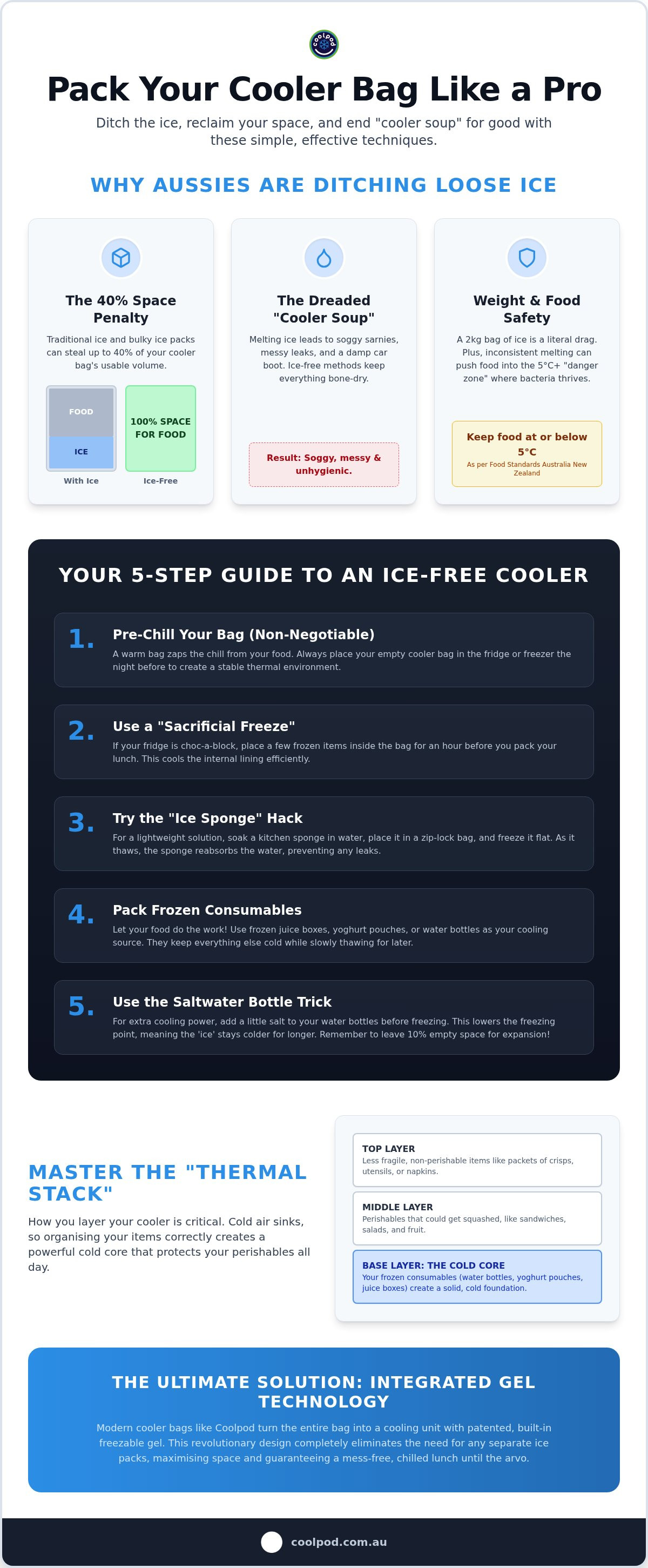
Master the "Thermal Stack": Layering for Maximum Chill
Most camping guides suggest layering large 50L chests for week-long trips, but these rules don't always translate to your daily commute or a family outing. When you're learning how to pack a cooler bag without ice for a picnic or work, the way you stack your items is just as important as what you pack. Cold air naturally sinks, so your packing strategy must account for this downward flow to maintain a consistent internal environment. By placing your most robust frozen items at the very base, you create a thermal reservoir that anchors the temperature of the entire bag.
The core of your bag should be reserved for heavy perishables like meat, dairy, or your main meal. Nestling these items in the centre protects them from the external walls where heat penetration is highest. If you're packing delicate fruit or veggies, add an insulation layer. A simple tea towel or a thin piece of foam prevents "freezer burn" from direct contact with frozen bottles while still allowing the ambient cold to keep them crisp. Finally, use a top shield. A final layer of insulation at the very top acts as a barrier, preventing warm air from rushing in every time you unzip the bag to grab a drink.
The 3-Tier Rule for Small Bags
For those using a compact bento cooler bag, space is at a premium. Follow the three-tier rule to ensure every centimetre works in your favour. The bottom tier should consist of your frozen water bottles or integrated gel elements. The middle tier is for your pre-chilled containers and drinks, which benefit from being sandwiched between cold layers. The top tier is for light snacks, napkins, and cutlery, which don't require intense cooling. This logical progression keeps your most sensitive food at the safest temperature for the longest duration.
Managing Air Flow
Dead air is the enemy of a cold bag. You should never leave a cooler bag half-empty, as the large volume of air will circulate and accelerate the thawing process through convection. If you have extra space, fill it with clean towels, bubble wrap, or even extra napkins to stop air movement. Latent heat dictates how much energy is required to melt your frozen elements, and this process accelerates rapidly when that energy is spent cooling empty air pockets instead of your snacks. To eliminate the guesswork of stacking and air gaps, choose a freezable cooler bag that uses integrated technology to surround your food with a consistent, ice-free chill from every angle.
The Ultimate Ice-Free Solution: Coolpod Patented Freezable Tech
While DIY hacks and clever layering provide a temporary fix, the most efficient way to master how to pack a cooler bag without ice is to use technology designed specifically for the Australian climate. Coolpod has revolutionised the daily commute by building patented cooling gel directly into the walls of the bag. This innovation eliminates the need for separate ice packs or loose ice entirely, essentially turning the entire carrier into a high-performance cooling unit. By surrounding your food with integrated gel, you ensure a consistent temperature that DIY methods often struggle to maintain.
The "Fold, Freeze, and Go" workflow is a game-changer for busy professionals and parents. Instead of digging through the freezer for loose packs or stopping at the servo for bags of ice, you simply fold the empty bag and place it in the freezer overnight. This 30-second morning routine ensures your bag is primed and ready to go. Because the cooling element is part of the structure, you don't lose any internal volume. This clever engineering is why many locals consider it the best freezable lunch bag in Australia for those who need reliable, all-day performance.
The Coolpod Range for Every Aussie Occasion
Different activities require different thermal solutions. The Coolpod Freezable Wine Cooler is a favourite for sunset drinks, keeping your Pinot Grigio at the perfect temperature without the drips or condensation of a traditional bucket. For families, the Coolpod Freezable Yoghurt Bag and smaller pouches are essential for keeping dairy snacks safe until second break. If you prefer structured meals, the Coolpod Freezable Bento Bag is designed to fit your favourite containers with zero wasted space. This variety ensures you have the right tool for how to pack a cooler bag without ice regardless of your plans.
Durability and Sustainability
Choosing an integrated solution is also a win for the environment. You can finally say goodbye to single-use plastic ice bags that end up in landfill after a single picnic. These bags feature easy-clean linings that don't hold onto "Esky smells," ensuring your gear stays fresh use after use. A patented Coolpod is a smarter long-term investment than a cheap insulated bag because it's engineered for longevity. It provides a dependable, professional-grade solution that handles the rigours of daily use while keeping your food safe and your bag lightweight.
Ready for a Smarter Way to Stay Cool?
Mastering the art of keeping your gear cold doesn't have to involve heavy bags or soggy results. By focusing on pre-chilling your gear and using the thermal stack layering technique, you can ensure your food stays at a safe temperature even in the peak of summer. Knowing how to pack a cooler bag without ice is a practical skill that reclaims your storage space and protects your belongings from moisture damage.
For over 15 years, Coolpod has provided a dependable solution engineered specifically for our harsh climate. Our patented Australian technology simplifies your routine by building the cooling power directly into the bag walls. This means no more "cooler soup" ruining your arvo and no more carrying dead weight across the sand. It's time to upgrade to a cleaner, lighter, and more efficient lunch experience.
Ditch the messy ice and shop the Coolpod Freezable range today!
Here's to fresher snacks and stress-free packing on your next Aussie adventure.
Frequently Asked Questions
How long does a cooler bag stay cold without ice?
A high-quality cooler bag can keep food at a safe temperature for up to 8 hours, provided you use integrated cooling technology and start with pre-chilled items. This duration is essential for meeting Australian food safety standards, which require hazardous foods to stay below 5°C. Factors like external heat and how often you open the bag will affect performance. For the best results, always start with a bag that has been pre-chilled in the freezer overnight.
Can I use frozen sponges as an ice alternative in my lunch bag?
Frozen sponges are a clever DIY alternative for short trips because they reabsorb water as they melt, preventing the mess of "cooler soup." Simply soak a clean sponge, place it in a zip-lock bag, and freeze it flat. While effective for a few hours, they lack the longevity of professional gel-lined bags. If you are learning how to pack a cooler bag without ice for a full day at work, integrated cooling is a more reliable choice.
What is the best way to keep a wine bag cold for a picnic?
The most effective method is using a specialised carrier like the Coolpod Freezable Wine Cooler. These bags feature cooling gel built into the walls, which chills the bottle from all sides without the need for messy ice cubes. This ensures your white wine or rosé stays at the perfect serving temperature from the moment you leave home until you pour your first glass at the park. It also prevents condensation from soaking your picnic rug.
Do freezable cooler bags really work in the Australian summer?
Yes, freezable bags are specifically engineered to handle the intense heat of an Australian summer. Patented technology that integrates cooling gel into the bag's structure provides a consistent thermal barrier against high external temperatures. Coolpod has been perfecting this design for over 15 years, ensuring that even on a 35-degree day, your lunch remains frosty. The key is ensuring the bag is completely frozen before use to maximise its cooling potential and thermal duration.
How do I stop my sandwiches from getting soggy without using ice?
Soggy sandwiches are usually caused by condensation from melting ice or temperature fluctuations. By switching to an ice-free method, you eliminate standing water entirely. To keep your sarnies crisp, place them in a sealed container and position them in the middle of your bag, away from direct contact with frozen elements. Using a dry, gel-lined bag ensures the internal environment stays cold and moisture-free, keeping your bread exactly as it should be until lunch.
Is it better to use a large Esky or a small cooler bag for a day trip?
For a day trip, a small, well-packed cooler bag is often superior to a large, half-empty Esky. Large containers trap significant amounts of air, which acts as a heat conductor and speeds up the thawing process. A compact bag that fits your food snugly reduces air circulation and maintains a lower temperature for longer. It is also much easier to carry across hot sand or through a busy park during your weekend adventures.
Can I put my whole cooler bag in the freezer?
You can certainly put your whole bag in the freezer if it is a dedicated freezable model like those in the Coolpod range. These bags are designed to be folded flat and frozen overnight, allowing the integrated gel to solidify. This "Fold, Freeze, and Go" routine is the most efficient way to prepare for the day. Standard insulated bags that don't have built-in gel won't benefit from being frozen and may even suffer material damage from the extreme cold.
How much space do I save by using a freezable bag instead of ice packs?
Using a freezable bag allows you to reclaim approximately 30% to 40% of your internal storage space. Traditional hard-shell ice packs are bulky and often force you to leave out extra drinks or snacks just to make them fit. When you master how to pack a cooler bag without ice by using integrated technology, the bag itself provides the cooling. This gives you 100% of the internal volume for your food, making it much more efficient for family picnics.


