

That bulky ice brick you've been shoving into your child's school bag isn't just taking up space, it's likely failing to keep their lunch at a safe temperature. Many parents spend their mornings wondering how to keep bento box cold, only to find a soggy, lukewarm mess come lunchtime. It's a frustrating cycle of wasted food and safety concerns, especially when dealing with dairy or meat in the middle of a scorching Australian summer. We understand the daily struggle of trying to fit a healthy, varied meal into a bag that's already half-full of heavy, leaking plastic blocks.
The good news is that you don't have to settle for soggy sandwiches or food safety fears. This article reveals why traditional cooling methods are a myth and shows you how to keep your lunch fresh for hours using smarter, integrated technology designed for our unique climate. We will walk you through the science of the temperature danger zone and provide a lightweight way to maximise your space for actual food. Discover how to ensure everything stays crisp and safe until the very last bite, giving you total peace of mind every single day.
Key Takeaways
- Understand the specific risks the Australian climate poses to food safety and why bento boxes require more than just a standard insulated bag.
- Debunk common lunch box hacks, such as frozen sponges, that fail to keep perishable items out of the temperature danger zone.
- Learn exactly how to keep bento box cold using patented integrated cooling technology that provides a consistent, 360-degree thermal barrier.
- Discover practical packing techniques, like pre-chilling your food and bento box, to ensure your meal stays fresh and safe until lunchtime.
- Explore how to maximise space in school bags and office totes by eliminating bulky, leaking ice packs in favour of a streamlined, freezable design.
Facing the Australian Heat: Why Your Bento Box Needs Serious Cooling
Living in Australia means dealing with some of the harshest lunchbox conditions on the planet. While a standard insulated bag might work in cooler climates, it often fails during a 35-degree day in an unshaded school bag area. If you're struggling with how to keep bento box cold, it's vital to understand that our environment demands more than just a basic solution. When food warms up, it doesn't just lose its crunch; it becomes a breeding ground for pathogens that can cause serious illness.
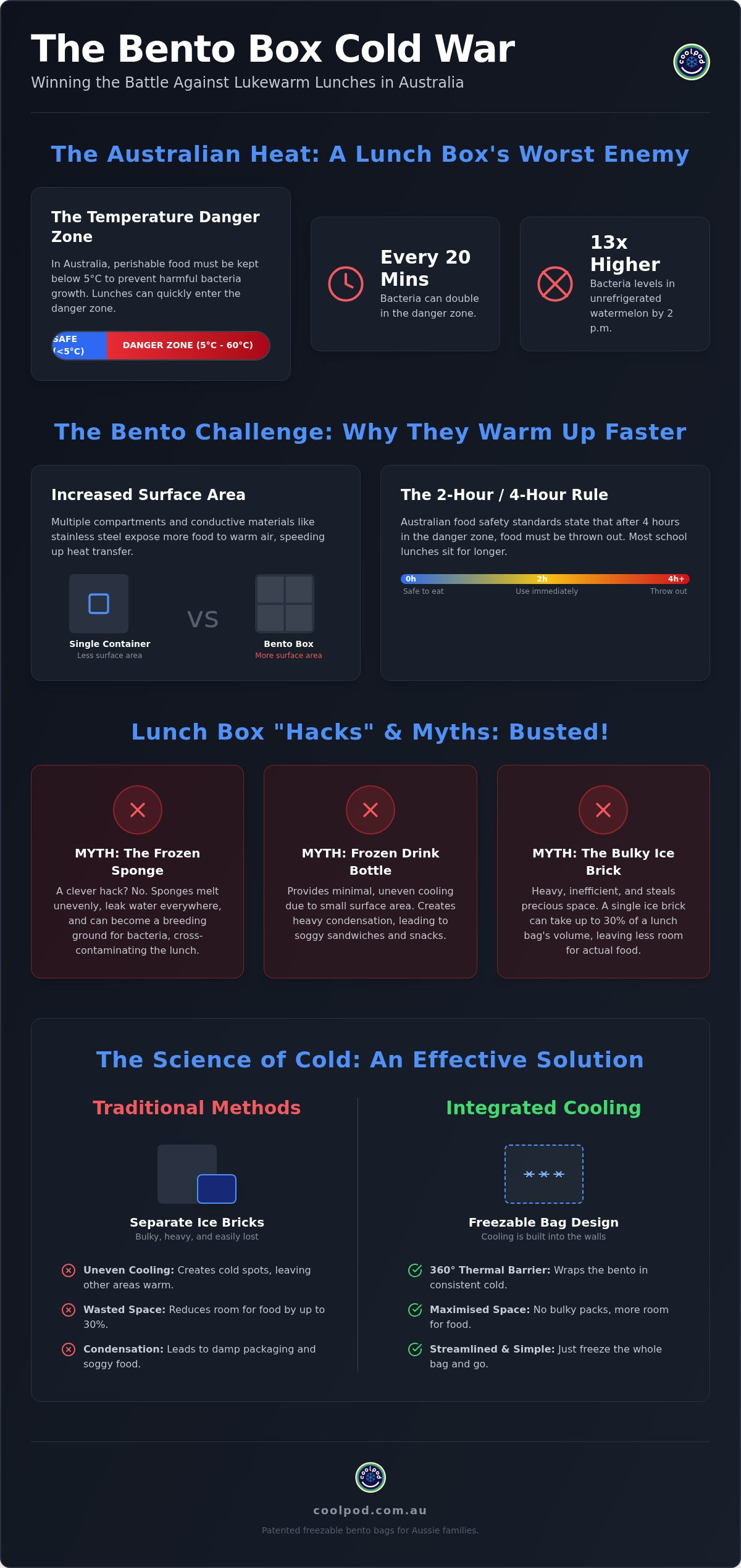
Bacteria thrive in what food scientists call the "Temperature Danger Zone," which spans from 5°C to 60°C. In this range, bacteria can multiply every 20 minutes. A 2023 experiment by the NSW Food Authority highlighted this risk, showing that bacteria levels in cut watermelon left without a cold source were 13 times higher by 2 p.m. than those kept chilled. Beyond the safety risks, heat destroys the texture of fresh produce and causes dairy to spoil, making that carefully packed lunch unappealing and wasteful.
The Bento Challenge: Surface Area and Thermal Loss
Bento boxes are fantastic for variety, but their design creates a unique cooling challenge. Unlike a single large container, a bento box has multiple compartments that increase the total surface area of the food exposed to the air inside the box. This makes it much harder to maintain a steady temperature across every snack. When considering how to keep bento box cold, remember that many popular stainless steel models are high-performance heat conductors. They effectively pull warmth from the surrounding air and transfer it directly into the food. Without a constant, surrounding cold source, the internal temperature of a bento box can spike within an hour of leaving the fridge.
Food Safety Standards in Australia
Australian safety standards are clear: perishable foods must stay below 5°C to remain safe. We often rely on the 2-hour/4-hour rule. This rule states that food is safe for up to two hours outside the fridge, but once it hits the four-hour mark, it must be discarded. Considering most school lunches sit in bags for at least four to five hours, the risk is real. A 2009 study by the NSW Food Authority found that only 29% of students had an ice brick or cold drink in their lunch box, leaving the majority at risk.
Common bento favourites like yoghurt, ham, and cooked rice are high-risk items that require strict temperature control. Understanding the science of cold packs is a start, but simply having something "cool to the touch" isn't enough. If the core temperature of the meat or dairy isn't below 5°C, it isn't truly food safe. True protection requires a cooling method that wraps the entire bento in a consistent thermal barrier.
Busted: 5 Common Myths About Lunch Box Ice Packs and Hacks
When searching for ways on how to keep bento box cold, you'll encounter countless DIY "hacks" that promise easy results. Unfortunately, many of these methods are inefficient or even unhygienic in the harsh Australian sun. Relying on a frozen sponge or a single water bottle might seem clever, but these shortcuts rarely keep food out of the food safety danger zone for the duration of a school or work day.
Why DIY Hacks Often Fail
The "frozen sponge" hack is perhaps the most concerning. While it stays cold for a short time, sponges are designed to trap moisture and debris. As they melt, they release water and potentially harbour bacteria that can cross-contaminate the entire lunch bag. Similarly, using a frozen water bottle as a primary cooling source is a recipe for disappointment. Water bottles have a limited surface area compared to the volume of the bag, meaning they can't provide the consistent, even cooling required. They also produce significant condensation, which leads to soggy sandwiches and unappealing, damp snacks.
The Space Penalty of Traditional Ice Packs
Traditional blue ice bricks present a different problem: they're massive space thieves. In a standard bento bag, a single large ice pack can take up to 30% of the available volume. This leaves parents struggling to pack enough food for a growing child or a full day at the office. These bricks are also heavy, adding unnecessary weight to already burdened school bags. It's a common frustration to find that the ice pack was left on the kitchen bench or lost in a locker, rendering the insulated bag almost useless against the heat. If you want to organise your daily lunch more effectively, moving away from separate, bulky cooling elements is the first step toward a more streamlined routine.
Finally, there's the persistent myth that placing an ice pack on top of the food is the only method you need. While cold air does sink, a single pack on top leaves the sides and bottom of the bento box vulnerable to ambient heat. True thermal protection requires a 360-degree approach that traditional bricks simply can't offer without doubling the weight of the bag. Understanding these limitations helps us move toward smarter, more integrated solutions that actually work to keep your food fresh and safe.
The Science of Cold: Why Integrated Cooling Outperforms Traditional Methods
Traditional ice bricks rely on a single point of contact. If the brick is at the bottom of the bag, the snacks at the top are essentially sitting in a warm pocket of air. To solve how to keep bento box cold, we need to move beyond these outdated methods and look at integrated technology. By embedding cooling gel directly into the walls of the bag, we create a chilled environment that surrounds the food entirely. This 360-degree approach uses thermal mass to maintain a consistent temperature, which is a much more effective way to meet USDA food safety guidelines compared to loose ice packs. It's the most reliable method for how to keep bento box cold throughout a long school day.
How Freezable Gel Technology Works
Unlike the simple water-based liquid found in cheap ice bricks, patented freezable linings utilise advanced phase-change materials. These materials are engineered to stay frozen for significantly longer periods even when exposed to high ambient heat. When you place the entire bag in the freezer overnight, you're "recharging" the thermal barrier. This eliminates the need for separate lunch box ice packs that steal valuable room from your bento. The bag itself becomes the cooling engine, providing a steady release of cold that keeps the internal environment sub-5°C for hours.
Eliminating the Condensation Gap
One of the biggest frustrations with traditional cooling is "sweating." When warm air hits a cold, separate ice pack, it creates condensation that leaves everything feeling damp. Integrated cooling bags are designed with multiple layers of high-quality insulation that significantly reduce this effect. By removing the air gaps between the ice source and the outer insulation, the cooling process is much more efficient. This keeps the exterior of your bento box dry, which is essential for preventing rust on stainless steel models or mould growth in the bag's corners. It's a cleaner, more hygienic way to manage daily lunches.
Material choice is just as vital as the cooling source. Many budget bags use thin foil linings that merely reflect heat for a short time. These fail quickly in the Australian sun. High-performance bags use heavy-duty, PVC-free materials that work in tandem with the integrated gel. This dual-action system provides a superior shield against the heat, ensuring your lunch remains crisp and appetising. It's a smarter way to handle a daily task without the mess, the bulk, or the safety risks of traditional packs.
Master the Pack: Practical Tips for a Chilled Bento All Day
Packing a lunch for the Australian sun requires more than just throwing items into a bag. If you want to master how to keep bento box cold, you need to think about how heat moves. Even the best gear needs a bit of help from smart packing habits to ensure your yoghurt doesn't turn into a science experiment by 11 a.m. By following a few simple steps, you can ensure your food stays at a safe, crisp temperature until the very moment you're ready to eat.
Pre-Chilling: The Secret Weapon
Packing warm food is the biggest mistake bento users make. When you put room-temperature or slightly warm leftovers into a bag, the cooling gel has to work twice as hard to bring that temperature down. This drains the bag's thermal energy before the school or work day has even properly started. Thermal equilibrium represents the state where the temperature of your food and the cooling environment equalise, meaning warm food will actively drain the cold from your bag. To avoid this, chill your bento box in the fridge overnight and only pack food that is already refrigerator-cold. This simple habit gives your freezable bag a significant head start.
Organising for Optimal Temperature
Placing your items strategically makes a massive difference to how long they stay fresh. High-risk foods like deli meats, boiled eggs, and dairy should always be placed directly against the cooling panels of the bag. Using specialised bento cooler bags helps you organise these items while ensuring they stay in constant contact with the cold source. It's also helpful to remember that a full lunchbox stays cold longer than a half-empty one. The more cold items you have packed together, the more they act as a collective thermal mass, resisting the external heat.
To get the best results throughout the day, follow these final practical steps:
- Eliminate air pockets: Use the right size bag for your bento box. Large gaps of air inside the bag act as a buffer that reduces cooling efficiency.
- Stay zipped: Keep the bag zipped shut until the very moment of eating. Every time the bag is opened, cold air escapes and warm air rushes in.
- Find the shade: Store the lunch bag in a cool, shaded spot. Even the best insulation will struggle if left in direct sunlight or inside a hot car.
If you're ready to upgrade your daily routine and ditch the messy ice bricks, you can shop the Coolpod range to find the perfect fit for your favourite bento box.
The Coolpod Advantage: Patented Freezable Bento Bags for Aussie Families
After understanding the science and the risks of the Australian climate, it's clear that traditional ice bricks aren't the answer. The Coolpod Freezable Bento Bag provides a streamlined, effective solution for how to keep bento box cold without the bulk or the mess. As an Australian owned and operated specialist since 2010, we've spent years perfecting a patented design that integrates cooling gel directly into the bag's lining. This eliminates the need for separate ice packs, leaving you with more room for actual food and a much lighter bag to carry.
Our bags are built to withstand the rigours of daily life, whether that's a busy school playground or a demanding job site. We use high-quality, durable materials that protect your bento box from bumps while maintaining a steady thermal barrier. Maintenance is just as simple as the design. There's no need for complex washing routines; a quick wipe down with a damp cloth is all it takes to keep the bag fresh. When the day is done, simply fold the bag flat and pop it back into the freezer so it's ready to go the next morning.
Designed for the Modern Australian Lifestyle
We know that bento boxes come in all shapes and sizes, which is why our bags are engineered to be a perfect fit for the most popular brands found in Australia. The lightweight construction is a major benefit for parents worried about the weight of school backpacks. By removing the heavy plastic ice brick, we significantly reduce the load on your child's shoulders. Our designs are also stylish and modern, making them a hit with everyone from primary schoolers to professionals looking for a sophisticated office lunch solution. You don't have to sacrifice style for safety when deciding how to keep bento box cold.
Investment in Health and Sustainability
Choosing a high-quality freezable lunch bag is an investment in your family's health and the environment. By keeping meals at a safe, consistent temperature, you drastically reduce food waste. Sandwiches stay fresh, yoghurt stays chilled, and fruit remains crisp, meaning lunch actually gets eaten rather than thrown away. We also prioritise safety in our materials, ensuring every bag is PVC, Lead, and Phthalate-free for your total peace of mind.
While cheap, unbranded bags might seem like a bargain, they often fail within a few months or fail to protect food in 30°C+ temperatures. A Coolpod is designed for longevity, offering a cost-effective way to manage food safety year after year. It's a smarter, more sustainable way to handle the daily lunch routine while ensuring your family enjoys fresh, safe, and appetising meals every single day.
Upgrade Your Daily Lunch Routine Today
Mastering how to keep bento box cold is about more than just convenience; it's about protecting your family's health in the demanding Australian climate. We've explored why traditional ice bricks and unhygienic DIY hacks fall short, often leaving you with soggy food and safety concerns. By switching to integrated cooling technology, you eliminate the mess and reclaim valuable space for the food your kids actually enjoy eating. Remember that pre-chilling your bento box and food is the final piece of the puzzle for all-day freshness.
With over 15 years of cooling expertise, Coolpod provides patented Australian technology that is trusted by thousands of Aussie parents. Our freezable bags offer a lightweight, reliable shield against the heat, ensuring every snack remains crisp and safe. Stop compromising on food safety and start enjoying the peace of mind that comes with a smarter, more efficient design.
Shop the Coolpod Freezable Bento Bag Range Today and make lukewarm lunches a thing of the past. Your family deserves fresh, appetising meals every single day.
Frequently Asked Questions
How long does a freezable bento bag stay cold in the Australian sun?
A Coolpod bag is designed to keep your food chilled for up to 8 hours, even when temperatures soar above 30°C. This duration covers the typical school or work day, ensuring your lunch remains safe and appetising. For the best performance, always freeze the bag flat overnight for at least 10 to 12 hours. This ensures the integrated cooling gel is fully charged to tackle the heat.
Do I still need to use separate lunch box ice packs with a Coolpod?
No, you don't need separate lunch box ice packs when using our patented freezable technology. The cooling gel is already built into the walls of the bag, which provides a more consistent thermal barrier than a loose brick. This design is specifically intended to maximise space for your food while reducing the overall weight of the bag. It's a much more efficient way to manage how to keep bento box cold without the extra bulk.
Can I put my bento box directly into the freezer inside the bag?
You can certainly place your bento box inside the bag while it freezes, provided your container is freezer-safe. This is actually a great way to pre-chill the container itself, which helps maintain a lower temperature for longer once you pack your food. Just ensure the bag is zipped shut to prevent any frost buildup on the interior. If your bento box isn't freezer-safe, just chill it in the fridge instead.
Is the gel inside the freezable bag safe if the lining gets punctured?
The cooling gel used in our freezable bags is completely non-toxic and safe for families. We use high-quality materials that are Phthalate, Lead, and PVC-free to ensure total peace of mind. While the bags are built to be incredibly durable, if a puncture does occur, the gel won't harm your food or your child. We recommend replacing the bag if the lining is compromised to maintain its patented cooling efficiency.
What is the best way to clean a bento bag after a spill?
Cleaning your bag is simple and straightforward. For most spills, a quick wipe with a damp cloth and some mild soapy water will do the trick. Avoid using harsh chemicals or placing the bag in the washing machine, as this can damage the internal cooling gel and the insulation layers. Once cleaned, simply leave the bag open to air dry completely before popping it back into the freezer for its next use.
Will a freezable bag keep my bento box from rusting?
Yes, the integrated design helps protect stainless steel bento boxes from rust by significantly reducing external condensation. Traditional ice bricks often "sweat" as they melt, leaving a pool of water that can affect metal containers over time. Because our cooling source is embedded within the insulated walls, the exterior of your bento box stays much drier. This moisture control is a key part of how to keep bento box cold while preserving your gear.
How do I know if my bento box will fit inside a Coolpod bag?
Our bags are designed to fit the most popular bento brands available in Australia. To ensure a perfect match, we recommend checking the internal dimensions listed on our product pages against your specific bento box. A snug fit is actually better for thermal efficiency as it eliminates large air pockets that can sap the cold. If you're using a particularly large or deep model, our bento range offers various sizes to suit.
Can I use a freezable bag for hot food as well?
These bags are specifically engineered for cooling and shouldn't be used for hot food. The patented gel is designed to be frozen and provide a thermal barrier against heat. Placing hot containers inside could damage the gel's structure and reduce the bag's future cooling performance. If you need to keep food warm, it's best to use a dedicated thermal flask or a separate insulated container designed specifically for heat retention.


