

You've spent your morning carefully layering fresh sourdough with premium ham and crisp salad, only to open your lunchbox at midday and find a limp, waterlogged mess that's more sponge than sandwich. It's a classic Aussie disappointment that leads to wasted food and money, leaving you hungry and frustrated. Most of us have stood over the bin wondering if the dampness leaked from the tomatoes or if the ice pack simply gave up the ghost in the heat.
We understand that the struggle against moisture is real when the temperature hits the danger zone between 5°C and 60°C. This guide is your ultimate resource for avoiding soggy sandwiches from condensation, ensuring your bread stays crusty even in the middle of a humid summer. You'll learn how to master the art of the perfect lunch with professional tips designed to eliminate moisture and protect your food's texture. We will walk you through smarter morning routines, the science of temperature differentials, and how clever engineering can create a dry, chilled environment for your meal. By the time you've finished reading, you'll have the confidence to pack a fresh, dry lunch that actually survives until the arvo break.
Key Takeaways
- Understand how temperature differentials and the "dew point" create unwanted moisture inside your lunchbox during the Australian summer.
- Learn to use oil-based spreads as a protective fat barrier that shields bread fibres from wet ingredients like tomatoes and beetroot.
- Master professional prep techniques, such as thoroughly drying salad greens, to assist in avoiding soggy sandwiches from condensation.
- Discover why traditional ice packs often cause internal "rain" and how to manage external sweat to keep your meal dry.
- Explore how integrated freezable technology creates a stable micro-climate that keeps food fresh and chilled without the moisture mess.
The Science of Sogginess: Why Condensation Ruins Your Lunch
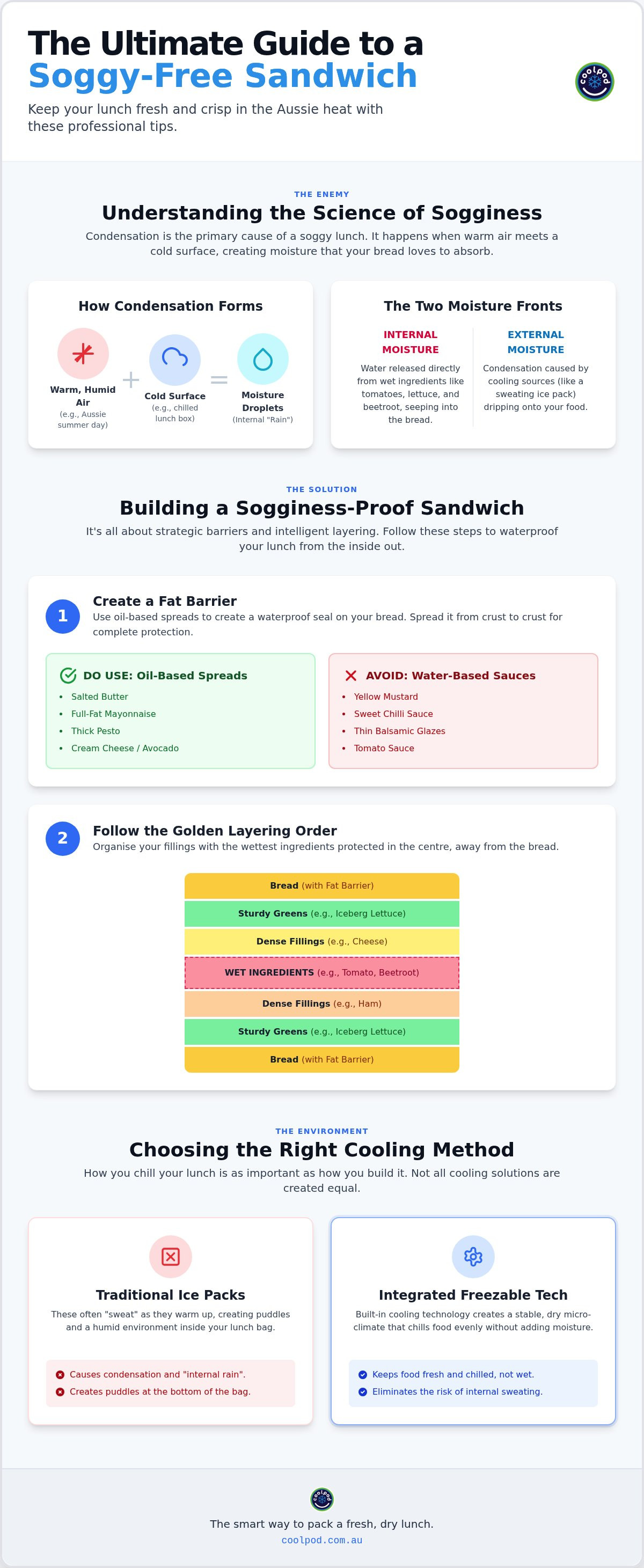
To win the battle for a better lunch, you first need to understand the physics at play. Understanding The Science of Sogginess is the first step toward a better meal. In simple terms, condensation occurs when warm, moist air comes into contact with a cold surface. When this happens, the air cools rapidly and loses its ability to hold water vapour. That excess moisture has to go somewhere, and in a standard lunch box, it usually settles right on your sandwich bread.
In the peak of an Australian summer, this process is accelerated by the "Dew Point." This is the specific temperature at which air becomes saturated with water vapour. When you take a cold lunch box out of a chilled fridge and head into a 35°C afternoon, the temperature differential is massive. The warm air around the sandwich hits the cold surface of your ingredients or your cooling source, reaching the dew point instantly. This results in "rain" inside your container. Because bread is incredibly porous, it acts like a high-efficiency sponge, soaking up every microscopic drop of atmospheric humidity it can find.
Internal vs. External Moisture
There are two distinct fronts in this war: internal and external moisture. Internal moisture comes from the ingredients themselves. Sliced tomatoes, washed lettuce, and juicy beetroot release water over several hours. This liquid seeps directly into the bread fibres from the inside out. Avoiding soggy sandwiches from condensation requires managing this internal release just as much as the environment around the bread.
External moisture is often caused by the very thing meant to keep your food safe: the ice pack. Traditional plastic ice bricks often "sweat" as they melt. This creates a pool of water at the bottom of your bag. The air inside a sealed lunch box can carry a surprising amount of water vapour. As the temperature fluctuates, this vapour turns into liquid droplets that cling to the lid and eventually drip onto your lunch. This "sweating" effect is a major hurdle for anyone trying to keep their sourdough crusty until midday.
The Australian Climate Factor
The Australian climate presents a unique challenge for food storage. In many parts of the country, high humidity levels mean the air is already heavy with water before you even open your lunch bag. When you move your lunch from a stable 5°C fridge into a hot car or a school bag, you create a high-speed condensation cycle. This rapid transition is exactly what leads to that unappetising, damp texture we all want to avoid. Condensation is the primary enemy of the Australian packed lunch.
The Fat Barrier: How to Organise Your Sandwich Layers
Building a sandwich for an Australian summer is like waterproofing a house. You need a solid barrier to keep the elements out. The most effective way to keep your bread dry is to apply what professionals call a "fat barrier." Since oil and water don't mix, a thin layer of fat prevents moisture from migrating from your fillings into the bread fibres. This is a vital tactic for avoiding soggy sandwiches from condensation, as it protects the crumb from both internal ingredient juices and the humid air trapped inside your container.
Choosing the Right Spreads
Not all spreads are created equal. Water-based condiments like yellow mustard, sweet chilli sauce, or thin balsamic glazes will soak straight into the bread, causing the very problem you're trying to solve. Instead, choose oil-rich options like salted butter, full-fat mayonnaise, or a thick pesto. These ingredients are naturally hydrophobic. They fill the pores of the bread and create a slick surface that water cannot penetrate.
Maintaining food safety for packed lunches is much easier when your ingredients stay in their designated layers. Avocado and cream cheese also make excellent secondary sealants. They provide a dense, creamy layer that acts as a structural foundation. If you love watery sauces, apply them between layers of meat or cheese rather than directly on the loaf. To ensure your sandwich remains firm and these fats don't melt in the heat, using a freezable lunch bag will help maintain a consistent, cool internal environment.
Don't just dab a bit of butter in the middle of the slice. Use the "Crust-to-Crust" method. Spread your chosen fat all the way to the very edges of the bread. Any exposed patch of crumb is a weak point where moisture can enter and begin the softening process. Total coverage is the only way to guarantee a crunch at midday.
The Golden Layering Order
Once your barrier is set, the sequence of your fillings determines the longevity of your lunch. Think of it as a "wetness gradient" where the most hydrated items are kept as far from the bread as possible. Follow this blueprint for the perfect build:
- The Shields: Place dry items like cheddar cheese, swiss slices, or deli meats directly against the spread. These act as a physical wall.
- The Centre: Keep "wet" items like sliced tomatoes, pickles, or beetroot in the absolute middle of the sandwich.
- The Umbrella: Place a large, dry piece of cos or iceberg lettuce over the wet items. This catches rogue drips before they can reach the top slice of bread.
Preparing your ingredients properly is just as important as the order in which you stack them. If you're serious about avoiding soggy sandwiches from condensation, the work starts before the bread even hits the board. Most moisture issues begin with residual water from washing or the release of internal juices during the day. By treating your fillings with a bit of professional care, you can significantly extend the shelf life of your lunch's texture.
The Temperature Rule
Heat is the enemy. Never put a warm ingredient directly onto your bread. Whether it's a freshly fried schnitty or a slice of leftover roast, heat creates steam. When that steam is trapped inside a lunch box, it has nowhere to go but into your bread fibres. This turns a crisp sanger into a damp mess in minutes. Always let your proteins cool completely in the fridge before assembly. If you're in a rush, a quick toasting of the bread can help. Toasted bread has a dehydrated surface that is naturally more resistant to moisture than fresh, soft slices. This simple step creates a sturdy foundation that holds up much better against the humidity of a school bag or office locker.
Drying Your Greens and Veg
Wet lettuce is a common culprit. Even if you think you've shaken it dry, droplets cling to the ridges. Use a salad spinner if you have one, or try the Paper Towel Trick. Lay your greens on a sheet of paper towel and gently pat them dry until no visible moisture remains. This ensures you aren't adding unnecessary liquid to your build. For tomatoes, don't just slice them and toss them in. Take a moment to de-seed them by removing the watery "guts" or seeds. This removes the highest concentration of liquid while keeping the flavourful flesh intact. Similarly, salt-prepping cucumbers by letting them sit with a pinch of salt for ten minutes draws out excess water that would otherwise end up in your bread. These small habits are essential for avoiding soggy sandwiches from condensation in the humid Australian climate.
For the ultimate protection, consider packing high-moisture items like pickles, juicy beetroot, or dressed salads in a separate small container. You can quickly add them to your sandwich right before you eat. It takes an extra thirty seconds in the lunchroom, but it's the only way to guarantee a perfectly dry result every single time. Combining this separate packing method with pre-dried greens creates a failsafe system that keeps your lunch fresh from the morning prep until the arvo break.
Mastering the Environment: Avoiding External Sweat
You can follow every prep tip in the book, but if your cooling source is working against you, your bread doesn't stand a chance. In a humid Australian climate, the biggest threat often comes from the outside. When you place a cold object in a warm, sealed space, you create a miniature weather system. Managing this external environment is a critical step in avoiding soggy sandwiches from condensation, as it prevents the "rain" that often forms inside a standard lunch container.
The Problem with Traditional Ice Packs
Most people don't realise that their ice pack is the primary source of moisture. Traditional plastic ice bricks "sweat" profusely as they begin to thaw. This happens because the cold surface of the brick pulls moisture directly out of the air. This liquid then pools at the bottom of your bag or migrates into your sandwich wrapping via capillary action. If you've ever used a standard cooler bag, you've likely dealt with the soggy mess left behind by a melting ice bag. This external water is often what people mistake for ingredient leakage.
To combat this, try the paper towel lining trick. Placing two sheets of dry paper towel at the bottom of your bag acts like a bilge pump, absorbing rogue droplets before they can touch your lunch. On days with extreme humidity, consider the "Double Bagging" method. Wrap your sandwich in parchment paper first to allow for slight breathability, then place that entire package inside a reusable silicone or plastic bag. This creates an air gap that insulates the bread from the damp air inside the main container.
Smart Wrapping Techniques
Your choice of wrapping material significantly impacts how much moisture reaches the crumb. Plastic wrap is excellent for sealing, but it also traps any residual warmth or steam, which quickly turns bread into a sponge. Parchment paper or greaseproof paper is a superior choice. It provides a sturdy barrier while allowing just enough airflow to prevent moisture buildup. For those who require sustainable, wholesale options, Goodies Distribution supplies specialised eco-friendly and compostable food packaging that helps maintain ingredient integrity. For the best protection, a rigid container like a bento box provides a physical shield that keeps your sandwich away from any "sweating" items like chilled fruit or yoghurt pouches.
Using a dedicated bento cooler bag is the gold standard for organisation. It keeps your meal upright and separate from your cooling sources, reducing the risk of direct water contact. If you're tired of dealing with messy, dripping ice bricks every arvo, you should explore our range of freezable lunch bags that use integrated cooling technology to keep things dry and chilled.
Air circulation is your final line of defence. While it's tempting to seal everything as tightly as possible, a tiny bit of air movement can actually help prevent the dew point from being reached as quickly. If you're using a high-quality insulated bag, you don't need to wrap your sandwich in five layers of plastic. Focus on high-quality wrapping and a dry cooling environment to ensure your lunch stays as fresh as the moment you made it.
The Ultimate Solution: Why Integrated Cooling Wins
While mastering layering techniques and drying your salad greens are essential tactics, the most effective strategy for avoiding soggy sandwiches from condensation is changing the cooling environment itself. Most traditional insulation methods rely on a single, concentrated source of cold, such as a loose ice brick. As we've explored, these bricks create massive temperature differentials that trigger the dew point and lead to internal "rain." Coolpod's patented technology eliminates this flaw by integrating the cooling power directly into the structural walls of the bag.
By surrounding your lunch with consistent, gentle cooling from all sides, you eliminate the hot spots where moisture likes to collect. This approach creates a stable internal micro-climate that keeps your bread fibres dry while ensuring your fillings stay safely below the 5°C threshold. It's a proactive way to handle the lunch box environment, moving away from reactive measures like double-bagging and toward a smarter, engineered solution.
Engineering a Drier Lunch
The secret to a crunchier midday meal lies in the clever use of integrated gel panels. These panels are designed to reduce the sharp temperature contrast that typically causes traditional plastic bricks to "sweat." Because the cooling is distributed evenly, the air inside the bag doesn't reach saturation as quickly, which is the primary secret to avoiding soggy sandwiches from condensation. Coolpod bags are engineered for the Australian heat to keep food safe and dry, providing a reliable barrier against the harsh summer sun.
These Australian-designed solutions are built for longevity and daily use. Unlike thin, disposable cooler bags that lose their effectiveness within an hour, a high-quality freezable lunch bag maintains a steady temperature for much longer. This "Goldilocks" environment ensures your sandwich stays cold enough to prevent bacterial growth but dry enough to maintain its structural integrity until the arvo break.
Practical Daily Benefits
Switching to an integrated cooling system offers immediate lifestyle advantages that go beyond just saving your sourdough. You'll reclaim a significant amount of space by removing bulky, loose ice packs that often take up a third of a standard lunch box. This extra room allows for better air circulation around your food containers, further assisting in moisture control. You can pack more variety without worrying about your fruit or yoghurt pouches causing your sandwich to damp down.
Perhaps the most satisfying benefit is the reduction in food waste. There's nothing worse than throwing away a premium sandwich because it's become unappetising and limp. When your meal remains as fresh as the moment you made it, you save money and enjoy a better quality of life. It's a simple upgrade to your morning routine that pays dividends at midday. Ready to ditch the soggy bread? Explore the Coolpod Freezable Range and discover a smarter way to keep your lunch fresh and dry.
Take Control of Your Lunchtime Experience
Mastering the art of the perfect lunch doesn't have to be a daily struggle against the elements. By implementing a reliable fat barrier with butter or mayo and ensuring your greens are bone-dry before assembly, you've already won half the battle. These simple morning routines are the foundation for avoiding soggy sandwiches from condensation. However, the real game-changer is moving away from messy, sweating ice packs and embracing a more stable cooling environment that protects your bread from the outside in.
At Coolpod, we've spent over 15 years perfecting our craft as an Australian owned and operated specialist. Our patented cooling technology is designed specifically for our unique climate; it ensures your meal stays in the safe zone without the moisture mess. It's time to enjoy the lunch you actually planned to eat. Shop the Coolpod Freezable Lunch Bag Range today and experience the difference that clever engineering makes. You deserve a fresh, dry, and delicious sandwich every single day.
Frequently Asked Questions
How do I stop my sandwich bread from getting soggy in a lunch box?
Start with the "fat barrier" method using butter or full-fat mayo to shield the bread. Then, ensure all salad greens are bone-dry before assembly. Using a Coolpod Freezable Lunch Bag helps by providing an integrated cooling source that doesn't sweat. This consistent environment is the most effective way of avoiding soggy sandwiches from condensation by keeping the internal air stable and dry until lunchtime.
Does toasting bread prevent it from getting soggy?
Yes, toasting bread is a highly effective way to create a moisture-resistant surface. The toasting process dehydrates the outer layer of the crumb, making it harder for liquids from ingredients or humid air to penetrate the fibres. For the best results, let the toast cool completely on a wire rack before adding fillings. This prevents steam from being trapped inside your wrapping, which would otherwise turn the bread limp and unappetising.
Is it better to wrap a sandwich in foil or plastic wrap to avoid moisture?
It is generally better to use greaseproof or parchment paper rather than foil or plastic. While plastic wrap seals tightly, it also traps any residual warmth or steam, which leads to immediate sogginess. Paper allows the bread to "breathe" slightly while still providing a protective barrier. If you are dealing with high humidity, place the paper-wrapped sandwich inside a rigid container to provide an extra layer of protection against external moisture.
Can I make my sandwich the night before without it getting wet?
You can make a sandwich the night before if you follow strict moisture-control rules. Use a heavy fat barrier like cream cheese or butter and keep wet ingredients like tomatoes in a separate container to be added at lunch. Store the assembled bread and dry fillings in an airtight container in the fridge. This preparation method is a reliable way of avoiding soggy sandwiches from condensation when combined with a pre-chilled lunch bag the next morning.
Why does my ice pack make my lunch box wet?
Traditional ice packs get wet because of a process called "sweating," where moisture from the warm air condenses on the cold plastic surface. This liquid then pools at the bottom of your bag and soaks into your food. Coolpod's patented freezable technology solves this problem by integrating gel panels into the bag's walls. This design reduces the temperature differential that causes external sweat, keeping your lunch box interior dry and your bread crusty.
What are the best breads for avoiding sogginess in Australian humidity?
Denser, crustier breads like sourdough, ciabatta, or baguettes are superior to soft white sandwich loaves in humid conditions. These varieties have a more robust structure and a thicker crust that acts as a natural shield against moisture. If you prefer sliced bread, choose wholemeal or multigrain options with visible seeds. These are generally less porous than highly processed white bread, meaning they won't absorb atmospheric humidity as quickly during a hot arvo.
How do I pack tomatoes in a sandwich so they don’t leak?
To prevent tomatoes from leaking, you should de-seed them by removing the watery pulp before slicing. After slicing the remaining flesh, pat the pieces dry with a paper towel to remove any surface liquid. Place the tomatoes in the absolute centre of your sandwich, sandwiched between "dry" layers like meat or cheese. This prevents the juice from ever touching the bread, ensuring your lunch stays fresh and firm until you're ready to eat.
Will an insulated bag alone stop condensation?
No, a standard insulated bag alone cannot stop condensation because it only slows down heat transfer rather than managing the internal micro-climate. Condensation occurs when the temperature inside the bag fluctuates or when a traditional ice pack starts to melt. To truly eliminate moisture, you need a system with integrated cooling. Our freezable lunch bags provide consistent, multi-sided cooling that stabilises the internal temperature, which is the only failsafe way to prevent internal "rain."


