

Imagine it's a sweltering 35-degree afternoon and you're finally sitting down for a break. You open your bag expecting a crisp, refreshing meal, but instead, you're met with a lukewarm sandwich and a soggy mess from a melted ice pack. It's a common frustration that leaves many Australians asking: how long does a freezable lunch bag stay cold when the heat is truly on?
We understand the anxiety of wondering if your dairy is still safe or if your chicken wrap has spent too long in the "danger zone" before the lunch bell rings. You shouldn't have to carry a heavy, bulky cooler just to ensure your food stays fresh and safe. This 2026 guide provides the clear answers you need to keep your meals chilled and your mind at ease, even during a classic Aussie summer.
We will explore the clever engineering behind integrated cooling gels and compare performance across different environments. You'll discover practical tips to extend your bag's cooling power and learn how a slimline, freezable design can keep your lunch feeling fridge-cold until 1:00 PM.
Key Takeaways
- Learn why high-quality freezable bags keep meals below the critical 5°C threshold for up to 10 hours, even in demanding conditions.
- Discover how integrated gel technology provides active cooling that outperforms standard foam insulation and bulky ice packs.
- Understand how factors like ambient temperature and thermal mass determine exactly how long does a freezable lunch bag stay cold throughout the day.
- Master simple preparation techniques, such as freezing your bag flat overnight, to ensure your food remains fresh and safe for the job site or school.
Understanding Cooling Times: How Long Does a Freezable Lunch Bag Really Stay Cold?
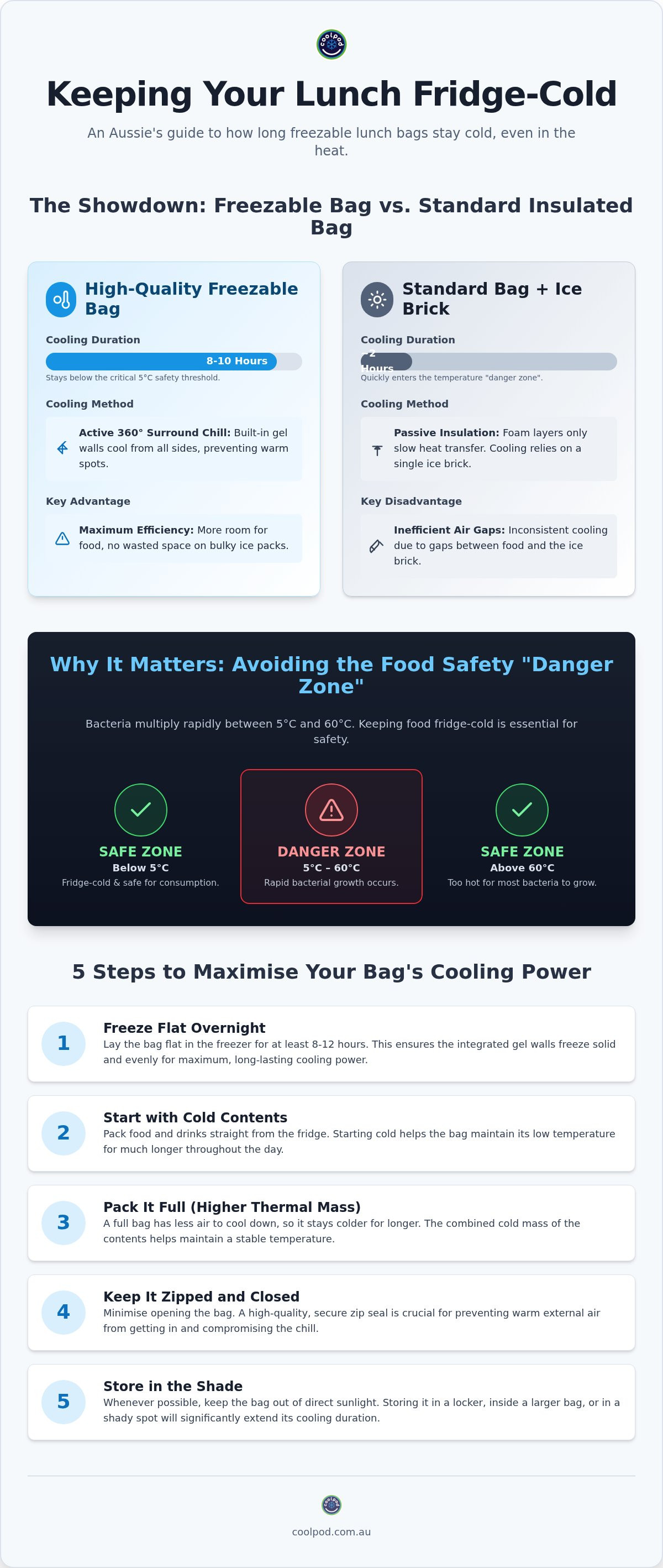
When you're packing a lunch for a long shift or a school day, the most pressing question is usually: how long does a freezable lunch bag stay cold? A high-quality freezable bag is designed to maintain a fridge-cold temperature for roughly 8 to 10 hours. In the context of food safety, we define "fridge-cold" as keeping your meal below the critical 5°C threshold. While a standard Thermal bag without extra ice packs often loses its chill within just two hours, modern freezable technology provides a much longer window of protection.
The 8-to-10 Hour Benchmark
The 10-hour mark has become the standard for premium freezable technology because it covers the entire journey from the morning commute to the mid-afternoon snack. During the first four hours, the bag undergoes a "peak chill" phase. Because the walls are frozen solid, the interior mimics a portable freezer, which is ideal for keeping yoghurts or salads crisp. As the day progresses, the frozen gel transitions into a highly effective chilled insulation layer. By the six-hour mark, your food remains well within the safe zone. Even as you hit eight hours, the internal temperature should still feel like it just came out of the kitchen fridge.
Freezable Bags vs. Traditional Eskies
While a large plastic esky is great for a weekend barbecue, it's often overkill for a single lunch. Slimline freezable bags offer a smarter alternative for daily use. Unlike a traditional cooler that relies on a single ice brick sitting at the bottom, a freezable bag provides 360-degree cooling. Every side of your meal is in direct contact with the cooling source. This surround-chill effect is far more efficient at preventing warm spots where bacteria could grow. It's helpful to consider this when deciding how long does a freezable lunch bag stay cold compared to a bulky box; the direct contact with the gel walls makes the cooling much more immediate and consistent.
You won't have to lug around the extra weight of heavy plastic shells or melting ice packs that take up all your snack space. It is a lightweight, streamlined solution that fits easily into a backpack or work satchel without the bulk. This efficiency makes it the dependable choice for Australians who need a lunch that stays fresh from the first bell until the end of the workday.
The Science of Chill: How Built-in Gel Technology Outlasts Standard Insulation
Standard insulated bags are essentially passive containers. They use layers of foam to slow down the transfer of heat from the outside air to your food, but they don't actually provide a cooling source. Freezable bags change the game by using active cooling. By integrating non-toxic gel linings directly into the fabric, the bag itself becomes the cooling agent. This is a fundamental part of the science behind modern coolers that allows for significantly extended freshness in high temperatures.
One of the biggest advantages of this design is the "Surround Chill" effect. In a standard setup, you might have one ice brick at the bottom, leaving the top of your sandwich exposed to rising heat. With built-in gel, every wall of the bag radiates cold simultaneously. This prevents the formation of warm spots where bacteria often start to multiply. The gel actively absorbs heat from the food and the surrounding environment to maintain a stable internal temperature for hours. This clever engineering is exactly how long does a freezable lunch bag stay cold enough to withstand a hot afternoon on a job site or in a school bag.
Integrated Gel vs. Separate Ice Packs
When you use separate ice bricks, you inevitably create "air gaps" between the cooling source and your food. Air is a poor conductor of cold, which means the cooling is less efficient than it could be. Integrated gel eliminates these gaps by providing direct, consistent contact from all sides. It also maximises internal volume, giving you more room for your actual lunch and less wasted space taken up by heavy, rigid plastic packs. The thermal mass of the frozen gel walls provides a dense reservoir of cold that resists the penetrating heat of the Australian sun much better than a single loose brick.
The Role of High-Density Insulation
The gel doesn't work in isolation. A high-quality bag uses a durable polyester outer layer and specialised foil linings to protect the inner gel from external elements. These materials work together to reflect radiant heat away from the bag's core, ensuring the gel stays frozen for as long as possible. A secure, high-quality zip seal is also vital for performance. Without it, "cold air leaks" allow the internal chill to escape while warm air seeps in, which can significantly reduce how long does a freezable lunch bag stay cold during the day.
If you're tired of bulky boxes and want a more efficient way to keep your meals fresh, choosing a Coolpod Freezable Lunch Bag with integrated technology is a smarter, more reliable solution for the daily grind.
Variables That Affect Cooling Duration in the Australian Heat
While the 10-hour benchmark is a reliable guide, the answer to how long does a freezable lunch bag stay cold isn't written in stone. Real-world performance is a constant battle between the bag's frozen gel and the external environment. Ambient temperature is the most significant variable you'll face. A bag stored in a climate-controlled 20°C office will naturally maintain its chill far longer than one left in a 35°C school bag on a playground or in the back of a ute on a job site.
According to USDA food safety guidelines, keeping food out of the "danger zone" is the primary goal of any cooling solution. To help your bag win this thermal battle, you must consider the starting temperature of your food. Placing a room-temperature sandwich into a frozen bag forces the gel to work twice as hard to cool the food down. For the best results, always ensure your meals are pre-chilled to at least 4°C before they're packed. This preserves the bag's energy for maintaining coldness rather than creating it.
Thermal mass and usage habits also play their part. A bag packed full of cold items acts like a single large block of ice, whereas a half-empty bag contains pockets of air that warm up quickly. Every time you unzip the bag to grab a snack, that precious cold air escapes and is replaced by a rush of warm ambient air. Minimising the frequency and duration of openings will significantly extend how long does a freezable lunch bag stay cold during a long day.
The Impact of the Australian Summer
The intense Aussie sun presents a unique challenge. On days where temperatures climb above 30°C, cooling duration can drop by as much as 30% if the bag is left in direct sunlight or on hot pavement. It's vital to keep your lunch in the shade or inside a locker whenever possible. Because we understand these local extremes, the Best freezable lunch bags in Australia 2026 guide highlights designs specifically engineered with high-density insulation to repel radiant heat and protect the frozen core.
Packing for Thermal Success
To maximise performance, follow the "fuller is colder" rule. If you have extra space, fill the air gaps with small snacks or even a chilled cloth. You can also use "booster" cooling items to support the bag's integrated gel. Adding frozen reusable yoghurt pouches Australia or a frozen drink bottle provides extra thermal mass. These items stay cold for hours and gradually thaw, giving you a refreshing treat while simultaneously helping the bag maintain its fridge-cold environment until the very last bite.
Food Safety and the "Danger Zone": Why Keeping Your Lunch Cold Matters
While we've explored the mechanics of cooling, it is just as vital to understand why those temperatures matter for your health. The "Danger Zone" is a scientific term for the temperature range between 5°C and 60°C. Within this window, bacteria can double in number every 20 minutes. High-risk foods like sliced meats, dairy products, eggs, and even cooked rice or pasta become breeding grounds for pathogens if they aren't kept sufficiently chilled. When considering how long does a freezable lunch bag stay cold, the goal isn't just a refreshing drink; it's the prevention of spoilage.
A "cool-ish" lunch isn't necessarily a "safe" lunch for children or the elderly. Vulnerable immune systems require food to be kept strictly below 5°C to remain safe for consumption. Standard insulated bags often fail this test by midday because they lack an active cooling source. A freezable bag provides a critical safety window that standard bags simply cannot match, acting as a reliable shield against the rising heat of the day. This intelligence in design ensures your family’s meals remain in the safe zone from the moment they leave the kitchen until the very last bite.
Bacterial Growth in Warm Lunches
Pathogens like Salmonella can grow with alarming speed in a warm school bag or a locker. This is especially true during the peak of an Australian summer when internal bag temperatures can skyrocket within minutes of being left outdoors. Food-borne illness often stems from poor temperature control. By choosing a "fridge-in-a-bag" solution, you gain the peace of mind that comes with knowing your meal is protected by integrated gel technology. This proactive approach to food safety is a smarter way to handle the daily lunch routine, removing the guesswork and the fear of potential food poisoning.
Maintaining Quality and Texture
Safety is the priority, but quality is what makes a lunch enjoyable. Heat quickly ruins the crispness of a fresh salad and can turn dairy products into an unappealing, sour mess. Poorly insulated bags often lead to "sweaty" sandwich syndrome, where moisture builds up and ruins the texture of the bread. Using a specialised bento cooler bag allows you to organise fresh ingredients in separate compartments while ensuring they all stay perfectly chilled. This keeps your carrots crunchy and your deli meats firm, ensuring that 1:00 PM meal feels just as fresh as when you packed it at 7:00 AM.
To ensure your family stays safe and satisfied throughout the day, shop our range of freezable bags and experience the difference of professional-grade cooling.
Maximising Performance: 5 Steps to Keep Your Bag Cold for 10+ Hours
Achieving the best results from your gear requires more than just a quick toss in the freezer. To truly influence how long does a freezable lunch bag stay cold, you need a disciplined approach to preparation. Following a few simple steps ensures that your meal stays in that "fridge-cold" sweet spot even when the mercury climbs. First, always freeze your bag flat and completely overnight for at least 8 to 12 hours. Second, only pack food that has already been chilled to 4°C or lower in your home refrigerator. Third, fill the bag to capacity; using small snacks or a chilled cloth to fill air gaps reduces the amount of warm air trapped inside.
If you're heading into extreme conditions, such as a construction site or an outdoor event, consider using a secondary insulated outer bag for an extra layer of protection. Finally, keep the bag zipped tight whenever you aren't eating and store it in the coolest possible spot, like under a desk or in a locker away from sunlight. These small habits make a massive difference in maintaining the integrity of the cooling gel throughout the day. By being proactive with your packing, you ensure the internal temperature remains stable until the last bite.
Freezer Best Practices
The way you store your bag in the freezer is just as important as how long it stays there. Freezing the bag flat is the golden rule. This ensures the internal gel is evenly distributed across all panels, providing consistent 360-degree cooling once it's in use. If the bag is bunched up, the gel might pool in one corner, leaving other sections with no active cooling power. You should also avoid burying the bag under heavy frozen packets. Proper airflow is essential for the freezer's cold air to penetrate the bag's layers efficiently. You'll know your bag is "fully charged" and ready for the day when the walls feel rock-solid to the touch.
The Final Checklist for a Chilled Day
A quick morning routine is your best defence against the heat. Pack your pre-chilled items quickly and zip the bag shut immediately to trap the cold air inside. After you've enjoyed your lunch, give the interior a quick wipe with a damp cloth to remove any crumbs or spills. This keeps the bag hygienic and ensures the materials remain in top condition for years of daily use. Maintaining the bag properly prevents the buildup of odours and protects the specialised linings that keep your food fresh. When you follow these simple steps, you can be confident in how long does a freezable lunch bag stay cold during even the longest shifts.
Ready to upgrade your lunch game? Explore the full range of Coolpod Freezable Bags to find your perfect match and enjoy a fresh, safe meal every single day.
Enjoy Fresh, Safe Meals Every Single Day
Mastering the daily lunch routine means understanding that effective cooling isn't just about basic insulation; it's about active, intelligent protection. By choosing a bag with integrated gel technology, you ensure every side of your meal is guarded against the harsh environment. You now have the facts on how long does a freezable lunch bag stay cold when you follow the right preparation steps, such as freezing the bag flat and pre-chilling your ingredients to 4°C or lower.
With over 15 years of cooling expertise and a patented Australian design, we've spent significant time perfecting a solution that stands up to our unique and demanding climate. It's why thousands of Australian families trust our products to keep their school lunches and work meals safe from the morning commute until the mid-afternoon break. You can stop worrying about soggy sandwiches or food safety fears and focus on enjoying your day with total confidence.
Keep your lunch fridge-cold with a Coolpod Freezable Bag and take the stress out of your daily meal prep. We're here to help you stay fresh and energised, no matter how high the temperature climbs.
Frequently Asked Questions
How long does food stay cold in a freezable lunch bag without extra ice?
Food typically stays fridge-cold for 8 to 10 hours in a premium freezable bag. This duration is achieved because the entire bag acts as an ice pack, providing consistent cooling from all sides. To ensure your meal remains safe, it is vital to start with pre-chilled food. This eliminates the need for separate, bulky ice bricks that take up space and often melt unevenly during the day.
Do I need to freeze the lunch bag every single night?
Yes, you should freeze your bag every night for at least 8 to 12 hours to ensure the integrated gel is completely solid. A fully charged bag provides the thermal mass needed to combat high ambient temperatures. If you only freeze it for a few hours, the gel won't reach its peak cooling potential. This directly impacts how long does a freezable lunch bag stay cold during a standard school or work day.
Can I put hot food in a freezable lunch bag?
You shouldn't put hot food inside a freezable bag as it will immediately thaw the frozen gel walls. This creates a warm, moist environment that encourages bacterial growth rather than preventing it. These bags are specifically engineered for cold storage and food safety. If you need to carry a warm meal, it's better to use a dedicated thermal container designed for heat retention instead of a cooling solution.
Is the gel inside the freezable bag safe if it leaks?
The gel used in our patented designs is non-toxic and food-safe, providing peace of mind for parents and professionals alike. While the durable outer materials are built to withstand daily use on job sites or in school bags, accidents can occasionally happen. If a leak occurs, simply wipe the area with a damp cloth. The integrated nature of the gel panels means it is much less likely to leak than standard plastic ice bricks.
How do I clean my freezable lunch bag to keep it fresh?
Cleaning your bag is a straightforward process that helps maintain the integrity of the cooling technology. Simply wipe the interior and exterior with a damp cloth and mild soapy water after every use. Avoid submerging the bag in water or putting it in the washing machine, as this can damage the specialised insulation and gel panels. Ensuring the bag is completely dry before placing it back in the freezer prevents ice buildup.
What happens if I forget to freeze my bag overnight?
If you forget to freeze your bag, it will still function as a standard insulated container, but it won't provide active cooling. Without the frozen gel walls, the bag relies solely on passive insulation to slow down heat transfer. In this scenario, you won't achieve the 8 to 10 hour cooling window. You might need to add a separate ice pack temporarily to keep your perishables safe until your next freeze cycle.
Are freezable lunch bags better for the environment than ice packs?
Freezable bags are a smarter environmental choice because they are designed for long-term reuse and eliminate the need for disposable cooling options. Since the cooling gel is built directly into the fabric, you won't lose or need to replace separate plastic ice bricks. This durable, all-in-one design reduces household waste and provides a more efficient way to manage how long does a freezable lunch bag stay cold without constantly buying new accessories.
Can a freezable bag keep drinks cold as well as food?
Absolutely. The integrated gel technology is incredibly effective for chilling beverages. Whether you are using a standard lunch bag for a juice box or a specialised drink cooler bag for a water bottle, the surround-chill effect ensures your drinks stay refreshing for hours. This makes them perfect for outdoor sporting events or long commutes where a lukewarm drink is the last thing you want during the peak of an Australian summer.


