

Did you know that 25% of Australians are actively looking to cut back on buying lunch every day to save money? It is a savvy financial move, but many of us struggle with the reality of boring, soggy sandwiches or the nagging worry that our food won't stay safe in the summer heat. Learning how to pack a bento box for adults is the ultimate solution for anyone wanting to reclaim their lunch hour. It is about more than just food art; it is a strategic way to ensure you enjoy a fresh, nutritious meal that actually keeps you fuelled until dinner.
We understand that a successful midday meal needs to be both delicious and practical. You likely want better portion control and food that stays crisp and cold, even after a long commute on public transport. This guide provides a repeatable system for packing a balanced bento that survives the daily grind. We will cover everything from smart ingredient organisation to critical food safety standards for our unique climate. You will discover how to maintain that vital temperature control so your lunch remains below 5°C, ensuring every bite is as fresh as when you left home this morning.
Key Takeaways
- Learn the "Power Four" framework to balance protein, carbohydrates, and vegetables for a midday meal that actually keeps you satisfied.
- Master the "Big to Small" packing order to create a stable, organised lunch that won't get jumbled during your morning commute.
- Discover the most effective methods for how to pack a bento box for adults while ensuring your food stays safely below 5°C in the Australian heat.
- Streamline your week with batch-prepping strategies and a "Bento Stash" of non-perishables to ensure you never have to rely on expensive takeaway.
- Understand the limitations of loose ice packs and how integrated cooling can protect your food from the bacterial "Danger Zone."
Why the Bento Box is the Ultimate Adult Lunch Strategy
The humble sandwich has had its day in the Aussie office. While a quick wrap or toastie might suffice occasionally, many professionals find themselves in a "soggy sandwich" rut that leaves them unsatisfied by 2 pm. Understanding the history and cultural significance of bento reveals why this method is so effective for the modern worker. It isn't just about aesthetics; it is a system designed for variety and freshness. By using compartmentalised sections, you can pack a diverse range of textures and flavours that stay separate until you are ready to eat.
Learning how to pack a bento box for adults also offers significant financial and environmental advantages. With a growing number of Australians looking to cut back on daily lunch purchases to save money, the bento box serves as a perfect vessel for last night's leftovers. Instead of tossing out a small portion of roast veg or stir-fry, it becomes a star component in your lunch. This approach naturally reduces your reliance on single-use plastics and glad wrap, making your workday more sustainable and your fridge more organised.
Bento vs. Traditional Lunch Boxes
Traditional lunch boxes often lead to a "mushy" experience where different foods bleed into one another. A bento box solves this through clever structural integrity. Your crisp crackers won't absorb moisture from your hummus, and your salad leaves won't wilt against a warm protein. For health-conscious professionals, the fixed compartments provide an effortless way to manage portion control without the need for constant calorie counting. It is a visual cue that helps you strike the right balance between nutrients. We often eat with our eyes, and an organised, colourful meal provides a much-needed psychological reset during a busy shift.
Choosing the Right Box for Your Appetite
Finding the right hardware is the first step in mastering how to pack a bento box for adults. You need to consider your specific hunger levels and your daily commute conditions. The goal is to find a balance between durability and portability.
- Material: Stainless steel is incredibly durable and holds no odours, while BPA-free plastic is lightweight for those on the move. Glass is excellent for reheating but can be heavy in a laptop bag.
- Capacity: Size matters. Look for a box with a capacity between 800ml and 1200ml. This volume generally fits a substantial adult meal without being overly bulky.
- Seals: Leak-proof silicone seals are non-negotiable. There is nothing worse than beetroot juice or dressing leaking onto your work documents or electronics.
By selecting a box that fits your lifestyle, you create a repeatable system that removes the stress from your morning routine. Once you have the right container, you can focus on the quality of the food inside, knowing it will stay exactly where you put it.
The Anatomy of a Balanced Adult Bento
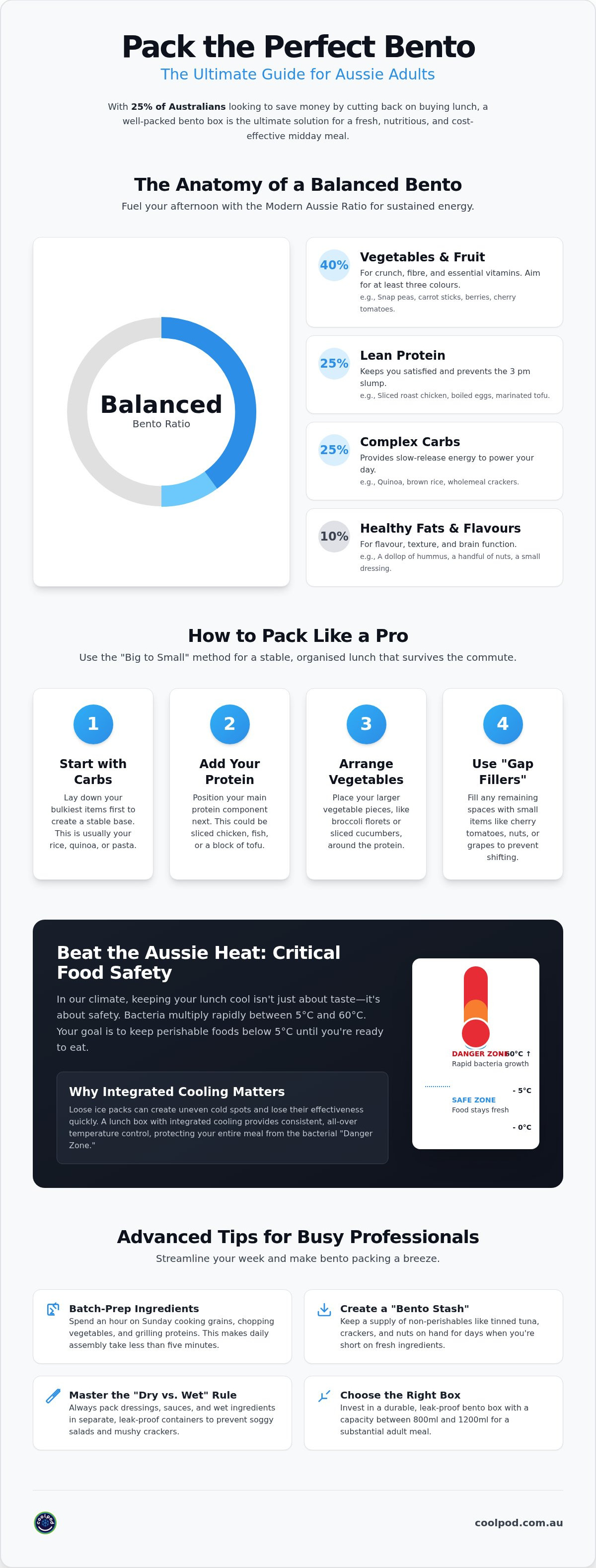
Traditional bento ratios often prioritise rice, but the modern Australian palate usually demands more protein and fresh produce. When considering how to pack a bento box for adults, think of your container as a roadmap for sustained energy. A balanced box prevents the mid-afternoon slump by combining complex carbohydrates with lean proteins and high-fibre vegetables. With 39% of Australians prioritising their health in 2026, this organised approach to lunch is a practical tool for meeting nutritional goals without the stress of constant calorie counting.
The Modern Aussie Bento Ratio
A functional adult bento should move away from rigid traditions and focus on what keeps you full during a long shift or office day. Aim for this simple, effective breakdown:
- Protein (25%): Sliced roast chicken, tinned tuna, boiled eggs, or marinated tofu.
- Complex Carbs (25%): Quinoa, brown rice, or a wholemeal wrap sliced into rounds.
- Vegetables & Fruit (40%): Snap peas, carrot sticks, or berries for essential crunch and fibre.
- Healthy Fats & Flavours (10%): A dollop of hummus, a handful of nuts, or a small square of dark chocolate.
Colour coding your nutrients is a quick way to perform a visual health check. If your box looks mostly beige, you are likely missing out on essential vitamins. Aim for at least three different colours to ensure a variety of antioxidants. To keep everything in place during a bumpy commute, use "gap fillers" like cherry tomatoes or grapes. These small items act as natural padding, preventing your carefully arranged meal from shifting into a jumbled mess before you reach your desk.
Smart Leftover Integration
Mastering how to pack a bento box for adults also involves understanding the "Dry vs. Wet" rule. Repurposing dinner is the most efficient way to maintain this habit, but you must keep sauces and dressings separate to avoid a mushy texture. Last night's stir-fry or roast veggies fit perfectly into bento compartments, provided you use silicone cups to wall off different flavours. These cups are a game-changer, allowing you to place a small serving of yoghurt or dip right next to your crackers without any moisture transfer.
Following official food safety tips for packed lunches is vital when using leftovers, especially with high-risk proteins like seafood or poultry. To ensure your meal remains fresh and safe in our climate, using a Coolpod Freezable Bento Bag provides a reliable insurance policy. It removes the need for bulky, separate ice packs while keeping your carefully balanced lunch at the right temperature until your break arvo.
Step-by-Step: How to Pack Your Bento Like a Pro
Packing a midday meal shouldn't feel like a chore or require a drawer full of specialised gadgets. Many online guides overcomplicate the process, but mastering how to pack a bento box for adults is actually about logic and structural integrity. The goal is to create a "tight pack" so your lunch survives the commute without turning into a jumbled mess. Before you even touch your box, ensure all cooked components have cooled completely. Packing warm rice or protein creates steam, which leads to a soggy texture and, more importantly, can push your food into the bacterial "danger zone" faster than you think.
The 5-Minute Packing Workflow
Efficiency is key for busy professionals. Follow this streamlined order to ensure your lunch remains stable and visually appealing until your break:
- Step 1: Place your base layer first. This is usually your carbohydrates, such as rice or pasta, or bulky items like a sandwich wrap.
- Step 2: Nest your protein securely against the side of the container. This provides a solid anchor for the rest of your ingredients.
- Step 3: Wedge in firm vegetables, like carrot sticks or broccoli florets, to act as structural supports.
- Step 4: Fill any remaining small gaps with "edible padding" such as cherry tomatoes, grapes, or berries. This prevents food from shifting.
- Step 5: Add your separate sauce container or dressing. Never pour dressing over salad in the morning; it will be wilted by noon.
Managing Textures and Moisture
Moisture is the primary enemy of a fresh bento. After washing fruit and vegetables, always pat them dry with a paper towel. Even a small amount of residual water can ruin the crunch of your crackers or nuts. When considering how to pack a bento box for adults, remember that temperature separation is vital. Never pack warm leftovers directly next to cold salad leaves. If you don't have built-in compartments, use silicone dividers to create internal walls. Edible dividers like large lettuce leaves or radicchio cups also work well, though silicone offers better protection against flavour transfer between sections.
Finally, don't forget the finishing touches. A sprinkle of sea salt, a dash of furikake, or a few fresh herbs can transform a simple meal into something that feels like a café arvo treat. These small garnishes take seconds to add but significantly improve the "eat with your eyes" factor of your daily lunch. By following this logical sequence, you ensure your food looks just as appetising at 1 pm as it did when you first snapped the lid shut.
The Temperature Factor: Beating the Australian Heat
In the Australian climate, temperature control is the most critical part of your lunch strategy. Many international guides suggest that a simple ice pack is enough, but they haven't experienced a 35-degree arvo on a train with no air con. Understanding the "Danger Zone" is the first step in learning how to pack a bento box for adults safely. According to official food safety standards, bacteria grow most rapidly between 5°C and 60°C. To keep your meal safe, perishable items like chicken or dairy must stay below 5°C. Beyond the obvious safety benefits, a chilled environment is what keeps your celery sticks crunchy and your grapes firm instead of limp and unappealing. High-quality cooling acts as an insurance policy for your health and your enjoyment.
The Coolpod Advantage for Bento Enthusiasts
Traditional loose ice packs often fail because they create heavy condensation, leading to the dreaded "sweaty bag" syndrome that ruins your work documents and leaves your bento box dripping. They also take up valuable room that could be used for extra snacks or a larger meal. Choosing a bento cooler bag with built-in gel is a smarter, more efficient organisation strategy for how to pack a bento box for adults while maintaining freshness. This patented technology surrounds your food with consistent cooling from all sides. It is a game-changer if your office fridge is already overflowing or if you work in an environment where a fridge isn't accessible. This setup ensures your yoghurt, dips, and dairy stay at a safe temperature from the moment you leave your kitchen until you sit down to eat.
Logistics of the Commute
Public transport commuters face specific challenges that most lunch boxes aren't designed to handle. Between the walk to the station and the wait on the platform, your lunch is often exposed to extreme temperatures. The Coolpod Freezable Bento Bag acts as a portable fridge, providing a reliable barrier against the heat. For maximum effectiveness, pop your bag in the freezer overnight for at least eight hours. This ensures the integrated gel is completely frozen and ready to perform. During your commute, try to keep your bag in the shade and away from direct sunlight to extend its cooling duration. This simple habit keeps your food crisp and safe, no matter how long the delay on the train line.
Don't risk your health or your appetite with an inadequate cooling setup. You can explore our full range of freezable bento solutions to ensure your lunch survives the Australian heat every single day.
Advanced Tips for Busy Professionals
The greatest barrier to a consistent lunch habit is often the morning rush. When you are figuring out how to pack a bento box for adults, the goal is to make the process as frictionless as possible. A savvy professional doesn't start from scratch every morning. Instead, they rely on a combination of pre-prepped ingredients and a "Bento Stash" kept at their desk. This stash of non-perishables, like raw almonds, pumpkin seeds, or whole-grain crackers, ensures you always have a way to fill gaps and hit your nutritional targets even if you are running late.
Working in an open-plan office also requires a bit of social awareness. While tuna and hard-boiled eggs are excellent protein sources, they can be "stinky" in a shared space. To manage this, keep these items in airtight silicone cups or peel your eggs at home and rinse them under cold water to reduce the odour. Packing these items alongside fresh herbs like parsley or mint can also help neutralise scents. It is these small, thoughtful adjustments that make the bento lifestyle sustainable for the long term.
Sunday Prep for a Week of Bento
A productive Sunday arvo is the secret to a stress-free week. Dedicating just 45 minutes to preparation removes the decision fatigue from your Monday morning. Start by roasting a large tray of bento-friendly vegetables such as capsicum, zucchini, and pumpkin. These hold their structural integrity well when chilled and add a much-needed splash of colour to your box. Once they have cooled completely, store them in airtight containers.
- Protein Prep: Pre-boil a half-dozen eggs or marinate tofu and chicken breast to be grilled in one batch.
- Greens Management: Wash and dry all your salad greens thoroughly. Use a salad spinner and then store them in a container lined with a paper towel to keep them crisp for up to five days.
- Assembly Line: If you have multiple bento boxes, you can even portion out the non-perishable components ahead of time to save precious minutes.
Hygiene and Bag Care
To keep your gear in top condition, maintenance is essential. Always wipe down your bento box immediately after eating to prevent food stains and lingering odours. For your freezable lunch bag, hygiene is just as important. Since these bags are designed for the demanding Australian climate, they work hard to keep your food safe, but they still need a regular clean. Wipe the interior with a damp cloth and a mild detergent every few days to ensure it remains fresh and ready for the next commute.
Storing your hardware correctly is the final step. Don't leave your bento box or bag zipped up while they are damp. Store them in a dry, well-ventilated spot to ensure they stay in peak condition. This proactive approach to maintenance ensures your equipment remains a reliable partner in your health journey for years to come.
Reclaim Your Lunch Hour
Mastering how to pack a bento box for adults is a practical investment in your daily health and your bank balance. By moving away from the soggy sandwich and embracing a balanced mix of protein, complex carbs, and fresh produce, you create a midday meal that actually sustains you. Success comes down to the details: cooling your food before packing, using structural "gap fillers" to prevent shifting, and ensuring your textures stay separate and crisp until the moment you eat.
The final, most vital piece of the puzzle is temperature. In our demanding climate, food safety isn't something you can leave to chance. Our patented cooling technology is designed specifically to beat the heat, keeping your meal safely chilled for up to 8 hours without the mess or bulk of separate ice packs. It is why we are trusted by thousands of Australians to deliver freshness that survives the longest commute or the hottest office environment.
Upgrade your lunch game with a Coolpod Freezable Bento Bag and enjoy the peace of mind that comes with a perfectly preserved meal. You have the system and the strategy; now get the gear that makes it effortless. Happy packing!
Frequently Asked Questions
Do I need a special box to pack a bento for an adult?
While you don't strictly need a "special" box, choosing one with internal compartments is the most effective way to learn how to pack a bento box for adults successfully. Look for a container with a capacity of 800ml to 1200ml to suit an adult appetite. Using a box designed for bento makes portion control and food separation much simpler, ensuring your salad doesn't mix with your snacks during the morning commute.
How do I keep my bento box from getting soggy by lunchtime?
Preventing sogginess starts with moisture control. Always allow cooked ingredients like rice or roasted vegetables to cool completely before closing the lid to prevent steam build-up. Use a paper towel to pat down washed berries or salad leaves. Keeping dressings in a separate, small container and adding them just before you eat is a foolproof way to ensure your lunch remains crisp and appetising throughout the day.
Can I pack a bento box the night before?
You can definitely pack your bento the night before to save time during the morning rush. For the best results, keep the packed box in the fridge overnight. If you are including crunchy items like crackers, nuts, or seeds, it is better to add those in the morning or keep them in a separate dry compartment. This prevents them from absorbing moisture from the other chilled ingredients while in the fridge.
How long will food stay cold in a Coolpod Freezable Bento Bag?
Food will stay safely chilled for up to 8 hours in a Coolpod Freezable Bento Bag. This is possible because of our patented integrated cooling technology, which surrounds your lunch with frozen gel. Unlike traditional bags that rely on loose ice packs, our design provides consistent, all-over cooling. This makes it a reliable insurance policy for your food, even during a long commute in the intense Australian heat.
Is it safe to pack leftovers like fish or chicken in a bento?
It is safe to pack high-risk leftovers like fish or chicken as long as you maintain a strict temperature below 5°C. Bacteria grow rapidly in the "Danger Zone" between 5°C and 60°C, so using a reliable cooling solution is non-negotiable. Ensure your leftovers are refrigerated immediately after cooking and transferred directly into a chilled bento environment the next morning to keep your lunch fresh and food-safe for your break.
What are the best "gap filler" foods for an adult bento?
The best gap fillers are small, firm items that provide structural support and extra nutrition. Cherry tomatoes, grapes, blueberries, and almonds are excellent choices because they don't bruise easily. You can also use blanched broccoli florets or snap peas to wedge between larger items. These fillers act as natural padding, ensuring your carefully organised meal looks just as good at lunchtime as it did when you first snapped the lid shut.
How do I stop my bento box from leaking in my work bag?
Preventing leaks requires a combination of the right hardware and smart packing. Invest in a bento box with high-quality silicone seals on the lid to keep liquids contained. Always keep your box upright in your bag. For added protection, using a dedicated Coolpod Freezable Bento Bag provides an extra layer of security, as its durable construction is designed to handle the daily grind of public transport and office life.
Do I need to put my bento bag in the office fridge?
You don't need to find space in a crowded office fridge if you are using a Coolpod. Our bags are engineered to maintain food-safe temperatures for hours on their own. This is a major advantage for professionals who work in environments where a fridge isn't available or is poorly maintained. Simply freeze your bag overnight, pack your bento, and enjoy the convenience of keeping your fresh meal right at your desk.


