

Imagine your child opens their backpack at second break only to find a lukewarm, watery mess instead of their favourite snack. In the harsh Australian heat, a standard lunchbox often transforms into a miniature oven, leaving parents wondering how to keep yoghurt cold for school lunch without creating a soggy disaster. With over 4.1 million Australians experiencing food poisoning each year, keeping dairy products out of the 5°C to 60°C "danger zone" isn't just about taste; it's a vital safety priority for every school day.
We understand the frustration of finding expensive, untouched yoghurt tubs at the bottom of a bag or dealing with bulky ice packs that take up all the room. You deserve a solution that actually works without the messy condensation or the unnecessary weight. This guide reveals the most effective, mess-free ways to ensure yoghurt stays fridge-cold for five hours or more, providing you with total peace of mind. We will walk through clever engineering hacks, essential food safety standards, and the simple shift to integrated cooling technology that keeps school bags dry and snacks perfectly chilled until the final bell rings.
Key Takeaways
- Understand the 5°C to 60°C "danger zone" to ensure dairy snacks remain safe and bacteria-free throughout the school day.
- Learn exactly how to keep yoghurt cold for school lunch using a "freeze the bag" approach that outperforms traditional ice bricks.
- Compare common DIY hacks like frozen sponges and water bottles against modern, mess-free solutions that won't ruin sandwiches with condensation.
- Discover how patented, integrated cooling gel provides hours of consistent refrigeration without taking up valuable space in a child's backpack.
The Challenge of Keeping Dairy Cold in the Australian Schoolyard
Packing a healthy lunch is only half the battle for Australian parents. The real struggle begins once the school bell rings and bags are tucked away in outdoor cubbies or hanging on verandah hooks. Our climate presents a unique set of thermal challenges that most standard lunch gear simply isn't built to handle. By mid-morning, the ambient temperature inside a school bag can easily climb, turning a nutritious snack into a potential health hazard.
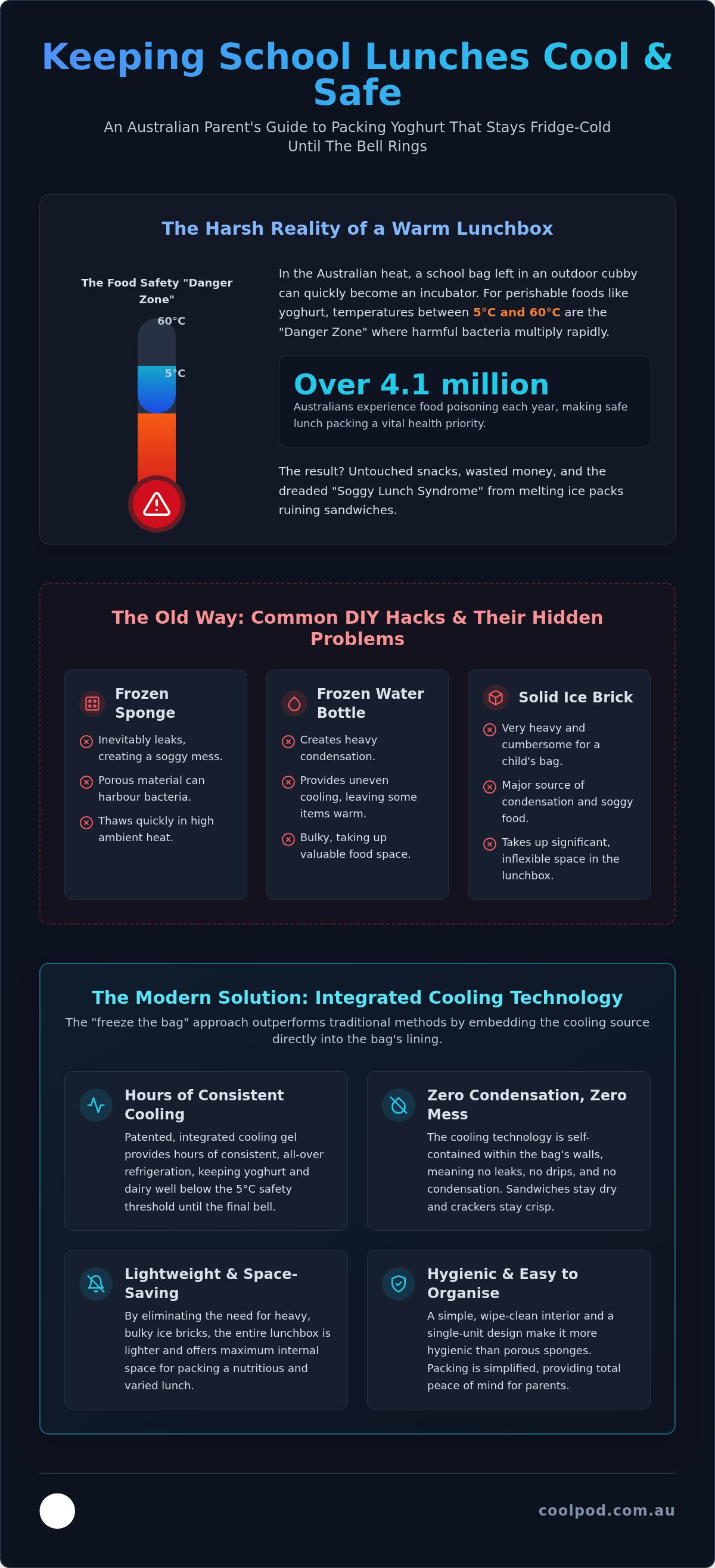
Food safety experts highlight the "Danger Zone" as the temperature range between 5°C and 60°C. This is where harmful bacteria multiply most rapidly. Because dairy is highly perishable, it requires consistent refrigeration to stay safe. When you are figuring out how to keep yoghurt cold for school lunch, you are essentially fighting a race against time and the Australian sun. A standard insulated bag might feel cool at 8:30 am, but without a high-performance cooling source, it often fails to protect its contents by the lunch bell.
The result is often the dreaded "lunchbox return." Kids are incredibly sensitive to the texture and temperature of their food. If a yoghurt tub feels slightly warm or has separated, it usually ends up back in the bag, untouched. This leads to wasted money, hungry children, and a messy cleanup for parents at the end of the day. It is a frustrating cycle that many families face every week.
Understanding Thermal Transfer in School Bags
Radiant heat from the sun is a constant factor in Australian schools. Even if a bag is in the shade, the surrounding air temperature remains high. Dark-coloured backpacks absorb this energy and transfer it directly to the lunchbox inside. The science of yoghurt explains that as a fermented dairy product, it is far more sensitive to these fluctuations than an apple or a simple sandwich. Maintaining a high thermal mass, which is the ability of an object to store "coldness," is crucial for keeping dairy stable in these demanding conditions.
The Problem with Condensation and "Soggy Lunch Syndrome"
Many parents rely on traditional ice bricks or frozen sponges, but these often create more problems than they solve. As these items melt, they release moisture into the lunchbox. This leads to "Soggy Lunch Syndrome," where condensation ruins sandwiches and makes crackers unappealing. In humid regions, this effect is even more pronounced. Modern parents are increasingly looking for dry, intelligent cooling solutions that provide how to keep yoghurt cold for school lunch without the watery mess that traditional hacks leave behind. Finding a way to keep the bag dry is just as important as keeping the food chilled.
Comparing Traditional Cooling Hacks vs. Modern Solutions
Many parents turn to DIY methods to solve the problem of warm dairy. While these hacks are budget-friendly, they often fall short in the harsh Australian climate. You need to weigh up the convenience against the actual performance when researching how to keep yoghurt cold for school lunch. What works in a cooler climate rarely stands up to a 30-degree day in a school cubby.
The "frozen sponge in a zip-lock bag" is a common suggestion across social media. It is cheap and easy to put together, but it inevitably leaks as it thaws. This leaves your child with a damp, unappealing lunch. Similarly, using a frozen water bottle as an ice pack seems clever because it provides a cold drink later. However, it only cools the items it directly touches. The yoghurt on the opposite side of the lunchbox remains at room temperature, which isn't safe for dairy.
Solid ice bricks are a step up in reliability, but they are heavy and bulky. They take up valuable "real estate" in the lunchbox, often forcing parents to pack less food or use a larger, more cumbersome bag. These bricks also create significant condensation, which leads to the "soggy sandwich" problem that many kids find off-putting.
The Limitations of DIY Ice Packs
Hygiene is a major concern that many parents overlook. Sponges are porous and can harbour bacteria if they aren't dried perfectly between uses. Old plastic bottles can also degrade over time. In high ambient temperatures, these small DIY items have a rapid thaw rate. They often lose their cooling power before the first school break. They also add significant weight to a child's backpack, which is already burdened with heavy books and sports gear. Following government advice on packing a safe lunchbox is much easier when your equipment is actually designed for the task.
Why Integrated Cooling Technology is Superior
Modern freezable bags represent a significant leap forward in design. Instead of relying on a single "spot" of coldness from a brick, these bags provide 360-degree cooling. The cooling gel is built directly into the walls of the bag, so the entire container acts as an ice pack. This saves immense space, allowing you to pack more nutritious snacks without the extra bulk. Because the entire bag is chilled, it maintains a consistent temperature for hours. This ensures your child's yoghurt stays as fresh as it was in the fridge. If you are tired of worrying about how to keep yoghurt cold for school lunch, switching to a specialist freezable yoghurt bag is a smarter, more efficient choice for busy mornings.
The Science of Food Safety: Why Temperature Matters for Yoghurt
Every year, 4.1 million Australians suffer from food poisoning, and dairy products are frequently the culprit when not stored correctly. While many parents focus on nutrition, the science of food safety is equally vital when planning how to keep yoghurt cold for school lunch. According to Australian health standards, the food safety "Danger Zone" is the temperature range between 5°C and 60°C, where harmful bacteria grow most rapidly. Recent updates to the National Food Safety Standard 3.2.2A emphasize the importance of strict temperature control in preventing illness, particularly in environments like schoolyards where refrigeration isn't available.
Bacterial Growth and Dairy
In warm, moist environments, the number of bacteria can double every twenty minutes. This exponential growth is why a yoghurt tub that leaves the fridge at 8:00 AM can become hazardous by the time the midday bell rings. Pathogens associated with dairy thrive in these conditions. Younger children are particularly vulnerable to food-borne illnesses because their immune systems are still developing. When you are determining how to keep yoghurt cold for school lunch, you are essentially managing a biological timeline. A reliable, long-term cooling solution is a necessity rather than an optional extra.
Preserving Nutritional Value and Texture
Maintaining a steady temperature isn't just about avoiding illness; it's also about protecting the nutritional investment you make for your family. Many parents buy specific brands for their live cultures and probiotics, but these beneficial bacteria are highly sensitive to heat. When temperatures fluctuate, these cultures can die off, stripping the snack of its main health benefits. You are essentially paying a premium for "live" cultures that may no longer be active by lunch time if the bag isn't chilled correctly.
The consistency of the food also changes with heat. High temperatures cause Greek yoghurt to separate, leaving a watery layer of whey on top that most kids find unappealing. By following official food safety tips for lunchboxes, you ensure the texture remains creamy and the taste stays fresh. You can't always rely on a "sniff test" to tell if dairy is safe. Some harmful bacteria don't produce a sour smell or a change in colour. This means a yoghurt could look perfectly fine while still being unsafe to eat. Keeping the lunch at fridge-equivalent temperatures is the only way to guarantee both safety and quality.
Practical Packing Guide: How to Organise a Cool School Lunch
Success in the schoolyard starts with a solid routine at home. If you want to master how to keep yoghurt cold for school lunch, you need to think beyond just throwing an ice brick into a bag. It's about creating a miniature, portable refrigeration system that stands up to the midday heat. By following a few simple steps, you can ensure that every snack remains fresh and safe for your child to enjoy.
Start by selecting the right container. While individual tubs are convenient, they are often bulky and leave large air gaps that allow heat to circulate. Instead, consider sleek pouches that fit snugly against cooling surfaces. The most critical step is the "Freeze the Bag" ritual. Rather than freezing the yoghurt itself, which can ruin the smooth consistency and kill off beneficial cultures, you should freeze the entire bag. This ensures the cooling source is integrated into the walls, surrounding the food with a consistent chill from the moment it leaves your kitchen.
Strategic layering is your next line of defence. Place your yoghurt in the centre of the bag, surrounded by other cold items like fruit or a chilled drink bottle. This creates a thermal core that protects the most sensitive dairy items. Finally, ensure the bag is packed relatively full to minimise air gaps. Air is a poor insulator. Keeping the internal space tight helps maintain that vital thermal envelope for as long as possible.
Using Reusable Yoghurt Pouches for Efficiency
Many parents find that reusable yoghurt pouches are a game changer for school lunches. They are easy to fill from large, bulk-buy tubs, which can save a significant amount on your weekly grocery bill. Cleaning is simple with warm soapy water, and they drastically reduce the amount of single-use plastic waste heading to landfill. It's a smarter, more sustainable way to manage daily snacks while ensuring they stay at the perfect temperature.
The "Chill Chain" from Fridge to Playground
Maintaining the "chill chain" is all about timing. Pack the lunch at the very last second before your child heads out the door to avoid losing precious cooling time. When teaching your kids how to keep yoghurt cold for school lunch, remind them to keep their bags zipped tight and stored in the shade. Keeping backpacks inside a classroom or in a shaded cubby rather than on a sun-drenched verandah makes a massive difference to food safety. For a complete setup, check out our guide on the Best Freezable Lunch Bags in Australia to see how different kits work together.
Ready to upgrade your school lunch routine? You can shop our range of freezable yoghurt bags to find the perfect, mess-free fit for your child's backpack.
The Coolpod Solution: Patented Technology for Stress-Free Lunches
While DIY hacks provide a temporary fix, the Coolpod Freezable Yoghurt Bag offers a permanent, engineered solution. It is the definitive answer for parents asking how to keep yoghurt cold for school lunch without the daily guesswork or the inevitable mess. Unlike generic insulated bags that rely on external cooling, this is a purpose-built tool designed specifically to maintain dairy safety in demanding conditions. It is a "set and forget" solution that fits perfectly into a busy morning routine.
The secret lies in the patented cooling technology integrated directly into the walls of the bag. Instead of a single ice brick that takes up space and creates "cold spots," the entire bag surface acts as the cooling element. This provides consistent, 360-degree refrigeration for over five hours, ensuring the yoghurt stays as fresh as it was in the fridge. This "no-ice-pack" advantage means there is no condensation to ruin sandwiches, and there is significantly more room in the bag for healthy snacks like fruit, cheese, and treats.
Australian parents trust the brand because of its durability and thoughtful, kid-proof design. Since 2010, these bags have been tested against the rigours of the playground. They can handle being dropped, stuffed into lockers, or tossed around during recess without losing their thermal integrity. The high-performance insulation ensures that even on a scorching day, your child's lunch remains at a safe, palatable temperature until the final bell rings.
Features of the Coolpod Freezable Yoghurt Pouch
For those who prefer a more streamlined setup, the Coolpod Freezable Yoghurt Pouch is a perfect choice. Its compact design is specifically shaped to fit into standard bento boxes or crowded backpacks without adding unnecessary bulk. The pack-up routine takes just ten seconds; simply grab the pouch from the freezer, pop in your yoghurt, and you're ready to go. Every pouch is made from BPA-free and food-safe materials, providing total peace of mind regarding your child's health and safety.
Why an Australian-Owned Specialist Brand Matters
Choosing a locally-owned specialist brand means you are using technology specifically designed for our unique climate. We understand the challenges of the "Aussie heat" better than international manufacturers, resulting in products that actually perform when the temperature climbs. By focusing on smarter, innovative ways to handle routine tasks, we've created a range that simplifies your life while keeping your family safe. If you need a larger solution for full meals, you can The Ultimate Guide to Choosing the Best Bento Cooler Bag to ensure your entire lunch kit is optimised for performance and longevity.
Mastering the School Lunch Chill
Ensuring your child's dairy snacks stay safe in the Australian sun doesn't have to be a daily source of stress. By moving away from leaky DIY hacks and embracing integrated thermal technology, you can protect the nutritional value of their food while keeping their school bag completely dry. You now have a clear plan for how to keep yoghurt cold for school lunch, from strategic layering to maintaining a strict chill chain from your fridge to the playground.
Our solutions are specifically designed for the demanding Australian heat, meaning no separate ice packs are required. This leaves more room for a variety of healthy snacks and treats. Since 2010, Aussie parents have trusted our patented cooling technology to provide hours of reliable refrigeration in the toughest conditions. It's a smarter way to handle the daily lunchbox routine while prioritising food safety.
Ready to upgrade your routine? Shop the Coolpod Freezable Yoghurt Bag and Pouch range today to find the perfect fit for your family. Give yourself the gift of a stress-free morning and enjoy the peace of mind that comes with knowing their lunch is perfectly chilled and safe until the very last bell rings.
Frequently Asked Questions
Is it safe to freeze yoghurt directly for a school lunch?
While it is safe to freeze yoghurt, the freezing process often causes the dairy to separate and become watery or grainy once it thaws. This can be quite unappealing for children. A better approach for how to keep yoghurt cold for school lunch is to use a freezable bag. This maintains the creamy texture and preserves the live probiotics that can be damaged by extreme temperature changes.
How long can yoghurt stay in a lunch box without an ice pack?
Perishable dairy should not be left out of refrigeration for more than two hours. In the Australian heat, this window is often even shorter. Once the internal temperature of the yoghurt rises above 5°C, bacteria can begin to multiply rapidly. To ensure food safety until the second lunch break, you must use a high-performance cooling solution that provides consistent refrigeration for several hours in the bag.
Will a frozen yoghurt pouch make the rest of the lunch soggy?
No, a Coolpod Freezable Yoghurt Pouch is designed to eliminate the condensation issues common with traditional ice bricks. Because the cooling gel is integrated into the walls of the pouch, it doesn't "sweat" as it thaws. This keeps the surrounding lunch items, such as sandwiches or crackers, perfectly dry and crisp. It is a much cleaner, smarter alternative to using melting ice or wet sponges in a backpack.
What is the best type of yoghurt to pack for school?
Thicker varieties like Greek yoghurt or pot-set options tend to hold their consistency better during transit. These types are less likely to become runny if there are minor temperature fluctuations during the morning. When you are planning how to keep yoghurt cold for school lunch, choosing a high-protein, thick yoghurt ensures it remains appetising even after a few hours in a school bag, provided it stays properly chilled.
How do I clean a freezable yoghurt bag if there is a spill?
Cleaning is a straightforward process. Simply wipe the interior and exterior with a damp cloth and warm, soapy water after any spills. Because the materials are durable and food-safe, most messes come away easily without leaving stains. Ensure the bag is completely dry before placing it back in the freezer for the next day. This routine helps maintain hygiene and prevents any lingering food odours from developing.
Can I use a freezable bag for other snacks like cheese or fruit?
Yes, these bags are incredibly versatile and are not limited to dairy. They are perfect for keeping cheese sticks, sliced fruit, or even small dip containers chilled and fresh. Even if you are packing speciality items like Filipino fruits vegetables online UAE, the 360-degree cooling technology works effectively for any perishable snack that needs to stay out of the danger zone. This makes them a multipurpose tool for organising a healthy, safe school lunch for your child every single day.
You don't strictly need an additional insulated box, but using one can extend the cooling duration even further. The Coolpod Freezable Yoghurt Pouch acts as a standalone miniature fridge. However, placing that pouch inside another insulated lunch bag creates an extra layer of protection against radiant heat. This "double insulation" method is particularly effective during the peak of the Australian summer or for long school excursions.
How many hours will a Coolpod keep yoghurt cold in 30-degree weather?
A Coolpod is engineered to keep contents fridge-cold for approximately five hours or more, even in 30-degree ambient temperatures. The patented cooling gel is designed specifically for the Australian climate to provide long-lasting refrigeration without bulky bricks. This ensures that a yoghurt packed at 8:00 AM remains at a safe, chilled temperature until the lunch bell rings, giving parents total peace of mind regarding food safety and freshness.


