

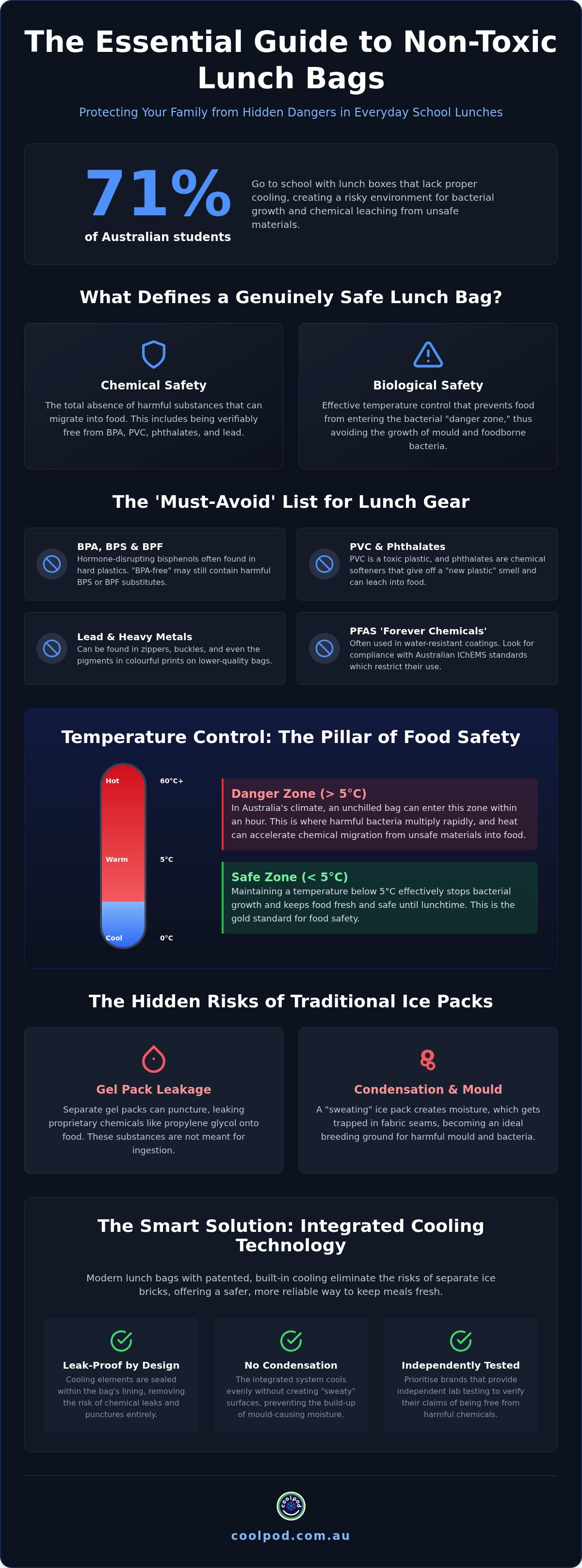
Did you know that a staggering 71% of Australian students head to school with lunch boxes that lack proper cooling, leaving their sandwiches to swelter in the heat? Finding a genuine non toxic lunch bag in Australia shouldn't feel like a chemistry experiment, yet many parents are still battling confusing labels and leaking blue gel packs. You deserve to know that the gear you use to nourish your family isn't secretly leaching chemicals or harbouring hidden mould.
We understand the frustration of buying "BPA-free" products only to discover they contain other harmful bisphenols or develop that unmistakable "funky" smell after just a few weeks. This guide is here to help you protect your loved ones from both toxic coatings and foodborne bacteria. We will explore the latest 2026 safety standards, the benefits of integrated cooling technology, and how to ensure your lunch stays at a safe temperature until the very last bite.
Key Takeaways
- Identify the specific chemicals to avoid, including BPA, PVC, and lead, to ensure your family’s food storage meets the latest 2026 safety standards.
- Learn why traditional gel packs and condensation can lead to chemical exposure and mould, making them a risky choice for daily use.
- Discover why maintaining a temperature below 5°C is the most effective way to stop bacterial growth and prevent chemicals from migrating into your food.
- Compare popular materials like stainless steel and silicone to decide which non-leaching option best fits your daily routine and durability needs.
- Find out how a non toxic lunch bag australia with patented integrated cooling offers a smarter, safer way to keep meals fresh without separate ice bricks.
What Defines a Non-Toxic Lunch Bag in Australia?
When you start looking for a non toxic lunch bag australia, it's easy to get overwhelmed by marketing jargon. A genuine non-toxic product is defined by more than just a label; it's about the total absence of harmful substances that can migrate into your food. This means the bag is free from BPA, BPS, PVC, phthalates, and lead. In Australia, we're seeing a shift toward stricter regulations as consumers demand higher safety benchmarks for food-contact materials.
It's vital to distinguish between "eco-friendly" and "food-safe". A bag made from recycled materials is great for the planet, but it isn't necessarily safe for your lunch if those materials contain legacy chemicals. True safety requires materials that are tested specifically for food contact. We must also consider biological toxicity. If a bag is chemical-free but fails to keep food cool, it creates a toxic environment where bacteria thrive. In our harsh climate, temperature control is as much a safety feature as the fabric itself.
The "Big Four" Chemicals to Avoid
Safety starts with knowing what to look for on the tag. BPA is the most famous culprit, but many manufacturers now use BPS or BPF as substitutes. These "cousins" can be just as problematic for our health. You should also watch out for phthalates, which are chemical softeners often found in cheap PVC linings. They give bags that "new plastic" smell that you definitely don't want near your fruit.
Heavy metals like lead and cadmium are the final pieces of the puzzle. These can hide in the zippers, buckles, or even the pigments used for colourful prints. While common lunch box materials of the past often relied on these substances for durability, modern high-quality designs use lead-free alloys and safe dyes to protect users.
Regulatory Standards: What to Look for on the Label
Understanding safety ratings can be tricky. While US FDA and European standards are common, Australian consumers should look for products that meet our local requirements. As of July 2025, the Australian government has restricted specific PFAS chemicals under the Industrial Chemicals Environmental Management Standard (IChEMS). These "forever chemicals" were once common in water-resistant coatings but are now recognised as high-risk.
2026 standards now require brands to be more transparent about their supply chains. Always prioritise brands that invest in independent lab testing to verify their claims. This ensures the bag you choose is actually as safe as the manufacturer says it is. Look for clear statements regarding lead-free and phthalate-free construction to ensure you're getting a product designed for long-term health and safety.
The Hidden Dangers of Traditional Cooling Methods
Many families invest in a high-quality non toxic lunch bag australia only to unknowingly compromise it by adding a cheap, separate ice pack. While we focus on the fabric of the bag, the cooling medium often escapes scrutiny. Traditional blue gel packs are frequently made with proprietary chemical blends that aren't required to be listed on the label. This creates a safety gap in your kitchen. If you've ever found a sticky blue residue on a sandwich or at the bottom of a school bag, you've witnessed a chemical leak first-hand.
Beyond chemical exposure, traditional cooling methods often struggle with condensation. In our humid climate, a "sweaty" lunch bag is more than just a nuisance; it's a biological hazard. Moisture trapped in fabric folds creates an ideal breeding ground for mould and bacteria. Choosing a smarter cooling solution ensures your food stays fresh without the side effects of dampness or mystery gels.
Gel Pack Leakage: A Common Kitchen Hazard
Standard freezer bricks typically contain substances like sodium polyacrylate or propylene glycol to maintain their frozen state. While often labelled as "non-toxic," these chemicals are not intended for ingestion and can cause distress if a child accidentally bites into a punctured pack. Punctures are surprisingly common, especially as plastic casings become brittle after repeated freezing cycles.
By choosing a design that integrates the cooling medium directly into the lining, you eliminate the possibility of chemical leaks entirely. The Coolpod Freezable Lunch Bag uses patented technology to seal the cooling element within the bag walls. This removes the puncture risk associated with loose packs and ensures that no unlisted chemicals ever come into contact with your family's fruit or snacks.
Mould and Bacteria: The Biological Toxicity Risk
The Australian sun is relentless, and unchilled bags can reach the "danger zone" for bacterial growth within an hour. When a cold ice pack meets warm air, condensation forms instantly. This moisture seeps into fabric seams, where it can be nearly impossible to clean. Over time, this leads to the growth of spores that cause that familiar "funky" lunch bag smell. This is a form of biological toxicity that is just as concerning as chemical leaching.
Adhering to Australian food safety standards requires keeping perishable items dry and below 5°C. To achieve this, your lunch storage needs two things: superior insulation and an easy-clean lining. Smooth, waterproof internal surfaces allow you to wipe away any spills or moisture at the end of the day. This simple habit prevents mould from taking root and ensures your non-toxic gear remains a healthy environment for years to come.
Temperature Control: The Overlooked Pillar of Food Safety
The Australian sun doesn't just warm your sandwich; it can turn your lunch box into a Petri dish. To keep perishable food safe, health authorities recommend maintaining a temperature below 5°C. Anything higher enters the "Danger Zone" where bacteria multiply rapidly. When you're hunting for a non toxic lunch bag australia, it's easy to focus solely on the fabric. However, temperature is the silent partner in chemical safety. Standard foam-insulated bags often fail by 11 am in our climate, leaving food vulnerable.
A freezable lunch bag isn't just a convenience for keeping drinks cold. It's a critical tool for food hygiene. By integrating the cooling element into the bag itself, you create a consistent thermal barrier that lasts until the midday break. This is especially vital in 2026, as we understand more about how heat impacts the items we use to store our meals.
Chemical Leaching and the Heat Factor
There's a direct link between high temperatures and the stability of food-contact materials. Heat provides the energy required to break down polymer bonds in various linings. When a bag gets hot, the rate at which molecules can migrate from the container into your food increases significantly. This means that even a bag made from safer materials is most effective when it stays chilled.
Keeping the internal environment cold ensures that the materials remain chemically stable. There's a powerful synergy between using non-toxic fabrics and maintaining effective cooling. By preventing the bag from heating up, you're essentially locking the materials in their safest state. This dual-action approach is the gold standard for anyone serious about chemical-free living in a hot climate; if you're looking to further support your body's natural processes, you can visit St Agnes Rituals to learn about their award-winning detox kits.
Outdoor workers and tradies face the toughest conditions. A lunch bag left in a hot ute or on a dusty site can easily reach 40°C by mid-morning. In these environments, a standard mens lunch kit requires heavy-duty thermal performance to be effective. Cheap foam insulation relies on air pockets that eventually equalise with the outside air, offering little protection during an afternoon heatwave.
Freezable gel walls offer a superior alternative to traditional foam. These walls act as a massive heat sink, actively absorbing warmth before it reaches your food. For those working 8 to 10-hour shifts, this extended retention time is the difference between a fresh, safe meal and a health risk. Choosing gear designed for the Australian sun ensures your lunch stays fresh and your body stays fueled without compromise.
Comparing Non-Toxic Materials: Which is Best for You?
Choosing a non toxic lunch bag australia involves balancing weight, durability, and thermal performance. While we've discussed the importance of keeping food chilled, the physical materials that touch your containers also play a huge role in safety. Stainless steel is often touted as the ultimate choice because it's virtually indestructible and won't leach chemicals. However, it's heavy for school bags and offers almost zero insulation on its own, meaning it relies entirely on the bag around it to stay cool.
Silicone has emerged as a flexible, heat-resistant alternative to plastic, but you must be cautious. Lower-quality silicone often contains plastic fillers that can off-gas or leach when they get warm. To stay safe, look for "platinum-cured" food-grade silicone. For the bag itself, modern high-tech fabrics like food-grade polyester and nylon offer a lightweight solution that's easy to carry. When checking the interior lining, ensure it uses PEVA rather than PVC. PEVA is a chlorine-free vinyl that provides a waterproof seal without the harmful phthalates found in cheaper alternatives.
The Truth About Eco-Friendly Fabrics
Don't assume that "eco-friendly" automatically translates to "food-safe". Some recycled fabrics might still contain legacy chemical dyes or water-repellent coatings that aren't intended for close contact with food. High-quality non-toxic gear often utilises TPU (Thermoplastic Polyurethane) instead of traditional plastic laminates. TPU is more stable, doesn't require harmful plasticisers, and is much better for the environment. Investing in durable, high-performance materials is also a key part of sustainability; a bag that lasts for years prevents the "landfill" cycle of replacing cheap, flimsy alternatives every school term. This focus on durability and waste reduction is a growing trend across Australia, with brands like Reset Razor offering long-lasting alternatives to common single-use plastic items.
Your daily routine should dictate which material works best for your needs. School-aged children require lightweight bags with high-impact resistance to survive the playground. In contrast, professionals often look for the slim, sophisticated profiles found in modern adult lunch bags that slide easily into a work tote. If you're heading out for a weekend at the beach, picnic cooler bags need the highest thermal ratings and rugged outer fabrics to withstand the Australian sun and sand.
If you're ready to upgrade to a solution that combines these safe, durable materials with patented cooling technology, check out the full Coolpod range to find your perfect match.
The Coolpod Solution: Patented Safety for Every Australian
Coolpod provides a streamlined answer to the safety concerns we've explored throughout this guide. Our design philosophy moves away from the traditional "bag plus ice pack" model, which we've seen can lead to chemical leaks and biological hazards. Instead, we offer a non toxic lunch bag australia that acts as its own cooling system. By integrating the cooling element directly into the bag walls, we provide a consistent thermal barrier that protects your food without the need for separate, potentially leaky gel bricks.
This patented technology is at the heart of our range. It ensures that every part of your meal stays chilled evenly until the clock strikes 1 pm. Because the cooling medium is sealed within the lining, there's zero risk of it puncturing and spilling mystery gel onto your food. It's a cleaner, smarter way to handle the school run or the office commute. Every product we sell, including the Coolpod Freezable Lunch Bag and the Coolpod Freezable Bento Bag, is built with 2026 food safety standards in mind.
Engineering a Safer Cooler Bag
Safety shouldn't be a complicated chore. We designed our bags for a simple "toss in the freezer" routine that fits into any busy family schedule. You place the entire bag in the freezer overnight, and by morning, it's ready to provide hours of medical-grade cooling. This eliminates the daily hunt for frozen bricks and ensures your lunch box is always in its most effective state. We've been Australian owned and operated since 2010, and our heritage informs every design choice. We understand how the local sun can test even the best gear, so we've engineered our bags to handle 30°C+ ambient heat with ease.
Our commitment to your health is backed by rigorous material choices. Every bag in our collection is Lead-free, BPA-free, and Phthalate-free. This means you can have peace of mind knowing that the materials touching your children's snacks are as safe as the food itself. We don't use the hidden chemical softeners or heavy metals often found in budget alternatives, ensuring a truly chemical-free experience for your family.
Smart Snacking: Non-Toxic on the Go
Snack time often involves sensitive foods like dairy that require strict temperature control to stay safe. Our range extends beyond the standard lunch box to include specialised solutions like the Coolpod Freezable Yoghurt Bag and the Coolpod Freezable Yoghurt Pouch. These are perfect for keeping snacks fresh during long afternoons at sport or after-school care. For those who prefer a multi-compartment approach, our bento cooler bags provide the ideal fit for varied, waste-free meals.
Using reusable yoghurt pouches is a fantastic way to reduce single-use plastic waste while maintaining high safety standards. Finding a truly non toxic lunch bag australia means looking for a solution that handles both chemical safety and biological risks. To ensure your setup is as safe as possible, follow this final checklist:
- Verify that the bag is certified free from BPA, Lead, and Phthalates.
- Choose integrated cooling to avoid the risk of leaky, chemical-filled gel packs.
- Ensure the lining is smooth and easy to wipe clean to prevent mould growth.
- Confirm the bag can maintain a temperature below 5°C until lunch.
Secure Your Family's Food Safety for the Future
Protecting your family from hidden chemicals is a journey that starts with the right gear. By choosing a non toxic lunch bag australia, you're doing more than just avoiding BPA and lead; you're ensuring that every meal stays fresh and safe from biological risks. True food safety requires a dual-defence strategy that combines high-standard, food-grade materials with a cooling system that actually works in our harsh local conditions.
Our 100% Australian owned business has spent over a decade perfecting patented integrated cooling technology. This design keeps your sandwiches and snacks at a safe temperature without the need for separate, leaky gel packs. It's a simple, effective way to gain peace of mind every single morning when you pack the school or work bags. You can feel confident that your lunch is as healthy when you eat it as it was when you first prepared it.
Shop the Range of Non-Toxic, Freezable Lunch Bags at Coolpod and upgrade your daily routine with a smarter, safer solution today.
Frequently Asked Questions
Are all lunch bags in Australia required to be non-toxic?
No, there isn't a single law that requires every lunch bag sold in Australia to be "non-toxic," though specific chemicals are restricted. For example, as of July 2025, the government restricted three high-risk PFAS chemicals often used in water-resistant coatings. However, many budget imports still contain phthalates or lead. You should always check the label for specific certifications like "BPA-free" and "Lead-free" to ensure your family's safety.
How can I tell if my current lunch bag contains PVC or Phthalates?
Check the lining for a strong, pungent chemical odour or a very shiny, plastic-like finish. PVC is often marked with a #3 recycling symbol, but many fabric bags don't include these codes. If the bag lacks a "PVC-free" label and has a distinct "new plastic" smell, it likely contains phthalates used as softeners. High-quality non toxic lunch bag australia options will always clearly state their chemical-free status on the packaging.
Is it safe to freeze a lunch bag every night?
Yes, it's perfectly safe if the bag is specifically designed for freezing. Coolpod bags feature patented integrated cooling technology that's engineered to withstand repeated freezing cycles without becoming brittle or cracking. This "toss in the freezer" routine is a core part of our design. It ensures the bag is ready for the Australian heat every morning without compromising the material's safety or its ability to protect your food.
What is the safest material for a child’s lunch box lining?
PEVA and TPU are the safest fabric-based linings available today. These materials are chlorine-free and don't require the harmful phthalates found in traditional PVC. For the highest level of safety, ensure the lining is also certified lead-free and BPA-free. This combination ensures that no chemical migration occurs even when the bag is exposed to sunlight. These modern materials provide a waterproof, food-safe surface that's easy to maintain over time.
Can non-toxic lunch bags be washed in the machine?
It's generally best to avoid machine washing to preserve the integrity of the cooling elements and waterproof seals. Most high-quality bags feature smooth, easy-clean linings that only require a quick wipe with a damp cloth and mild soap at the end of the day. This simple maintenance routine effectively prevents the buildup of bacteria. Always check the specific care instructions, as the heat and agitation of a washing machine can damage patented technology.
Do freezable bags stay cold longer than standard ice packs?
Yes, freezable bags typically offer more consistent cooling because the cold source surrounds the food entirely. Standard ice packs only chill the items they are touching, which often leaves the rest of the container to warm up quickly in the sun. A freezable lunch bag creates a 360-degree thermal barrier that's much more effective. This integrated approach helps keep perishable items below the 5°C safety limit until the lunch break.
Are Coolpod bags tested for lead and heavy metals?
Every Coolpod product undergoes rigorous testing to ensure it meets 2026 food safety standards. Our entire range is certified Lead-free, BPA-free, and Phthalate-free. We prioritise high-quality engineering to ensure no heavy metals are used in our zippers, dyes, or fabric coatings. Being Australian owned and operated since 2010, we take our responsibility to local families seriously and invest in independent testing to verify our non-toxic claims for every customer.
Why does my lunch bag smell, and is it toxic?
A "funky" smell is usually caused by mould or bacteria growing in moist fabric seams. While the odour itself isn't a chemical toxin, the resulting spores and bacteria are a form of biological toxicity that can cause illness. This is why a non toxic lunch bag australia must be easy to clean and capable of staying dry. Our integrated cooling helps reduce the condensation that typically causes these unpleasant and unhygienic smells.


