

That standard insulated lunch box you bought might actually be trapping heat instead of keeping it out. Every Australian parent knows the frustration of a child returning home with a warm, untouched ham sandwich or a leaking yoghurt pouch that's ruined their school bag. It's more than just a waste of money; it's a genuine worry for their health when the summer heat sets in. This guide reveals the most effective strategies for keeping kids' lunch safe in summer, ensuring their food stays at fridge-like temperatures until the very last bell.
We'll explore the science of the 5°C to 60°C 'danger zone' and why the 2-hour/4-hour rule is vital for school lunches. You'll also discover how to move beyond bulky, loose ice packs toward clever, patented cooling technology that stays cold for hours without the mess. It's time to reclaim your peace of mind and make school mornings a little bit easier.
Key Takeaways
- Understand the 5°C to 60°C 'Danger Zone' and why standard insulated bags often fail to protect perishable food on scorching days.
- Learn the 'Fridge-First' rule, a simple packing routine for keeping kids' lunch safe in summer by ensuring every item starts at the correct temperature.
- Compare the thermal efficiency of integrated cooling walls against traditional ice bricks to eliminate soggy sandwiches and bulky school bags.
- Discover specialised strategies for protecting high-risk dairy items and yoghurt pouches from spoiling or creating a mess in the heat.
- Save money and reduce food waste by investing in durable gear designed specifically for the unique challenges of the Australian climate.
The Science of the "Danger Zone": Why Summer Lunches Spoil
Australian summers are relentless. When the outside temperature hits 35°C, a school cubby or bag rack becomes a heat trap. Without the right protection, keeping kids' lunch safe in summer becomes an uphill battle. Most parents rely on a standard insulated bag, but without an active cooling source, that bag actually traps the warm air inside. It creates a humid environment where bacteria like Salmonella and E. coli flourish. It's not just about the sandwich getting a bit sweaty; it's about preventing the growth of pathogens that cause genuine illness.
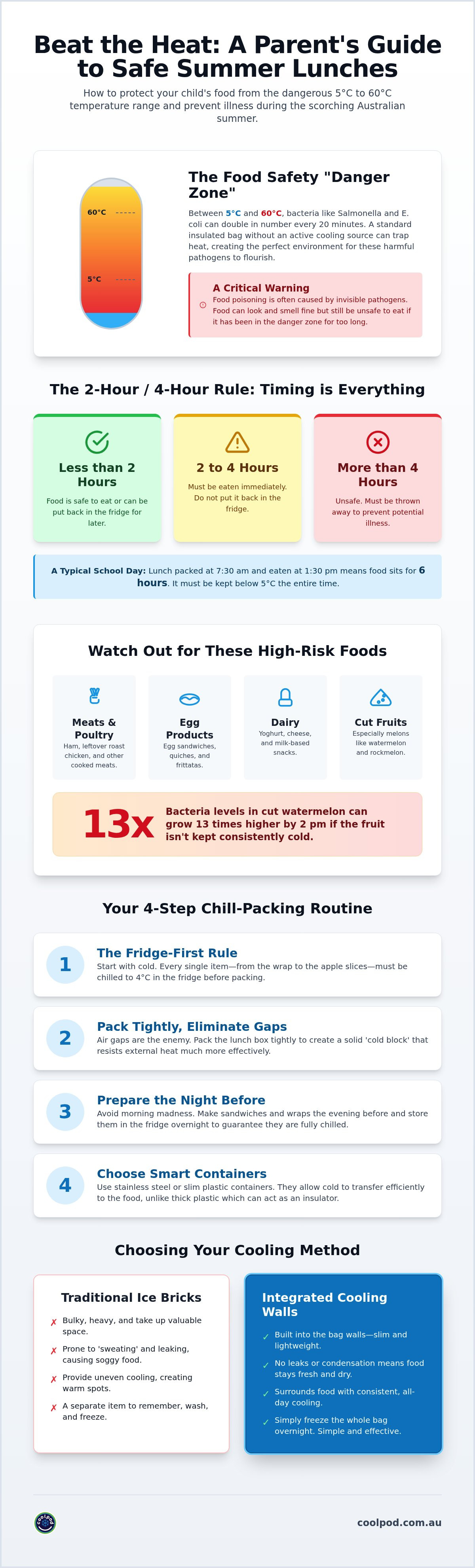
Understanding the 'danger zone' for food is the first step in prevention. This critical range sits between 5°C and 60°C. In this window, bacteria can double in number every twenty minutes. There's a significant difference between food "spoiling" and food "poisoning" too. Spoilt food might look slimy or smell a bit funky, but food poisoning is often caused by invisible pathogens. Your child's ham wrap might taste perfectly fine while still being unsafe to eat because it sat in the heat too long during a scorching Aussie arvo.
The 2-Hour/4-Hour Rule Explained
Timing is everything when it comes to food safety. The 2-hour/4-hour rule is the national standard for managing perishable items. If high-risk food stays in the danger zone for less than two hours, it's safe to eat or put back in the fridge. Between two and four hours, it should be eaten straight away. Once it hits that four-hour mark, it must be thrown out. Consider the typical school day. Lunch is often packed at 7:30 am, but second break isn't until 1:30 pm. That's six hours of cumulative heat. To ensure food is safe, it must stay below 5°C from the moment it leaves your kitchen until the second bell rings.
High-Risk Foods in the Aussie Lunch Box
Some foods are far more vulnerable than others. Protein-rich items like ham, leftover roast chicken, and egg sandwiches are prime targets for bacterial growth. Dairy is another major concern; yoghurt and cheese need constant cooling to stay fresh and appetizing. Even healthy fruit options carry hidden risks. Data from the NSW Food Authority indicates that bacteria levels in cut watermelon can grow 13 times higher by 2 pm if the fruit isn't kept cold. While shelf-stable crackers are easy, children need these high-risk perishables for energy and growth, which makes keeping kids' lunch safe in summer a top priority for every household. For parents who prefer making these fresh snacks and meals from scratch, ThermoKitchen offers a range of free recipes and support to streamline your kitchen preparation.
Keeping kids' lunch safe in summer starts well before you zip up the school bag. The most common mistake is packing room-temperature food into a cold bag and expecting it to chill down. It doesn't work that way. Instead, you must follow the Fridge-First Rule. This means every item, from the ham wrap to the apple slices, should be chilled to 4°C in your refrigerator before it's packed. When food starts cold, your cooling source only needs to maintain that temperature rather than fighting to drop it.
Thermal mass is your best friend during a heatwave. Air gaps inside a lunch box allow cold air to escape and warm air to circulate. You can prevent this by packing the box tightly. If there's extra space, fill those gaps with small, chilled items like a bag of grapes or a cheese stick. This creates a solid block of cold that resists the external heat. The Better Health Channel offers great advice on Food safety and lunchboxes, reminding parents that maintaining this cold chain is the best defence against spoilage.
The Overnight Prep Strategy
Morning madness is the enemy of food safety. To ensure maximum chill, prepare sandwiches and wraps the evening before and store them in the fridge overnight. This guarantees they hit that target 4°C mark. Using a freezable lunch bag as your primary cooling engine simplifies the process. Simply pop the entire bag in the freezer overnight. In the morning, you're placing cold food into a frozen environment, which keeps everything at fridge-temperature for much longer than a standard bag with a single ice brick.
Smart Container Choices
The material of your containers affects how well the cold reaches the food. Stainless steel and slimline plastic containers are excellent because they allow for efficient cold transfer. Avoid thick, heavy plastic tubs that act as insulators, potentially keeping the cold out. A bento cooler bag is a brilliant choice here. It allows you to keep different food groups separate while ensuring the integrated cooling panels sit flush against the containers. For an extra boost, you can freeze a water bottle to act as a secondary cooling source. It keeps the bag cold and provides a refreshing drink by second break.
Investing in a high-quality cooling solution ensures your hard work in the kitchen doesn't go to waste when the temperature climbs.
Ice Bricks vs. Integrated Cooling: Which is Better?
Traditional ice bricks have been the standard choice for decades, but they often fall short when it comes to keeping kids' lunch safe in summer. While research from the NSW Food Authority suggests that ice bricks keep a lunchbox significantly cooler than one without, this only addresses the internal temperature in ideal conditions. In the reality of a busy school day, the physical design of the cooling source matters just as much as its temperature. Integrated cooling, such as that found in a Coolpod Freezable Lunch Bag, offers a more reliable and streamlined solution for the Australian climate.
The Problem with Traditional Ice Packs
Loose ice packs present several practical headaches for parents. They are heavy, bulky, and frequently go missing in the schoolyard or end up forgotten at the bottom of a backpack. There's also the 'cold spot' problem. Only the food directly touching the plastic brick stays at a safe temperature, while the rest of the lunch box remains at the mercy of the heat. Condensation is another major drawback. As the ice melts, moisture builds up, leading to 'Soggy Sandwich Syndrome' and providing a breeding ground for mould inside the bag fabric. This often means you're replacing expensive school bags far more frequently because of hygiene concerns.
Why Integrated Freezable Technology Wins
Switching to a bag with built-in cooling panels changes the game entirely. According to Australian food safety guidelines for lunchboxes, consistent chilling is non-negotiable for high-risk foods like dairy and meat. Integrated technology provides 360-degree cooling because the entire bag acts as the cold source. This surrounds the lunch from every side, eliminating warm pockets and ensuring the contents stay at a uniform temperature.
These bags are also much lighter on little shoulders. By removing the need for heavy plastic bricks, you reduce the overall weight of the school bag while actually increasing the available space for food. The patented gel-lined walls used in these designs maintain a consistent sub-5°C environment for up to 8 hours, ensuring food stays safe from dawn until the final bell. It's a smarter, more efficient way to manage the daily school run without the mess or the extra weight.
Special Handling for Dairy and "Squeezy" Snacks
Dairy products are notoriously sensitive to temperature fluctuations. While they are a staple for protein and calcium, they pose the biggest risk for spoilage in a hot school bag. Yoghurt pouches, often called "squeezies," are particularly vulnerable. Because they are often consumed at recess, they have several hours to sit in the heat before being opened. If they reach room temperature, the texture changes and bacteria can grow rapidly. Keeping kids' lunch safe in summer means paying extra attention to these dairy-heavy snacks to avoid both illness and a sticky mess in the school bag.
Using a reusable yoghurt pouch is a brilliant way to control what your child eats while reducing plastic waste. These pouches are often more durable than single-use versions and can be better insulated when paired with the right gear. They also allow you to buy yoghurt in bulk, which is better for the environment and your wallet.
The Yoghurt Pouch Hack
Many parents try to freeze store-bought yoghurt pouches to keep them cold. This works well, but it can be a gamble. Sometimes they don't thaw in time for recess, leaving your child with a block of ice. Other times, they thaw too quickly and become warm by lunch. A smarter approach is using a dedicated yoghurt pouch cooler. This provides a focused cooling environment specifically for that snack.
If you do freeze the pouch, place it right against the internal cooling panel of the bag. This creates a "mini-esky" effect. The pouch helps keep the rest of the lunch box cold while it slowly thaws. By recess, it should be the perfect slushy consistency; cold enough to be safe, but liquid enough to eat. It's a simple way to maintain the cold chain for the whole lunch.
Cheese and Dip Safety
Not all cheeses are created equal for the Aussie summer. Hard cheeses like cheddar or parmesan are much safer options than soft varieties like brie or camembert. Soft cheeses have higher moisture content and spoil much faster when they "sweat" in a warm lunch box. If you're packing cheese sticks or cubes, keep them in a small airtight container to prevent them from drying out or absorbing other flavours.
Dips like hummus or tzatziki also require careful handling. If they get too warm, they can separate and become unappetising. Packing them in a small stainless steel pot tucked inside a bento section is ideal. This keeps the crunch in the accompanying veggie sticks while ensuring the dip stays at the right consistency. Effective thermal insulation prevents the dairy from reaching that lukewarm stage where it starts to lose its appeal and safety.
To ensure your dairy snacks stay perfectly chilled, browse our range of specialised freezable yoghurt pouches and bags today.
Investing in the Right Gear for the School Year
Choosing the right equipment is the final piece of the puzzle for keeping kids' lunch safe in summer. A high-quality Australian lunch bag needs to do more than just look good; it must be a high-performance tool designed for our specific climate. When evaluating your options, prioritise thick insulation, heavy-duty zippers, and a design that integrates the cooling source directly into the walls. This avoids the common problem of forgotten ice bricks and ensures the entire contents stay chilled until the final bell.
There is a significant cost-benefit to investing in premium gear. While a basic bag might seem like a bargain, the hidden cost lies in the bin. If your child constantly brings home warm, uneaten ham sandwiches or spoiled yoghurt, you are literally throwing money away. A smarter, freezable bag pays for itself by reducing food waste and ensuring your child actually eats the nutritious lunch you've prepared. The Coolpod difference lies in our patented gel-lined technology, which has been perfected since 2010 to meet the demands of Aussie school life.
Food safety isn't just for the kids, either. Many parents find that a professional-grade womens lunch bag or bento bag is just as essential for their own commute. Whether you're heading to the office or out on site, maintaining the cold chain for your own meals is just as important for health and freshness. It's about bringing that same level of clever engineering to every member of the family.
Durability for the Playground
School bags take a beating. They are dropped on hot asphalt, kicked under bag racks, and stuffed into cramped lockers. You need materials that can withstand this daily rigour without tearing or losing their thermal properties. Look for BPA-free, food-safe linings that are easy to wipe clean. This is vital for preventing bacterial buildup and mould, which are common reasons why cheap, low-quality bags often fail before Term 1 is even over. A durable bag should last the entire school year and beyond.
Final Checklist for Summer Food Safety
To keep this essential gear from being misplaced, many parents find that personalising bags and containers is the best solution. Using versatile markers from PoscART allows you to add names or fun designs that won't easily rub off during the daily school routine.
As you prepare for the next heatwave, keep this simple routine in mind to ensure your hard work stays fresh:
- Freeze the bag: Pop your freezable bag in the freezer overnight so it's ready for the morning.
- Chill the food: Ensure every item is at 4°C before it goes into the bag.
- Pack tight: Reduce air gaps to maintain thermal mass and keep cold air in.
- Use quality gear: Rely on patented technology designed specifically for the Australian sun.
Small changes in how you pack can lead to a much healthier and happier school year for your family. Ready to upgrade your school morning routine? Check out the full range of Coolpod freezable bags here and experience the peace of mind that comes with superior cooling.
Prepare for a Cooler School Year
Mastering the school run in the middle of a heatwave doesn't have to be a daily struggle. By understanding the science of bacterial growth and adopting a fridge-first packing routine, you have already taken the biggest steps toward keeping kids' lunch safe in summer. Moving away from leaky ice bricks and bulky packs in favour of smarter, more efficient designs ensures that high-risk dairy and meats stay fresh until the very last bell. It is a simple shift that protects your children's health while significantly reducing daily food waste.
We've spent over 15 years perfecting the art of keeping Aussie lunches cold in even the harshest conditions. Our patented integrated cooling technology provides genuine freezer-to-school convenience, removing the guesswork from daily food safety. It's about giving your family the protection they deserve with gear that is specifically engineered for our unique climate. Upgrade to a Coolpod Freezable Lunch Bag and beat the summer heat to ensure every meal stays at fridge-temperature. You can head into the new school term with total confidence that your hard work in the kitchen will stay fresh, safe, and delicious.
Frequently Asked Questions
Is it safe to freeze a whole lunch box overnight?
It is generally not recommended to freeze a fully packed lunch box overnight. While the cooling panels in your bag need time in the freezer, freezing bread, lettuce, or certain fillings can ruin their texture and taste. Instead, you should freeze the empty bag for at least eight hours and keep your containers in the fridge. This ensures the bag is ready to perform without turning your child's sandwich into a soggy mess when it thaws.
How long will a freezable lunch bag stay cold in a 30-degree classroom?
A high-quality freezable bag is designed to maintain a sub-5°C temperature for up to 8 hours, even in a warm environment. This duration is critical for keeping kids' lunch safe in summer, as it covers the entire window from the morning commute until the final lunch break. For the best results, ensure the bag is completely frozen before use and keep it away from direct sunlight or hot surfaces like metal lockers.
Can I pack hot food in a freezable cooler bag?
You should avoid packing hot food inside a freezable cooler bag. These products are specifically engineered to maintain cold temperatures using integrated gel panels. Placing a hot container inside will cause the gel to thaw almost instantly, rendering the cooling technology useless for the rest of the day. If you need to pack warm meals, it is better to use a dedicated insulated flask that is designed for heat retention rather than cooling.
What are the best "non-perishable" lunch options for extreme heat days?
On extreme heat days, consider packing items like popcorn, whole pieces of fruit, or canned tuna with a pull-ring lid. Rice crackers, dried apricots, and shelf-stable muesli bars are also excellent choices that handle the heat well. While these items are safer, using a freezable bag still helps maintain their texture and prevents snacks like chocolate-coated bars or fruit leathers from melting into a sticky mess before the recess bell rings.
How often should I clean my child’s freezable lunch bag to keep it hygienic?
You should give the interior lining a quick wipe with a damp cloth every afternoon to remove crumbs or small spills. For deeper hygiene, a thorough clean with mild soapy water once a week is ideal. This prevents bacterial buildup and keeps the bag smelling fresh. Always ensure the bag is completely dry before popping it back into the freezer, as any leftover moisture can turn into ice and affect the zipper's performance over time.
Will a freezable bag make the outside of the school bag wet from condensation?
Coolpod bags are engineered with high-quality outer fabrics to minimise external moisture, but slight condensation can occur on very humid days. This is a natural result of the temperature difference between the frozen gel and the warm air. To protect school books and homework, you can place the lunch bag in a separate compartment of the backpack. Most parents find that the moisture is minimal and dries quickly without damaging other school essentials.
What happens if my child forgets their lunch in their bag over the weekend?
If a lunch is left in the bag over the weekend, the food must be discarded immediately as it will have spent too long in the danger zone. You should thoroughly sanitise the bag using a mixture of water and white vinegar or a mild food-safe detergent. Leave the bag open to air-dry completely in a well-ventilated spot before using it again. This ensures any lingering odours or bacteria are completely removed from the lining.
Are freezable gel bags safe if they happen to puncture or leak?
Yes, our freezable bags are designed with safety as a priority. The integrated gel is non-toxic and the materials used are strictly BPA-free and food-safe. While the outer shells are highly durable and resistant to the rigours of the playground, if a puncture does occur, the gel will not cause harm. However, once the internal cooling wall is compromised, the bag will no longer hold its temperature effectively and you should look at replacing it.


