

Imagine it's 2:00 PM on a sweltering 38-degree February day, and your child opens their bag to find a lukewarm sandwich sitting in a puddle of melted condensation. It’s a scenario every Aussie parent dreads, especially when you realise the expensive loose gel pack you packed this morning has mysteriously vanished into the school playground. Choosing a reliable lunch bag with built in ice packs is no longer a luxury in our climate; it's a critical tool for keeping food safe and appetising until the late arvo.
We know how frustrating it is to deal with soggy bread or the constant worry that dairy products aren't staying below the recommended 5°C in the summer heat. You want a solution that’s truly 'set and forget' and durable enough to last more than a single term. This 2026 buying guide promises to help you navigate the latest integrated cooling technologies to ensure your family's meals stay fridge-cold. We will preview the best materials for longevity, explain the food safety standards you need to know, and show you how clever engineering can finally end the epidemic of lost ice bricks for good.
Key Takeaways
- Understand why active cooling is essential for maintaining food temperatures below 5°C during extreme Australian summers.
- Learn how a lunch bag with built in ice packs uses permanently sewn-in gel to create a portable fridge environment without the need for loose inserts.
- Discover why integrated technology is the ultimate 'set and forget' solution for school kids, eliminating the cost and hassle of lost gel packs.
- Identify the best bag style for your daily routine, from compact yoghurt pouches to full-sized bento bags designed for organised snacking.
- Explore the benefits of patented Australian-owned innovation that prioritises BPA-free materials and long-term durability for our harsh climate.
Why Standard Insulated Bags Struggle in the Australian Heat
Most of us grew up using the classic soft-sided cooler bag for school or work. It’s a staple of the Aussie lifestyle, but as we move through 2026, traditional designs are proving inadequate for our intensifying summers. These standard bags rely on passive insulation; a simple layer of foam or foil designed to slow down the entry of heat. While this might suffice in milder climates, the Australian sun is far more aggressive. Passive insulation doesn't stop heat; it only delays the moment your lunch reaches the outside temperature.
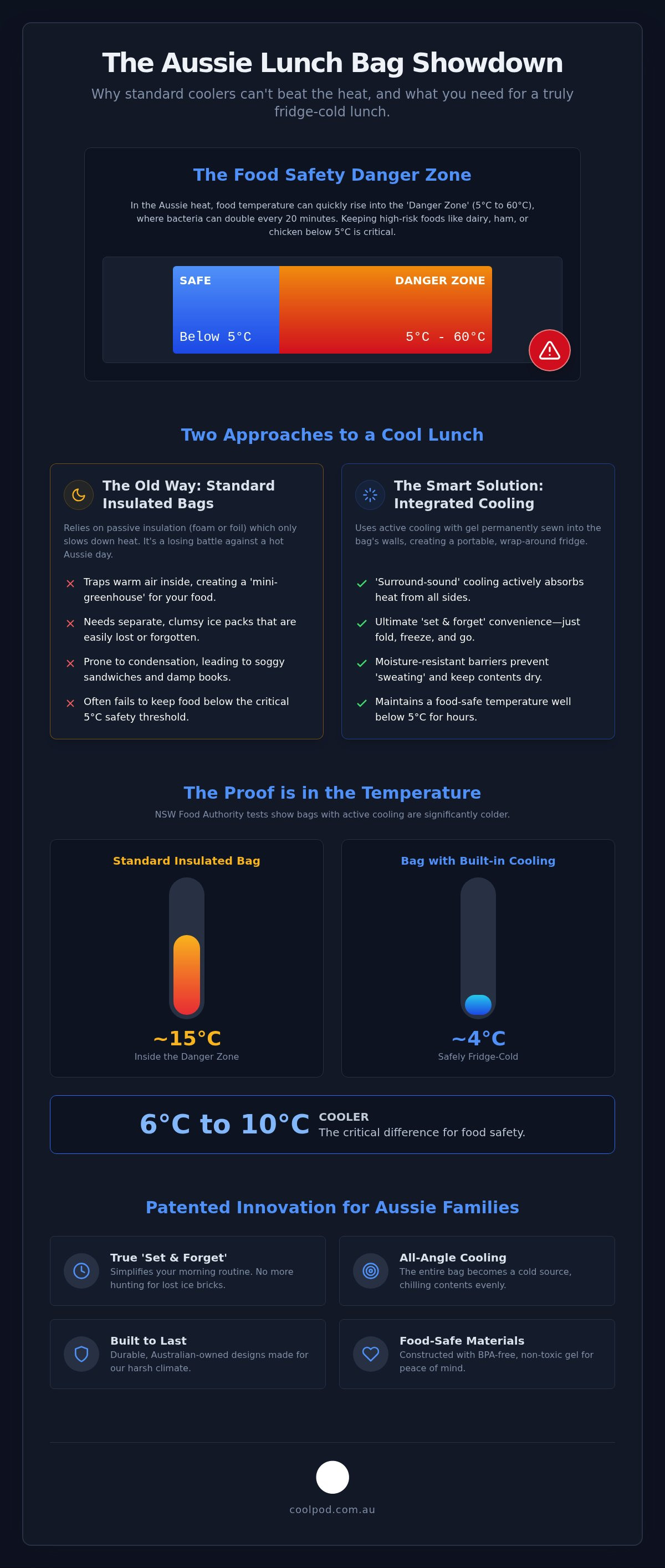
A lunch bag with built in ice packs offers a necessary upgrade by providing active cooling. Instead of merely resisting the external heat, these bags use a frozen thermal mass to actively absorb heat from the food and the surrounding air inside the bag. This is a critical distinction. Traditional loose ice packs often melt quickly because they aren't integrated into the bag's structure, leaving you with a lukewarm lunch by the time the midday bell rings. Learning how integrated freezable technology actually works as a thermal battery helps explain why 'active' systems are now the gold standard for food safety.
Recent data highlights the urgency of this shift. In 2023, experiments by the NSW Food Authority demonstrated that lunch boxes equipped with ice bricks remained between 6°C and 10°C cooler than those without. In a climate where 40-degree days are becoming more frequent, that temperature gap is the difference between a safe meal and a health risk.
The Limits of Polyurethane Foam and Foil Linings
Many consumers believe that a shiny foil lining is enough to protect their food. However, polyurethane foam and foil only act as barriers. They don't generate cold; they just resist the ambient air. On high-humidity days, standard bags often struggle with condensation, which can dampen the insulation and make it even less effective. Using a lunch bag with built in ice packs bypasses this problem by surrounding the food with a constant source of cold. Once the air pocket inside a traditional bag warms up, the insulation actually begins to work against you, trapping that warm air inside and creating a miniature greenhouse for your sandwiches.
Food Safety Standards for the Aussie Summer
The 'Danger Zone' for food safety is between 5°C and 60°C. This is the temperature range where bacteria can double every twenty minutes. For high-risk items like ham, chicken, or dairy, staying below the 5°C threshold is essential. Many people mistakenly believe that if a yoghurt pouch feels 'cool' to the touch, it is safe. In reality, food can feel cool while still being well above the safe limit required to stop bacterial growth. To ensure maximum safety, potentially hazardous school lunch foods must be stored at or below 5°C to effectively inhibit the growth of harmful bacteria.
How Integrated Freezable Technology Actually Works
Unlike standard bags that require you to hunt for loose gel bricks in the morning, a lunch bag with built in ice packs features cooling gel permanently sewn into the lining of the bag itself. This design creates a high level of thermal mass. In scientific terms, thermal mass refers to the ability of a material to absorb and store heat energy. By freezing the entire bag, you are essentially turning the walls into a battery of cold energy that surrounds your food from every angle. This is much more effective than a single loose pack that only cools the item it's touching.
Understanding How Integrated Freezable Technology Actually Works involves looking at heat transfer mechanisms like conduction and convection. Patented designs often include moisture-resistant barriers that prevent the 'sweating' or condensation typical of cheaper, non-integrated options. This keeps the outside of the bag dry and prevents your child's school books or your work documents from getting damp in a shared backpack. The 'fold, freeze, and go' routine simplifies your morning; you just pull the flattened bag from the freezer, pop in your food, and head out the door.
The Engineering Behind the Cooling Walls
The secret lies in the non-toxic, food-safe gel formulations used within the lining. These gels are designed to stay frozen longer than standard water-based ice bricks. Because the gel is distributed throughout the walls, it provides a 'surround-sound' cooling effect, ensuring that the top and sides of your meal stay as cold as the bottom. High-quality internal membranes are engineered for durability, meaning they won't leak or puncture even after hundreds of freeze-thaw cycles. If you're looking for a reliable option for the family, you can explore the full range of freezable bags designed specifically for these conditions.
Maximising Your Bag's Cooling Potential
To get the best results from your lunch bag with built in ice packs, a 12-hour 'deep freeze' is the gold standard. This ensures the gel is completely solid and ready to combat the Aussie sun. It's also vital to pack food that is already cold from the fridge. A cooling bag is designed to maintain temperature, not to chill warm leftovers. One of the best features of this technology is its clever foldability; these bags are designed to collapse flat, meaning they won't take up half your freezer shelf while they're prepping for the next day.
Built-in Ice Packs vs. Loose Gel Inserts: A Practical Comparison
Choosing between a traditional cooler and a lunch bag with built in ice packs often comes down to everyday reliability. A loose gel pack is essentially a heavy cold slab that takes up valuable room and only cools the items it directly touches. In contrast, integrating the cooling agent into the bag's lining reduces bulk and ensures your meal has a smaller footprint in a crowded school backpack or work bag. This streamlined design makes it much easier to fit other essentials like drink bottles and fruit without the bag becoming overly heavy or cumbersome.
Efficiency is paramount in the Aussie heat. Loose packs tend to slide around, often ending up at the bottom of the bag while the top of your sandwich sits in the warm air. According to USDA food safety guidelines, maintaining a consistent temperature throughout the container is vital for preventing bacterial growth. Integrated technology provides 360-degree cooling, surrounding your food like a mini-fridge rather than relying on a single contact point. This ensures that every part of your lunch stays at a safe, crisp temperature until the lunch bell rings.
The True Cost of Replacing Loose Ice Packs
Every Aussie parent is familiar with the 'toddler tax'. It is that hidden cost of replacing school items that mysteriously vanish into the playground or the school's lost property bin. Loose gel inserts are prime candidates for this disappearing act. If you find yourself replacing two or three packs every year, the financial cost and the frustration quickly add up. Investing in a single, high-quality bag where the cooling is part of the structure is a smarter long-term move. For a deeper look at the top-rated options available this year, check out our Best Freezable Lunch Bags in Australia: 2026 Guide.
Cross-Contamination and Leak Prevention
Hygiene is a major factor often overlooked during the buying process. Loose packs are prone to puncturing, especially when packed alongside forks or sharp container edges. If a gel pack leaks, it can ruin your food and create a sticky, chemical mess that is difficult to clean properly. Built-in walls use durable internal membranes that are far more resilient to daily wear and tear. They also solve the 'soggy bottom' syndrome common in traditional coolers. Because the cold is distributed evenly through the walls, you don't get heavy condensation pooling at the base. The seamless, easy-wipe interiors make managing mould simple; a quick wipe with a damp cloth after school is all it takes to keep the bag fresh for the next day.
Choosing the Right Style for Your Aussie Lifestyle
Selecting the right lunch bag with built in ice packs depends entirely on your daily routine. A massive meal kit is overkill for a quick office snack, while a tiny pouch won't survive a ten-hour shift on a construction site. Assessing your volume requirements is the first step toward a successful purchase. You might need a slimline version for a briefcase or a high-capacity bag that holds multiple containers for a full day of field work. Modern designs in 2026 have moved beyond the one-size-fits-all approach, offering everything from 'tiny cooler bags' for snacks to comprehensive kits for long-haul travel.
The rise of 'Bento' style eating has changed how we think about chilled storage. Instead of one big sandwich, many Aussies now prefer variety. Specialised cooling technology is essential here. A yoghurt pouch or a wine bag requires different thermal engineering than a standard lunch box to maintain the right temperature for specific contents. Material choice also plays a huge role in longevity. You can find 'luxe' fabrics for the daily commute or rugged, tear-resistant materials built for the job site. Balancing aesthetic appeal with practical durability ensures your bag looks good while standing up to the harsh Australian sun.
The Ultimate Men's Lunch Kit for the Job Site
Tradies often face the harshest conditions, with bags sitting in the back of a ute or under direct sun for hours. These environments demand high-capacity cooling and heavy-duty fabrics. If you're working long shifts, you need a bag that can handle being tossed around while keeping your hydration and meals at fridge-like temperatures. You can find more details in our guide on The Ultimate Men's Lunch Kit. Rugged poly-canvas is usually the best choice for these demanding settings because it resists abrasions and stays easy to clean.
Bento Bags and School Run Essentials
For parents, the challenge is different. You need a bag that provides enough space for variety but is compact enough to fit into a standard school backpack alongside books and sports gear. This is where organising the perfect chilled lunch with a Bento Cooler Bag becomes a game-changer. These designs allow for multiple snack compartments while keeping everything crisp. Snack-sized freezable bags are also the secret to keeping fruit and yoghurt fresh until the second break, ensuring nothing comes home uneaten because it went 'mushy' in the heat.
To find the perfect fit for your specific daily needs, shop the full range of Australian-designed freezable bags here.
The Coolpod Advantage: Patented Innovation for Every Occasion
Since 2010, we have focused on a single mission: perfecting the lunch bag with built in ice packs for the people who need it most. Our design philosophy is where clever engineering meets everyday convenience. We don't just sell containers; we provide a reliable solution to the thermal challenges of our local environment. In 2026, our patented technology remains the gold standard because it was built from the ground up to handle extreme heat. We remain committed to using only non-toxic, lead-free, and food-safe materials, ensuring your family's health is never compromised for the sake of performance.
A 15-year heritage in Australian-owned cooling expertise means we understand the nuances of the local climate better than any international competitor. While other brands might adapt designs meant for milder northern hemisphere summers, we prioritise high-standard insulation and superior gel formulations that actually work when the mercury hits forty. Every bag we produce is a testament to our status as a dependable specialist and a thoughtful innovator in the portable cooling space.
Australian Heritage and National Reliability
Our story began with a simple vision to solve a common daily frustration: the soggy, warm lunch. We test our bags to ensure they stand up to the unique demands of the outback and the coast alike. Whether you are working in the humid tropics or the dry heat of the interior, our gear is built to perform under pressure. At Coolpod, we believe that no Aussie should ever have to settle for a lukewarm lunch again. This dedication to quality has allowed us to grow from a small specialist into a trusted partner for families and professionals across the entire country.
Beyond the Lunch Box: A Complete Cooling Ecosystem
We have expanded our patented technology far beyond the standard lunch container to create a complete cooling ecosystem for every part of your day. You can build a coordinated set for family picnics or weekend adventures by exploring everything from Yoghurt Pouches to specialised wine coolers. Our range is designed to be modular and practical, including:
- Coolpod Freezable Bento Bag for organised meals
- Coolpod Freezable Drink Cooler Bag for all-day hydration
- Coolpod Freezable Yoghurt Bag to keep dairy safe and chilled
By choosing a lunch bag with built in ice packs from our collection, you are investing in a product that prioritises longevity and high-performance protection. Our materials are BPA-free and designed for years of daily use, making them a sustainable choice for the environment and your wallet. Shop the full Coolpod range today and experience the peace of mind that comes with genuine Australian innovation.
Upgrade Your Daily Routine for the Aussie Summer
Navigating the extreme temperatures of an Australian summer requires more than just a standard insulated bag. We have explored how a lunch bag with built in ice packs provides the active cooling needed to maintain safe temperatures and keep food fresh until the late arvo. By choosing integrated technology, you eliminate the frustration of lost gel inserts and the mess of condensation while ensuring 360-degree protection for your meals. This shift from passive insulation to active cooling is a game-changer for food safety and convenience.
Since 2010, Coolpod has been a trusted partner for families and professionals, providing patented cooling solutions that are both BPA-free and non-toxic. Whether you need a rugged kit for the job site or a compact bento bag for school, investing in quality engineering is the smartest way to handle our unique climate. Our Australian-owned heritage ensures that every design is tested for the specific demands of our environment.
Ready to make the switch? Keep your lunch stinking cold with Coolpod's patented freezable bags and enjoy the peace of mind that comes with genuine Australian innovation. Here is to fresher, safer, and colder lunches for the whole family.
Frequently Asked Questions
How long does a lunch bag with built-in ice packs stay cold?
Most bags will maintain a fridge-like temperature for several hours, depending on the ambient heat. A lunch bag with built in ice packs uses its integrated gel walls to create a constant cooling environment. Experiments by the NSW Food Authority suggest that using frozen elements can keep a lunch box between 6°C and 10°C cooler than standard bags. This is usually enough to keep your food safe until the late arvo.
Can I put these bags in the dishwasher?
No, you should never put these bags in the dishwasher. The high temperatures and harsh detergents used in dishwashers can damage the internal cooling gel and the durable outer fabrics. To keep your bag fresh, simply wipe the easy-wipe interior with a damp cloth and mild soap. This simple maintenance protects the integrity of the patented freezable technology and ensures your bag lasts for multiple school years without any issues.
Are the built-in ice packs safe if the bag gets a small tear?
Yes, the cooling gel used in our bags is non-toxic and safe for your family. We prioritise using BPA-free and food-safe materials because we understand that daily wear and tear can happen. If you notice a puncture, the gel won't contaminate your food, but the bag's cooling performance will decrease. It's best to replace a damaged bag to ensure moisture doesn't enter the insulation and to maintain maximum food safety standards.
How long do I need to freeze the bag for it to work properly?
You should freeze the bag for at least 12 hours to achieve the best results. A full 'deep freeze' ensures the integrated gel walls are completely solid and ready to combat the harsh Aussie sun. We recommend placing your lunch bag with built in ice packs in the freezer overnight. The clever foldability of the design means it takes up very little space on your freezer shelf while it preps for the morning.
Will the bag make my sandwiches soggy from condensation?
No, our patented design includes moisture-resistant barriers that significantly reduce the 'sweating' common in cheaper bags. Traditional loose gel packs often cause condensation to pool at the bottom, which leads to soggy bread. Because the cooling agent is sewn into the walls, the cold is distributed more evenly. Using airtight containers alongside the bag's integrated technology will ensure your sandwiches stay crisp and your child's school books remain completely dry.
What is the best size lunch bag for a primary school student?
The Coolpod Freezable Bento Bag is generally the most practical choice for primary school students. It provides enough volume for a full day of snacks and a main meal while remaining compact enough to fit into a standard school backpack. This size accommodates most popular bento-style containers. Choosing a bag that matches your child's daily meal volume ensures they aren't carrying unnecessary bulk or weight to the playground every day.
Can I use a freezable lunch bag for hot food as well?
No, these bags are specifically engineered for active cooling and should not be used to store hot food. The integrated gel is designed to store cold energy, and placing hot containers inside could damage the gel formulation and the internal lining. If you need to keep a meal warm, a traditional thermos or a dedicated heat-insulated bag is a much safer option. Our technology focuses on keeping high-risk foods like dairy and meats safely chilled.
How do I store my Coolpod bag when it's not in the freezer?
When you aren't using your bag, store it in a cool, dry place away from direct sunlight. Ensure the interior is completely dry before storing it to prevent any mould or mildew from developing. You can leave it folded flat in a kitchen cupboard or pantry. Many parents find it easier to keep the bag permanently in the freezer so it's always ready for the morning rush, ensuring the cooling walls are always prepped.


