

Imagine it's a scorching 35-degree afternoon and you've finally reached for that "cold" drink you packed this morning, only to find it's reached a disappointing room temperature. Worse still, you're eyeing your yoghurt or chicken wrap with genuine suspicion, wondering if it's spent too long in the temperature danger zone. Learning how to keep drinks cold on the go isn't just about a refreshing sip; it's a vital part of avoiding the 4.1 million cases of foodborne gastro that Australians face each year.
We all know the frustration of bulky ice bricks that hog all the space in your bag, or the soggy mess left behind by condensation that ruins your belongings. You deserve a lunch that stays fresh until the very last bite without the unnecessary weight. This guide will show you how to master the art of keeping your beverages and meals icy cold while out and about, ensuring your food stays safe regardless of the mercury. We'll explore the science of spoilage and introduce you to smarter, integrated cooling technology designed specifically for our demanding local climate.
Key Takeaways
- Understand the 5°C to 60°C "danger zone" and why maintaining a consistent temperature is critical for preventing food poisoning in the Aussie heat.
- Discover the most efficient methods for how to keep drinks cold on the go by switching from bulky, separate ice bricks to integrated freezable technology.
- Learn how to eliminate the "ice pack tax" and reclaim valuable bag space while keeping your belongings dry and free from condensation.
- Master practical packing techniques, including the 12-hour freeze rule and pre-chilling, to extend the life of your cold contents throughout the day.
- Explore why Melbourne-engineered, food-safe materials provide a more durable and reliable solution for the unique challenges of the Australian climate.
The Science of Spoilage: Why Your Drinks Get Warm
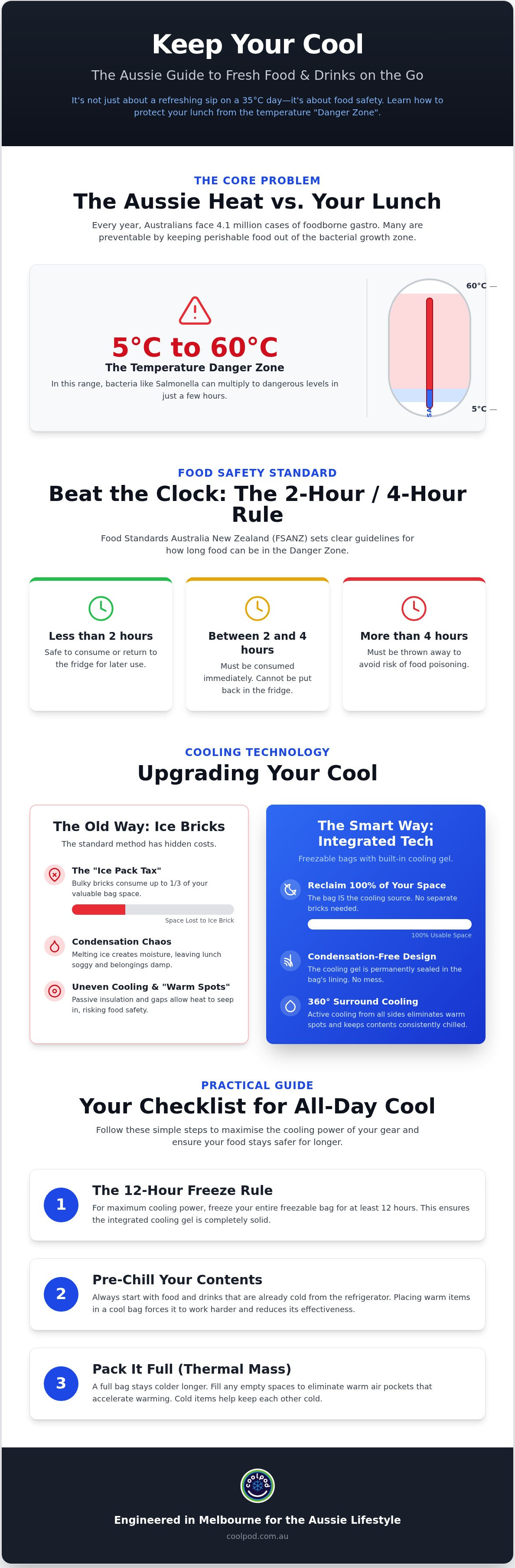
Food spoilage is the result of microbial growth accelerated by ambient temperatures exceeding 5°C. In the harsh Australian climate, staying under this threshold is a constant battle against physics. Bacteria multiply at an alarming rate in what experts call the "Danger Zone," a temperature range between 5°C and 60°C. When your lunch or beverage sits in this bracket, you're essentially inviting pathogens like Salmonella or Campylobacter to thrive. Understanding The Science of Spoilage makes it clear that passive insulation isn't a silver bullet. A standard insulated bag merely slows down heat transfer; it doesn't stop it.
In an Aussie car or a school backpack, heat moves in three ways. Conduction occurs when heat travels through the bag's walls. Convection happens as warm air circulates around your containers. Radiation is the direct energy from the sun hitting the surface of your gear. Most "just insulated" bags fail because they can't counteract these forces, especially if the starting temperature of your food is already climbing. Without an active cooling element, your lunch is often at risk before the morning tea break even arrives.
The Role of Thermal Mass in Keeping Drinks Cold
Physics plays a significant part in how to keep drinks cold on the go. Thermal mass is the ability of an object to store and maintain its temperature. A bag packed to the brim stays chilled far longer than one that's half-empty. This is because the cold items inside act as a collective "battery," supporting each other's temperatures. Liquids, such as water or wine, are excellent heat sinks. They require a significant amount of energy to warm up compared to air. If you leave large air pockets in your bag, that warm air will quickly compromise your snacks. Always aim to fill your bag and start with items that are already fridge-cold or frozen.
Understanding Australian Food Safety Standards
Food Standards Australia New Zealand (FSANZ) provides a strict 2-hour/4-hour rule for managing food safety. If potentially hazardous food has been in the Danger Zone for less than two hours, it's safe to eat or refrigerate. Between two and four hours, it must be consumed immediately. After four hours, it must be thrown away to avoid illness. Under our local sun, these windows feel even shorter. School lunches are particularly high-risk. Lukewarm dairy, like yoghurt pouches or cheese sticks, can become unsafe long before midday. Investing in gear that maintains a temperature below 5°C is the only way to ensure your family stays safe while out and about.
Traditional Cooling vs. Modern Freezable Technology
For decades, the standard approach to keeping a lunch fresh involved a silver-lined bag and a couple of heavy ice bricks. This method carries a hidden cost often called the "Ice Pack Tax." These bricks are bulky; they take up nearly a third of the usable space in a standard bag. By the time you pack a drink and a sandwich, there's barely room for a piece of fruit. Beyond the space issue, traditional ice packs suffer from condensation. As the ice melts, moisture seeps through the bag, leaving your lunch soggy and your belongings damp. If you're looking for how to keep drinks cold on the go, these old-school methods often create more problems than they solve.
Modern alternatives move away from these clunky additions by using phase-change materials (PCM). This technology involves specialised cooling gels integrated directly into the walls of the bag. When you freeze the entire unit, the bag itself becomes the cooling source. This eliminates the need for separate bricks and ensures that every centimetre of internal space is available for your food and drinks. It's a smarter, more efficient way to manage temperature without the mess of melting ice.
The Problem with Standard Insulated Lunch Bags
Many people assume a silver-lined bag is enough to protect their food. In reality, these linings are passive barriers. They're designed to reflect heat, but they don't actually generate "cold." According to Safe Food Storage Guidelines, maintaining a consistent temperature is the only way to stop bacteria from multiplying. A standard bag sitting in a 30-degree school locker or a warm car will lose its cool quickly. Zips and seams are the primary weak points; they allow cold air to leak out and warm air to seep in. Without an active cooling element, the internal temperature can reach the danger zone in less than two hours.
Why Integrated Freezable Bags are a Game Changer
Integrated freezable bags solve the "warm spot" problem by providing 360-degree cooling. Because the gel is sewn into all sides of the bag, your drink or meal is completely surrounded by a chilled environment. There's no need to worry about which side of the sandwich is touching the ice pack. This Melbourne-engineered approach is built for durability, using food-safe materials that can withstand daily use in the Australian heat. It's a lightweight, streamlined solution that gives you peace of mind. You can explore the Coolpod range to see how integrated cooling can simplify your daily routine and keep your lunch safe until the very last bite.
Preventing Food from Spoiling in a Lunch Box: A Practical Guide
Packing a lunch is more than just throwing items in a bag. It's a strategic operation. To master how to keep drinks cold on the go, you need to understand the hierarchy of cooling. Cold air naturally sinks. This means your most sensitive items, like meats or dairy, should sit at the bottom of the bag. Using a freezable bento bag helps you organise these different food groups while ensuring the integrated cooling gel surrounds them from the moment you leave the house. It's a smarter way to pack that keeps every layer chilled.
Don't ignore the "Air Gap" rule. Warm air is the enemy of a cold lunch. If your bag is only half full, the remaining space is occupied by ambient air that will quickly heat up. Fill those gaps with small snacks or even a spare napkin to keep the internal environment stable. Most importantly, pre-chill your bag. Freezing the bag overnight is the most overlooked step in the process. When the bag starts at sub-zero temperatures, it doesn't have to work as hard to maintain the chill. For more expert advice, check out these Tips for a Safer Cooler to ensure your packing strategy is foolproof.
Safe Storage for High-Risk Foods
High-risk items like dairy require extra care. You can keep snacks fresh and mess-free by using a reusable yoghurt pouch Australia. These pouches provide a dedicated chilled environment for yoghurt, preventing it from reaching the danger zone. When packing meats and salads, keep them separated to avoid cross-contamination. Place heavy, cold items at the base and delicate leafy greens on top to prevent wilting. Dedicated pouches for small dairy snacks act as an extra layer of protection against the afternoon heat.
Packing for the Australian Job Site or Office
Tradies often rely on a standard "chilly bin," but these are often too bulky for a quick smoko. If you're working on a site, your bag might spend hours in a hot ute. A streamlined, freezable solution is much more effective for these transitions. It maintains a steady temperature without the need for melting ice that can ruin your sandwich. In an office setting, communal fridges are notoriously crowded. Having a bag that stays cold at your desk gives you independence. You won't have to worry about your lunch being pushed to the back of a warm fridge or forgotten in the breakroom. For corporate events, pairing these bags with custom drinkware from Personalised Glasses Australia ensures your refreshments stay chilled in style.
For professionals in the cleaning industry who spend their days on various job sites, having a reliable lunch solution is just as vital as the quality equipment they source from Cleaners Hub.
Achieving a perfectly chilled lunch in the middle of a heatwave requires more than just good gear; it requires a consistent routine. If you want to master how to keep drinks cold on the go, you must treat your cooling bag as a portable battery that needs proper charging. Follow these five essential steps to ensure your refreshments stay icy from dawn until dusk.
- Step 1: Freeze the bag flat. Place your bag in the freezer for at least 12 hours. Overnight is best. Laying it flat ensures the integrated cooling gel distributes evenly across the walls, providing 360-degree protection once packed.
- Step 2: Pre-chill your contents. Never pack room-temperature items. A cold bag shouldn't be used to chill warm drinks; its job is to maintain an existing low temperature. Ensure all food and beverages come straight from the main fridge.
- Step 3: Organise by density. Place your most sensitive items, such as dairy or meat, in the very centre of the bag. Surround them with denser items like water bottles or juice boxes which act as additional thermal mass.
- Step 4: Practice zip discipline. Every time you open the bag, you lose a pocket of cold air and invite ambient heat inside. Keep the bag closed whenever you aren't actively eating or drinking.
- Step 5: Seek the shade. Even the best technology struggles under direct Australian sunlight. Store your bag in a locker, under a desk, or in the footwell of your car rather than on a hot seat or dashboard.
Cleaning and Maintenance for Longevity
Hygiene is vital for any food storage solution. To prevent mould and lingering odours, wipe down the interior of your bag with a damp cloth and mild detergent after every use. Never put a freezable bag in the washing machine. The agitation can damage the patented gel seals and compromise the bag's cooling efficiency. Always ensure the bag is completely dry before placing it back in the freezer; this prevents ice crystals from forming on the fabric and ensures a clean start for your next trip.
Choosing the Right Size for the Occasion
Different outings require different tools. For a social afternoon, a wine cooler bag is specifically designed to maintain the delicate temperature of your favourite vintage. If you're heading out with the whole family, a picnic cooler bag Australia offers the volume needed for multiple meals. For those who only need to protect a small snack or temperature-sensitive medication, a tiny cooler bag provides a compact, lightweight solution that fits easily into a larger backpack. You can browse our full collection of freezable bags to find the perfect fit for your lifestyle.
The Coolpod Advantage: Patented Tech for the Aussie Lifestyle
Choosing gear that stands up to a scorching summer or a sudden heatwave requires local knowledge. Coolpod is a Melbourne-founded specialist that has spent over 15 years perfecting the science of portable cooling. Unlike generic imports, our range is designed specifically for the national climate. This ensures that the materials don't degrade under high UV levels and the cooling gel remains effective even when the mercury rises. By opting for an Australian-owned brand, you're investing in a product that's been tested in the very conditions you face every day. We understand the unique challenges of the local landscape and build our products to exceed those demands.
The versatility of the range means there's a solution for every member of the family. From professional womens lunch bag Australia styles that look at home in a boardroom to rugged bento bags for the playground, the design is always sleek and functional. The durability of our freezable lunch bag ensures it can handle being tossed into a school locker or the back of a ute without losing its thermal integrity. These bags are built to last, using food-safe materials that resist wear and tear while keeping your lunch looking as fresh as it tastes.
Innovation in Every Stitch
The secret lies in the patented engineering of the integrated cooling gel. We've eliminated the need for separate ice packs by sewing the cooling power directly into the bag walls. This provides a consistent chilled environment that can last for up to 8 hours in typical conditions. Beyond the immediate convenience, there's a significant environmental benefit to this design. You'll reduce your reliance on single-use plastic ice bags or cheap, disposable coolers that end up in landfill. If you've been searching for how to keep drinks cold on the go, this integrated technology is the most efficient, sustainable answer.
Ready for Your Next Adventure?
Mastering your daily routine shouldn't be a messy chore. By switching to integrated freezable technology, you reclaim your bag space and gain the peace of mind that your food is safe to eat. It's time to upgrade from old-fashioned eskies and bulky bricks to a solution that works as hard as you do. Whether you're heading to the office, the job site, or a weekend picnic, we have a design that fits your needs. Browse our full range of freezable bags and experience the difference of Melbourne-engineered cooling today.
Stay Fresh and Safe in the Australian Sun
Mastering the science of food safety means moving beyond passive insulation and embracing smarter design. By understanding the "Danger Zone" and the limitations of standard bags, you're already ahead of the game. You've learned that how to keep drinks cold on the go requires a combination of pre-chilled contents and active, integrated cooling that surrounds your lunch with a 360-degree chill. This approach eliminates the mess of melting ice and ensures your meal stays safe until the very last bite.
Coolpod has spent over 15 years of Aussie expertise perfecting this craft right here in Melbourne. Our patented cooling technology ensures your meals stay at safe temperatures without the weight of heavy bricks. Every bag is crafted from BPA-free and food-safe materials, giving you the peace of mind that your family's health is protected. It's time to reclaim your bag space and enjoy a crisp, cold lunch exactly when you need it, regardless of the temperature outside.
Ditch the ice packs and shop the Coolpod freezable range today! You'll never have to settle for a lukewarm sandwich again, even in the peak of a scorching summer day.
Frequently Asked Questions
How long will a freezable bag keep my drinks cold in the sun?
A Coolpod bag can keep your beverages chilled for up to 8 hours under typical conditions. This duration is significantly longer than standard insulated bags because the cooling gel is built directly into the walls. For the best results in the harsh Australian sun, start with pre-chilled drinks and keep the bag in the shade. This integrated technology ensures you have a reliable method for how to keep drinks cold on the go without relying on bulky external ice blocks.
Can I put my freezable lunch bag in the microwave or dishwasher?
No, you should never place a freezable bag in the microwave or dishwasher. High heat and intense agitation can damage the patented cooling gel and compromise the internal seals. These bags are engineered for durability, but they require gentle care to maintain their performance. To keep your bag in top condition, simply wipe the interior and exterior with a damp cloth and mild detergent; then allow it to air dry completely before returning it to the freezer.
What is the best way to prevent food from spoiling in a lunch box without a fridge?
The most effective method is maintaining a temperature below 5°C to stay out of the danger zone where bacteria multiply. Using a bag with integrated cooling gel provides a consistent chilled environment that passive insulation cannot match. Pack your bag tightly to increase thermal mass and ensure all items are fridge-cold before they go in. This strategy is essential for anyone wondering how to keep drinks cold on the go while protecting high-risk foods like dairy and meat.
Do I still need to use ice packs with a Coolpod bag?
You don't need to use separate ice packs with our bags. The patented technology integrates the cooling gel directly into the walls of the bag, which eliminates the ice pack tax on your internal storage space. By freezing the entire bag overnight, you create a 360-degree cooling environment that is more efficient than a single loose brick. This design makes your daily commute lighter and ensures there are no warm spots where bacteria could potentially grow.
Is it safe to freeze yoghurt pouches overnight?
Yes, it's perfectly safe and highly recommended to freeze the yoghurt pouch itself. Our Coolpod Freezable Yoghurt Pouch is designed to be frozen flat overnight, ensuring the integrated gel is ready to protect your snacks the next day. While you can freeze some types of yoghurt, many people prefer to pack chilled yoghurt into the already-frozen pouch. This keeps the dairy fresh and at a safe temperature until recess or smoko without changing the yoghurt's texture.
How do I stop my lunch bag from smelling after a few uses?
Odours are usually caused by moisture or small food spills that encourage microbial growth. To prevent this, wipe the interior with a solution of water and mild soap after every use. It's vital to let the bag air dry completely in a well-ventilated area before you put it back in the freezer. If a smell persists, a quick wipe with a mixture of water and a small amount of bicarbonate of soda can help neutralise any lingering scents effectively.
Are freezable bags safe for children to use at school?
Absolutely, these bags are designed with school-aged children in mind. We use food-safe, BPA-free, and lead-free materials to ensure that every lunch is stored in a non-toxic environment. The durable construction stands up to the daily rigours of being tossed into school bags or lockers. Because the cooling technology is integrated, there are no heavy ice bricks that could leak or get lost, making it a safer and more practical choice for younger students during the school week.
What should I do if my drink cooler bag starts to sweat?
While our high-quality materials are designed to minimise condensation, some sweating can occur in extremely humid conditions when warm air hits a cold surface. If you notice moisture on the outside, simply wipe it down with a dry towel. To reduce this effect, ensure the bag is zipped tightly and avoid opening it unnecessarily. Storing the bag inside a backpack or in a shaded spot will also help regulate the temperature difference and keep your belongings dry.


